Trekking in Nepal in 2026: Permits, Routes, Costs and Altitude
Published Oct 27, 2026 Updated Oct 27, 2026 12 min read
Quick answer
To trek in Nepal in 2026 you need the entry permit for your region, usually NPR 3,000, and in most national parks and conservation areas a licensed guide booked through a registered agency; the Everest region is the main exception. Choose a route by your days and altitude experience, go in October to November or March to May, and plan for altitude, not distance.
We run treks from Pokhara every week of the season, and most of the questions we get come from out-of-date information online. This guide sets out how trekking in Nepal works in 2026: the rules as they are applied on the trail, how to pick a route that suits you, what it costs, and how to stay well at altitude. Where a topic needs more depth, it links to our detailed guides.
Key facts
Entry permitACAP, MCAP or a national park fee, NPR 3,000 for most foreigners
TIMS cardNot active; not needed
GuideRequired in national parks and conservation areas since April 2023; Everest region excepted
Restricted areasExtra permit in US dollars; single-trekker permits since March 2026, guide still required
Best seasonsOctober to November and March to May
Guide and porterUSD 40 a day / USD 20 to 25 a day
2026 eventsFloods in Rasuwa (August) and storms in Manang and Khumbu (September)
One trekker can now get a permit for restricted areas such as Manaslu, Upper Mustang and Nar Phu; you still need an agency and a licensed guide
Upper Mustang charged per day (since late 2025)
USD 50 per person per day inside the restricted zone
Rasuwa flood (26 August)
The road to Syabrubesi was badly damaged; on 21 October TAAN declared Langtang and Gosaikunda open, with access via Dhunche or Thulo Syabru
Late-September storms
Floods and landslides closed the road to upper Manang at Chame for days, and heavy snow hit the upper Khumbu on 26 September
Budhi Gandaki flood (11 October)
Bridges at Soti Khola and Arughat were damaged; the Manaslu route partly reopened on 21 October with a detour, while Tsum Valley stayed closed for repairs
New flights into Pokhara
flydubai has flown daily from Dubai to Pokhara since 23 September
The storms are the change that matters most for planning. In recent autumns the season has started and ended with more snow and rain than it used to. Build two spare days into any trek, and read our Nepal trekking conditions update before you fly.
Permits and the guide rule
Every trekking region needs an entry permit. The Annapurna Conservation Area permit (ACAP) and the Manaslu Conservation Area permit cost NPR 3,000 for foreigners; national parks such as Sagarmatha (Everest) and Langtang charge NPR 3,000 plus VAT. The Everest region adds a Khumbu Pasang Lhamu Rural Municipality fee of NPR 3,000. Rupee fees are fixed, so the dollar amount moves with the exchange rate. There is no TIMS card to buy: the TIMS system is not active.
Since 1 April 2023 foreign trekkers in Nepal's national parks and conservation areas must walk with a licensed guide arranged through a registered agency. The Everest (Khumbu) region is the main exception, where the local municipality still allows independent trekkers. Restricted areas always need a guide.
Restricted area
Permit, autumn (September to November)
Manaslu
USD 100 for the first 7 days, then USD 15 a day
Tsum Valley
USD 40 for the first 7 days, then USD 7 a day
Nar Phu
USD 100 for the first 7 days, then USD 15 a day
Upper Mustang
USD 50 a day
Upper Dolpo
USD 500 for the first 10 days
Since 22 March 2026 a single trekker can apply for a restricted-area permit, which used to need at least two. The application still goes through a registered agency, and a licensed guide still walks with you. Every fee, season and exception is in our Nepal trekking permits guide.
Heads up
Ignore any site that tells you to buy a TIMS card, or that says Upper Mustang costs USD 500 for ten days. Both are out of date. If in doubt, ask your agency to show you the permits it will buy for you.
Which trek should you choose?
Choose by your days in Nepal and your altitude experience first, and by the famous name last. If you have never slept above 3,000 m, start with a shorter, lower trek and find out how your body handles it.
My short version, counting days in Nepal including travel and spare days: Poon Hill if you have a week; Annapurna Base Camp if you have ten to twelve days and want a big mountain amphitheatre without Lukla flights; Mardi Himal if you want a quieter, steeper ridge; the Annapurna or Manaslu Circuit if you have about sixteen days and some altitude behind you; Everest Base Camp if you are set on Everest and can keep spare days for flights. Upper Mustang sits in the rain shadow and is one of the few treks that works in the monsoon.
Two routes need a check before you plan. Langtang reopened on 21 October, with vehicles going via Dhunche or Thulo Syabru while the Syabrubesi road is repaired. Manaslu partly reopened the same day after the 11 October flood on the Budhi Gandaki, with vehicles stopping at Machhakhola; see our Budhi Gandaki flood update. For a fuller comparison see our guides to choosing the right trek, Mardi Himal vs Poon Hill and Everest Base Camp vs Annapurna Base Camp.
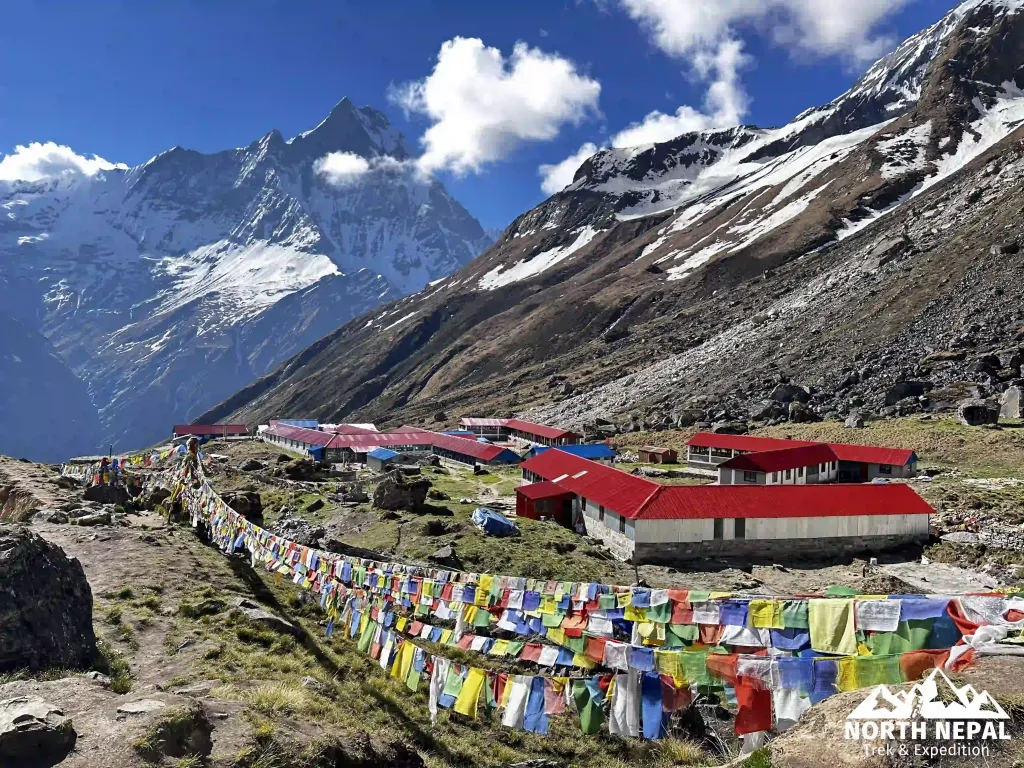
Annapurna Base Camp, 4,130 m (13,550 ft), the moderate trek we suggest most often to first-timers. Photo: North Nepal Travel & Trek.
How hard are Nepal's treks?
Difficulty in Nepal comes from height gained and lost and from altitude, not from distance. A 10 km day can mean hundreds of metres of climbing as the trail drops to a river and climbs back over a ridge. We use four rough grades.
Grade
Altitude
Walking day
Examples
Easy
Below about 3,500 m
4 to 6 hours, stone steps and village trails
Poon Hill
Moderate
3,500 to 4,500 m
5 to 7 hours, long staircases, real climbs
Annapurna Base Camp, Mardi Himal
Challenging
Up to about 5,500 m
6 to 8 hours, high passes, moraine and scree
Everest Base Camp, Annapurna Circuit
Strenuous
Very long days, high passes, remote or above 5,500 m
Rough trail, 10-hour pass days, sometimes camping or crampons
Manaslu Circuit, Three Passes, Dhaulagiri Circuit, Upper Dolpo
Be honest about which grade fits you. Every season we meet trekkers on a challenging route with moderate-route fitness, and their trip becomes a struggle rather than a pleasure. Train for eight to twelve weeks with long walks carrying a pack; our 16-week training plan has a full programme.
What trekking in Nepal costs
The simplest way to budget is a package from a local agency, which covers the permits, guide, porters, rooms and meals. Our prices for one trekker are in the table above and fall as the group grows. If you hire people directly, a licensed guide costs USD 40 a day and a porter USD 20 to 25 a day, carrying 20 to 25 kg.
Teahouse rooms are cheap and food is not. Lodges price rooms low because they expect you to eat where you sleep, and everything above the roads arrives by porter or mule, so prices rise with altitude. Hot showers, charging and Wi-Fi cost extra higher up. Dal bhat is the best value on any menu: it is cooked fresh and refills are usually free.
Above 3,000 m, increase your sleeping height by no more than about 500 m a day where the route allows, and take a rest day every three or four days or so. Drink plenty, eat well, and tell your guide about symptoms early. Fitness does not protect you; a slow ascent does.
Mild altitude sickness feels like a hangover: headache, nausea, poor appetite and poor sleep. Stop going up until it clears. HAPE (fluid in the lungs: breathless at rest, a wet cough) and HACE (swelling of the brain: confusion, loss of balance) are emergencies that need immediate descent. Our guides check you every evening, but the decision to go down is made on symptoms.
Acetazolamide (Diamox) can help prevent altitude sickness. The Wilderness Medical Society's preventive dose is 125 mg twice a day, starting the day before you go high. It has side effects and is not suitable for everyone, especially anyone who has had a severe reaction to sulfa drugs, so talk to your doctor before you travel.
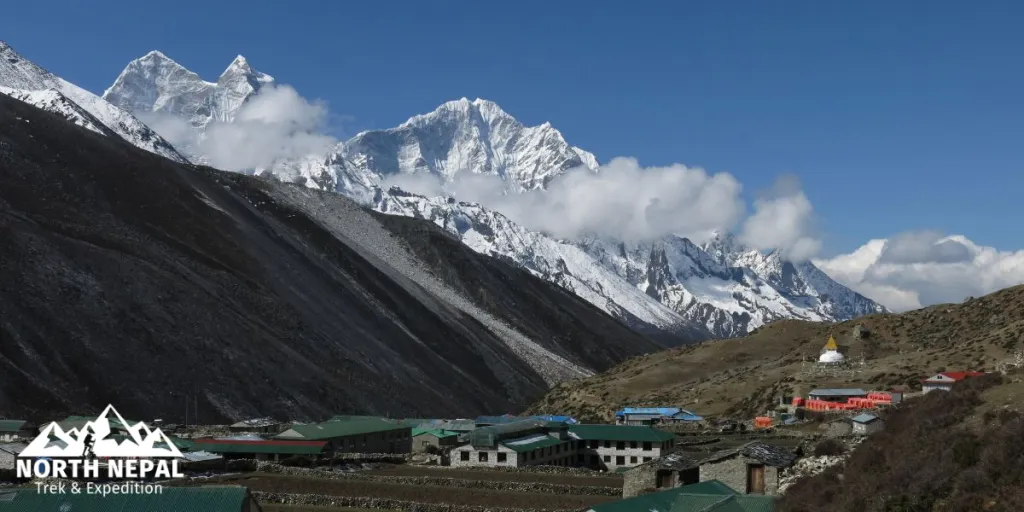
Dingboche, 4,410 m (14,469 ft), on the Everest trail: a classic acclimatisation stop. Photo: North Nepal Travel & Trek.
Gear: what to bring and what to rent
Dress in layers: a base layer that wicks sweat (no cotton), a fleece, a warm down jacket for the evenings and a waterproof shell. Teahouse dining rooms are warm only near the stove, and bedrooms at altitude are below freezing at night. Bring a sleeping bag good to well below freezing for any trek above 4,000 m.
Buy your boots at home and break them in; blisters end more treks than altitude does. Down jackets, sleeping bags, poles and duffel bags rent cheaply in Thamel or Lakeside; check zips and loft before you take them. Carry microspikes for high passes after snow. Our packing checklist and Pokhara gear guide list everything.
When to go
Months
Conditions
Our view
October to November
Clearest skies, cold nights, busiest; early snow is now common
Best overall; keep spare days
March to May
Warmer, rhododendrons, haze builds by May
Very good
December to February
Cold and clear, quiet; high passes can close after snow
In national parks and conservation areas, including the Annapurna and Manaslu regions, yes: a licensed guide has been required since April 2023. The Everest region is the main exception. Restricted areas always need a guide.
No. The TIMS system is not active. You need the entry permit for your region instead.
ACAP and the Manaslu Conservation Area permit cost NPR 3,000 for foreigners; national parks charge NPR 3,000 plus VAT. Restricted areas add a fee in US dollars, such as USD 100 for the first week in Manaslu in autumn or USD 50 a day in Upper Mustang.
Since 22 March 2026 one trekker can get a restricted-area permit, but it must be arranged through a registered agency and a licensed guide must go with you.
Ghorepani Poon Hill: four days from Pokhara, a highest point of 3,210 m (10,531 ft), and our price from USD 375 per person.
October to November and March to May. Keep spare days in autumn, when early snow and storms have become more common.
The August flood hit the Bhotekoshi and Trishuli corridor in Rasuwa and the road to Langtang. The Annapurna, Everest and Mustang trails are separate valleys and are being trekked, though road access to Manang was disrupted in late September. On 21 October TAAN declared the Langtang and Manaslu routes open again, with detours, after the August and October floods. Check our conditions update before you fly.
Go up slowly: above 3,000 m add no more than about 500 m of sleeping height a day where you can, take rest days, drink plenty, and descend if symptoms get worse.
A native of the Annapurna region, he brings over 17 years of firsthand experience leading treks across the mountains of Nepal. His deep local roots and proven guiding expertise make him a trusted authority on authentic Himalayan adventures.