Dhorpatan Trek with Gurja Khani: A Perfect Place for Hunting
The 10-day Dhorpatan Trek with Gurja Khani is an off-beaten-path adventure through western Nepal'...
OVERVIEW & HIGHLIGHTS
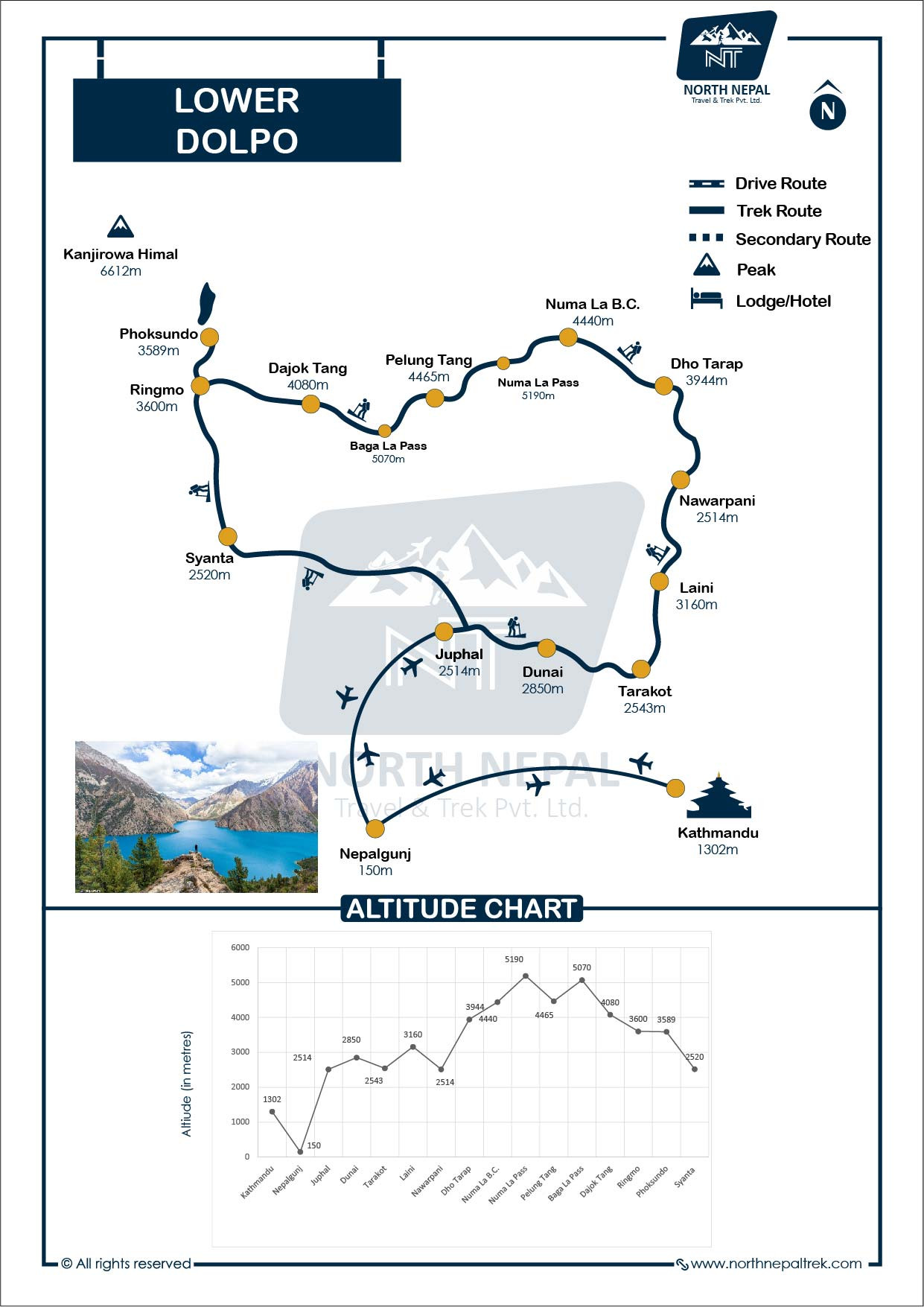
The trek takes us to the ‘Hidden Treasure of Nepal’ as we cross three high passes at Baga La, Numa La, and Kangma La. Also, we will visit the famous Phoksundo Lake and explore the wilderness in the vicinity. We will need special trekking permits to travel in this region, as it's quite a remote yet beautiful area. Still, despite being almost untouched by the modern world, the people here are amiable and humble.
Jeewan Tamang, Trekking Guide / Mountain Climber / Trail Runner
Since founding North Nepal Trek in 2015, Mohan Raj Bhandari has kept a close eye on the Lower Dolpo Circuit Trek, and Jeewan Tamang shares firsthand insight from personally leading this trek, so you know exactly what to expect before you go.
We will take an hour-long trip to Nepalgunj from Kathmandu. Located near the Nepal-India border, it is the gateway to all western treks of Nepal. We will explore the town for the rest of the day.
Photo: Nepalgunj's Bageshwori Temple
After breakfast, we take a 45-minute flight to Jhupal, where we begin our trekking. We will walk across the terraced fields on the sides of the Bheri River. After hiking for about 3 hours, we arrive at the administrative center of the Dolpo region i.e., Jhupal. We will stroll around the small town and spend the night in an outdoor camp.
Photo: Dunai, starting point for Lower Dolpo trek. (source)
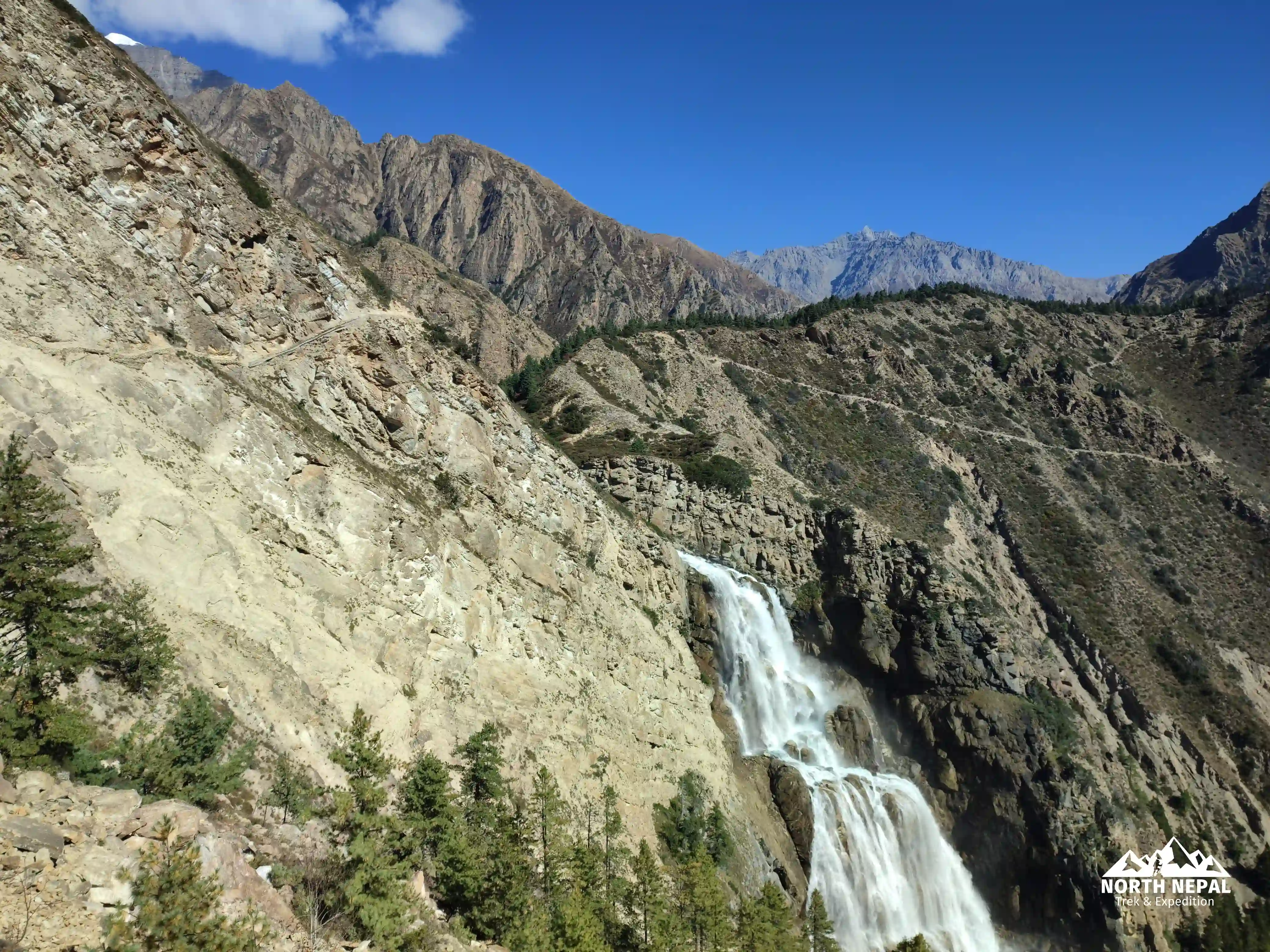
We continue our trek to Tarakot along the southern bank of the Bheri River passing through several villages and hanging bridges. We also tread across deep gorges surrounded by pine trees. After encountering vibrant terrace fields, we will have arrived at the small village of Tarakot. We will stay overnight at a tented camp.
Photo: Reichi Village viewpoint en route Lower Dolpo
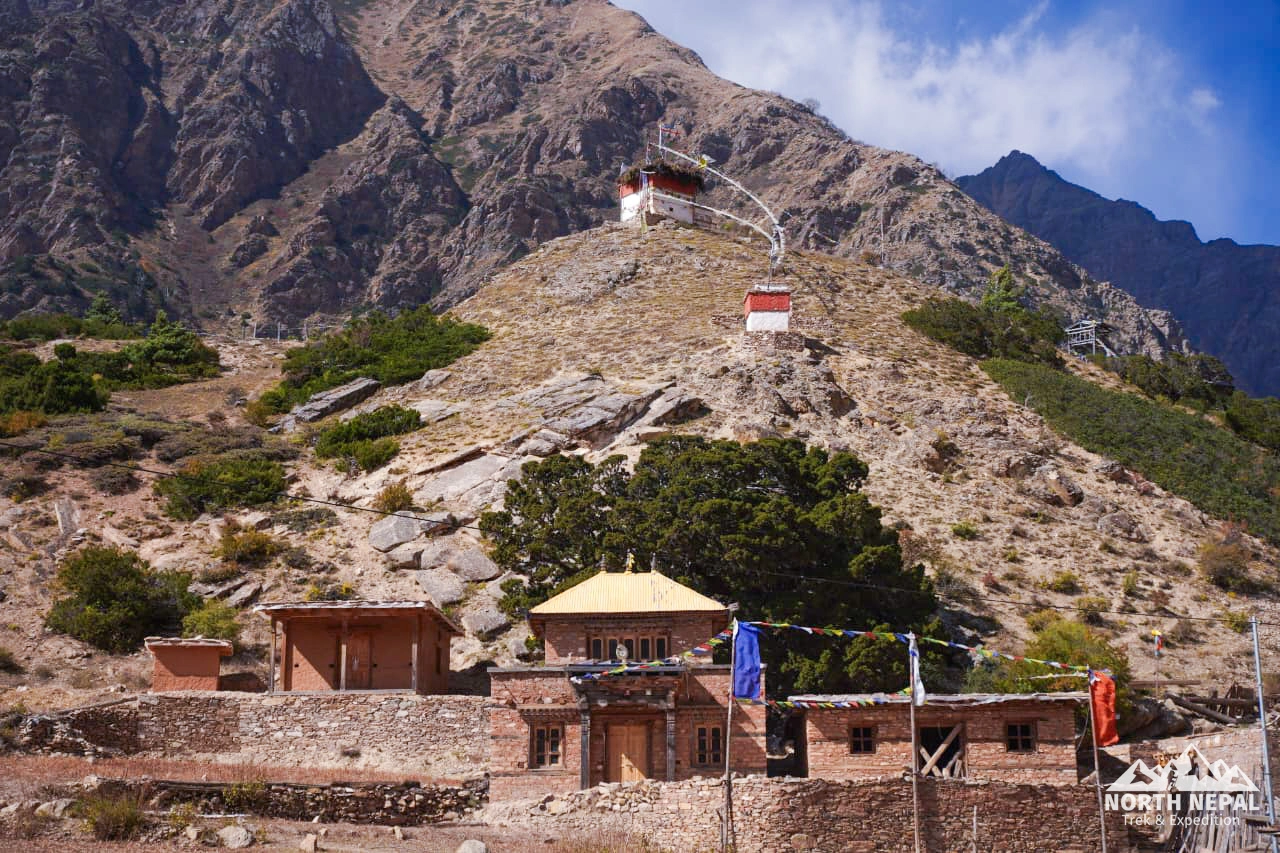
We will walk along the Tarap Chu river and cross two bridges before reaching Sandul Gompa. Situated near the confluence of Tarap Chu and Barbung Khola, the gompa was built in the 11th century.
Climbing on a steep path, we will walk above the Tarap River. After several ascents and descents along the way, we will arrive at the bank of Chyugur Khola. The village of Nawarpani is just nearby where we will spend the night.
We gradually ascend to Kamattarka, which lies at the intersection of the Lang Khola and Tarap Chu. From there, we cross a gorge and walk alongside juniper bushes to reach the village of Do Tarap. It is a Magar settlement who have been living here for centuries.
We will take a free day in this place to acclimatize to the altitude by resting in Do Tarap. We will visit the nearby monasteries and also explore the ancient culture of the people.
Trekking upwards from Do Tarap, we enter the grasslands of inner Dolpo. We will walk along the Tarap Chu river for a couple of hours before reaching the village of Tokyu. After visiting the Buddhist monastery nearby, we hike along rough terrain before reaching Numa La Base Camp.
After breakfast, we begin our hiking along a steep trail that takes us to the Numa La Pass. The Pass offers some excellent views of the surrounding villages as well as the Dhaulagiri massif. After about 7 hours of hike, we will reach Pelung Tang, where we spend the night.
Again, we do some steep climbing to reach another pass at Baga La. From the top, we can see a fantastic landscape with snow-clad mountains like Kanjirowa in the distance.
It’s a relatively short trek as we tread alongside gorgeous alpine vegetation. After only about 4 hours, we will reach the Tibetan-style village of Ringmo.
Photo: Ringmo Village Dolpo
We will hike to the famous Phoksudo Lake as we get close to the Tibetan border. Visiting several monasteries on the way, we finally reach the glorious and sacred lake.
Photo: Shey Phoksundo Lake
After trekking downhill to Chepka, we pass through several villages before reaching Shyanta.
We hike to Sulighat, which provides some fascinating views of the mountains. Walking cautiously along the ridge, we descend to Jhupal village.
We take the earliest flight to Nepalgunj and then to Kathmandu.
We will drop you at the airport and bid you farewell.
Best trekked from March to May or September to November, when the high passes are most reliably clear.
With several passes above 5,000 m, we build acclimatization time into the schedule and monitor trekkers daily for early signs of Acute Mountain Sickness (AMS), with an immediate-descent protocol if symptoms worsen.
Lower Dolpo is remote with limited mobile coverage, so our guides carry satellite communication devices to coordinate rescue when needed, and we require travel insurance that explicitly covers helicopter evacuation.
All trekkers must carry travel insurance covering high-altitude trekking up to at least 5,500 m and helicopter evacuation, given the remoteness of this restricted area.
Secure the Lower Dolpo Circuit Trek for 2026/2027 before the seat gets fully booked.
The Lower Dolpo Trek is a remote Himalayan trekking route in western Nepal, known for rugged mountain terrain, high passes, traditional villages, and the distinctive culture of Dolpo. The route reaches remote areas around Shey Phoksundo Lake and passes through landscapes that remain far less developed than Nepal's major trekking regions.
Lower Dolpo is not recommended for young children or inexperienced family trekkers. The route involves steep and rocky trails, remote terrain, long walking days and high-altitude passes. Anyone considering the trek should have strong fitness, appropriate preparation and previous experience with demanding Himalayan trekking.
No. Boating is not permitted on Shey Phoksundo Lake. The lake is considered sacred by local communities, and visitors should respect the religious and environmental significance of the area.
The trek provides a close look at the traditional lifestyle of people living in one of Nepal's most remote regions. Dolpo has a strong Tibetan Buddhist cultural influence, and the journey offers opportunities to observe local communities, traditional lifestyles and ancient Buddhist practices that have remained closely connected to the landscape.
Because much of the route involves remote camping, you should pack for cold nights, high-altitude conditions and changing mountain weather. Essential personal gear includes sturdy trekking boots, warm layered clothing, a down jacket, waterproof outerwear, gloves, a warm hat, trekking poles, sunglasses, sunscreen, a headlamp, reusable water bottles and personal medication.
The supplied source does not provide a reliable breakdown of personal or additional expenses. Before booking, confirm what is included in the package and budget separately for personal purchases, drinks, tips, insurance and any services not listed in the itinerary.
Families can enquire about the trek, but suitability depends heavily on the age and trekking experience of each traveller. Because Lower Dolpo is a demanding remote trek, the itinerary should be assessed individually rather than treated as a standard family trek.
Spring and autumn generally offer clear mountain views and favourable trekking conditions. Lower Dolpo also lies in a rain-shadow region, so it receives considerably less monsoon rainfall than many other parts of Nepal. This makes the summer monsoon period a viable option for trekkers who specifically want to explore the region when much of Nepal is wet.
Yes. The route involves steep, rocky and remote trails, and the high-altitude sections require good physical preparation. The combination of demanding terrain, limited infrastructure and long distances between settlements means this trek should be approached as a serious Himalayan expedition rather than a comfortable teahouse trek.
A permit is required to enter the Lower Dolpo region. However, the USD 10 per person per week figure in the supplied source should not be published as the current permit fee without verification. The source does not provide enough reliable information to establish the current applicable Restricted Area Permit and conservation-area fees.
Lower Dolpo requires additional travel logistics compared with trekking regions close to Kathmandu or Pokhara. The exact transportation arrangement depends on the selected itinerary and trailhead, so flight and ground-transfer details should be confirmed in the final trip plan before departure.
Accommodation is primarily camping in remote sections, with very limited teahouse infrastructure. Kathmandu and Nepalgunj offer hotel accommodation, while the trekking section relies largely on outdoor camps. Food is therefore more basic than on established teahouse routes and must be planned around the limited facilities available in Lower Dolpo.
Reliable connectivity should not be expected throughout the trek. Lower Dolpo is remote and has limited infrastructure, so trekkers should be prepared for periods without normal mobile or internet access and should arrange emergency communication through their trekking operator.
Lower Dolpo combines high Himalayan terrain, remote valleys, rugged mountain passes and alpine landscapes. Shey Phoksundo Lake is one of the region's defining natural features, while the surrounding wilderness remains comparatively untouched because of the area's difficult access and limited tourism infrastructure.