Most trekking gear guides on the internet are the same list, reshuffled. A three-day walk to Poon Hill and a two-week crossing of Thorong La at 5,416 metres are not the same trek. A trekker packing for 7 Days Annapurna Base Camp in October needs different things than one heading there in January. Yet most guides treat Nepal trekking as a single activity with a single packing list.
If you are deciding where to buy or rent trekking gear in Nepal, this guide zeroes in on Pokhara's Lakeside—showing exactly where to buy or rent trekking gear in Pokhara and how to match items to your route and season.

Our team visited gear rental shops across Pokhara's Lakeside area and asked shop owners what trekkers actually rent, what they waste money on, what breaks on the trail, and what people consistently forget. We cross-referenced everything against TESA (Trekking Equipment Shops Association) pricing and matched it to the specific trails our clients walk every week. TESA is an official organization in Nepal responsible for the standardization of renting equipment & gear in Pokhara and Nepal.
The Buy vs. Rent Decision: What Shop Owners Actually Said
We asked every shop owner the same question: if a trekker walked in here and could only buy five things and rent the rest, what should they buy?

The answers were remarkably consistent.
Always buy:
- Boots. Every shop owner said this first. Boots need to fit your specific feet, and fit requires time — time to break them in, time to find the right pair. Dozens of different feet wear rented boots, often losing their shape. A poorly fitting boot creates blisters that can end a trek.
- Socks. Hygiene. A sleeping bag liner protects you from a rented sleeping bag, but nothing protects you from someone else's socks.
- Base layers. Same reason as socks. The layer that sits against your skin should be yours.
- Sunglasses. Fit matters, and UV protection is not something to gamble on with worn-out rental lenses.
- Sleeping bag liner. At NPR 700–1,200, it is a one-trip purchase that solves the hygiene problem of rented sleeping bags and adds roughly 5°C of warmth. Every shop owner recommended buying one.

Always rent:
- Sleeping bag. Unless you trek multiple times a year, buying a -15°C sleeping bag for one trip does not make financial sense. A 10-day trek at NPR 200–330/day runs NPR 2,000–3,300 total. A decent sleeping bag to buy costs NPR 8,000–25,000.
- Down jacket — with one important caveat. For shorter treks under 7 days at moderate altitude (Poon Hill, Mardi Himal, lower ABC), renting at NPR 200/day (TESA standard) is the obvious choice. You wear it for a week, return it, and save NPR 15,000–40,000 versus buying. For longer treks, high-passes routes (Thorong La, Three Passes), and any winter or extreme-weather expedition, we recommend buying your own. Rental down jackets are workhorses — used by hundreds of trekkers per season — and the loft compresses over time. At 5,000m in -20°C wind on Thorong La at 4 AM, a tired rental jacket that has lost a third of its insulation is the difference between cold and dangerous. If your trek crosses a high pass or runs in December–February, the jacket is not the place to economise.
- Trekking poles. The TESA rate of NPR 150/day means a 10-day rental runs NPR 1,500. Buying costs NPR 2,000–6,000, and then you have to carry them home.
- Gaiters, crampons, waterproof pants, microspikes. Specialised gear for specific conditions. Rent when you need it, return when you do not.
What Trekkers Get Wrong: The Gear Failures
Shop owners do not just rent and sell — they hear the stories when trekkers come back. Here are the most common gear-related problems they reported.

The sleeping bag temperature gap.
A sleeping bag rated to -10°C should keep you warm at -10°C, right? Not if it has been rented 200 times and the down is compressed to half its original loft. The most common complaint shop owners hear: "My bag was supposed to be -10, but I froze at -3."
The solution: always rent one tier colder than you think you need. If you expect -5°C nights, rent a -10°C bag. If -10°C, rent -15°C.
Cheap boots that leak.
The second most common failure. Trekkers buy NPR 2,500 boots in Lakeside to save money, and the waterproofing fails on day two when they hit wet trail above Chomrong. By the time they reach ABC, their feet are blistered and cold.
Boots are the one item where spending the extra money genuinely affects your safety on the mountain.
No rain protection for the backpack.
A wet sleeping bag at 4,000m is a serious problem. A rain cover costs NPR 400–800 to buy or NPR 50–100/day to rent. According to one shop owner, "At least one trekker every day in monsoon shoulder season skips it and regrets it."
Forgetting sun protection.
Sunburn and snow glare are cumulative. By day three above 3,500m without proper sunglasses and sunscreen, trekkers start experiencing headaches and eye pain they mistake for altitude sickness. Carry both, use both, every day.
Where to Go For Trekking Gears/Equipment in Pokhara
If you are searching for "renting trekking gears in Pokhara" or "buying trekking gears in Pokhara," Lakeside's main strip is your most convenient starting point.
Pokhara's Lakeside area has dozens of trekking gear shops along the main street running parallel to Phewa Lake. Shops closest to the main tourist area tend to have higher starting prices but will negotiate. Shops a few minutes further down the strip often offer better base rates. For renting gear near Pokhara beyond the main strip, check the side lanes around Lakeside and nearby Damside; many outlets here are also TESA members.

What to know before you walk in:
- TESA (Trekking Equipment Shops Association) sets official rental pricing for its member shops. Ask whether the shop is a TESA member. Most display their TESA certificate at the counter.
- Deposits typically range from NPR 5,000 to NPR 50,000, depending on the gear rent or a passport photocopy. Clarify the deposit and return policy before renting.
- Peak season (October and March–April) means higher demand. The best sleeping bags and down jackets go quickly. Visit shops 1–2 days before your trek starts. During off-peak months, you have more selection and better leverage to negotiate.
- Bargaining is expected and reasonable. Asking for 10–20% off the starting price is normal. For multi-item rentals or 10+ day durations, ask about package discounts — Trek Equipment Solution Shop (operated by Ramesh Adhikari) is one shop known for offering preferential rates for treks extending beyond five days.
- Rental rates are generally consistent year-round, but some TESA-member shops offer off-season discounts when demand is lower. Worth asking.
Booking:
Many Lakeside shops accept reservations via WhatsApp, Facebook, or email. If you are arriving in peak season and have specific size requirements — extra-large boots, tall-person sleeping bags, heavy-duty crampons — reach out 1–2 weeks ahead. Some shops accept advance payment via bank transfer or digital wallet.

On gear cleanliness:
TESA-member shops are expected to maintain rental stock in usable, reasonably hygienic condition. Gear is inspected and aired out between rentals, though not professionally laundered after every use.
Before accepting any rented item, inspect it in the shop. Unzip sleeping bags and check for odour and loft. Try on the boots and check the lining. Look for visible staining or damage on down jackets. Reputable shops will not take offence — they expect it.
A sleeping bag liner is a worthwhile purchase for hygiene alone (NPR 700–1,200). It creates a clean barrier between you and the rented bag, adds warmth, and is yours to wash and reuse.
Our recommendation: If you are trekking with North Nepal Trek, we handle gear coordination as part of trip planning. We work with trusted Lakeside shops and can arrange rental packages matched to your specific trek, season, and budget — ready for pickup when you arrive in Pokhara. Contact us at northnepaltrek.com or reach us on WhatsApp.
Official TESA Rental Rates 2025–26
The following rates are issued by the Trekking Equipment Shops Association (TESA), effective 2025–26. Individual shops may vary slightly depending on gear condition and quality grade, but TESA-member shops are expected to stay within this framework.
|
S.N.
|
Item
|
Specification
|
Rate Per Day (NPR)
|
|
1
|
Tent
|
2-person
|
NPR 500
|
|
1
|
Tent
|
3-person or above
|
NPR 800
|
|
2
|
Sleeping Bag
|
Standard
|
NPR 200
|
|
3
|
Trekking Boots
|
Standard
|
NPR 300
|
|
4
|
Rucksack / Trekking Bag
|
Up to 35L
|
NPR 150
|
|
5
|
Rucksack / Trekking Bag
|
35L and above
|
NPR 200
|
|
6
|
Down Jacket
|
Standard
|
NPR 200
|
|
7
|
Trekking Poles (pair)
|
2 pieces
|
NPR 150
|
|
8
|
Waterproof Jacket or Trousers
|
Either item
|
NPR 150
|
|
9
|
Crampons / Microspikes
|
Either type
|
NPR 150
|
What is TESA?
TESA (Trekking Equipment Shops Association) is the governing body that unifies everyone involved in selling, buying, and renting trekking equipment in Nepal. It sets standardized rental pricing and represents retailers across the country.
The association operates through two main markets — Thamel in Kathmandu and Lakeside in Pokhara. Any business renting trekking gear commercially is required to hold a TESA membership to operate within its framework.
TESA is entirely separate from TAAN (Trekking Agencies' Association of Nepal), which represents trekking agencies rather than gear shops.
Zone 1: Low Altitude Treks (800m – 2,500m)
Treks: Ghorepani Poon Hill, Kapuche Glacier Lake trek, Ghandruk Village trek, Australian Camp, Dhampus
Who does these: First-time trekkers, families, people with a week or less, and anyone who wants mountain views without the full expedition commitment.
The terrain: Stone steps — thousands of them. The trails through the Modi Khola valley and up toward Ghorepani are well-maintained but relentless on the knees. Expect forest paths, river crossings on suspension bridges, and the occasional mud section after rain. You are walking through villages the entire way.
Seasonal Breakdown
Autumn (September – November)
The best window. Skies are clear after the monsoon, temperatures sit between 10°C and 22°C, and trails are dry. You will see the Annapurna range and Machhapuchhre clearly most mornings.
The tradeoff: October and November are peak seasons. Popular stops like Ghorepani fill up fast — book teahouses ahead or start early.
Spring (March – May)
Second best. The rhododendron forests between Tikhedhunga and Ghorepani bloom red and pink in late March and April — the most photographed trail section in Nepal.

Mornings are clear; afternoons get hazy by late April. Slightly warmer than autumn, with occasional afternoon showers.
Winter (December – February)
Doable and underrated. Trails are nearly empty, skies are sharp and blue, and teahouses stay open. Mornings are cold — below freezing above 2,000m — and you will want a fleece on by 4 PM.
Poon Hill sunrise at 3,210m in January means standing in -5°C wind while waiting for the light to hit the peaks. Worth it — but dress for it.
Monsoon (June – August)
Not recommended. Daily rain, leeches on the lower trails, and no mountain views for days at a stretch. Trails get slippery. If you must trek in the monsoon, look at rain-shadow areas like Upper Mustang or Dolpo instead.
Gear for Zone 1
Buy in Pokhara
- Lightweight trail shoes or hiking boots (NPR 3,500–10,000). You do not need mountaineering boots for Poon Hill. Something with ankle support and a decent grip on wet stone is enough. Break them in before you go — the flat promenade along Phewa Lake is perfect for a test walk.
- Moisture-wicking shirts, 2–3 (NPR 500–1,500 each). Cotton soaks through by mid-morning and stays wet all day. Synthetic or merino only.
- Convertible trekking pants (NPR 1,000–2,500). The zip-off kind. Mornings are cool, midday is warm, and being able to switch without stopping is worth the small premium.
- Sunscreen SPF50 and a sun hat. UV at 2,000m is stronger than most people expect. Sunburn on the neck and ears is the most common complaint shop owners hear from returning trekkers.
- Water purification — a bottle with a filter or tablets. Saves NPR 200–400 per day versus buying bottled water at teahouses.

Rent in Pokhara
- Trekking poles (NPR 150/day, TESA rate). Your knees will thank you on the descent from Ghorepani. Stone steps are unforgiving.
- Daypack 20–30L (NP R 150/day) if you are using a porter for your main bag.
- Headlamp (NPR 100/day). Power cuts happen in smaller villages, and early morning starts for Poon Hill sunrise mean walking before daylight.
|
Item
|
Buy or Rent
|
Cost (NPR)
|
|
Lightweight trail shoes/boots
|
Buy
|
3,500–10,000
|
|
Moisture-wicking shirts (×2–3)
|
Buy
|
500–1,500 each
|
|
Convertible trekking pants
|
Buy
|
1,000–2,500
|
|
Sunscreen SPF50 + sun hat
|
Buy
|
Varies
|
|
Water bottle with filter/tablets
|
Buy
|
Varies
|
|
Trekking poles
|
Rent
|
150/day
|
|
Daypack 20–30L
|
Rent
|
150/day
|
|
Headlamp
|
Rent
|
100/day
|
|
Light fleece (winter add)
|
Buy
|
800–2,000
|
|
Sleeping bag −5°C (winter add)
|
Rent
|
200/day
|
Skip entirely at this altitude:
Down jacket (autumn/spring), heavy sleeping bag (teahouse blankets are fine in peak season), gaiters, crampons, thermal base layers.
Winter adjustment: Add a light fleece (buy, NPR 800–2,000) and rent a sleeping bag rated to -5°C (NPR 200/day, TESA rate) for cold nights in Ghorepani. A warm hat and lightweight gloves become necessary rather than optional.
Zone 2: Mid Altitude Treks (2,500m – 3,500m)
Treks: Mardi Himal trek (lower section), ABC trail (Bamboo to Deurali), Annapurna Circuit (Besisahar to Manang), Langtang Valley (Syabrubesi to Lama Hotel), Mohare Danda
Note: The approach to Tilicho Lake begins in this zone, but the lake itself sits at 4,919m — see Zone 4 for full gear requirements.
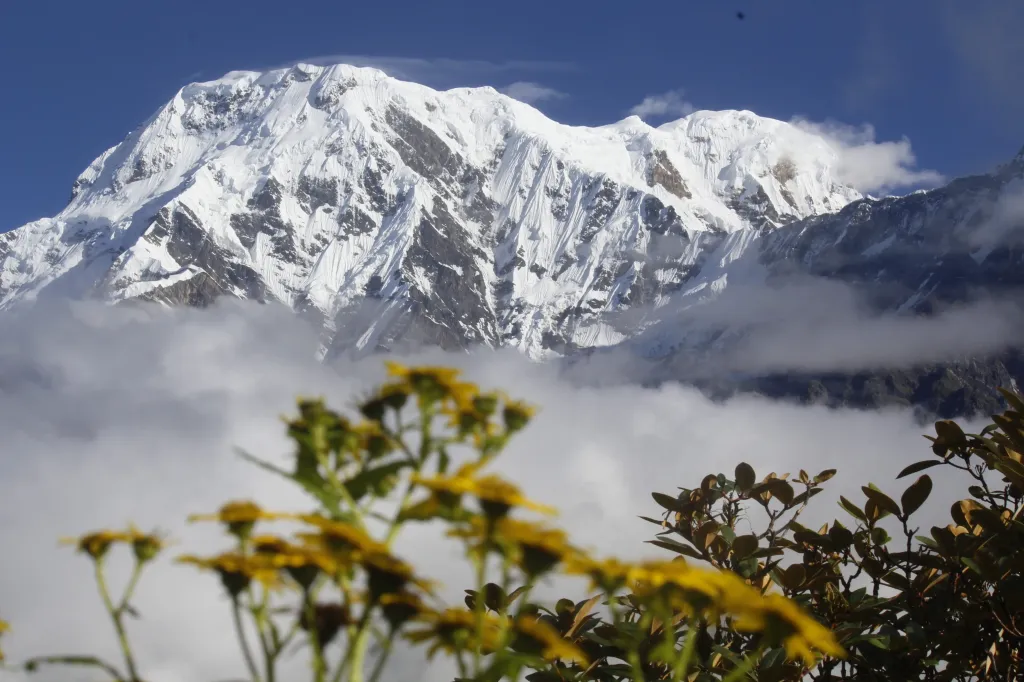
Who does these: Most trekkers in Nepal pass through Zone 2. It is the sweet spot — high enough for serious mountain views, low enough that altitude sickness is uncommon. The ABC trail spends several days here, as does the approach to Manang on the Annapurna Circuit.
The terrain: Steeper than Zone 1, more exposed. You move through rhododendron and pine forests into alpine meadows. Trail surfaces shift from stone steps to rocky dirt paths. At the higher end of this zone, you will hit your first frost on the ground.
Seasonal Breakdown
Autumn (September – November)
Temperatures range from 0°C to 15°C depending on altitude and time of day. Clear mornings, cold nights. The Annapurna massif and Machhapuchhre dominate the skyline. This is when teahouses are fullest, and the trail has the most social energy.
.webp)
Spring (March – May)
Similar temperatures, slightly warmer afternoons. The forest sections are spectacular — rhododendrons, birdsong, green everywhere. Occasional afternoon rain showers from mid-April, usually passing within an hour. Snow patches above 3,000m are possible into early March.
Winter (December – February)
This is where gear choices start to matter. Night temperatures at 3,500m can drop to -10°C. The trail above Bamboo on the ABC route may carry snow.
Teahouses operate with reduced services — some close entirely in January. You need proper cold-weather layering, not just a fleece over a t-shirt.
Monsoon (June – August)
Rain, leeches up to about 3,000m, and cloud cover that eliminates views for days at a time. The Langtang Valley is slightly better due to rain shadow effects, but still wet in the lower section.
Gear for Zone 2
Buy in Pokhara
- Mid-weight hiking boots, waterproof preferred (NPR 5,000–12,000). The terrain is rougher, and wet mornings mean damp trails. Waterproofing matters at this altitude.
- Thermal base layer, top and bottom (NPR 800–2,500/set). Merino wool is ideal; synthetic is fine. This is your second skin for cold mornings — it stays on under everything else.
- Fleece jacket (NPR 1,200–3,000). Your main warmth layer during the day. Something you can hike in without overheating.
- Rain jacket and rain pants (NPR 2,000–5,000). Even in autumn, afternoon cloud bursts happen. The rain jacket doubles as a wind layer at higher elevations.
- Warm hiking socks, wool blend, three pairs (NPR 300–800/pair). Cold feet ruin everything. Merino wool dries faster and holds warmth when damp.
- Lightweight gloves and warm hat (NPR 400–1,200 total). Mornings at 3,000m are cold in any season.
Rent in Pokhara
- Sleeping bag rated -5°C to -10°C (NPR 200/day, TESA standard rate). Teahouse blankets at this altitude are inconsistent — some lodges have decent bedding, others hand you a thin blanket that will not do the job. A rented sleeping bag is cheap insurance. Shop owners told us this is the most rented item in their stores.
- Down jacket, light (NPR 200/day, TESA rate). The most popular rental item in Nepal. Evenings and early mornings at mid-altitude are cold enough that you will wear it from about 4 PM until 9 AM.
- Trekking poles (NPR 150/day). More critical here than at low altitude — steep ascents and descents take a real toll on the knees.
- Backpack 40–50L (NPR 200/day for up to 35L, NPR 200/day for 35L+, TESA rates) if you are carrying your own gear without a porter.
- Headlamp (NPR 100/day). Early morning starts, power cuts in teahouses, and occasional night arrivals make a headlamp essential from Zone 2 upward. Bring spare batteries.
|
Item
|
Buy or Rent
|
Cost (NPR)
|
|
Mid-weight waterproof hiking boots
|
Buy
|
5,000–12,000
|
|
Thermal base layer (top + bottom)
|
Buy
|
800–2,500/set
|
|
Fleece jacket
|
Buy
|
1,200–3,000
|
|
Rain jacket + rain pants
|
Buy
|
2,000–5,000
|
|
Wool hiking socks (×3)
|
Buy
|
300–800/pair
|
|
Light gloves + warm hat
|
Buy
|
400–1,200
|
|
Sleeping bag −5°C to −10°C
|
Rent
|
200/day
|
|
Down jacket (light)
|
Rent
|
200/day
|
|
Trekking poles
|
Rent
|
150/day
|
|
Backpack 40–50L
|
Rent
|
150–200/day
|
|
Headlamp
|
Rent
|
100/day
|
|
Sleeping bag −10°C to −15°C (winter)
|
Rent
|
200/day
|
|
Gaiters (winter add)
|
Rent
|
100–150/day
|
Skip at Zone 2:
Crampons, ice axe, expedition sleeping bag, Gore-Tex pants (regular rain pants are sufficient).
Winter adjustment: Upgrade the sleeping bag to -10°C to -15°C. Add a second fleece or insulated mid-layer. The down jacket shifts from evening wear to all-day wear. Rent gaiters (NPR 100–150/day) if snow is on the trail.
Zone 3: High Altitude Treks (3,500m – 4,500m)
Treks: Annapurna Base Camp (4,130m), Mardi Himal High Camp (3,580m), EBC trail Namche to Tengboche (3,867m), Langtang Kyanjin Gompa (3,870m), Khopra Ridge, Manang approach en route to Tilicho Lake

Note: Mardi Himal High Camp sits at 3,580m — just inside Zone 3. Tilicho Lake (4,919m) begins its approach in this zone, but summit gear requirements are covered in Zone 4. EBC and Kala Patthar are Zone 4 destinations; Namche–Tengboche is listed here for the acclimatisation section of the EBC approach.
Who does these: Trekkers with some experience, or well-prepared first-timers on supported routes. Annapurna Base Camp (ABC) is the most popular destination in this zone — achievable for most people in reasonable fitness, but the altitude demands respect.
The terrain: Alpine, above treeline. Rocky moraines, scree slopes, and glacial valleys. Snow patches are common above 4,000m even in autumn. The air is noticeably thinner — you will feel it on steep sections. Trails are well-marked on popular routes but exposed to wind and weather.
Seasonal Breakdown
Autumn (September – November)
The best season for high-altitude trekking. Temperatures range from -5 °C to 10°C depending on altitude and time of day.
October at ABC means clear mornings with the Annapurna massif filling the horizon, cold but manageable nights, and dry trails. November gets colder but keeps the clarity.
Spring (March – May)
Slightly warmer than autumn at the same altitude, which matters when you are sleeping at 4,130m. Snow lingers on the trail into March, sometimes April.
Views are good in the morning, with cloud buildup in the afternoon. April at ABC can mean fresh snow overnight that melts by midday.
Winter (December – February)
Serious cold. Overnight temperatures at ABC drop to -15°C or lower. The trail may be snow-covered from Deurali onward. Teahouses at ABC and MBC (Machhapuchhre Base Camp) may close entirely in January.
This is not for casual trekkers — you need proper gear, experience reading weather, and a guide who knows the winter route. That said, early December or late February offers empty trails, snow-covered peaks, and complete silence.
Monsoon (June – August)
Technically open but practically unusable. Cloud cover, rain at lower sections, snow at upper sections, and landslide risk. Not recommended.
Gear for Zone 3
Buy in Pokhara
- Sturdy waterproof hiking boots (NPR 7,000–16,000). Snow is likely above 3,800m in any season. Your boots must be waterproof — not water-resistant, waterproof. Spend the extra NPR 2,000–3,000 for genuine waterproofing. Shop owners consistently told us that cheap boots with leaking seams are the most common gear failure they hear about.
- UV sunglasses, Category 3–4 (NPR 800–3,000). Snow glare above 4,000m causes real snow blindness. This is a medical issue, not a cosmetic one. Category 3 minimum; Category 4 for Tilicho or higher.
- Sleeping bag liner (NPR 700–1,200). Hygiene protection for rented sleeping bags — rental bags get used by hundreds of people per season — plus it adds roughly 5°C of warmth. Every shop owner we spoke to recommended buying one.
- Expedition-weight thermal base layers, two sets (NPR 1,500–3,000/set). Heavier than Zone 2 thermals. You change daily because sweat at altitude stays cold against your skin.
- Insulated gloves plus liner gloves (NPR 800–2,500). Thin liner gloves for dexterity when adjusting pack straps or taking photos; thick insulated gloves for everything else. Wind chill at 4,000m makes bare hands painful within minutes.
- Warm hat, neck gaiter, or balaclava (NPR 500–1,500). Your face and neck lose heat fast in the wind. A buff-style neck gaiter is the most versatile piece — it pulls up over your nose in the wind, drops to your neck when calm.
Rent in Pokhara
- Sleeping bag rated -10°C to -15°C (NPR 200/day standard rate; expedition-grade bags up to NPR 330/day). Inspect it carefully. Compressed down loses loft and warmth. Unzip the bag in the shop, squeeze the insulation, and check for cold spots. If the fill feels lumpy or flat, ask for another one. One shop owner told us, "I can always tell which trekkers rented a bad sleeping bag. They come back and say they froze at -3 when it was rated -10." Note on fill type: Synthetic bags are cheaper, heavier, and retain some warmth when wet. Down bags are lighter, compress better, and are warmer for the weight — but lose insulation when damp. For high-altitude trekking, down is the better choice if you can keep it dry.
- Down jacket, medium weight (NPR 200/day). At Zone 3 altitude, you wear it from late afternoon until mid-morning. It layers over your fleece and under your shell when the wind picks up.
- Gaiters (NPR 100–150/day). Keeps snow out of your boots on the upper sections — especially important in spring and winter when snow patches are more extensive.
- Backpack rain cover (NPR 50–100/day or buy for NPR 400–800). Afternoon snow and rain at altitude will soak an unprotected pack. A wet sleeping bag at 4,000m is a serious problem.
- Headlamp (NPR 100/day). Pre-dawn starts are standard at this altitude. The approach to ABC, Kyanjin Gompa, and Khopra Ridge all involve early departures before the teahouse's power comes on.
|
Item
|
Buy or Rent
|
Cost (NPR)
|
|
Sturdy waterproof hiking boots
|
Buy
|
7,000–16,000
|
|
UV sunglasses (Cat 3–4)
|
Buy
|
800–3,000
|
|
Sleeping bag liner
|
Buy
|
700–1,200
|
|
Expedition-weight thermal base layers (×2)
|
Buy
|
1,500–3,000/set
|
|
Insulated gloves + liner gloves
|
Buy
|
800–2,500
|
|
Warm hat/neck gaiter/balaclava
|
Buy
|
500–1,500
|
|
Sleeping bag −10°C to −15°C
|
Rent
|
200–330/day
|
|
Down jacket (medium)
|
Rent
|
200/day
|
|
Gaiters
|
Rent
|
100–150/day
|
|
Backpack rain cover
|
Rent / Buy
|
50–100/day · 400–800
|
|
Headlamp
|
Rent
|
100/day
|
|
Sleeping bag −15°C to −20°C (winter)
|
Rent
|
330/day
|
|
Gore-Tex waterproof pants (winter)
|
Rent
|
150/day
|
|
Microspikes (winter)
|
Rent
|
150/day
|
Skip at Zone 3 (usually):
Ice axe (unless doing a peak climb), full crampons (microspikes are sufficient for most trail conditions).
Winter adjustment: Sleeping bag steps up to -15°C to -20°C. The down jacket becomes expedition weight. Add Gore-Tex waterproof pants (rent, NPR 150/day per TESA rate). Gaiters shift from optional to mandatory. Rent microspikes (NPR 150/day) for icy trail sections.
Zone 4: Extreme Altitude (4,500m – 5,600m+)
Treks: Thorong La Pass on the Annapurna Circuit (5,416m), Everest Base Camp and Kala Patthar (5,644m), Gokyo Ri (5,357m), Tilicho Lake (4,919m), Three Passes Trek, Mera Peak Base Camp

Who does these: Experienced trekkers, or well-supported first-timers with good fitness and altitude awareness. Thorong La and EBC are the most iconic high-altitude objectives in Nepal. Thousands complete them every year — but they demand proper preparation and proper gear.
The terrain: Glacial moraine, ice, snow, scree, and exposed high passes with no shelter from wind. Above 5,000m, the air carries roughly half the oxygen of sea level. Everything takes longer — walking, thinking, recovering. Thorong La requires a 4:00 AM start from High Camp and a sustained climb through wind and snow.
Seasonal Breakdown
Autumn (September – November)
The window for high passes. October is ideal for Thorong La — snow is manageable, the trail is marked, and teahouses at High Camp and Muktinath are open.
EBC in October and November gives the clearest Everest views of the year, with overnight temperatures of -10°C to -15°C. Wind is the main adversary, not snow.
Spring (March – May)
Thorong La is crossable from late March, depending on snowfall. More snow than autumn but fewer trekkers, which means less pressure on accommodation at High Camp.
EBC in spring runs 3–5°C warmer than autumn but hazier in the afternoons. Expedition teams fill Gorak Shep and EBC from late March.
Winter (December – February)
Thorong La closes periodically. Deep snow, extreme cold (-20°C or worse at night), and elevated avalanche risk above 5,000m.

EBC is possible in December with the right gear and guide. January and February are genuinely dangerous at this altitude. Most operators do not run trips.
Monsoon (June – August)
Passes closed or extremely dangerous. Not a realistic option.
Gear for Zone 4
Buy in Pokhara
- Heavy-duty waterproof boots (NPR 10,000–25,000+). If you plan to use crampons or microspikes, the sole must be stiff enough to accept them. Test the flex in the shop — a boot that bends at the ball of the foot will not hold a crampon securely. For Thorong La in autumn, waterproof trekking boots with microspike compatibility are sufficient. For winter crossings or peak climbing, you need mountaineering boots.
- Snow goggles or Category 4 sunglasses (NPR 1,200–3,500). Full UV protection with side shields. The snow reflection on Thorong La and at EBC is intense enough to damage eyes within hours.
- Diamox plus a comprehensive first aid kit (NPR 400–1,200). Altitude sickness prevention. Diamox is available at pharmacies in Pokhara and Kathmandu without a prescription. Start 24 hours before ascending above 3,500m. Consult your doctor before the trip.
- Full 4-layer thermal system: base layer, fleece mid-layer, insulated layer, waterproof shell. Buy the base and fleece in Pokhara; rent the outer layers. Each layer has a specific function. The ability to add or remove layers as conditions shift is what keeps you comfortable — or safe.
- Heavyweight insulated gloves plus expedition mittens (NPR 1,200–3,000). Fingers freeze first. Above 5,000m in wind, your hands can go numb in minutes. Mittens are warmer because fingers share heat. Carry both: gloves for dexterity, mittens for standing on passes.
- Balaclava plus warm hat (NPR 500–1,500). Full-face protection for pass crossings. Wind on Thorong La at sunrise can take exposed skin from comfortable to frostbite risk in very little time.
- Hand and toe warmers (NPR 100–200/pair). Available in Lakeside and Thamel. Not a substitute for proper gear, but they make a real difference stuffed inside gloves or boots at 5,000m.

Rent in Pokhara
- Expedition sleeping bag rated -15°C to -20°C (NPR 330/day). Inspect this more carefully than any other rented item. At 5,000m, the difference between a well-maintained -20°C bag and a worn-out one is the difference between sleeping and shivering through the night. Check for: even loft distribution throughout, clean interior, full-length functional zipper, and no rips or patches. If the shop owner hesitates when you ask about the temperature rating, try a different shop.
- Expedition down jacket (NPR 250–400/day per market rate; TESA standard rate NPR 200/day for a standard down jacket). Full coverage, hip-length minimum. On pass-crossing days, it stays on from the moment you leave camp until you drop below the wind line.
- Microspikes or mini crampons (NPR 150/day, TESA rate). Non-negotiable for Thorong La. Ice forms on the approach overnight and does not melt until well after you have crossed. For EBC, strongly recommended for the Khumbu glacier approach.
- Gore-Tex shell jacket and pants (NPR 150/day per item, TESA rate). Windproof, waterproof, and breathable. At extreme altitude, wind is the primary threat — it drives the effective temperature far below the air temperature.
- Gaiters, waterproof (NPR 100–150/day). Deep snow on passes. Without gaiters, snow enters your boots within the first hour of a crossing.
- Headlamp with fresh batteries (NPR 100/day or buy NPR 500–800). Thorong La requires a 4:00 AM start in complete darkness. Cold at altitude drains batteries fast — carry spares.
- Four-season tent (NPR 500/day for 2-person, NPR 800/day for 3+ person, TESA rates). Only needed for camping treks or off-route expeditions. Most EBC and Circuit trekkers use teahouses throughout.
|
Item
|
Buy or Rent
|
Cost (NPR)
|
|
Heavy-duty waterproof boots
|
Buy
|
10,000–25,000+
|
|
Snow goggles / Cat 4 sunglasses
|
Buy
|
1,200–3,500
|
|
Diamox + first aid kit
|
Buy
|
400–1,200
|
|
Base + fleece layers (4-layer system)
|
Buy
|
Varies
|
|
Insulated gloves + expedition mittens
|
Buy
|
1,200–3,000
|
|
Balaclava + warm hat
|
Buy
|
500–1,500
|
|
Hand and toe warmers
|
Buy
|
100–200/pair
|
|
Expedition sleeping bag −15°C to −20°C
|
Rent
|
330/day
|
|
Expedition down jacket
|
Rent
|
200–400/day
|
|
Microspikes / mini crampons
|
Rent
|
150/day
|
|
Gore-Tex shell jacket + pants
|
Rent
|
150/day each
|
|
Waterproof gaiters
|
Rent
|
100–150/day
|
|
Headlamp + spare batteries
|
Rent / Buy
|
100/day · 500–800
|
|
4-season tent (camping treks only)
|
Rent
|
500–800/day
|
Winter adjustment: Everything goes to maximum spec. Sleeping bag: -20°C or colder. Double down on layers if possible. The question is not whether you will be cold — it is how cold. Plan for the answer to be very.
Quick-Reference Gear Checklist by Trek
Gear minimums by trek and season. 'Winter' adjustments apply December–February at altitude.
|
Gear Item
|
Poon Hill
|
ABC
|
Mardi Himal
|
Circuit
|
EBC
|
Langtang
|
|
Hiking boots
|
Light
|
Waterproof
|
Waterproof
|
Waterproof, stiff sole
|
WTPF, stiff sole
|
Waterproof
|
|
Sleeping bag
|
Not needed (Oct–Nov) / -5°C winter
|
-10°C / -15°C winter
|
-10°C / -15°C winter
|
-15°C to -20°C
|
-15°C to -20°C
|
-10°C / -15°C winter
|
|
Down jacket
|
Not needed (Oct–Nov) / Light winter
|
Medium
|
Medium
|
Expedition
|
Expedition
|
Medium
|
|
Thermal layers
|
Winter only
|
1 set
|
1 set
|
2 sets exp.
|
2 sets exp.
|
1–2 sets
|
|
Trekking poles
|
Recommended
|
Essential
|
Essential
|
Essential
|
Essential
|
Essential
|
|
Microspikes
|
No
|
Winter only
|
Winter only
|
Yes (Thorong La)
|
Recommended
|
Winter only
|
|
Gaiters
|
No
|
Winter/spring
|
Winter/spring
|
Yes
|
Recommended
|
Winter/spring
|
|
Rain gear
|
Yes
|
Yes
|
Yes
|
Yes
|
Yes
|
Yes
|
|
UV sunglasses
|
Cat 2
|
Cat 3
|
Cat 3
|
Cat 4
|
Cat 4
|
Cat 3
|
|
Sleeping bag liner
|
Optional
|
Yes
|
Yes
|
Yes
|
Yes
|
Yes
|
North Nepal Trek Recommendation
After decades of running treks across Nepal and watching what works and what does not, here is what we tell our clients:
For short and moderate-altitude treks (under 7 days, Zones 1–2): rent the trekking poles, the down jacket, and the sleeping bag. Buy the boots, base layers, socks, sunglasses, and a sleeping bag liner. This is the cheapest path to a complete kit, and at this altitude, the consequences of a slightly worn rental jacket are minor.
For longer treks, high passes, and winter (Thorong La, EBC, Three Passes, December–February): buy the down jacket and a quality sleeping bag if you plan to trek again,n or rent only from shops where you can personally inspect the loft and condition first. Do not accept the first jacket handed to you — squeeze the sleeves, check the baffles, ask whether it is a current-season bag or one carried over from previous years.
Whatever you rent, inspect it before you pay. Hygiene matters. Loft matters. The shops listed in our directory above are TESA members and expect you to check — that is how the system is meant to work.
The honest tradeoffs of renting
Renting is the right call for most trekkers most of the time — but it is not without compromises, and shop owners were straightforward about this.
Hygiene. Rental gear is aired out between uses but not laundered after every rental. Down jackets and sleeping bags pass through dozens of trekkers per season. Skin infections, fungal issues from rented boots, and lice from unwashed bedding have all been reported — uncommon, but real. A sleeping bag liner solves the bedding side; for jackets, inspect for visible staining and odour before accepting.
Fit and condition. Rental boots lose their shape. Rental sleeping bags lose loft. Rental down jackets compress over hundreds of stuff-sack cycles. The temperature rating on the tag is the original spec, not what the bag delivers after two seasons of use.
Quality variance. TESA-member shops maintain reasonable standards, but quality varies between shops and between items within the same shop. Inspect every item in the shop before paying. If something looks tired, ask for a different one — reputable shops expect this.
Why renting still wins for most trekkers? The cost savings are substantial — often NPR 20,000–60,000 across a full kit for a single trek. Renting also reduces what you pack and fly with, lowers your environmental footprint by sharing gear across many users instead of buying a single-use kit, and lets you return home with a lighter bag. For first-time trekkers, especially, renting lets you experience proper gear without committing to gear that may not suit a future style of trekking.
A Final Note on Gear and Safety
Gear is not a substitute for preparation. A trekker in an expedition sleeping bag who ignores altitude sickness symptoms is in more danger than one in a basic bag who acclimatizes properly. The most important thing you bring on a Nepal trek is not in your pack — it is the willingness to go slowly, listen to your body, and turn back if conditions demand it.

That said, at 5,000m in the dark with wind screaming over a pass, good gear gives you the margin between discomfort and danger. Do not treat it as an afterthought.
Get the boots right. Get the sleeping bag right. Layer properly for the season. And talk to the people in Pokhara who see trekkers leave and return every single day — they know things that no packing list on the internet can tell you.
Frequently Asked Questions
1. What gear do I need for Everest Base Camp?
For EBC, you need: waterproof boots with a stiff sole, an expedition sleeping bag (-15°C to -20°C), an expedition down jacket, a full 4-layer thermal system, Category 4 sunglasses or snow goggles, trekking poles, gaiters, microspikes, and a headlamp. Rent the sleeping bag, down jacket, poles, gaiters, and microspikes in Pokhara. Buy boots, base layers, sunglasses, socks, and a sleeping bag liner.
2. Is it cheaper to rent or buy trekking gear in Pokhara?
For a single trip, renting is significantly cheaper. A sleeping bag costs NPR 200–330/day to rent versus NPR 8,000–25,000 to buy. A down jacket rents for NPR 200/day (TESA rate). The rule: rent big insulation items (sleeping bag, down jacket, poles, gaiters). Buy personal-contact items (boots, socks, base layers, sunglasses).
3. What sleeping bag rating do I need for Annapurna Base Camp?
For ABC in autumn (October–November), a -10°C bag is the minimum; -15°C is recommended as a safety buffer. In winter (December–February), -15°C to -20°C is essential. Always rent one tier colder than you think you need — heavily used rental bags lose loft and perform below their rated temperature.
4. What is the TESA rental rate for trekking gear in Nepal?
TESA 2025–26 official rates: sleeping bag NPR 200/day, down jacket NPR 200/day, trekking poles (pair) NPR 150/day, rucksack up to 35L NPR 150/day, rucksack 35L+ NPR 200/day, crampons/microspikes NPR 150/day, waterproof jacket or trousers NPR 150/day each, 2-person tent NPR 500/day, 3+ person tent NPR 800/day. Confirm the shop is a TESA member before renting.
5. Do I need trekking poles for Nepal trekking?
Strongly recommended for any trek with significant elevation change. For Poon Hill, poles reduce knee strain on stone-step descents. For ABC, EBC, and the Annapurna Circuit,t they are considered essential. Rent in Pokhara for NPR 150/day (TESA rate).
6. What are the most commonly forgotten items for Nepal trekking?
Based on shop owner feedback: sleeping bag liner (hygiene and +5°C warmth), backpack rain cover (a wet sleeping bag at altitude is dangerous), UV Category 3–4 sunglasses (snow blindness is real above 3,500m), water purification, and a headlamp with spare batteries for 4 AM starts.
7. Can I rent trekking boots in Pokhara?
Yes — TESA shops rent trekking boots at NPR 300/day. However, every shop owner we interviewed recommended buying instead. Rental boots lose their shape after heavy use. A poorly fitting boot causes blisters that can end a trek. If you rent, allow time for a proper fit check and a short break-in walk. If budget is a concern, locally made Goldstar boots (NPR 2,000–3,500) are a reasonable option for low-to-mid altitude treks.
8. Do prices change by season?
TESA rates are consistent year-round. However, some member shops in Lakeside offer informal discounts during the off-season when demand drops. It is worth asking, particularly for multi-day rentals.
9. What boots should I buy in Pokhara for trekking?
Budget option: Goldstar (Nepali brand, NPR 2,000–3,500) — good grip and durability for lower-altitude terrain. Mid-to-high range: La Sportiva, Scarpa, Lowa, Zamberlan, and Salomon (USD 130–500). These offer superior waterproofing and ankle support for multi-day altitude trekking. For Thorong La or EBC, invest in a proper waterproof boot with a stiff sole.
10. How do I find a reliable gear shop in Pokhara and get a fair rental price? Start on Lakeside’s main strip (parallel to Phewa Lake), then check side lanes and nearby Damside for better base rates. Prioritize TESA-member shops (look for the certificate at the counter) because they follow standardized rental pricing. In peak seasons (October and March–April), visit 1–2 days before your trek to get the best sleeping bags and down jackets. Bargaining is normal—ask for 10–20% off, and request package discounts for multi-item or 10+ day rentals. Some TESA shops offer off-season discounts; it’s worth asking.
11. What deposit or ID do shops typically require, and how do I avoid surprises?
Expect a deposit of roughly NPR 5,000–50,000 depending on the items, or a passport photocopy. Before you pay, clarify the shop’s deposit amount, damage/cleaning clauses, and exact return time so you don’t trigger extra-day charges. Keep every receipt, tag, and checklist you sign, and return gear clean and on time to ensure a smooth refund.
12. • 11. How should I inspect rental gear in-store before accepting it?
TESA shops expect you to check—do it thoroughly:
- Sleeping bag: unzip fully; check odour, overall loft, and for cold spots by squeezing baffles; ensure zippers run smoothly and there are no tears. If you expect -5°C nights, rent a -10°C bag (go one tier colder than you think you need).
- Down jacket: look for even loft, intact baffles, working zips, and no visible staining; squeeze sleeves to feel insulation.
- Boots: try on with your socks; check lining and fit (rental boots lose shape—buying is strongly preferred).
- Poles: test the locks and tips.
- Packs and rain covers: verify zips, straps, and that the cover fits your pack.
- Headlamp: turn it on; carry or request fresh batteries. If something looks tired, ask for another item—reputable shops won’t mind.
13. When is it smarter to buy a down jacket or sleeping bag instead of renting?
Rent for short, moderate treks (under 7 days, Zones 1–2). Buy for long itineraries, high passes (Thorong La, Three Passes), and winter (Dec–Feb), where a tired rental’s reduced loft can move you from cold to unsafe. If renting a sleeping bag, always choose one tier colder than your expected temperature and inspect loft carefully. Frequent trekkers should consider buying both a quality bag and jacket.
14. Can I reserve specific gear or sizes in advance, and how far ahead should I book?
Yes. Many Lakeside shops accept reservations via WhatsApp, Facebook, or email. For peak season arrivals—or if you need specific sizes (e.g., extra-large boots, tall sleeping bags) or heavy-duty items (crampons, four-season tents)—reach out 1–2 weeks in advance. Some shops accept advance payment via bank transfer or digital wallet, and will prep a matched rental package for pickup when you arrive.
This guide is based on original research conducted by North Nepal Travel and Trek in Pokhara's Lakeside gear shops, cross-referenced with TESA 2025–26 pricing and our team's first-hand experience running treks across Nepal. Do not take this as an official guide. Your own research is recommended.
Author
Mohan Raj Bhandari
Founder/Managing director
A native of the Annapurna region, he brings over 17 years of firsthand experience leading treks across the mountains of Nepal. His deep local roots and proven guiding expertise make him a trusted authority on authentic Himalayan adventures.
Field Notes, Monthly
Receive monthly trekking updates, seasonal trail conditions, permit changes, packing
advice, and exclusive travel planning tips from our local guides.