Travel Guide Nepal 2025/2026 | Plan Your Nepal Trip
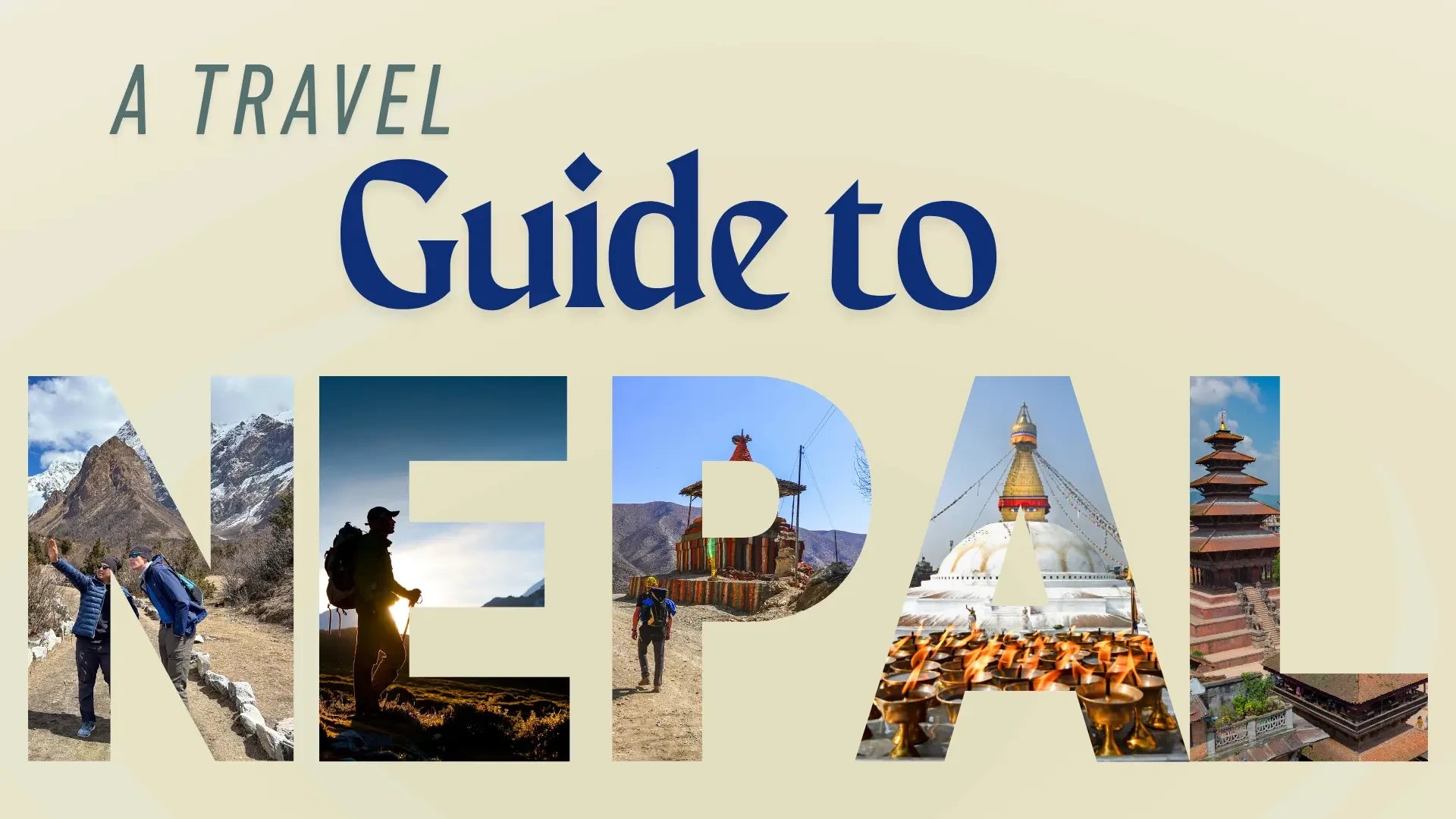
Nepal is a multilingual, multicultural, and extremely diverse nation. Situated between India and China, it is a landlocked country. Nepal is the 93rd largest country in the world with a population of 29,164,578. Divided into three geographical divisions: the Himalayan region to the North, Hilly region in mid, and Terai (plain) region to the south.
Nepal is home to the world's tallest mountain, Mt. Everest (8848.86 m), the deepest gorge in the world, Kali Gandaki Gorge, and a sanctuary to the one-horned Rhino. The birthplace of Gautam Buddha and ancient Rishis (Guru) depict our contribution to world peace, spirituality, and philosophy.
Best time to visit Nepal
Spring (March to May) and Autumn/Fall (October to December) are the best seasons and times to travel to Nepal. However, Monsoon is paradise for nature lovers, and Winter is packed with an expedition team for Everest, Ama Dablam, and other peaks.
How to get to Nepal?
Take a flight to Kathmandu at the International Tribhuwan Airport (TIA). The common airlines that fly to Nepal are Cathay Airlines, Thai Airways, Sichuan Airlines, Malaysia Airlines, Qatar Airways, Fly Dubai, and Jazeera Airlines.
Nepal Travel Visa Requirements
Most of the country gets a visa on arrival at the International Tribhuwan Airport (TIA). You require a passport with 6 months of validity and a passport-size photo.
Nepal Internal Flight and Transport
You can hire a taxi to your hotel or accommodation destination. The price depends on the distance from your hotel. However, your travel agency will drop you off at the hotel.
Accommodation (Hotel, Hostel, and Resort)
Kathmandu offers basic hotels to extremely luxurious properties. Thamel has many hotels, guest houses, and hostels. However, it can be noisy for a few. Accommodation at Lalitpur and Bhaktapur is less crowded. Want to be surrounded by nature with a mountain view? Luxury resorts and hotels are widely available on the outskirts of crowded Kathmandu.
Clothing/Dress: What to wear in Nepal?
Your packing list depends on the season and the places. You can download a packing checklist for different seasons. Be mindful and respectful of local cultures and traditions. City areas are open to Western appeals and fashion, whereas villages are quite traditional. Temple etiquette in Nepal is seriously taken.
Internet, SIM Cards & Connectivity
Get an NTC and NCELL SIM card for internet and connectivity with your family and friends back home. If you are trekking, an NTC SIM is suggested for wider network coverage in rural areas. Both provide offers DATA Package and the Call Package, choose as per your necessity. Wifi in Nepal is widely available all over the country.
Be curious and open to learning
Expect cultural shock (except for a few neighbours) as you will travel far away from home. Be curious to learn. Keep your biases away, be open to change. Do not hesitate to ask, people are extremely helpful (nodding left & right = NO, nodding up & down = Yes).
Nepali phrases for tourists
Namaste, pronounced as Nam-mas-tay, with the joining of two palms, is a common greeting etiquette. Sanchai Hunuhunxa? (How are you?) and Khana khanu vayo? (Have you had your meal?) are a few useful Nepali phrases for ice-breaking. Do not shy away from using them whenever you get a chance. And lastly, say Hajur (ha-zur) to agree on every statement they say.
Transport for Major Cities in Nepal (Kathmandu, Pokhara, and Chitwan)
The transportation network in these major cities is well interconnected via road and airways. By flight, you can reach any city within 25 minutes. Travelling by road can take longer. Kathmandu to Pokhara takes around 6 to 7 hours. Kathmandu to Chitwan takes around 5 to 6 hours. Pokhara to Chitwan takes around 5 to 6 hours. The estimated time is on a normal traffic day.
5 Things to Do in Kathmandu
-
Go for a UNESCO World Heritage Walk; Kathmandu Durbar Squares, Bhaktapur Durbar Squares, Patan Durbar Squares, Pashupatinath, Boudhanath, and Swayambhunath
-
Day hike in the outskirts of the city. Champadevi, Phulchowki, Shivapuri, and Chandragiri Hike are a few popular destinations. You can also join Hiking groups like Hike For Nepal.
-
Try Newari cuisine along with locally brewed beers. Both vegetarian and non-vegetarian cuisines are available.
-
Join the Pottery class, Thanga classes, cooking classes, and local dance classes
-
Indulge in Wall climbing, Archery, and the Central Zoo, which is Nepal's only Zoo
5 Things to Do in Pokhara
-
Go for a day hike. World Peace Stupa, Sedi-Sarangkot, Damside-Pumdikot, Kaudanda, and Methlang are a few popular routes.
-
Pokhara is an activities and adventure paradise. Try activities like Boating, Kayaking, Canyoning, Paragliding, Hot air balloon, and many more.
-
Join the Pottery class, cooking classes, and local dance classes
-
Try foods and beverages in the cafe of the vibrant lakeside
-
International Mountain Museum, Gurkha Memorial Museum, and Regional Museum if a history and culture interests you.
5 Things to Do in Chitwan
-
Go for a Jungle Safari at Chitwan National Park. You can see the Elephant, One-horned Rhino, and deer. If luck favours you, you can see the Royal Bengal Tiger
-
Spent time at Tharu cultural homestay and learn culture and cuisine of Tharu people who are native to the Terai (plain) of Nepal
-
Visit the Elephant Breeding Center and Crocodile Breeding Center to learn about the breeding process and conservation approaches practised in the breeding centers.
-
Tharu Cultural Museum and Research Center gives you more insight into the art, culture, and history of the Tharu people
-
If you are someone who enjoys learning about birds, bird watching at Chitwan National Park is sanctuary
Annapurna Region Trek Guide
1. Packages for the Annapurna Region Trek
North Nepal Travel & Trek has trek packages for Annapurna Circuit, Annapurna Base Camp, Mardi Himal, Kori trek, Mohare Danda, Namun La Pass, Hidden Lake, Teri La Pass, and more. Annapurna region.
2. Duration of the Annapurna Region Trek
The shortest trek package from the Annapurna region is the Short Annapurna Base Camp Trek – 5 Days, whereas the longest trek is the Annapurna Base Camp trek - 13 Days.
3. Difficulty Level of the Annapurna Region Trek
Trek in the Annapurna region changes from moderate to challenging. High elevation and rugged terrains make it challenging. Specifically, crossing Throng La Pass (5,416 m) and Mesokanto Pass (5,330 m) can be difficult. As the altitude increases, there is a high possibility of getting altitude sickness.
4. Accommodation in the Annapurna Region Trek
Overnight stay during the Annapurna region trek is at Teahouses. Accommodation offers basic facilities like traditional and organic food, simple rooms, wifi facility, and shared bathrooms in the upper region of Annapurna. In the lower belt of the trek, you will find good facilities.
5. Best Season of the Annapurna Region Trek
Spring and Autumn (Fall) are the best times to trek in the Annapurna region. Both season has mild climate, clear blue sky, beautiful scenery, and lively nature. But monsoon offers lush green forest and diverse vegetation compared to the spring and autumn seasons.
6. Accessibility of the Annapurna Region Trek
The trail of the Annapurna region is easily accessible. They are child-friendly friendly making them the best option for a family trek. In case of a health emergency, an easy helicopter rescue can be done, and the road is also easily accessible.
7. Food and Beverages on the Annapurna Region Trek
Like most of the treks in Nepal, you will get traditional and organic food. Daal (lentil soup), Rice, and mixed vegetables are a prime source of energy during the trek. You can easily choose between vegetarian and non-vegetarian food. Since it is easily accessible to the road network, you can also get packed food and cold beverages.
Everest Region Trek Guide
1. Packages for the Everest Region Trek
The Everest region offers a variety of trekking destinations for you. We have an 11-day trek to Everest Base Camp proximity to the world's highest mountain, Mt. Everest (Sagarmatha). Similarly, we have Gokyo trek, Three Passes trek, and Pikey Peak trek.
2. Duration of the Everest Region Trek
The shortest trek package from the Annapurna region is the Pikey Peak Trek for 5 days. The longest duration is the 17-day Everest Three Passes Trek.
3. Difficulty Level of the Everest Region Trek
The Everest region trek is considered a challenging trek because of its altitude. Rugged terrain adds more depth to the difficulty level. As you ascend, the oxygen level decreases, making you prone to altitude sickness.
4. Accommodation in the Everest Region Trek
Since EBC is a popular trekking destination for tourists, the accommodation facilities in the Everest region are very good. You will find an Irish pub to a luxury hotel like Everest View Hotel, where the view of Mt. Everest is seen from the room window. But teahouses in Gorekhsep may not provide you with the same facilities as hotels in the lower region of Everest.
5. Best Season of the Annapurna Region Trek
Spring and Autumn (Fall) are the best times to trek in the Everest region. Both season has mild climate, clear blue sky, beautiful scenery, and lively nature. But monsoon offers lush green forest and diverse vegetation compared to the spring and autumn seasons.
6. Accessibility of the Annapurna Region Trek
The Everest region is accessible by road and flight. The road goes via Salleri or Phaplu, which takes around 8 to 10 hours. It can be a hectic, long-hour ride. The easiest and costliest is a flight from Kathmandu to Lukla, which is around 45 minutes. The Everest region is not recommended for children or family treks due to altitude. But with trusted and certificied agency, you can achieve it. In case of a health emergency, a helicopter rescue can be done, which is covered by your travel insurance.
7. Food and Beverages on the Everest Region Trek
Yes, you can get food and beverages easily on the trek to the Everest region. Like always, Daal (lentil soup), rice, and vegetables are the main source of energy. Apart from these common meals, you can try the local cuisines of the Sherpa community like Tsampa (roasted barley flour), Thukpa (noodle soup), and Sherpa butter tea.
Manaslu Region Trek Guide
Manaslu with Tsum Valley is a popular trekking destination in the Manaslu region and Tsum Valley, which requires a Restricted Area Permit to enter.
1.Packages for the Manaslu Region Trek
We have 3 major trek packages for the Manaslu region. Bhimthang trek, Manaslu Circuit Trek, and Tsum Valley trek. The other two trekking itineraries are designed combining the Tsum and Manaslu region.
2. Duration of the Manaslu Region Trek
The longest trek duration is 18 days Manaslu Circuit Tsum Valley Trek, whereas the shortest trek is 8 days Tsum Valley trek.
3. Difficulty Level of the Manaslu Region Trek
The Manaslu region trek is a moderate to challenging trek. The difficult section is crossing Larkya La Pass, which is at an elevation of 5,106 m. When the trail is covered by snow, it makes it difficult to navigate. High altitude can even make it worse. Therefore, a guide is always recommended while trekking such high passes.
4. Accommodation in the Manaslu Region Trek
You will stay in the teahouse during your trekking days in the Manaslu region and the Tsum Valley. Teahouses operated by families offer basic facilities with shared rooms and bathrooms. You can get good accommodation at Samaguan, which is more advanced than other trekking stops.
5. Best Season of the Manaslu Region Trek
The Manaslu region is best during the spring and autumn seasons. The environment is clear and pristine. Wildlife and vegetation come to life. Lush green forests and vibrant blooms add beauty to the landscape of Tsum and Manaslu. However, expect more trekkers like you as it is peak season in Nepal.
6. Accessibility of the Manaslu Region Trek
The Jeep reaches up to Jaga, which is the entry point to the Tsum Valley and Manaslu region. During the monsoon, the jeep reaches Dharapani. The muddy road makes it difficult to walk. The Manaslu region is not a family-friendly trek due to the altitude and landslide zones. In case of a health emergency, a helicopter rescue can be done. Your travel insurance covers all the costs.
7. Food and Beverages on the Manaslu Region Trek
Most importantly, this to remember is Meat is not allowed in the Tsum Valley trek. As Tsum practices non-violence in the region. Daal (lentil soup), Rice, vegetables, and pickles are standard meals during the trek. This combination is full of nutrients and gives you enough energy to walk for hours and hours. You can try the local cuisines of the Tibetan-Buddhist community like Tsampa (roasted barley flour) and Thukpa.
West Nepal Trek Guide
1. Packages for the West Nepal Trek
West Nepal is a lesser-known trekking destination despite its huge possibilities. Dhorpatan-Gurjakhani trek, Upper Dolpo trek, Lower Dolpo Circuit trek, and Jumla-Rara trek are beautiful trekking destinations in the west of Nepal.
2. Duration of the West Nepal Trek
Duration depends on the trek package you choose. The longest trek is the Upper Dolpo trek for 23 days. It gives you sufficient time to explore the lesser-known destination of West Nepal in the northern belt. The shortest trek is the Dhorpatan-Gurjakhani trek; closer trails from Pokhara.
3. Accommodation in the West Nepal Trek
Accommodation facilities in the western trekking trail are basic. Most of the destinations are undergoing an upgrade due to an increase in tourists. Teahouses provide basic facilities like food, a room, and a shared bathroom. While you follow our itinerary to Upper Dolpo, you might have to camp whenever necessary.
4. Best Season of the West Nepal Trek
Like every other trekking destination, Spring and Autumn are the desired seasons. The ambiance is quite pleasant to watch. Blooming flowers add contrast to the surroundings. Festivals are around the corner, and villages are quite cheerful to observe.
5. Accessibility of the West Nepal Trek
West Nepal is quite a distance from Kathmandu. Most people do not travel because of accessibility.
6. Food and Beverages on the West Nepal Trek
Daal, rice, vegetables, and pickes are the basic meal combination. Vegetables are mostly grown with tradtional practise with optimum use of organic fertilizers. Similarly, you can get all sort of beverages. Water is available inthe most areas, however water fiter tablet is always recommended.
Langtang Trek Guide
1. Packages for the Langtang Trek
Langtang is a famous and close trekking destination from Kathmandu, known for Tibetan Buddhism and exquisite landscapes. We have the Langtang Valley trek, the Gosainkunda Trek, Tamang Heritage Trek and Helambu trek.
2. Duration of the Langtang Trek
Our itinerary in the Langtang region has 5 to 6 days of trekking. The longest trekking day is 7 days of the Ghoisikund trek, while the shortest is the Langtang Valley trek for 5 days.
3. Accommodation in the Langtang Trek
You will stay at the Teahouses during most of the days. Kyanjin Gompa in Langtang valley offers good accommodation facilities compared to other treks of Langtnag region.
4. Best Season of the Langtang Trek
Spring and Autumn are the best times to travel Langtang region. These two seasons give you a perfect climatic condition for travellers all around the world. Exploring these during monsoon and winter is highly recommended to explore the different features and landscapes of the Langtang region.
5. Accessibility of the Langtang Trek
The Langtang region is easily accessible from Kathmandu. You can travel by bus or hire a private jeep. Langtang is family family-friendly trek destination with easy road accessibility and a helicopter for emergency rescue.
6. Food and Beverages on the Langtang Trek
Like most of the trekking destinations, you will get healthy and fresh Daal, rice, and vegetables
Dhaulagiri Region Trek Guide
1. Packages for the Dhaulagiri Region Trek
The Dhaulagiri region offers some of the most challenging and remote trekking adventures in Nepal. Popular trekking packages include the Dhaulagiri Circuit Trek, French Pass Trek, and Hidden Valley Trek. These routes take you through high mountain passes, alpine landscapes, glacial valleys, and remote Magar villages with very limited human settlements en route.
2. Duration of the Dhaulagiri Region Trek
The duration depends on the trekking route you choose. The Dhaulagiri Circuit Trek, the most feared trek in Nepal, takes about 13 days. It involves trekking through difficult terrain, high passes like French Pass and windy Hidden Valley, and days of wilderness camping. Shorter variations are possible but usually require careful planning and acclimatization.
3. Accommodation in the Dhaulagiri Region Trek
Accommodation in the Dhaulagiri region is primarily camping-based. There are a few basic teahouses at the lower elevations, such as Muri and Beni, but as you ascend, the trails enter remote and uninhabited zones where you must rely on tented camps, carried and managed by your trekking team. North Nepal Trek provides full camping support with cooks, porters, and gear.
4. Best Season for the Dhaulagiri Region Trek
Spring (March–May) and Autumn (September–November) are the ideal seasons to trek in the Dhaulagiri region. These months offer clear skies, stable weather, and breathtaking views of the Dhaulagiri massif. In spring, rhododendrons bloom along the lower trails, while autumn offers crisp air and festive local ambiance in the villages.
5. Accessibility of the Dhaulagiri Region Trek
Access to the Dhaulagiri region begins with a drive or flight to Pokhara, followed by a jeep ride to Darbang or Beni, the trek’s starting point. The region is more accessible than western Nepal, but it still involves rugged roads and off-grid travel. Helicopter evacuation options are available but costly and weather-dependent.
6. Food and Beverages on the Dhaulagiri Region Trek
Meals include traditional Nepali dishes like dal bhat (rice, lentils, and vegetables), soups, noodles, and local bread. Since most of the trek is camping-based, meals are prepared fresh by trekking cooks using locally sourced or carried ingredients. Boiled and filtered water is provided, but it's advisable to carry water purification tablets for added safety, especially near glacial sources.
Kanchenjunga Region Trek Guide
1. Packages for the Kanchenjunga Region Trek
The Kanchenjunga region, located in far eastern Nepal, offers Kanchenjunga Circuit Trek, which is remote and untouched trail. These trails take you close to Mt. Kanchenjunga (8,586 m), the third-highest mountain in the world, and through culturally rich Limbu and Rai villages.
2. Duration of the Kanchenjunga Region Trek
Trek duration depends on the package you choose. The Kanchenjunga Circuit Trek typically takes 20–24 days, offering a complete loop through both base camps. Shorter options like the North Base Camp Trek or South Base Camp Trek can be done in 15–18 days. Due to the remoteness, proper acclimatization and buffer days are recommended.
3. Accommodation in the Kanchenjunga Region Trek
Accommodation along the Kanchenjunga trails is basic and limited, with small teahouses and homestays in villages like Taplejung, Ghunsa, and Yamphudin. In more remote sections, camping may be necessary. Facilities are improving slowly due to an increase in eco-tourism, but trekkers should be prepared for simple bedding, shared toilets, and limited menu options.
4. Best Season for the Kanchenjunga Region Trek
The best seasons for the Kanchenjunga trek are Spring (March–May) and Autumn (September–November). These seasons offer stable weather, clear views of the snowcapped peaks, and comfortable trekking conditions. Spring welcomes blooming wildflowers, while autumn is ideal for cultural interactions during the post-harvest festivals.
5. Accessibility of the Kanchenjunga Region Trek
The region is quite remote and requires multiple modes of transport. Treks usually begin with a flight from Kathmandu to Bhadrapur, followed by a long drive to Taplejung via Ilam or Suketar. The journey itself is scenic but time-consuming, contributing to the region’s limited tourist flow and preserved wilderness.
6. Food and Beverages on the Kanchenjunga Region Trek
Meals are mostly locally prepared, with staples like dal bhat, noodles, chapatis, and local greens. In teahouses, expect basic but hearty food options. Vegetables are organically grown, and meat is rare in higher elevations. Water is available, but trekkers should always use purification tablets or filters due to limited infrastructure.