Island Peak Climbing

Home Trekking

Peak Climbing | North Nepal Expedition

Island Peak Climbing
DESTINATION Nepal
MAX. ELEVATION 6189 meters
WALKING DISTANCE 6-7 hrs
GRADE Challenging
BEST SEASON Spring and Autumn
DURATION 12 Days
MEALS INCLUDED (Breakfast, Lunch, and Dinner
ACCOMMODATION Tea house/ Lodge/ Camping

OVERVIEW & HIGHLIGHTS

Best Time to Climb Island Peak

Assorted under the trekking peaks by Nepal Mountaineering Association (NMA), the island peak is the most popular climbing peak among others. This peak is near Mt.Everest so many climbers with a motive to mount Everest exploit this peak as a training peak. People and the local natives may recognize it by another name, Imja Tse.

This peak lies in the Sagarmatha National Park in the Solukhumbu district of eastern Nepal. With an altitude of 6189 meters, the trek to Island peak is a blend of flora and fauna and the majestic and grand views of some of the tallest mountains in the world, such as Ama Dablam, Baruntse, Lhotse, Everest, etc.

This trek traverses through several culturally enriched villages and stops at Namche Bazaar, a gateway to the Everest region for acclimatization. Moreover, this peak was used by legendary climbers Tenzing Norgay Sherpa and Edmund Hillary in 1953 as a training peak before conquering the unsurmountable Mount Everest.

The peak gained its name Island peak because it is surrounded by a great south wall of Mt.Lhotse and Mt. Nuptse to the north and Mt. Baruntse to the south. Also, the island peak can be perceived vividly from Dingboche, and when viewed from there, the peak is surrounded by an ice sea resembling an island. So, Eric Shipton named the peak "Island Peak".

The main highlight of the expedition is a 360-degree panorama of many of the highest mountains in the world, such as Nuptse (7,879m), Lhotse (8,516m), Lhotse Middle Peak (8,410m), Lhotse Shar (8,383m), and Makalu (8485m) from the top. Furthermore, the climb is a bit technical and not exceptionally hard, so this peak can be mounted easily with a little knowledge about the gear and technical ideas.

HIGHLIGHTS

  • The most famous peak among the trekking peaks, assorted by the Nepal Mountaineering Association.
  • Indulge in the outstanding view of the Himalayas like Mt.Lhotse, Mt. Nuptse, etc.
  • Feel the culturally and religiously enriched Sherpa villages such as Namche Bazaar, Tengboche, etc.
  • Explore the unspoiled part of the Khumbu region, lush vegetation, waterfalls, and Khumbu glaciers.

Jeewan Tamang
Itinerary review by

Jeewan Tamang, Trekking Guide / Mountain Climber / Trail Runner

Since founding North Nepal Trek in 2015, Mohan Raj Bhandari has kept a close eye on the Island Peak Climb, and Jeewan Tamang shares firsthand insight from personally leading this trek, so you know exactly what to expect before you go.

Island Peak Climb Itinerary

Toggle all
Day 1

Fly from Kathmandu to Lukla (2860 m) and trek to Phakding (2610 m)

FLIGHT 35 minutes
HIGHEST ALT. 2850 m
DURATION 4-5 hours
Distance
DISTANCE 6.2 Km

We take an early morning flight to Lukla from Kathmandu. A 35-minute flight will grant us an alluring and enchanting view of the Himalayas, like Mt. Everest. After landing in Lukla, we continued our journey to Phakding and spent the night there.

On our route, we pass through several small settlements and villages, pine forests, and Rhododendron-filled hills. Also, we traverse through rivers and waterfalls of the Khumbu region. We have to walk for 2-3 hours, which is relatively straightforward. We will stay for a night in Phakding.

Day 2

Trek from Phakding to Namche Bazaar (3440 m)

HIGHEST ALT. 3440 m
DURATION 6-7 hours
Distance
DISTANCE 9.4 Km

After an early breakfast, we start our trek towards Namche Bazaar. Enjoying the spellbinding views of the grand Himalayas, waterfalls, and lush green vegetation, we will walk forward to reach the Sagarmatha National Park. We will keep up our hike only after showing our permits and documents to the officials.

After that, the scenery gets even more alluring because of the exotic floras and fauna inside the national park. Moreover, this trek is also used for the Everest Base Camp trek, so we may meet many trekkers along the way. Finally, after crossing the Hillary Suspension Bridge, we will be welcomed by a famed world village, Namche Bazaar. We will spend the night there.

Day 3

Acclimatization at Namche Bazaar (3440 m)

HIGHEST ALT. 3440 m
DURATION 2-3 hours

On our third day, we will rest for acclimatization purposes as it is vital to adjust our heart and lungs to higher altitudes to avoid altitude sickness. We will hike towards the nearest viewpoint, called the Syangboche viewpoint, to further adapt our bodies.

The landscapes and the panoramas of the Himalayas seen from the top will take our breath away. After that, we can indulge in the local culture, taste Sherpas's unique cuisines, and explore the place. This village is also known as a gateway to the Everest region. After wandering around the valley, we will spend our night in a lodge.

Day 4

Trek from Namche Bazaar to Tengboche (3867 m)

HIGHEST ALT. 3867 m
DURATION 5-6 hours
Distance
DISTANCE 9.2 Km

As usual, our day commences with a nice cup of tea and breakfast towards Tengboche. Leaving behind monasteries, Chortens, and Gompas, along with a scenic view of the Himalayas, we pass through the Mong-La pass situated at 3975 meters to reach Tengboche.

Similarly, the top of the pass allows us to perceive the astounding vistas of the high Himalayas, such as Mount Everest, Lhotse, and Aba Dablam. Tengboche carries a religious significance for the Sherpa community because of the Tengboche Monastery, one of the oldest monasteries in the Khumbu region. Moreover, we get a peek at the Buddhist culture and various rituals practised by the locals. We will stay overnight in this place.

Day 5

Trek from Tengboche to Dingboche (4410 m)

HIGHEST ALT. 4410 m
DURATION 5-6 hours
Distance
DISTANCE 9 Km

As on any other normal day, we will get up early to observe the beautiful sunrise view from the Tengboche Monastery. After breakfast, we will give continuity to our expedition by indulging in the spellbinding views of mountains, pasturelands, and landscapes. After crossing the Imja River, we will be welcomed by a gorgeous view of an Island Peak. 

Upon reaching Dingboche, we will realize why the peak is called the Island Peak, as we can witness the peak surrounded by the Himalayas from four sides. We will spend the night in a lodge in Dingboche.

Day 6

Trek from Dingboche to Island Base Camp (5100 m)

HIGHEST ALT. 5100 m
DURATION 5 hours
Distance
DISTANCE 5 Km

After an early breakfast, we hike further up towards Island Base Camp. The terrains and paths are rough, so we must watch our steps more carefully. En route, we will be encompassed with beautiful vistas of some of the highest mountains of the Everest region, like Lhotse, Island Peak, Nuptse, etc. Moreover, we are soaring towards the 5000m plus altitudes, so we must keenly pay attention to our health. Finally, after reaching the Island Base Camp, we will set up a tent to spend the night.

Day 7

Acclimatization and Preparation at Island Base Camp (5100 m)

HIGHEST ALT. 5100 m

Our 7th day is a free day partitioned for the acclimatization purpose. Since we have ascended the 5000m plus altitude, there is a slight chance of altitude sickness. So, we adjust ourselves in the base camp. Furthermore, our guides will brief us about the usage of tools and gears needed to mount the peak. They will interpret the possible dangers ahead and train us to use the equipment efficiently. Moreover, we can opt to explore the nearby lake called Imja lake. We will eagerly wait for a summit day and spend the night in a tent.

Day 8

Climb to Island Peak summit (6189 m) and back to Island Base Camp

HIGHEST ALT. 6189 m
DURATION 9-10 hours

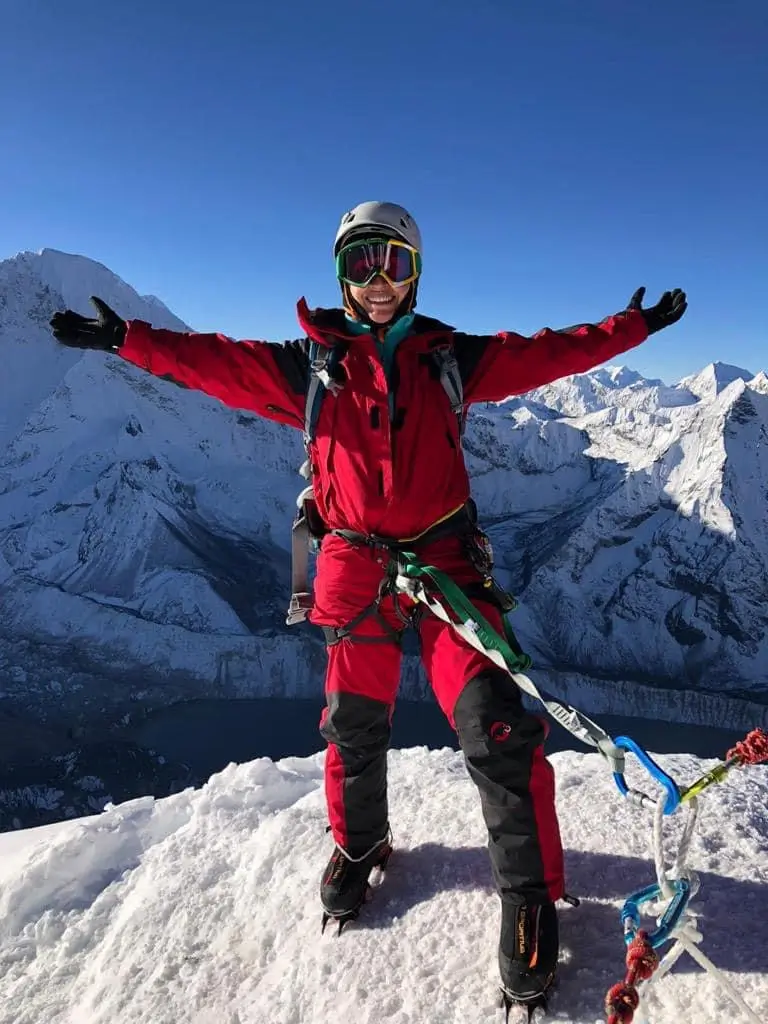
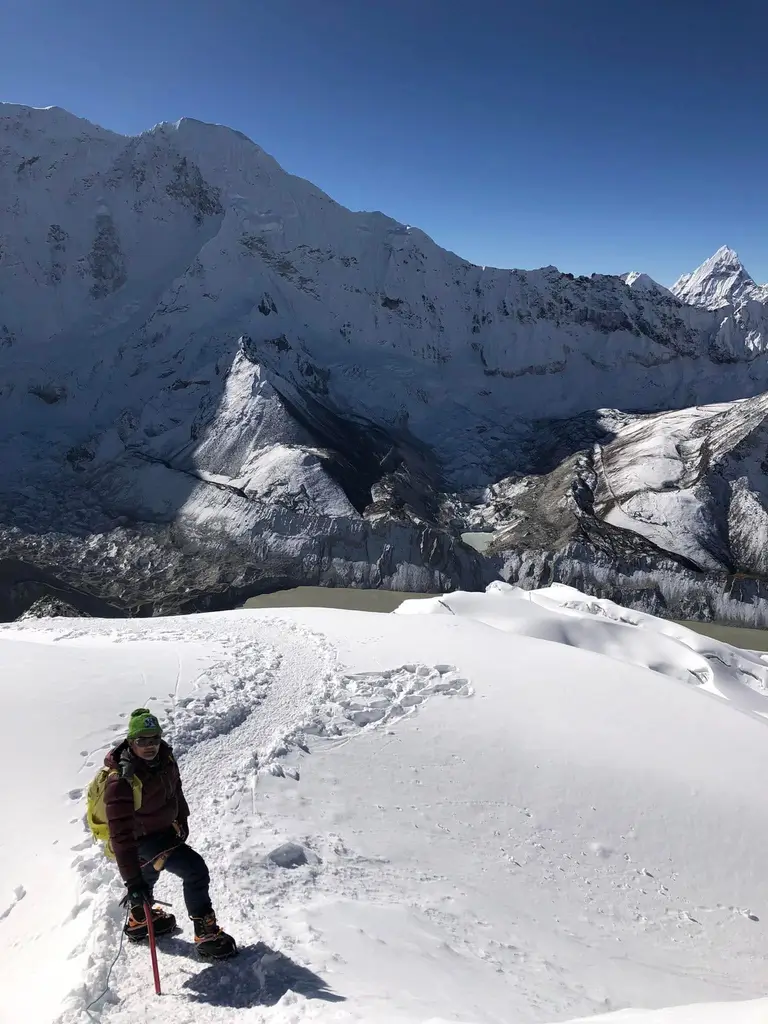
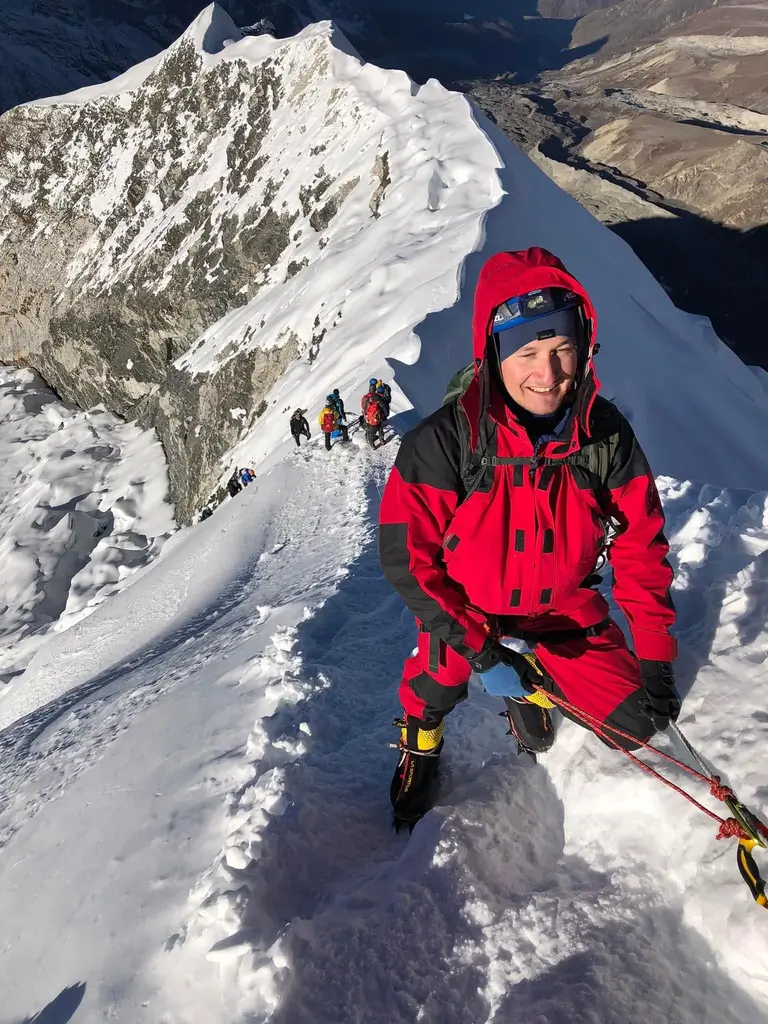
The most exciting, awaited, and auspicious day to summit the top has finally fallen to our lap. We start our ascension very early in the morning. The paths are steep, rough, and technical in some places. Some areas have crevices and glaciers where we may require a ladder and a rope to cross the crack. Fear not, as our experienced mountaineers will guide you throughout the journey and keep you safe from any harm that may befall you.

After a strenuous climb to the summit, we will be embraced by a heart-stopping view of mountains such as Mt. Ama Dablam (6812 m), Mt. Lhotse (8516 m), Mt. Nuptse (7861 m), and Mt. Baruntse (7129 m). This is the moment when we make an unforgettable memory. This is when an individual will feel all their struggle and difficulties vindicated along the way is worth every penny. With a proud heart and head held high, we descend toward Island Base Camp and spend the night there.

Day 9

Trek from Island Base Camp to Dingboche (4410 m)

HIGHEST ALT. 4410 m
DURATION 5-6 hours
Distance
DISTANCE 5 Km

After a historic achievement for ourselves, we descend back towards Dingboche, tracing the same previous route. Leaving behind the Imja Tse peak, and indulging in the beautiful scenery, we will descend towards Dingboche. We may opt to celebrate the achievement with the locals and may even try locally prepared alcoholic beverages. We will stay overnight in Dingboche.

Day 10

Trek from Dingboche to Namche Bazaar (3440 m)

HIGHEST ALT. 3440 m
DURATION 7-8 hours
Distance
DISTANCE 14 Km

After an early breakfast, we head back towards Namche Bazaar. We will pass through religiously and culturally enriched Tengboche. The mesmerizing view along the way will become pretty standard up to this day. Finally, we will halt and stay overnight at Namche Bazaar. If we have spare time, we can explore the place and buy souvenirs for our loved one

Day 11

Trek from Namche Bazaar to Lukla Village (2860 m)

HIGHEST ALT. 2860 m
DURATION 9-10 hours
Distance
DISTANCE 13.5 Km

After an early breakfast, we descend further down towards Lukla, where we will spend the night. We will observe breathtaking views of some of the peaks of the Everest region, such as Cho Oyu, Kongde Peak, etc. We will spend our night in Lukla Village.

Day 12

Fly from Lukla to Kathmandu

FLIGHT 35 minutes

After a heartwarming trek and climbing to the beautiful Himalayas, we will catch an early flight to Kathmandu from Lukla. It is just a 35-minute flight, so we have copious spare time. We may explore the Kathmandu Valley as it has a handful of attractions prepared for visitors.

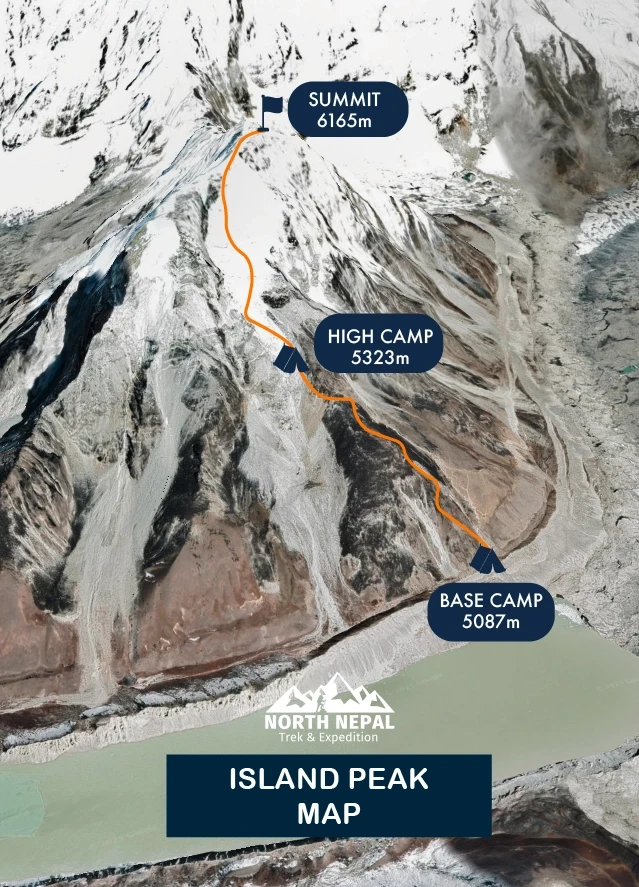
Island Peak Trek Map

Island Peak Trek Map

WHAT'S INCLUDED & EXCLUDED

  • Schedule flight tickets for the Kathmandu-Lukla-Kathmandu flight
  • Domestic airport transfers and taxes.
  • All necessary paperwork and trekking permits (Climbing Permit, Sagarmatha National Park permit, Local Area Permit, and TIMS)
  • All government and local taxes
  • An experienced English-speaking Trekking/expedition Guide (Govt. registered), Cook, and Assistant Climbing Guide (4 trekkers: 1 assistant guide).
  • Porters to carry luggage (2:1 ratio), 1 Porter for 2 Trekkers 
  • High-quality North Face or Mountain Hardware or similar sleeping tent, kitchen, dining, toilet
  • Tents, mattresses, and kitchen equipment during the climb
  • Full meals (Breakfast, Lunch, and Dinner) followed by a cup of Tea/Coffee during the trek and climb.
  • Safe Drinking water
  • One-hour Trekker's Massage upon completion of the trek
  • All mountain accommodation (Last night private room with independent bathroom/hot showers in Kathmandu.)
  • A comprehensive medical kit
  • Company T-Shirt and Brochure
  • Trekking equipment, such as a down-filled sleeping bag and duffel bag
  • Farewell dinner in an authentic Nepali Restaurant
  • Offred price includes our official service charges, government charges, and all taxes and vat. Except for the above amount, there are not any hidden costs charged by us.
  • Accommodation and meals in Kathmandu
  • $500 deposit for Garbage to NMA ( Fully refunded in condition )
  • Expenses arising out of various/unforeseen situations like natural disasters, political disturbance, strikes, change in government regulations
  • Personal Climbing Gear ( like Climbing Boot, Crampons, Ice Axe, Jummer, Harness set, Carabineer, Figure 8, Tap Sling )
  • Personal climbing guide, if requested
  • Deserts (cakes, bakes, and pies)
  • Any packed food and snacks
  • Additional Hot Drinks/Bottled drinks
  • Boiled/mineral water
  • Electronic device re-charge/Hot shower/Wi-Fi
  • Personal nature & Laundry expenses
  • Travel insurance and evacuation insurance (strongly recommended)
  • Tips and Gratitude to the trekking crew
  • Anything that is not mentioned in the 'Cost Included' section

Complete Guide to the Island Peak Climb

Toggle all

Best Time to Climb Island Peak

Like most treks, Spring and Autumn are considered the prime seasons to climb Island Peak. From March to May and September to November, the weather is favorable with clear skies and crystal-clear mountain views, though the routes can be more crowded during these months.

The trails see fewer climbers during the monsoon and winter seasons. The routes are muddy and slippery due to rainfall, and the chance of sudden weather change is high. Fog can obscure the mountain views, and winter temperatures drop well below freezing, raising the risk of cold-related issues such as frostbite.

How Hard is Island Peak Climbing?

Unlike Mera Peak, climbing Island Peak requires some technical climbing skills. This climb isn't suited to beginners; only those with prior experience trekking above 5,000 m should attempt this summit. Because of the crevasses and glaciers along the route, climbing equipment like ropes and ladders is required.

Basic training in climbing and using the required gear is essential. Since we climb above 6,000 m, the risk of Acute Mountain Sickness (AMS) is high, so it's important to acclimatize well on rest days.

Most importantly, climb with experienced guides and porters and follow their instructions closely. With a professional mountaineering guide, this peak can be summited successfully.

Permits Required for Climbing Island Peak

The cost of the climbing permit varies according to the season. Climbers must pay US$ 250 per person during the spring season (March to May), while the price drops to US$ 125 during the autumn season (September to November). During winter, climbers pay just US$ 70.

In addition, climbers are charged US$ 60 per person as a local area permit fee, along with the Sagarmatha National Park entry fee and TIMS card fee. A friendly reminder: travel insurance is required to secure these permits.

Why Trek With Us - Island Peak Climb

We are a 100% locally owned and Pokhara-based trekking and expedition company, so every rupee you spend stays within the community that guides you up the mountain.

We are officially licensed and registered with the Trekking Agencies' Association of Nepal (TAAN), giving you full peace of mind that your climb is organized to professional standards.

Our climbing guides are experienced, NMA-trained, and well-versed in the technical demands of Island Peak's crevasses and glaciers, ensuring your safety from Lukla all the way to the summit.

We communicate honestly about weather, altitude, and route conditions rather than making promises we can't keep, so you always know exactly what to expect.

We are proud of our top-rated client satisfaction, built one honest, well-organized climb at a time.

Live Trail Update of Island Peak Climbing Live

Last updated: 1 Week Ago

Updated: Jeewan Tamang

Trail Status Trails Open & In Good Condition
Weather Clear Mornings, Building Clouds
Permits Permits Available, Book Early
Group Size Small Groups, Limited Slots

Trekker Alerts

Spring (Mar-May) and Autumn (Sep-Nov) are the best seasons to climb Island Peak - book early to secure your permit and guide.

Reviews From The Trail

Hear it from those who've walked with us.


Safety Policy

NMA Permit & Licensed Guide Requirement

Island Peak is an NMA-classified trekking peak, so every climb requires a valid climbing permit and a licensed climbing guide. We handle all permit paperwork, including the Sagarmatha National Park entry fee, TIMS card, and local area permit, so you can focus on the climb itself.

Technical Climbing Gear & Training

Island Peak involves crevasses and glacier travel, so ropes, ladders, crampons, and an ice axe are required. We provide a pre-climb briefing and hands-on training at base camp before the summit push, and prior high-altitude trekking experience above 5,000 m is required.

Altitude Sickness & Acclimatization Protocol

Climbing above 6,000 m carries a high risk of Acute Mountain Sickness (AMS). Our itinerary is built around Namche Bazaar and other acclimatization stops, and our guides monitor every climber closely and will adjust or turn back the ascent if symptoms appear.

Mandatory Travel Insurance

Travel insurance covering high-altitude climbing and emergency helicopter evacuation up to at least 6,200 m is mandatory for the Island Peak climb. Please arrange your policy before departure and share the details with us so we can act quickly in case of an emergency.


Island Peak Climb Departure Date for 2026/2027

Secure the Island Peak Climb for 2026/2027 before the seat gets fully booked.


Terms, Conditions & Feasibility

  1. All bookings are made with North Nepal Travel & Trek Pvt. Ltd Registered Company Number 162883/073/074 (hereafter referred to as The Company) whose office is in Lakeside, Pokhara-6, Nepal.
  2. The term "trip" used in this website and booking conditions refers to all itineraries described on this website including those which might otherwise be known as walking, tours, trekking trips, sightseeing, climbing, mountaineering, expeditions, or holidays.
  3. We accept your last-minute booking as well, but full payment of the total tour cost should be made in advance if necessary or can be paid fully on arrival day. See More 

Frequently Asked Questions

General Information

1. What is Island Peak Climbing in Nepal?

Island Peak, also known as Imja Tse, is a 6,189-meter trekking peak in Nepal’s Khumbu region. The climb combines the Everest-region trekking experience with a genuine high-altitude mountaineering section involving glaciers, fixed ropes and ladders.

2. How difficult is Island Peak Climbing?

Island Peak is graded Challenging. Previous high-altitude trekking experience is strongly recommended, along with basic training in the use of crampons, an ice axe, harness and ascender. The climb involves steep glacier terrain and demanding summit-day conditions.

3. Do I need previous mountaineering experience to climb Island Peak?

You don't need to be an advanced mountaineer, but previous trekking experience above 5,000 meters and basic climbing training are strongly recommended. The expedition includes preparation and climbing-equipment training before the summit attempt.

Cultural Insights

1. What cultural experiences are included on the Island Peak route?

The route passes through Sherpa settlements including Namche Bazaar, Tengboche and Dingboche. You can experience Sherpa Buddhist culture, visit Tengboche Monastery, and observe traditional village life in the Khumbu.

2. Why is Island Peak called Island Peak?

Island Peak is locally known as Imja Tse. The name "Island Peak" comes from its appearance when viewed from Dingboche, where the mountain seems to rise like an island among the surrounding peaks and glaciers.

Packing Gear & Rental

1. What climbing equipment do I need for Island Peak?

Essential personal climbing equipment includes climbing boots, crampons, ice axe, jumar/ascender, harness, carabiners, figure-eight device and tape sling. The expedition provides camping and group equipment, while personal climbing gear needs to be arranged separately.

2. Can I rent climbing equipment in Kathmandu?

Yes. Climbing equipment can be rented in Kathmandu before departure. Make sure boots, crampons, harnesses and other technical equipment fit properly and are checked before you leave Kathmandu.

Payments & Extra Costs

1. How much does the Island Peak Climbing package cost?

The listed price starts at USD 1,899 per person for a solo booking. Published group rates decrease according to group size, starting from USD 1,800 for two people and reaching USD 1,500 per person for larger groups.

2. What additional expenses should I budget for?

Personal climbing equipment, travel and evacuation insurance, tips, Wi-Fi, hot showers, charging, additional drinks, snacks, laundry and personal expenses are excluded. The package also lists a USD 500 NMA garbage deposit, subject to the stated refund conditions.

Booking & Company Policies

1. Is Island Peak available as a private expedition?

Yes. The expedition is offered as a Private Trip, with lower per-person rates for larger groups. The climbing team includes a government-registered English-speaking guide, cook and assistant climbing guide according to group size.

Weather & Seasons

1. When is the best time to climb Island Peak?

The main climbing seasons are spring, from March to May, and autumn, from September to November. These periods generally provide better climbing conditions and clearer Himalayan views. Winter is much colder, while monsoon can bring wet trails and reduced visibility.

Health & Safety

1. Is altitude sickness a concern on Island Peak?

Yes. The summit reaches 6,189 meters, making altitude a serious consideration. The itinerary includes acclimatization at Namche Bazaar and a dedicated preparation and acclimatization day at Island Peak Base Camp, approximately 5,100 meters. Any symptoms of altitude sickness should be reported to the guide immediately.

2. Is travel and evacuation insurance required for Island Peak?

Travel and evacuation insurance are strongly recommended. Because Island Peak exceeds 6,000 meters, your policy should specifically cover high-altitude mountaineering and emergency evacuation. A standard travel policy may not provide sufficient coverage.

Trekking Permits & Logistics

1. What permits are required for Island Peak Climbing?

The package includes the required Island Peak climbing permit, Sagarmatha National Park permit, Local Area Permit and TIMS, together with applicable government and local documentation. The published climbing-permit rates vary by season.

Transportation

1. How do I get to Island Peak Base Camp?

The expedition begins with a flight from Kathmandu to Lukla, followed by trekking through Phakding, Namche Bazaar, Tengboche and Dingboche before reaching Island Peak Base Camp. After the climb, you return through the Khumbu to Lukla and fly back to Kathmandu.

Accommodation & Food

1. What type of accommodation is available during Island Peak Climbing?

Lower sections of the route use teahouses and lodges in villages such as Phakding, Namche, Tengboche and Dingboche. At Island Peak Base Camp and during the climbing section, accommodation is provided in expedition tents.

2. What food is included during the Island Peak expedition?

Breakfast, lunch and dinner are provided throughout the trek and climbing period, with tea or coffee served with meals. During the camping section, the expedition kitchen team prepares the meals. Personal snacks, desserts and additional drinks are not included.

Wifi/Network and Communication

1. Is Wi-Fi and mobile connectivity available during Island Peak Climbing?

Connectivity becomes less reliable as you move above Namche and into the higher valleys. Wi-Fi and device charging may be available at some lodges for an additional fee, but continuous internet access should not be expected, particularly at higher camps.

Wildlife & Nature

1. What mountains and landscapes can I see during Island Peak Climbing?

The route passes through Sagarmatha National Park, with rhododendron and pine forests, waterfalls, glaciers and high-altitude Himalayan landscapes. From the upper route and summit, you can see major peaks including Lhotse, Nuptse, Ama Dablam, Baruntse and Makalu, depending on weather and visibility.

PRIVATE TRIP

12 Days

Price Start from USD 2500 pp

USD 1899 pp pp

We Offer Group Discount

No. of PersonsPrice per Person
1 Pax US$ $ 1899
2 Paxes US$ $ 1800
3 - 6 Paxes US$ $ 1750
7 - 12 Paxes US$ $ 1600
12 - 25 Paxes US$ $ 1500
RECOGNISED · CERTIFIED · TRUSTED

We are associated with