Annapurna Circuit Trek (12 Days) — Cost, Manang, Thorong La & 2026 Guide

Home Trekking

Annapurna Region

Annapurna Circuit Trek (12 Days) — Cost, Manang, Thorong La & 2026 Guide
DESTINATION Nepal
MAX. ELEVATION 5,416 m
WALKING DISTANCE 5-6 hrs
GRADE Moderate
BEST SEASON March-May / August-November
DURATION 12 Days
MEALS INCLUDED Breakfast, Lunch & Dinner
ACCOMMODATION Hotel, Lodge and Teahouse

OVERVIEW & HIGHLIGHTS

Overview

The Annapurna Circuit trek is a 12-day guided loop from Pokhara through the Manang valley and over the Thorong La Pass (5,416 m) to Muktinath, finishing with sunrise at Poon Hill. It's run by North Nepal Travel & Trek, a Pokhara-based, TAAN-registered operator, and the 2026 price starts at USD 780 per person in a group (USD 850 solo), including a licensed guide, both permits, transport, teahouse lodging and three meals a day.

Since 1 April 2023, solo and independent trekking is not allowed on this route — a licensed guide is mandatory, and you need two permits: the ACAP (NPR 3,000, about USD 25) and the TIMS card. We arrange the guide and both permits for you. Most trekkers book 2–3 months ahead for spring or autumn departures.

Tilicho Lake in winter

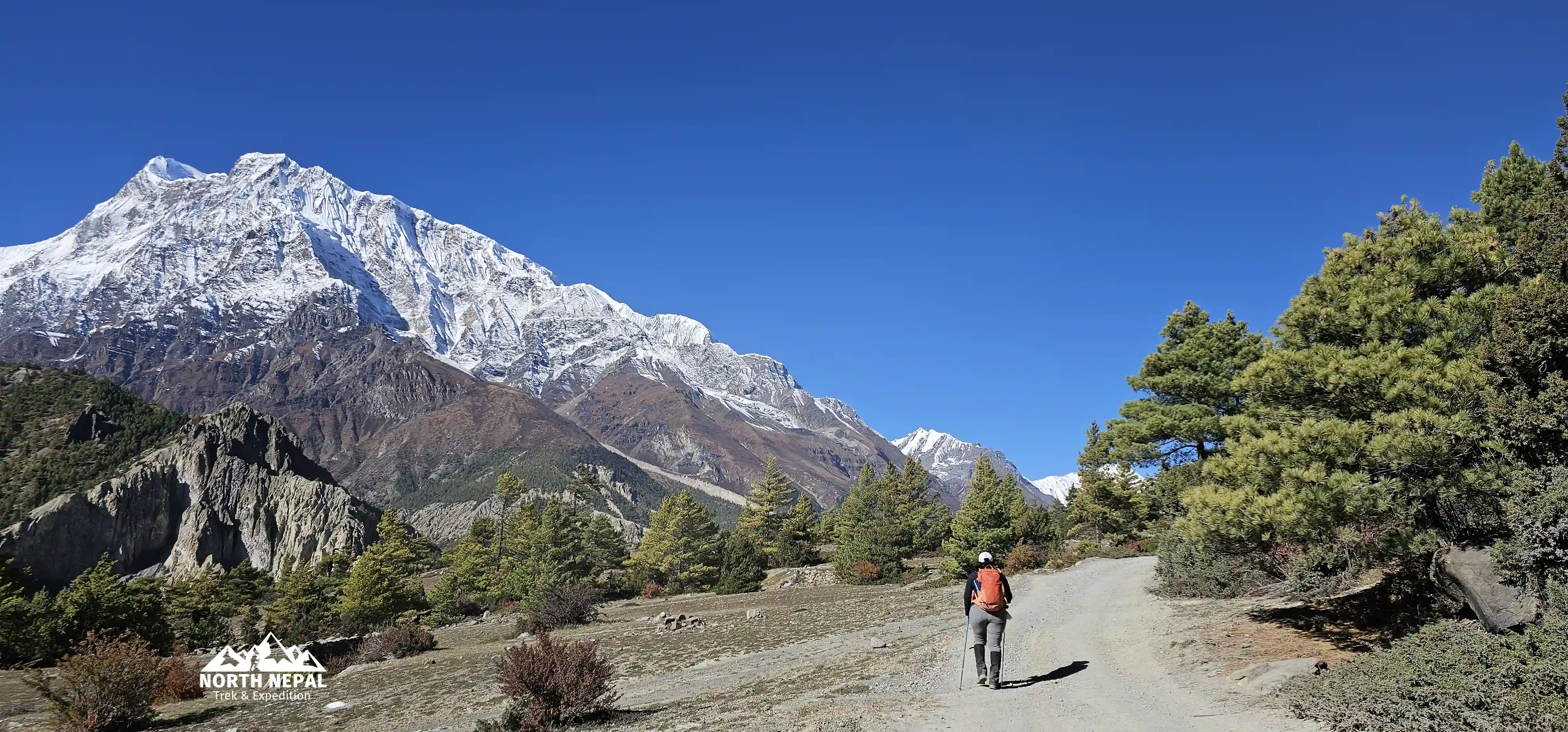
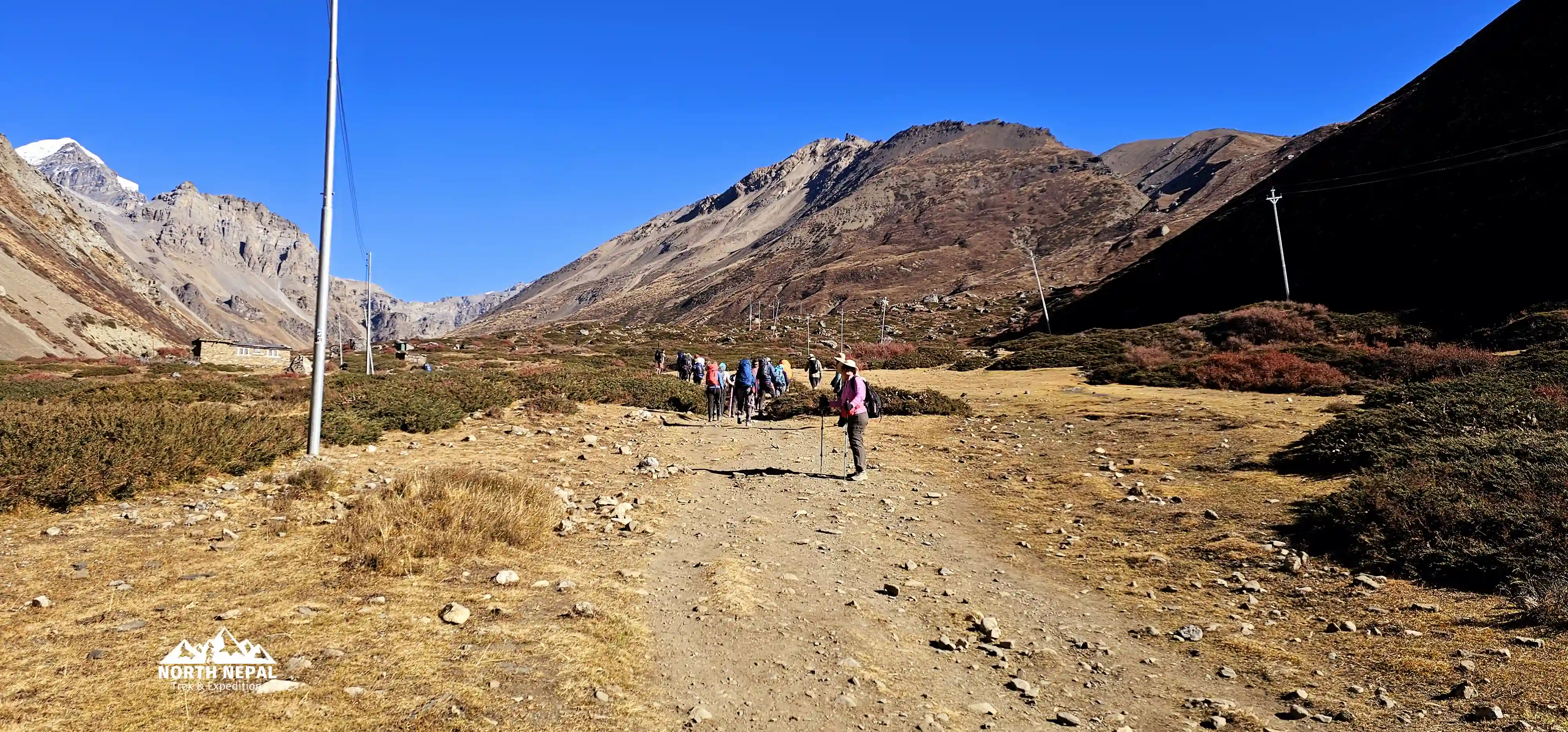
The Annapurna Circuit Trek is more than just a trek; it’s a journey through diverse landscapes, from lush forests and fields to rocky ridges. You’ll traverse human cultural settlements, experiencing various cultures unique to the Annapurna region. This trek offers a chance to discover naturally exotic places that will leave you in awe of nature’s beauty.

You will have the opportunity to explore the Annapurna Range, sacred Muktinath, and mesmerizing Poonhill, each giving you a unique experience. The most remarkable part of the trek is the walk across the Thorang La Pass, which is one of the highest mountain trekking passes in the world. The gratification after crossing this pass is beyond joy. By the end of the trek, the Annapurna Circuit Trek will give you a deep appreciation for the natural and cultural richness of the Annapurna region.

If you prefer a comfortable visit to Muktinath Temple, a 2-hour Helicopter Tour to Muktinath is a cut-through way to the famous Buddhist-Hindu pilgrimage. Download the all-season Annapurna Circuit packing checklist before the Trek.

Highlights of Annapurna Circuit Trek

  • Cross Thorung La Pass at 5,416m - the highest elevation in the trek
  • Spot snow leopards, red pandas, blue sheep, and other rare Himalayan wildlife
  • Visit Lupra village with just 20-25 houses and the ancient Bon religion culture
  • Walk through traditional villages like Manang, Ghyaru, and Pisang with old monasteries
  • Watch the sunrise over the snow peaks from the Poon Hill viewpoint
  • Hike to Ice Lake at 4,600m for a high-altitude adventure
  • Rest day in Manang exploring mud houses, prayer walls, and mountain views
Mohan Raj Bhandari
Itinerary review by

Mohan Raj Bhandari, Founder/Managing director

Annapurna Circuit trek route and pacing are drawn from 12+ years guiding the Annapurna region. Mohan founded North Nepal Trek in 2015; Jiwan has led over 20 Annapurna Circuit treks since 2016.

Annapurna Circuit Trek Itinerary

Toggle all
Day 1

Pokhara/Kathmandu to Dharapani (1,860 m | 6102 ft)

HIGHEST ALT.  1860 m | 6102 ft

Drive From Pokhara:
On our first day of the Annapurna Circuit trek, we start from Pokhara (820 m | 2690 ft), after having breakfast. We set off early, departing Lakeside and reaching the Prithvi bus park by 6:30 am. Availability of buses to Besisahar is limited, with only one or two morning options, so we'll book tickets in the early days. After a 15-minute drive, we arrive at Prithvi Chowk Bus Park. Our journey continues on a bus bound for Besisahar. The route offers captivating scenery during the approximately 4-hour drive from Prithvi Chowk to Besisahar, covering a total distance of 105 km.

Drive From Kathmandu:
Starting from Kathmandu (1400 m | 4594 ft), we catch an early bus to Besisahar from Balaju Bus Park at 7:00 AM. This picturesque ride treats us to stunning mountain vistas and follows alongside the Trishuli River. The journey lasts around 5 hours and 30 minutes, spanning a total distance of 180 km via Prithvi Highway.

Regardless of whether we start from Kathmandu or Pokhara, the route remains the same after arriving at Besisahar (760 m | 2494 ft). Upon reaching Besisahar, we stop for lunch before boarding a Jeep to Dharapani Village (1,860 m | 6102 ft). The trip provides breathtaking views of the Marsyangdi River, cascading waterfalls from towering cliffs, a tunnel to drive through, and the dynamic Marsyangdi River hydropower installations. The journey from Besisahar to Dharapani lasts approximately 6 hours and 30 minutes to 7 hours, as the road is rugged and unpaved. We spend the night in Dharapani.

Day 2

Trek from Dharapani (1,860 m | 6102 ft) to Chame (2670 m | 8670 ft)

HIGHEST ALT. 2670 m | 8670 ft
DURATION 5 - 6 hrs
Distance
DISTANCE ~ 15.5 km

After an early breakfast, we set off for Chame. The trek duration is 4-5 hours, covering a distance of around 15.5 km. The trek is a relatively easy walk through misty landscapes, pine forests, and charming villages.

A refreshing break awaits in Timang (2,750m), where we have lunch surrounded by alpine scenery. Continuing, we head to Koto (2,600m), relishing the journey's beauty. Upon reaching Chame, we delight in a delicious meal and unwind with a comforting warm tea and coffee. Overnight stay in Chame. 

Day 3

Chame (2650 m | 8695 ft) to Upper Pisang (3356 m | 11010 ft)

HIGHEST ALT. 3356 m
DURATION 5 - 6 hrs
Distance
DISTANCE ~ 16 km

Following breakfast at the lodge, we commence our third day of the Annapurna Circuit Trek. Our path leads us through a dense pine forest along a narrow trail, transitioning to a steep rocky ascent. Along the way, we traverse a semi-tunnel carved into the hillside, with the Marsyangdi River always in sight.

Breakfast (omelette, bread, roasted potatoes, tea) in tha mountain Photo: Breakfast (omelette, bread, roasted potatoes, tea) in the mountain.

Passing through Telekhu and Bhrathang, we cross a bridge to reach the southern bank of the Marsyangdi River. Bhrathang is renowned for its Apple Garden. After a lunch break at Dhikur Pokhari, we continue on a gentle ascent to the north, with the majestic Annapurna II  behind us.

Covering a total distance of 16 kilometers in about 6 hours of hiking, we finally arrive at Upper Pisang, a town brimming with Tibetan Gurung culture. We settle in Upper Pisang for the night. 

Day 4

Trek from Upper Pisang to Manang (3519 m | 11545 ft)

HIGHEST ALT. 3519 m
DURATION 7 - 8 hrs
Distance
DISTANCE ~ 15.5 km

Annapurna Circuit Trek starts with a walk towards Ghyaru, a Tibetan-Buddhist village. From the hilltop of Ghyaru, we have an amazing view of the Annapurna ranges, including Annapurna II, Annapurna III, and Annapurna IV.

On our way to Manang, we pass through Braka. In Braka, there's a beautiful ancient Gumba, one of the biggest in the area. Gumba is a Buddhist temple, and it looks really impressive, as it boasts the tradition and culture of the Gurung people living here. After trekking for around 7 hours, we will reach Manang. Overnight stay at the teahouse in Manang. 

Day 5

Acclimatize day at Manang and trek to Ice Lake (4620 m | 15157 ft)

HIGHEST ALT. 3519 m
DURATION 7 - 8 hrs
Distance
DISTANCE ~ 7 - 8 km

The 5th day of the Annapurna Circuit Trek is an acclimatization day. We will trek to a beautiful yet less-explored destination, Ice Lake. The total distance from Manang to Ice Lake is approximately 7 - 8 kilometers, which makes a round trip of approximately 14 -16 km. The trek from Manang to Ice Lake takes nearly 5 hours, and returning takes 4 hours, making it 8- 9 hours of trek.


The path towards the Ice Lake is on stairs going straight upward, and the altitude surpasses the treeline, making the path discernible and recognizable even from a distance, even in adverse weather conditions. In such cases, descending will be the best option. 

A splendid panorama of the Annapurna Range unfolds to the south, while Ice Lake, also known as “Kicho Tal” in the local dialect, is nestled to the north. Ice Lake is nestled beneath the towering Chulu East and Chulu Central. 

A grand stupa adorned with prayer flags marks the Ice Lake. After our expedition to Ice Lake, we trek back to Mustang and have lunch here, and with some rest, we trek to Manang. Overnight stay at Manang.

Day 6

Manang to Yak Khraka (4050m | 13287 ft)

HIGHEST ALT. 4050 m
DURATION 4 - 5 hrs
Distance
DISTANCE ~ 9.4 km

Manang to Yak Kharka is an easy walk compared to your trek yesterday from Ice Lake and back to Manang. It takes nearly 5 - 6 hours, on a slightly upward path, and you reach Manang. This route is completely vehicle-free, and you will blend with nature here.  After about 2 - 4 hrs of hiking, you will reach Ghusang at an altitude of 3,950 m, with a 400m elevation gain.

As you cross several suspension bridges, along with the mountain scenery in the backdrop, you can truly feel the worth of the Annapurna Circuit Trek. After trekking for about 3 - 3:30 hrs, you reach Yak Kharka. Overnight stay at Yak Kharka.

Day 7

Yak Kharka to Thorung Phedi (4540 m | 14895 ft)

HIGHEST ALT. 4540 m | 14895 ft
DURATION 5 - 6 hrs
Distance
DISTANCE 8.5 km

This is the shortest trekking day of the Annapurna Circuit Trek. We will trek for 3-4 hours. We follow the tributary of the Marsyangdi River towards Thorung Phedi or Dharmashala. After crossing the river via a suspension bridge, we are exposed to a landslide-prone area. It requires a careful walk.

After crossing the landslide section, we reach Thorong Phedi. We will start preparing to hike the Thorung La Pass tomorrow. Overnight stay at Thorung Phedi.

Day 8

Thorung Phedi to Muktinath via Thorong La Pass(5416m | 17769ft)

HIGHEST ALT. 5416 m | 17756 ft
DURATION 8 - 9 hrs
Distance
DISTANCE ~ 16 km

We will be crossing the world's highest trekking pass, Thorung La Pass, at an elevation of 5,416 meters (17,769 feet). The goal is to start early and reach Thorung La Pass before sunrise. The journey from Thorung Phedi to Thorung High Camp takes approximately 1 hour, after which we set our eyes on the Thorung La Pass. 

The trek is demanding and equally challenging. It consists of steep ascents, challenging paths, and breathtaking panoramas of mountain peaks. The gratification of conquering the world's largest mountain pass is ineffable. The path from Thorung La Pass gradually ascends from Thorung Phedi. En route, we encounter two emergency shelters and a hot tea/coffee break. Moreover, this trail treats us to up-close views of Thorung La Peak and mesmerizing views of Sangang Peak, Yakwankang, and Dajong Paldip Peak.

You will know you have made it to the Thorong La Pass before reaching there, thanks to vibrant Tibetan Prayer flags adorned around the pass. The trek to Thorong La Pass from Thorung Phedi takes about 5 - 6 hours of trek, and after capturing the moment, we trek towards Muktinath.  

The trail descends throughout, leading us to Muktinath in approximately 3 hours. Completely visiting the revered Muktinath temple isn’t suitable for today, so we head to the accommodations for rest and stay overnight at Muktinath. We will provide rooms with attached bathrooms if they are available.

Day 9

Muktinath(3762 m | 12343 ft) to Jomsom (2,743 m|8999 ft) via Lupra (3050 m|10006 ft)

HIGHEST ALT. 3762 m | 12343 ft
DURATION 4-5 hrs
Distance
DISTANCE ~ 21 km

We will visit the sacred Muktinath temple and the Buddhist Monastery in the vicinity. And then follow a steep descent towards Lupra Village. The trail will replenish your heart with captivating scenes of the Annapurna and Dhaulagiri mountain ranges.

After trekking for 5 to 6 hours, we will reach Jomsom. Buddhist architecture, the Bon Po monastery, and the ancient fossilized Kaligandaki River will keep us musing on the entire trek. The trail is well-maintained and easy to follow, ensuring a fulfilling experience. Overnight stay at Jomsom.

Day 10

Drive to Tatopani (1190 m | 3904 ft) and trek to Swanta Village (2214 m | 7264 ft)

HIGHEST ALT. 2743 m | 8999 ft
DURATION 5 - 6 hrs
Distance
DISTANCE ~ 6 km

Today’s ACT itinerary consists of a drive to Tatopani and a trek to Swanta village. It is a traditional village of the Magar Community in the Myagdi district of Nepal. We will enjoy the picturesque landscapes, terraced fields, and traditional villages along the way.

Tatopani is famous for two reasons. First, as a gateway to Lower and Upper Mustang. Second, for a natural hot spring. You can take a dip in the natural hot springs here and wash away your fatigue and tiredness. The trekking route to Swanta is filled with rhododendron forests, unique flora, and fauna of the region. Overnight stay at the teahouse of Swanta Village.

Day 11

Trek from Swants Village to Ghorepani (2874 m | 9429 ft)

HIGHEST ALT. 2874 m | 9429 ft
DURATION 6 -7 hrs
Distance
DISTANCE 16 km

Leaving the Swanta village behind, you will join the main trail to Ghorepani. The trail will be more crowded than before and goes through a forested path. On the way, you will get to see the beautiful view of the landscape.

We leave for Ghorepani after having our breakfast in Swanta Village. The trek is relatively easy, so we can reach Ghorepani after 5 - 6 hours of trekking. However, the path starts becoming more crowded from here. We hike through the forested path, along the beautiful landscape. You can witness wildlife like deer and even some of the endangered species like the Clouded Leopard.

We have our lunch on the way and trek toward Ghorepani. Ghorepani is a village situated on a ridge, mostly inhabited by the Gurung community of Nepal. You can also experience the traditional Nepali culture here in Ghorepani. Overnight stay at Ghorepani.

Day 12

Ghorepani to Poonhill (3210 m|10531 ft) to Hille (1430 m|4692 ft) and drive to Pokhara

HIGHEST ALT. 3210 m | 10531 ft
DURATION 5 - 6 hrs
Distance
DISTANCE ~ 6.5 km

We wake up and trek to Poonhill Viewpoint for the early sunrise. The Poonhill Viewpoint, at an elevation of 3,210 m, offers a magical sunrise and around 15 snow-capped mountains. After soaking in the beauty of Poonhill, we return to Ghorepani. We have our breakfast here at Ghorepani and trek towards Hile, passing through the rhododendron forest and several villages like Banthati and Ulleri. After 5 - 6 hours of trekking, we reach Hile and take a scenic ride to Pokhara. 

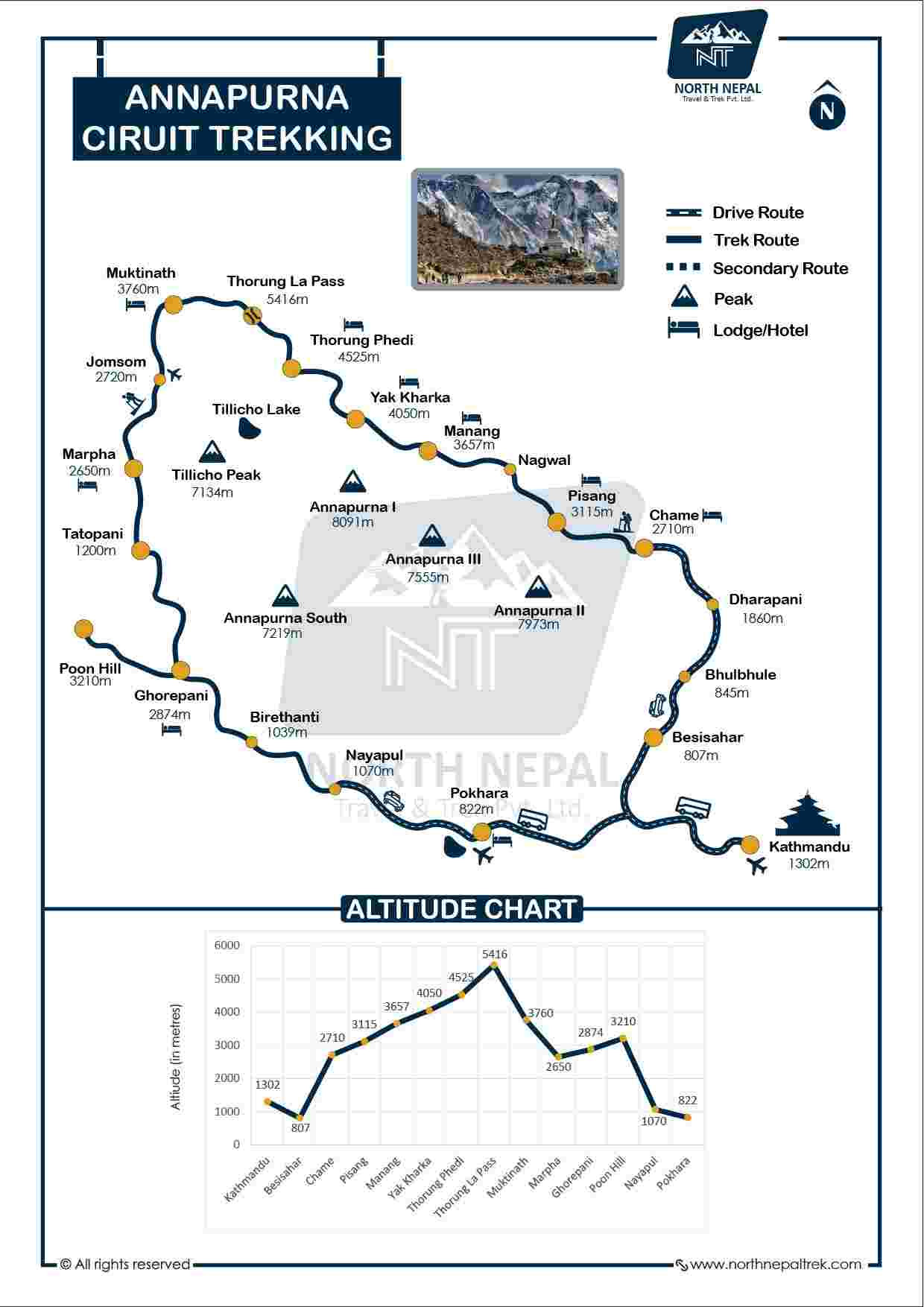
Annapurna Circuit Trek Map and Altitude Graph

Annapurna Circuit Trek Map and Altitude Graph

WHAT'S INCLUDED & EXCLUDED

  • All ground transfers in shared vehicles as per availability, for every itinerary. Bus transport ( KTM/PKR to Besisahar )  and Sharing Bus/Jeep ( Besisahar to Dharapani ) ( Muktinath to Tatopani ) & ( Hile to Pokhara ) 
  • One highly experienced, helpful, and friendly guide, and his food, accommodation, salary, equipment, and accidental insurance.
  • The best available twin or triple-sharing teahouse accommodation during the trek. 
  • We provide 3 meals per day (Breakfast, Lunch & Dinner) and Tea / Coffee twice daily. Please note that each meal is served as a single serving.
  • Complete trekking arrangements with the required permits like Annapurna Conservation Area Permit (ACAP).
  • First aid medical kit with oximeter during the trek.
  • Government taxes, local taxes, TDS, and office service charges.
  • Trekking achievement certificate after the trek.
  • Dry/Fresh fruits along the trek.
  • Anything related to International flight airfares, such as Nepal entry visa fees, excess baggage charges, International flight tickets, and so on.
  • Extra night accommodations due to changes in itinerary. 
  • Supporter/porter to carry your luggage during the trek. (One porter carries up to 25 kg of 2 pax) 
  • Personal expenses before the trek such as (renting sleeping bags, buying trekking shoes, and so on), during the trek (any shopping, boiled water, tea coffee(if more than 3 times), cold drinks, alcoholic beverages, hot showers, telephone calls, Wifi, cell-phone, camera battery recharge,s and so on).
  • Travel insurance covers high-altitude helicopter rescue and evacuation along with medical costs.
  • Tips and gratuities for guides and porters.
  • Additional costs, such as additional days due to delays caused by natural/uncontrollable phenomena such as bad weather, landslides, and change of plans(itinerary modifications) due to safety concerns, illness, and so on.
  • Lastly, all of the costs and expenses that aren’t listed in the “What’s Included?” section.

Note:

You can include a porter ( carries up to 20 kg ), with an extra cost of $ 25 per day.

Complete Guide to the Annapurna Circuit Trek

Toggle all

Why Trek With Us — Annapurna Circuit Trek

When you circle the Annapurna massif and cross the demanding Thorong La Pass at 5,416 metres, your safety depends entirely on who leads the way. Here is why trekkers choose North Nepal Travel & Trek:

100% Locally Owned & Pokhara-Based

We are proudly based right here in Pokhara, where the circuit begins and ends. Booking with us keeps your investment local, directly supporting the mountain communities we visit.

Officially Licensed & TAAN-Registered

We are a fully government-registered trekking agency and an active member of the Trekking Agencies' Association of Nepal (TAAN), ensuring full legal compliance, financial security, and the highest safety standards.

Years of Route Expertise

We have spent over a decade safely operating the full Annapurna Circuit, mastering the high-altitude Thorong La crossing, its acclimatisation logistics, and rapidly changing mountain weather.

Expert Local Leadership

Your expedition is personally led by our expert guide, a government-certified, English-speaking local leader who knows every stage of the circuit and the cultures of Manang and Mustang.

Top-Rated Client Satisfaction

Backed by a 4.9/5 rating across global review platforms, our travelers consistently rate our safety, local hospitality, and personalized service among the best in the Annapurna region.

Best time to trek the Annapurna Circuit

Spring and Autumn/Fall are the best times to trek the Annapurna Circuit. Landscapes are filled with lush green vegetation. The climate is moderate. Neither hot nor cold. Amazing views of the Annapurna and Manaslu ranges. Spring marks the new beginning. Autumn celebrates Nepali festivals, filling the joy and vibrancy in the air. 

Permits required for Annapurna Circuit Trek

Annapurna Circuit requires an Annapurna Conservation Area Project (ACAP) permit. ACAP permit costs NPR 3,000 for the Non-SAARC region, NPR 2,000 for the SAARC region, and no cost for Nepalese citizens. These permits ensure safety and regulation during your adventure. Similarly, fees collected are used for building and upgrading infrastructure in the Annapurna region.

Permit Type

Region / Nationality

Cost (NPR)

Annapurna Conservation Area Project (ACAP) Permit

Non-SAARC

3,000

SAARC

1,000

Nepalese Citizens

Free

Annapurna Circuit Trek Accommodation Bookings

North Nepal Trek arranges accommodation bookings during your trek. Along the Annapurna Circuit Trek trail, there are teahouses with basic facilities. The cost of accommodation and facilities such as internet, charging, and room increases with elevation.

Guide & Porter Services for Annapurna Circuit Trek

A guide is recommended due to safety concerns while trekking the Annapurna Circuit Trek. A companion of professional and certified guides enhances your ACT experience. To enjoy a hassle-free walk in the landscapes of the Annapurna region, you require a porter. Remember, a porter will only carry 22 kg of loads.  

Annapurna Circuit Trek’s Transportation Arrangements

North Nepal Trek is responsible for the transportation arrangements. The agency will look after your pick-up and drop-off. A Jeep will drop you off at Dharapani (the starting point) and pick you up from Jomsom to Tatopani for the Ghorepani-Poonhill, which is ACT’s extension. Drive back to Pokhara from Hille.

Annapurna Circuit Trek Equipment Rental

Rent trekking equipment from Thamel in Kathmandu and Lakeside in Pokhara. The cost of renting varies depending on. You can rent a Tent, Bags, Trekking sticks, and many more. Your trekking agency will assist with renting and purchasing the equipment.

We have designed a detailed packing list, but it's essential to pack your trekking gear according to the specific days and seasons of your journey. Pack just enough, and if you feel something is lacking in your packing, you can buy it at Manang, the last place where you can buy trekking equipment.

Annapurna Circuit Trek Insurance Requirements

Travel insurance covers medical expenses, loss/theft of expensive gear, emergency helicopter evacuation, and other travel-related issues on the Annapurna Circuit Trek. Travel insurance lowers and mitigates the risk of the trek.

Best time to trek the Annapurna Circuit

Spring and Autumn/Fall are the best times to trek the Annapurna Circuit. Landscapes are filled with lush green vegetation. The climate is moderate. Neither hot nor cold. Amazing views of the Annapurna and Manaslu ranges. Spring marks the new beginning. Autumn celebrates Nepali festivals, filling the joy and vibrancy in the air.

Annapurna Circuit Trek Difficulty

The difficulty level of the Annapurna Circuit Trek gradually transitions from moderate to challenging. The section of Tilicho Base Camp is technical and requires extra care. Crossing Thorang La Pass at an elevation of 5,416 m is difficult because of the high altitude. Descending a steep hill to Muktinath can put pressure on your legs.

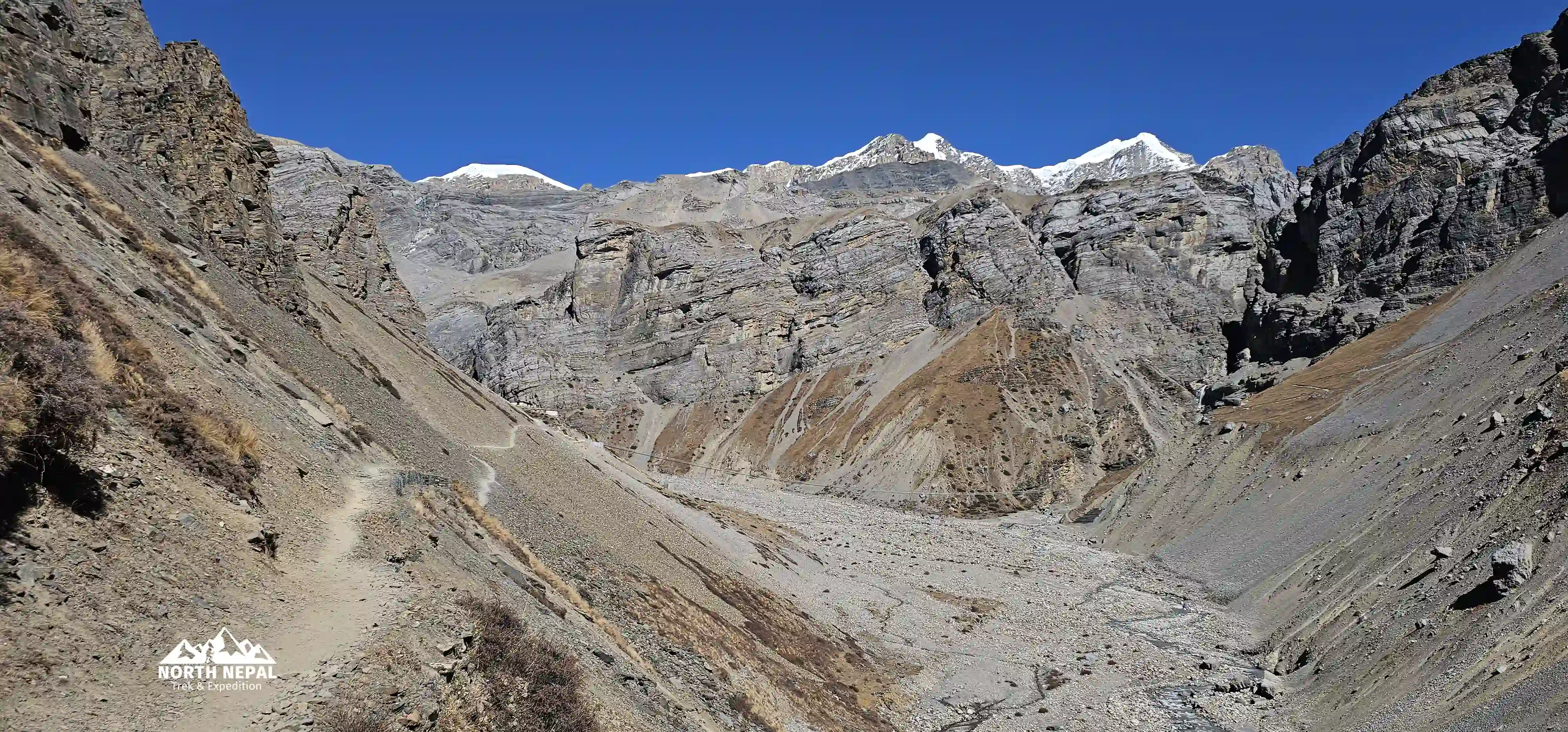
Scree slope on the way to Tilicho LakePhoto: Scree slope on the way to Tilicho Lake.

Various factors make certain sections of the trail challenging. High altitude is certainly a main factor in the Himalayas. Air becomes thinner as you ascend to high altitude. Walking on the snow is difficult, especially in the winter season. Low levels of oxygen concentration can make you a victim of Acute Mountain Sickness (AMS, commonly known as Altitude Sickness. However, with professional and certified guides, it is an easy trek. Above all, sheer willpower to conquer the ACT beats the fears and doubts. 

The classical ACT trek offers you exotic landscapes, green valleys, rural communities, and their unique cultures despite challenges. Most importantly, an excursion to the beautiful yet unexplored Ice Lake at 4,620 m (15,157 ft). However, with only moderate trekking difficulty, this trek can even be done by beginners with good physical fitness. While good physical fitness is needed for this trek, you must also be confident that you can conquer the Thorung La Pass.

How to Prepare for the Annapurna Circuit Trek?

Annapurna Circuit Trek requires careful and organized preparation. Start with equipment and gear packing. North Nepal Trek has designed a detailed packing list for the trek. Prepare clothes according to the weather and season.

Go for a short hike at high altitude. Include exercises like stretching, cardio, and running in your routine, or consider joining yoga classes in Pokhara. This helps to build strength, flexibility, and trains your body for high altitudes. The chances of getting AMS (Acute Mountain Sickness) or altitude sickness are high, so an emergency first-aid kit and insurance are a must.

Pack hot water, wet tissues, and warm clothes are mandatory because hot showers are barely available in remote areas. You can ask for further advice and suggestions from North Nepal Trek for the Annapurna Circuit Trek.

Altitude of Annapurna Circuit's Destination

The Annapurna Circuit Trek starts with a drive from Kathmandu (1400 m | 4594 ft) / Pokhara (822 m | 2697 ft) to Beshisahar (760 m | 2494 ft) in a Public bus. After that, we drive up to Dharapani (1860 m | 6102 ft) and trek to Chame ( 2650 m | 8695 ft). The 3000 m+ height is achieved on the 3rd day of our Annapurna Circuit trek from Chame to Upper Pisang (3300 m | 10826 ft). 

Subsequently, the 4000 m+ height is attained on the 6th day of our Annapurna Circuit trek as we trek from Bharka (3500 m | 11,483 ft) to Ice Lake ( 4620 m | 15157 ft), also known as Kicho Lake in Nepal. 

Furthermore, the 4500 m+ is achieved as we trek to Tilicho Lake(4,919 m | 16139 ft) from Tilicho Base Camp (4,920 m | 16142 ft) on our 8th day of Annapurna Circuit Trek.

Finally, on your 11th day of our Annapurna Circuit Trek, we trek from Thorong Phedi (5,416 m | 17,770 ft) to Muktinath (3,762 m | 12,343 ft) via the Thorong La Pass. The Thorong La Pass, at an altitude of 5,416 m (17,769 ft), is the highest altitude during our Annapurna Circuit Trek, and as you conquer the Thorong La Pass with Massive height, the feeling of achievement fills you from the bottom of your heart to its core.

Annapurna Circuit Route in Brief

Starts from Kathmandu/Pokhara (drive/flight) → Dharapani → Chame → Upper Pisang → Manang → Ice Lake → Yak Kharka → Thorung Phedi (Dharmashala) → Thorang La Pass (5,416 m) → Muktinath → Lupra Village → Jomsom → (drive) Tatopani → Swanta Village → Ghorepani → Poonhill → Hille → Kathmandu/Pokhara (drive/flight).

The Diverse Cultures During the Annapurna Circuit Trek

Annapurna Circuit Trek gives you ample exposure to the culture and traditions of the Annapurna region during the trek. The region of Annapurna is adorned with culture and tradition influenced by the teachings and values of Buddha. Predominantly a Buddhist region, the sights of Gompas, Mani Walls, fluttering Prayer flags, and Tibetan architecture are like a walk into a spiritual world of mountains.

Entering the Kani (entrance gate) is like stepping into a hidden world in the mountains. Muktinath is an important landmark of the Annapurna Circuit Trek. This ancient sacred temple is the center of beliefs for both Hindus and Buddhists. The ancient folklore, history, and bathing rituals in the 1108 water spouts make Muktinath an important religious site for tourists. Especially for Indian and Nepalese pilgrims. 

Braga Gompa at Manang is another cultural site you can explore during your Annapurna Circuit Trek. The 500-year-old Buddhist monastery takes center stage during festivals. Located at the cliffside, it carries a long history and culture. Built with local materials, it is designed in Tibetan architecture.

Thorong La Pass | 5,416 m (17,770 ft)

Thorong La Pass is the world’s highest mountain pass at an elevation of 5,416 m (17,769 ft) just below the Damodar Himal. It has the reputation of being one of the biggest hurdles of the Annapurna Circuit Trek. The high altitude, rugged terrain, and remote location make Thorong La Pass a challenging route. 

Thorong La Pass 5416 m

 Thorong La Pass is not just a challenging trek; it's an incredibly beautiful and culturally significant place and is a dream adventure for trekkers and nature lovers worldwide. It has been a traditional trade route between the people of the Manang and Mustang regions for centuries. It was an essential part of the salt trade from the arid region of Mustang to the lower areas.

Thorong La is a challenging Himalayan pass to cross, and trekkers must be acclimatized to high altitude before attempting it. The pass is usually crossed from east to west (Manang to Muktinath). This is the easiest and safest direction. Crossing Thorung La from Manang to Muktinath in one day is impossible. Trekkers usually spend the first night in Yak Kharka and the second night in Thorung Phedi, which is situated at 4,540 meters (14,895 ft), before attempting Thorong La. Choosing this option decreases the elevation gain and loss for that day's hike and the distance.

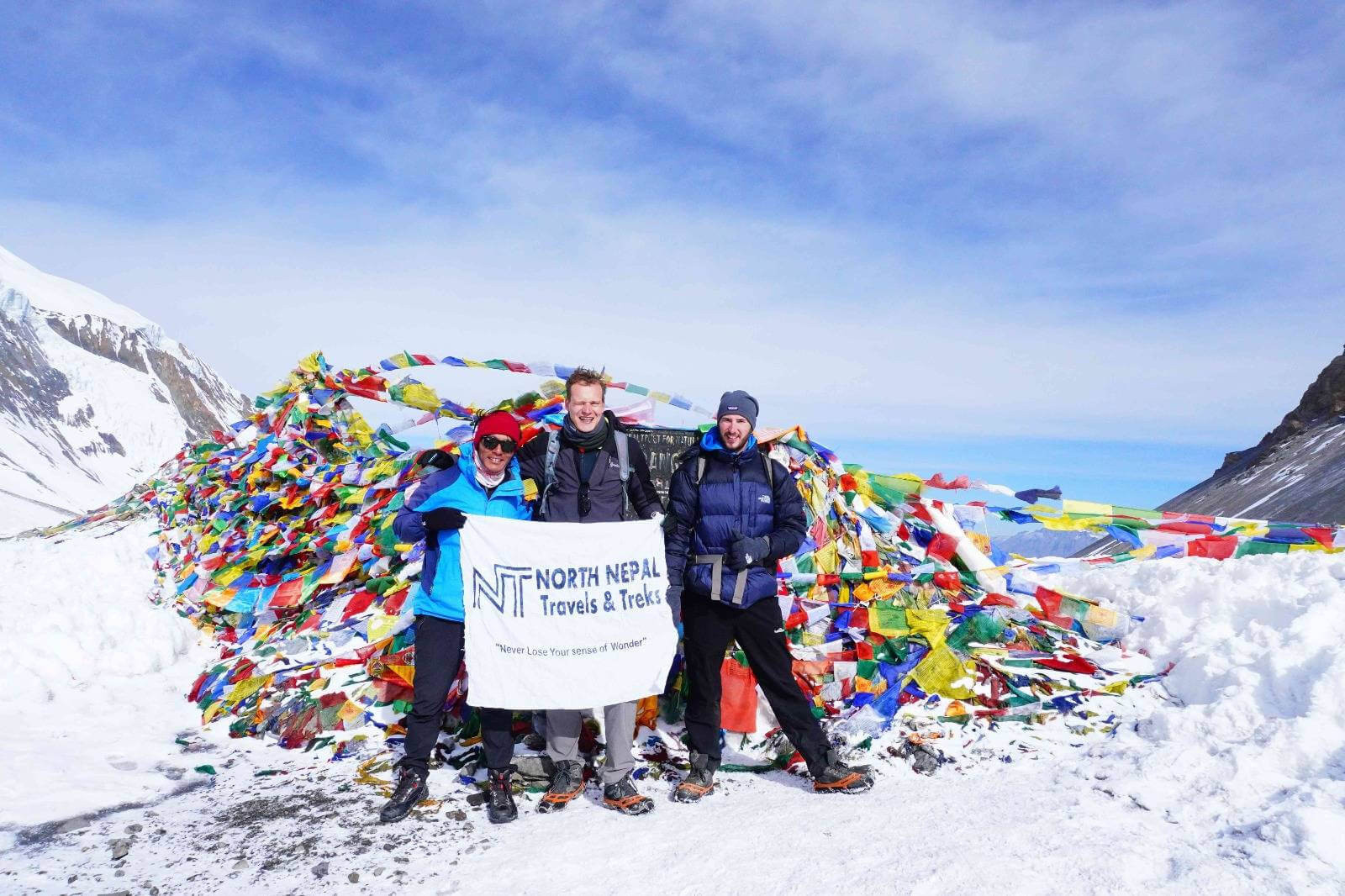
Guest posing at the Thorong La Pass with our Guide during Annapurna Circuit Trek Photo: Guest posing at the Thorong La Pass with our Guide during Annapurna Circuit Trek.

Moreover, the most challenging part of the Annapurna Circuit Trek is Thorong La Pass due to its high altitude, steep ascent, and unpredictable weather conditions, so acclimatization is a must. The best time to attempt the Thorong La Pass is during the spring (March to May) and autumn (September to November) seasons. The weather is relatively stable during these months, with clear skies and mild temperatures.

The top of Thorong La Pass offers a sense of accomplishment along with breathtaking panoramic views of the Annapurna and Dhaulagiri mountain ranges, including peaks like Annapurna II, Annapurna III, Gangapurna, and others. The scenery from the Thorong La pass is truly mesmerizing and makes the arduous trek well worth the effort.

While nowadays there are no such risks involved, as the ACAP in that region checks the weather through satellite every day, Thorong La is a popular destination for trekkers and is considered one of the most challenging and rewarding treks in the world. Moreover, the Annapurna Circuit Trek and the Thorong La Pass aren’t closed at any season of the year. Hence, you can pass the Thorong La Pass even in extreme winter; however, the Thorong La Pass is closed off/restricted if there are any signs of danger, such as high snow levels, warnings of snowstorms, constant rain, and so on.

Live Trail Update of Annapurna Circuit Trek (12 Days) — Cost, Manang, Thorong La & 2026 Guide Live

Last updated: 1 Week Ago from the field

Updated: Gopal Yonjan

Trail Condition Good
Weather Sunny
Wifi/Network Weak
Teahouses Mostly open

Trekker Alerts

  • Carry microspikes for Thorong La Pass
  • High winds in Jomsom during afternoons
  • Water filters recommended
  • ATM unreliable past Chame
Reviews From The Trail

Hear it from those who've walked with us.

★★★★★

Annapurna Circuit

Apr 2018 • Solo

North Nepal Travel & Trek helped me get set up to do the Annapurna Circuit and the owner, Mohan, was able to answer every question I had about the route and make suggestions on side treks I could o along the way as well, such as the Tilicho Lake Trek which was gorgeous! He is very knowledgeable on all the treks in Nepal as he was a guide himself for 10 years before taking ownership of North Nepal Travel & Trek. For my next trip to Nepal I will 100% be organizing all my activities through them. Cheers Mohan!

D
Derek W
Nepal · Annapurna Circuit Trek (12 Days) — Cost, Manang, Thorong La & 2026 Guide · Aug 2026
★★★★★

Annapurna Circuit Trek

Newcastle, Australia

Mar 2019 • Friends

Mohan, Bharat and their team were fantastic. Mohan went above and beyond to make an extremely competitive price and ensured that we enjoyed ourselves on the trek with having the worry of meals taken care of and accommodation. Especially in the busy time of year there were a few times that accommodation was hard to come by but our guide had gone to great length to make sure we had a place to eat, sleep with a lot of other comforts like hot showers available. The circuit exceeded all expectation, with the help of Mohan and his team. Couldn’t recommend them enough.

A
Alexi M
Nepal · Annapurna Circuit Trek (12 Days) — Cost, Manang, Thorong La & 2026 Guide · Aug 2026
★★★★★

North Nepal helped our family of 5 have a great time conquering the highest pass in the world

Minneapolis, Minnesota

Jun 2019

The Annapurna Circuit is something I have wanted to try for more than half a lifetime, however I'm now a father traveling with my wife (we're both over 50) and 3 kids (ages 18, 15 and 13). Everyone's got an agenda, but the biggest obstacles would be taking on the circuit in the 11 days that we had available for the trek, my wife's concerns about hiking at high altitudes, the kids varying levels of enthusiasm for such an endeavor and the fact that we would have to travel in June, the beginning of monsoon season.

When I laid these concerns out over a string of emails with North Nepal's manager, Mohan raj Bhandari, he responded quickly, demonstrated engagement and expertise with my questions, and worked through the issues and concerns one-by-one. Was Annapurna the right trek for us? What about Nar Phu? What about Manaslu? I was later to learn that his depth of expertise comes not only from having scheduled treks with so many customers, but he also gets out of the office and does the treks himself to experience the trails firsthand. He came along on our trip, not as a guide but as a porter and as an agency manager to see how his arrangements came to fruition.

With regards to those arrangement, North Nepal was clear from the get-go about the nature of the packages available. Mohan understood that I was torn between the independent backpacker mentality of going from lodge to lodge and, since I had kids with relatively small appetites, the need to pay-as-you-go for food, and the desire to make the experience as pleasurable and do-able as possible for those very kids. In the event, I never felt pressured to undertake an expense I wasn't comfortable with and the combination of working directly with the tea house owners, having the North Nepal team help with discussions (and frankly the fact that there were very few other trekkers on that route in June) made the expenses very reasonable.

The Route: The 11 day trek began with a long bus and jeep trip to Chame, with 3-6 hour treks for the following days until we came to Day 10, on which we would be waking up at 4 am to ascend from 14,500' to 17,600' (about a 1000m ascent). This would be our day to hike over Thorung La, the highest pass in the world and a place where breath comes short. This was a day my wife had been very concerned about. However, we had practiced on hikes on our acclimatization day and on a side trip up to Tilicho Lake (15,000') so had a reasonable idea how we might fare at these higher elevations. In the event, only my youngest daughter needed a horse until the pass with the rest of us doing fine through the morning mist. We spent the rest of the day going down, down, down into Muktinath (12,000'), and had a celebratory dinner. Day 11 was supposed to be a short hop back to Pohkara from a nearby airfield, but the clouds had come to stay and no planes were going to be landing, so we piled into a jeep with the North Nepal team and sloshed back to Pokhara over mud-soaked roads for 11 white-knuckled hours.

Overall, North Nepal did wonderfully. They brought professionalism to clear communication, transparent planning, trustworthy financial transactions, impeccable personnel on trail, and an appreciation of the kind of trip we were hoping to have. I will certainly come back to Mohan and North Nepal when we're in the neighborhood again.

A
Angus M
Nepal · Annapurna Circuit Trek (12 Days) — Cost, Manang, Thorong La & 2026 Guide · Aug 2026
★★★★★

Excellent Service for Manaslu Trek

Oct 2022 • Couples

We organized permits and a guide for an independent Manaslu Circuit Trek with North Nepal Travels & Trek (based in Pokhara) in October 2022. We recommend North Nepal for any adventure you may have in Nepal. The owner, Mohan, is patient, knowledgeable, and very kind. We reached out via WhatsApp before our arrival and he answered our questions well. As the time for our initial meeting approached, some late-monsoon weather caused landslides and damaged parts of the Manaslu Circuit trail, leaving many trekkers stuck in Samagaun. Mohan let us know about the conditions, and advised us to wait until it was safe. Two days later, he let us know that he got information that it was likely that local people would finish making trails across the landslides, and that we could begin our trek. We provided our passports and documents, and he got the three permits organized for us the same day (Manaslu Restricted Area Permit, Manaslu Conservation Area Permit, Annapurna Conservation Area Permit) for $160 per person. Guide service provided for $28/day (which includes guide accommodation, food, and drinks). We paid for our groups’ transportation, accommodation, food, and drinks independently on the trail. We met with the fantastic freelance guide he organized for us (Raj Rai - recommended!) and began transportation to the trek the next day. North Nepal allowed for the payment of 8 days upfront, and the remaining 5 days after we returned from the trek. Mohan also directed us to the reputable “Trekking Shop/ Trek equipment solution” located next door, which provided excellent service for equipment rental and purchase. During our pre-trip conversations, North Nepal also provided complementary chai masala, which was a nice touch. Overall, it was a lovely experience organizing our trek with North Nepal and recommend them fully for any adventures you want to plan, big or small.

N
Noah J
Nepal · Annapurna Circuit Trek (12 Days) — Cost, Manang, Thorong La & 2026 Guide · Aug 2026
★★★★★

Annapurna Circuit / Mardi Himal Treks

Sep 2024 • Solo

You can stop searching for trekking services, you’ve arrived at the right one. North Nepal Treks does it right! Cannot say enough about this company. You have expectations for your dream Himalaya trip and they simply want to see them come to life. I solo trekked the Annapurna Circuit late September 2024, with the pleasure of being guided by Rajkumar (If you’re lucky you’ll get him as well). Post Circuit trek, I had no intention of trekking. But, knowing the level of service and professionalism North Nepal Treks offered, I knew I would be missing out. Annapurna Circuit and Mardi Himal complete, with compassion, safety, laughs, and fun! Thank you to Mohan, Rajkumar and North Nepal Treks, for the trip of a lifetime! Namaste 🙏

F
freelandbeau
Nepal · Annapurna Circuit Trek (12 Days) — Cost, Manang, Thorong La & 2026 Guide · Aug 2026

Safety Policy

Professional & Certified Guides

Every trek is accompanied by a licensed, English-speaking local guide trained in eco-tourism, wilderness survival, and first-aid response. Guides carry comprehensive medical kits equipped with essential pharmaceuticals and pulse oximeters to monitor oxygen levels daily during the ascent toward Tilicho Lake and Thorong La Pass.

High-Altitude Acclimatization & AMS Management

Itineraries are structured with gradual elevation gains and designated rest days in places like Manang to ensure proper acclimatization before reaching high-altitude points like Tilicho Base Camp (4,150 m), Tilicho Lake (4,919 m), and Thorong La Pass (5,416 m). Guides conduct rigorous daily health assessments for early symptoms of Acute Mountain Sickness (AMS). If severe symptoms appear, standard protocol mandates immediate descent to lower elevations.

Emergency Rescue Coordination

In cases of severe injury, acute altitude illness, or extreme weather conditions on high-altitude passes, emergency helicopter evacuation is coordinated directly through local rescue services. Evacuations are initiated promptly upon assessment by your guide in communication with our Pokhara and Kathmandu offices.

Mandatory Travel Insurance

All trekkers must hold comprehensive travel insurance covering emergency medical treatment, high-altitude trekking (up to 5,500 m), and emergency helicopter rescue/evacuation. Insurance details must be submitted prior to the departure of the trek to streamline emergency logistics if required.


Annapurna Circuit Trek Departure Date for 2026/2027

Secure the Annapurna Circuit Trek for 2026/2027 before the seat gets fully booked.


Terms, Conditions & Feasibility

  1. All bookings are made with North Nepal Travel & Trek Pvt. Ltd Registered Company Number 162883/073/074 (hereafter referred to as The Company) whose office is in Lakeside, Pokhara-6, Nepal.
  2. The term "trip" used in this website and booking conditions refers to all itineraries described on this website including those which might otherwise be known as walking, tours, trekking trips, sightseeing, climbing, mountaineering, expeditions, or holidays.
  3. We accept your last-minute booking as well, but full payment of the total tour cost should be made in advance if necessary or can be paid fully on arrival day. See More

Frequently Asked Questions

General Information

1. What is the Annapurna Circuit trek?

The Annapurna Circuit trek is a classic 12-day loop around the Annapurna massif in central Nepal, crossing the Thorong La pass at 5,416m, its high point and most demanding day. The route runs from lush lowland valleys near Besisahar up through Manang to the pass, then down to the temple town of Muktinath and the Kali Gandaki gorge. It's prized for how much the landscape and culture change from start to finish. Message us and we'll tailor the itinerary to your fitness and days.

2. How hard is the Annapurna Circuit trek?

The Annapurna Circuit trek is moderate to challenging, and the difficulty is concentrated in one place: crossing Thorong La at 5,416m, one of the highest trekking passes in the world. That day is a long, cold, high-altitude climb that most trekkers find genuinely tough. The rest of the route is far gentler, with steady walking through villages and valleys. With good acclimatization and reasonable fitness, most trekkers complete it successfully. Tell us about your experience and we'll set the right pace.

3. Is the Annapurna Circuit trek possible with children?

It's possible, but we generally don't recommend the Annapurna Circuit trek for young children. The route crosses Thorong La at 5,416m, where the risk of altitude sickness and cold-related illness is real and harder to manage in kids. Families set on it should treat the child's health as the top priority, build in extra acclimatization, and consider hiring an additional guide to watch over them. For younger children, a lower trek like Annapurna Base Camp or Ghorepani Poon Hill is the safer, happier choice. Tell us your child's age and we'll advise honestly.

4. How long is the Annapurna Circuit trek, and how far do I walk?

The standard Annapurna Circuit trek runs 12 days and 11 nights. The total walking distance is roughly 160 to 230 km depending on where you start and end, since improved roads now let trekkers begin at Besisahar or drive further to Chame and finish below Muktinath. Shorter and longer variants are both possible. Tell us how many days you have and we'll build the version that fits, including whether to start higher up the valley.

5. Can I add Tilicho Lake to the Annapurna Circuit trek?

Yes, and it's one of the best add-ons. Our Annapurna Circuit with Tilicho Lake itinerary (northnepaltrek.com/tilicho-lake-trek) detours to Tilicho, one of the highest lakes in the world at about 4,919m, before rejoining the main trail for Thorong La. It adds two to three days and a serious dose of high-altitude scenery. The extra acclimatization it demands actually helps some trekkers on the pass. Ask us and we'll show you how it fits your schedule.

Trekking Permits & Logistics

1. What permits do I need for the Annapurna Circuit trek?

The Annapurna Circuit trek requires Annapurna Conservation Area Permit (ACAP) permits, which costs NPR 3,000 (about USD 25). Officials check both at entry and checkpoints along the route. The ACAP must be arranged through a registered trekking agency, and nationals of SAARC countries pay a reduced rate. North Nepal Trek arranges the guide and both permits for you, so there's no paperwork on your end.

2. Do I need a guide for the Annapurna Circuit trek?

Yes. As of April 2023, Nepal requires a licensed guide for trekking in the Annapurna Conservation Area, and on a high, remote route like the Annapurna Circuit a guide is genuinely important for safety. Your guide knows every trail and teahouse, carries a first-aid kit with a pulse oximeter, monitors you for altitude sickness before and after Thorong La, and coordinates any emergency evacuation. All North Nepal Trek guides are government-licensed and trained in altitude first aid.

3. Where does the Annapurna Circuit trek start, and how do I get there?

The Annapurna Circuit trek usually starts at Besisahar, a five to six hour drive from Kathmandu or Pokhara, though many trekkers now drive further up to Chame to skip the lower road sections. The trek ends near Muktinath or Jomsom, from where you fly or drive back to Pokhara. We arrange all transfers, including the jeep up the valley and the flight or drive out. We'll confirm your exact start and end points when we plan the itinerary.

Accommodation & Food

1. What are food and accommodation like on the Annapurna Circuit trek?

Teahouses are common along the Annapurna Circuit, so food and lodging are rarely a worry. Menus are varied and you'll eat well, from dal bhat with free refills to pasta, noodles, momos, and Tibetan bread. Lower down you'll usually get a private twin room, though in the busy villages near Thorong La you may need to share during peak season, and rooms get simpler and colder as you climb. The lodges are basic but warm, with a stove-heated dining room.

2. What vegetarian and special-diet food is available on the Annapurna Circuit trek?

Vegetarian food is easy to find all along the Annapurna Circuit, and it's often the smarter choice higher up where there's no reliable refrigeration for meat. Every teahouse serves dal bhat, fried rice, noodles, pasta, potatoes, eggs, and vegetable curries. If you're vegan, gluten-free, or have other dietary needs, tell us in advance and we'll brief your guide so the teahouses can prepare suitable meals for you.

Booking & Company Policies

1. How far in advance should I book the Annapurna Circuit trek?

For spring and autumn, the two best seasons, book two to three months ahead. The main reasons are securing your preferred dates, a good guide, and teahouse space in the busier villages, plus time to get fit and arrange proper insurance. Off-season and last-minute departures are sometimes possible. Send us your target dates and we'll tell you honestly what's still open and what to expect.

2. Do I trek alone or with a guide and group on the Annapurna Circuit?

You'll trek with a licensed guide, and porters if you want them, rather than alone. Solo trekking is risky at high altitude, and a guide is now required in the Annapurna region anyway. Your guide knows the trails, keeps good contacts with locals, carries first-aid supplies, and takes responsibility for your safety through altitude sickness, injury, or emergencies. You can join a small group departure or book a private trek with just your own party. Tell us which you prefer.

3. Is North Nepal Trek a registered and licensed trekking company?

Yes. North Nepal Trek is a government-registered adventure travel company based in Pokhara, Nepal, with a branch in Thamel, Kathmandu, and a member of the Trekking Agencies Association of Nepal (TAAN). We run treks, tours, expeditions, and helicopter tours across Nepal, Bhutan, and Tibet with fully licensed guides. Our whole approach comes down to one line: come as a guest, leave as a friend.

Weather & Seasons

1. When is the best time to do the Annapurna Circuit trek?

The best seasons for the Annapurna Circuit trek are spring (March to May) and autumn (late September to November), when the skies are clearest and Thorong La is most reliably open. Autumn offers the crispest mountain views, while spring brings rhododendron blooms lower down. Winter is possible but the pass can close after heavy snow, and the monsoon brings rain and cloud to the eastern half of the route, though the Manang side sits in a drier rain shadow. Tell us your dates and we'll advise.

2. How cold does the Annapurna Circuit trek get, especially at Thorong La?

Daytime walking in the sun can feel mild, but nights get cold quickly as you gain height, and the pre-dawn start for Thorong La at 5,416m is the coldest, windiest part of the whole trek, often well below freezing. Manang and the high camps are chilly at night even in peak season. This is why a sleeping bag rated for freezing temperatures and proper layering are essential. Your guide times the pass crossing for the safest weather window.

Health & Safety

1. How do I avoid altitude sickness on the Annapurna Circuit trek?

Gradual acclimatization is everything on the Annapurna Circuit, because you climb to 5,416m at Thorong La. Our itinerary includes an acclimatization day at Manang and follows a safe ascent profile, using the climb-high-sleep-low principle before the pass. Drink plenty of water, keep a slow steady pace, skip alcohol, and tell your guide about any headache or nausea early. Our guides carry a pulse oximeter and know the warning signs. Never rush toward the pass; the extra day is what keeps you safe.

2. What travel insurance do I need for the Annapurna Circuit trek?

You need travel insurance that covers high-altitude trekking plus emergency medical treatment and helicopter evacuation, because the Annapurna Circuit trek crosses Thorong La at 5,416m. Make sure the policy explicitly covers evacuation above 5,000m, since many standard policies quietly exclude high altitude. Read the fine print closely and buy the policy in your home country before you travel. Keep the emergency numbers saved on your phone and printed in your pack.

3. What happens if I get sick on the Annapurna Circuit trek?

If you develop altitude sickness or another illness, your guide assesses your condition and, where needed, consults local health posts to decide whether you can safely continue. Descent is the most effective treatment for altitude sickness, so if symptoms don't improve, we bring you down or arrange a helicopter evacuation. The Annapurna region has reasonable rescue coverage in good weather. This is exactly why high-altitude travel insurance is essential before you start the trek.

4. How should I train for the Annapurna Circuit trek?

Because the Annapurna Circuit trek is a long route with a high pass, some training makes a real difference. Start six to eight weeks out with regular walking or hiking, and add hill and stair work to build your legs and cardio for the long climb to Thorong La. Practice walking several hours at a stretch with a light daypack. The fitter you arrive, the more you'll enjoy the pass day rather than endure it. We're happy to suggest a simple plan based on your starting point.

Transportation

1. How do I travel back after finishing the Annapurna Circuit trek?

Most trekkers finish the Annapurna Circuit near Muktinath or Jomsom and return to Pokhara by a short mountain flight or a jeep drive down the Kali Gandaki valley. The flight from Jomsom is quick and scenic but weather-dependent, so we keep a buffer in the plan in case it's delayed. From Pokhara you can fly or drive on to Kathmandu. We arrange every transfer and confirm the return option when we finalize your itinerary.

2. Is airport pickup in Kathmandu included with the Annapurna Circuit trek?

Yes. Every North Nepal Trek package includes a private airport pickup and hotel transfer when you land in Kathmandu, plus a drop-off when you leave. A guide or company representative meets you in the arrivals hall holding a North Nepal Trek sign. After a long international flight, not having to haggle over a taxi is a small thing that helps a lot. Just send us your flight details once they're booked.

Packing Gear & Rental

1. Can I rent trekking gear for the Annapurna Circuit trek?

Yes. We rent sleeping bags and down jackets to handle the cold at Manang, the high camps, and the Thorong La crossing, and Thamel in Kathmandu also has many shops renting and selling gear before you set off. Renting bulky, cold-rated items makes sense if you rarely trek. For personal-fit items like boots, gloves, and base layers, bring your own. Message us for current rental rates and we'll set aside what you need before you arrive.

2. What should I pack for the Annapurna Circuit trek?

Pack warm layers, an insulated down jacket, a waterproof shell, fleece, thermal base layers, gloves, a warm hat, sturdy broken-in trekking boots, sunglasses, sunscreen, and a headlamp, plus a sleeping bag rated for freezing temperatures for the high camps and the Thorong La crossing. Trekking poles save your knees on the long descent to Muktinath. See our all-seasons packing list (northnepaltrek.com/all-seasons-trek-packing-list) for the full breakdown, and we send a season-specific list after booking.

PRIVATE TRIP

12 Days

Price Start from USD 1000

USD 850 pp

We Offer Group Discount

No. of PersonsPrice per Person
1 Pax US$ $ 850
2 Paxes US$ $ 780
3 - 6 Paxes US$ $ 700
7 - 12 Paxes US$ $ 650
13 - 20 Paxes US$ $ 625
RECOGNISED · CERTIFIED · TRUSTED

We are associated with