Bhimtang Trek - 9 Days

Bhimtang Trek - 9 Days
DESTINATION Nepal
MAX. ELEVATION 3700 m
WALKING DISTANCE ~ 66 km
GRADE Moderate
BEST SEASON March-May August-November
DURATION 9 Days
MEALS INCLUDED Breakfast/Lunch/Dinner
ACCOMMODATION Teahouse

OVERVIEW & HIGHLIGHTS

When to make a trip to Bhimtang?

The Bhimtang trek (also spelled Bimthang) is a nine-day route into the western edge of the Manaslu region, finishing in the glacial basin of Bimthang at about 3,700 m with a side trip to Ponkar Lake at 4,100 m. Around 66 km of total walking, graded moderate, with teahouse accommodation throughout.

Most trekkers experience Bimthang as their first rest stop after crossing the formidable Larkya La on the Manaslu Circuit. This dedicated route approaches directly from the western side instead — tracing up from Dharapani through Gho, skipping the high pass and avoiding the restricted-area permit required for the full circuit.

This makes it one of the few ways to experience genuine Manaslu scenery on a moderate grade, requiring only two conservation permits rather than three, and with no minimum group size requirement beyond a licensed guide.

Day

Route

Distance

Duration

Elevation

1

Arrival Kathmandu 

n/a

n/a

1,324 m

2

Chyamche

n/a

2 hrs

1,370 m

3

Dharapani

12 km

5-6 hrs

1,860 m

4

Gho

10.6 km

5-6 hrs

2,515 m

5

Bimthang 

16 km

4-5

3,700 m

6

Explore Ponkar Lake

2 km

2-3 hrs

4,100 m

7

Dharapani

26 km

7-8 hrs

1,860 m

8

Besisahar 

n/a

n/a

1,860 m

9

Kathmandu 

n/a

n/a

1,324 m

Distances and times are approximate and subject to route variation.

Ponker Lake, glacier, and areas of Bimthang Source: Google Map (Bimthang Area)

The famous stopover after Larkya pass and Tsum Valley Trek requires a Manaslu Conservation Area Permit (MCAP) and an Annapurna Conservation Area Project (ACAP) permit. Graded moderate, this trek features tea-house lodging, scenic Himalayan terrain from subtropical forest to alpine grasslands, and deep cultural immersion along a quieter route in the Manaslu region.

Highlights of Bimthang Trek

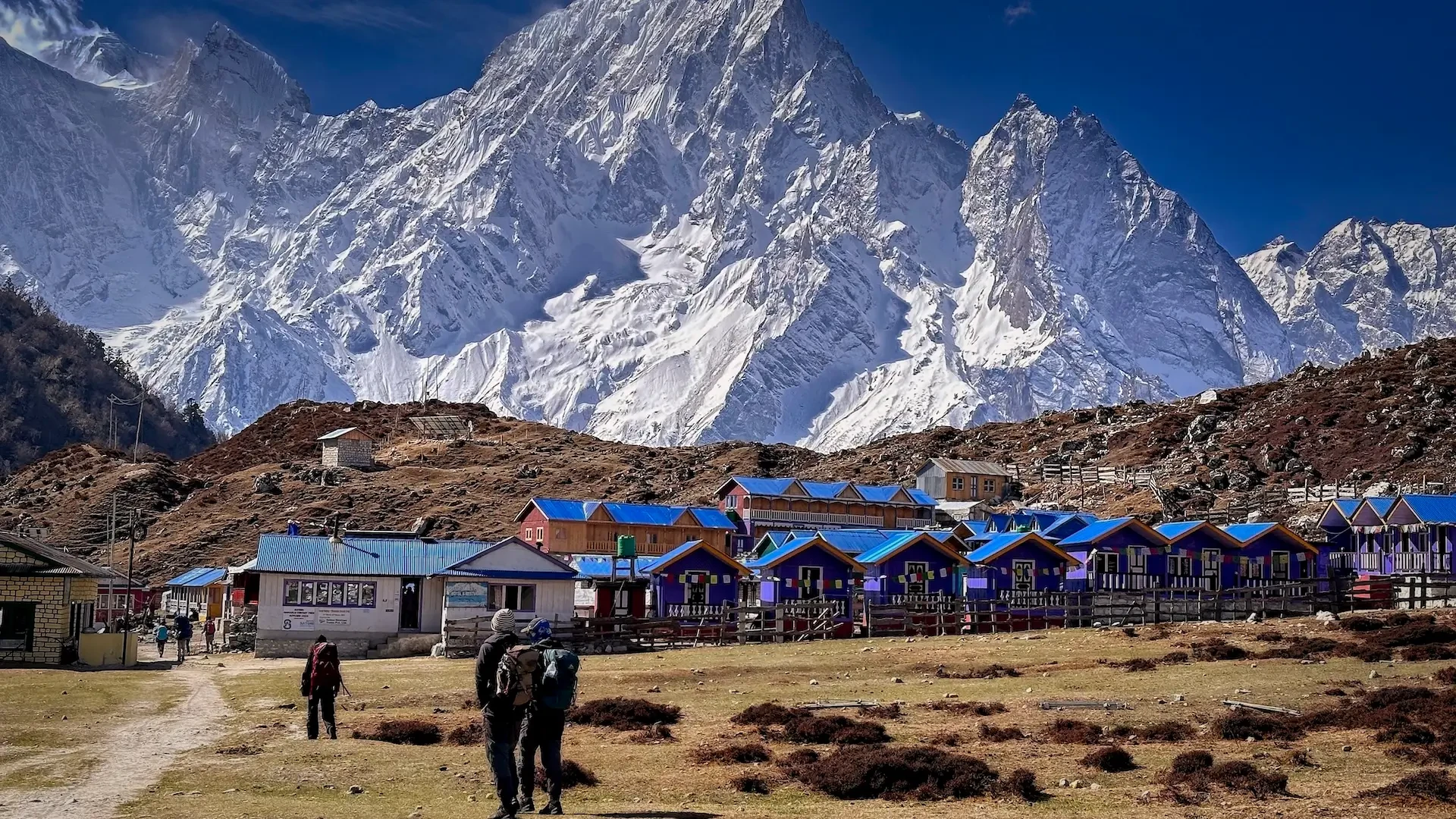
  • Bimthang Glacial Basin (3,700 m): Nestled directly beneath the towering faces of Manaslu (8,163 m) and Himlung Himal.
  • Ponkar Lake (4,100 m): A vibrant glacial lake at the foot of the Ponkar glacier, explored via a half-day excursion from Bimthang.
  • Western Approach: Reaches the heart of the Manaslu region without needing to cross Larkya La.
  • Streamlined Permits: Requires only two permits (MCAP & ACAP) — no restricted-area permit or two-person party minimum required.
  • Rich Tibetan Culture: Authentic cultural transitions through Gho and upper settlements.
  • Accessible Moderate Trek: 9 days total, teahouse-based, ideal for fit first-timers or those short on time.

Jeewan Tamang
Itinerary review by

Jeewan Tamang, Trekking Guide / Mountain Climber / Trail Runner

Since founding North Nepal Trek in 2015, Mohan Raj Bhandari has guided trekkers along the quieter western approach to the Manaslu region. Jeewan Tamang, who has personally led groups from Dharapani up through Gho to the Bimthang glacial basin and on to Ponkar Lake beneath Manaslu and Himlung Himal, shares firsthand insight into this moderate, permit-light route.

Bhimtang Trek Itinerary

Toggle all
Day 1

Arrival at the Kathmandu Airport:

HIGHEST ALT. 1324 m|4344 ft

As you arrive at Kathmandu's airport, our team member will be there to accompany you to your hotel. You can choose to start your Kathmandu exploration right away or take some time to relax and recover from your flight to Nepal. Later in the evening, we'll gather for a meeting to provide you with all the details you'll need for the upcoming trek.

Day 2

Pokhara/Kathmandu to Chyamche (1370 m)

DURATION 8 hours drive + 2 hours hike

On the first day of our journey to Bhimtang, we take a bus to Syange, Lamjung. From Kathmandu, it takes about 8 hours to reach, whereas from Pokhara it takes around 5 hours.

From Syange, we hike for 2hours to reach Chyamche.

Day 3

Chyamche to Dharapani (1860 m)

HIGHEST ALT. 1860 m
DURATION 5-6 hours
Distance
DISTANCE ~ 12 km

Passing through the villages of Chamche we come across Chamche waterfall which is huge and beautiful and cuts the road right through. To experience this waterfall is a refreshment in itself. We then walk by the mountainside where the trail ascends with stone steps and descends and continues likewise. It takes about 5 to 6hours to reach Dharapani.

Day 4

Dharapani to Gho (2515 m)

HIGHEST ALT. 2515 m
DURATION 5-6 hours
Distance
DISTANCE ~ 10.6 km

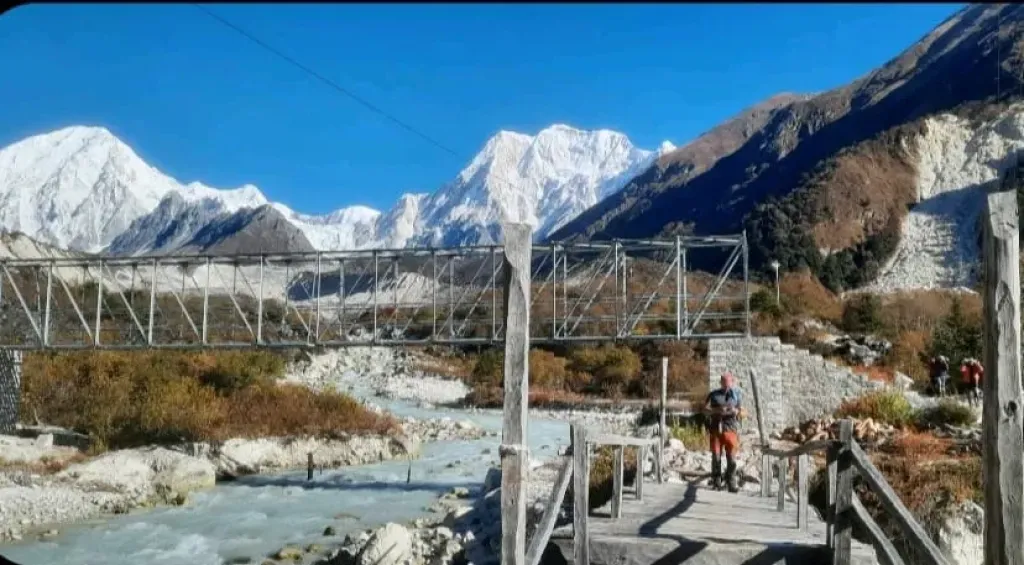
From Dharapani we head towards Gho which takes about 5-6 hours. Walking by the mountainside and views of rivers we have to cross two bridges over the Marsyangdi River. The trail ascends from Dharapani (1860m) to Gho (2515m).

Day 5

Gho to Bhimtang (3700 m)

HIGHEST ALT. 3700 m
DURATION 4-5 hrs
Distance
DISTANCE ~ 16 km

Gho to Bhimtang route is so beautiful that you start to realize how it feels to be all out in what you call true nature.

From Gho, we walk through dense forests with tall mountain views and huge rocks on the way to reach Surki. Further on, with the Marsyangdi River gushing, we walk by her side, experiencing the intensity of life. After one and a half hours of hiking, we will reach Yak Kharka and have our lunch there. Spotting Manaslu on the way will inspire you to get going. After about 2 hours of hiking, we will reach Bhimtang, where the nature and views will leave you spellbound.
The rawness and intensity of the huge forest, the massive sound of the river flowing in full force, and the glorious Manaslu Himal standing unapologetically strong are the intoxicants of life you will be blessed with on the way to Bhimtang.

Day 6

Explore Bhimtang (Trip to Ponkar Lake 4100 m)

HIGHEST ALT. 4100 m
DURATION 2-3 hours
Distance
DISTANCE ~ 2 km

On the 5th day, we will explore Bhimtang of which beauty can’t be absorbed in a single day. We will try to pay as much reverence to the place as we can by visiting the eminent places Bhimtang is embellished with, which are Ponker lake, Ponker glacier, Nayamlo lake. While hiking around Bhimtang we can see mountains including Manaslu, Lamjung Himal, and Himchuli. This will be our second night in Bhimtang.

Day 7

Bhimtang to Dharapani (1860 m)

DURATION 7-8 hours
Distance
DISTANCE ~ 26 km

We will hike back to Dharapani from Bhimtang following the same route. We begin by walking across the pastureland and descending to the valley of Budhi Khola.

We walk further, crossing the river and walking through the rhododendron forests. After a couple of hours of hiking, we reach Tije, where there is an apple orchard. Also, Tije is famous for its wine. We trek for another hour to reach Dharapani.

Day 8

Dharapani to Besisahar

DURATION 9-10 hours

From Dharapani, we return to Besisahar by jeep. The roads are not in good condition because of heavy rainfall last year, river Marsyangdi flooded through the Tal valley and caused much destruction.

Day 9

Besisahar to Pokhara/Kathmandu

DURATION 6-7 hours

Taking a bus from Besisahar we back back to Pokhara/Kathmandu.

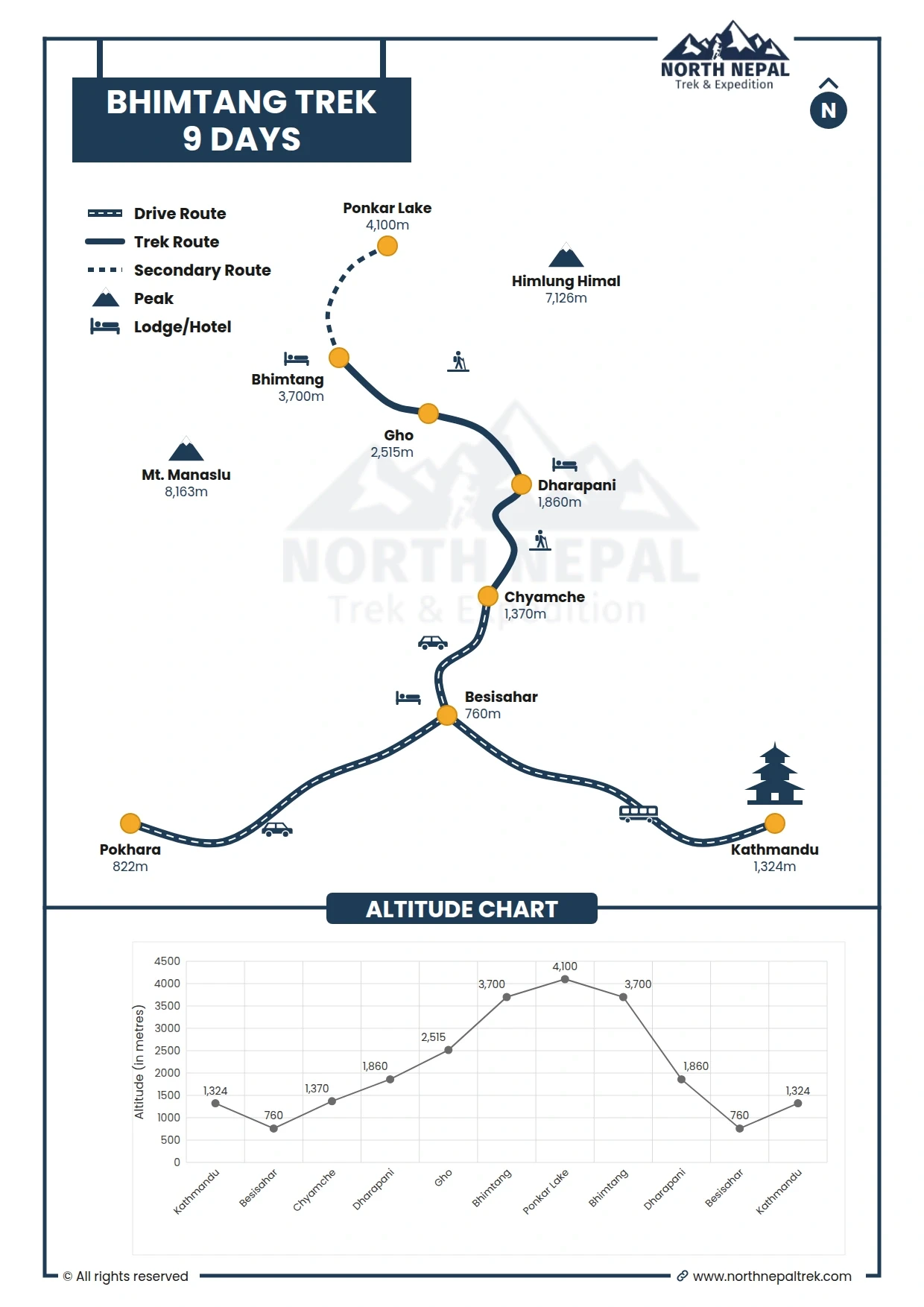
Bhimtang Trek Map & Elevation Graph

Bhimtang Trek Map & Elevation Graph

What's Included & Excluded

  • Professional English-speaking, Eco Trained trekking guide his food, accommodation, salary, insurance, equipment, medicine, transportation, etc.
  • Accommodations in the teahouse during the trek.
  • We provide 3 meals per day (Breakfast, Lunch, and Dinner) and Tea / Coffee twice daily. Please note that each meal is served as a single serving.
  • Transportation to Chyamche from Kathmandu / Pokhara.
  • Transportation from Dharapani to Besisahar to Kathmandu.
  • Medical Kit Bag on every trip with an oximeter.
  • Sleeping bag and trekking Sticks, if necessary ( return after the trek).
  • All trekking permits for the Manaslu region.
  • ACAP entry permit (Annapurna Conservation Area Project).
  • MCAP permit (Manaslu Conservation Area Project).
  • All Government taxes, VAT, and service charges.
  • International airfare & Nepal visa fee.
  • Accomondation, Lunch and Dinner while you are in Kathmandu.
  • Your Travel Insurance(Compulsory).
  • Your Personal expenses, entrance fees, and & personal expenses
  • All the alcoholic and non-alcoholic Drinks.
  • Tips for Guide and Porter.
  • Arrangement of emergency helicopter service which your Travel Insurance Company will pay.
  • Any others expenses which are not mentioned in including section.

Note: You can include Lunch and Dinner within the package itself, with an extra cost of 15$ - 20$ per day.

Complete Guide to the Bhimtang Trek

Toggle all

Permits Required for the Bhimtang Trek

Trekking to Bimthang requires two permits: the Manaslu Conservation Area Project Permit and the Annapurna Conservation Area Project (ACAP) permit.

  • Manaslu Conservation Area Project Permit Cost: NPR 3000 (USD 25 to 30) for Non-SAARC & NPR 1000 for SAARC members
  • Annapurna Conservation Area Project (ACAP) permit cost: NPR 3000 (USD 25 to 30) for Non-SAARC & NPR 1000 for SAARC members

Why an ACAP permit? You will be entering parts of the Annapurna Conservation Area (ACA); therefore, you need an ACAP permit, although you will be trekking in the Manaslu Region. A blog: Manaslu Circuit Trek - Planning Guide (Permits, Costs, & Best Season) for more details.

Best Season for the Bhimtang Trek

The surge of trekkers in Nepal increases during specific seasons. Spring and Autumn seasons are the best times for Bimthang. During spring and autumn, you can see a whole lot of people with their bags hiking in the mountains. And there is a reason for it.

Spring has warm days, chilly mornings, and evenings. The temperature is moderate and the days are clear. This is all that we want to get the best views after the taxing journey. Spring is basically the start of the trekking season in Nepal.

Similarly, Autumn (September-November) offers the clearest atmosphere after all the dust that gets washed away by the monsoon rain. The days are warm and clear, and the nights are cold.

You will get amazing views during winter, but the temperature can get extremely cold.

Trek Difficulty for the Bhimtang Trek

Bhimtang is a moderate trek and requires no previous trekking experience. Anyone in good physical condition can easily complete the trek. A Blog: Manaslu Circuit Trek Itinerary for Beginners & Expert Trekkers gives you deeper insight.

Route Variations for the Bhimtang Trek

  • Manaslu Circuit Integration: Connects seamlessly with the Manaslu Circuit for those who want to cross Larkya La from east to west.
  • Annapurna Circuit Extension: Dharapani joins the main Annapurna Circuit route. Trekkers can continue north toward Chame and Manang.
  • 8-Day Express Option: Omitting the Ponkar Lake side trip shortens the trip to 8 days, though visiting Ponkar Lake is highly recommended as the primary highlight.

Why Trek With Us - Bhimtang Trek (9 Days) — Ponkar Lake, Cost & 2026 Itinerary

Our team features local, certified guides with years of experience navigating the high-altitude trails to Bhimthang and beyond. Super friendly and easy to chat with, our guides are deeply passionate about the region and fully trained to manage any safety or trail situation smoothly so you can trek with peace of mind.

Our Bhimthang Trek package can be tailored completely to your schedule, fitness level, and preferences—whether you’re visiting Bhimthang as a standalone destination or as the grand finale of the Manaslu Circuit. We take care of every detail, including meals, cozy teahouse stays, permits, expert guides, and support porters. Most importantly, we treat our team like family: comprehensive insurance, fair wages, meals, housing, and medical care for all our guides and porters are always included. Your happiness and our crew's well-being are at the heart of everything we do.

Live Trail Update of Bhimtang Trek - 9 Days Live

Last updated: 1 Week Ago

Updated: Jeewan Tamang

Trail Condition Dry And Stable
Weather Clear, Cool Autumn Days
Wifi/Network Patchy Above Dharapani
Teahouses Open, Comfortable Rooms

Trekker Alerts

Autumn Trail Alert: Trails are dry and stable with clear, cool days; teahouses are open and comfortable, though wifi turns patchy above Dharapani.

Reviews From The Trail

Hear it from those who've walked with us.


Safety Policy

Expert Local Guides

Because guides are mandatory inside the conservation areas, your trek will always be led by a licensed, English-speaking professional. They are equipped with standard first aid kits and wilderness training to keep you safe every step of the way!

Altitude Safety

Your maximum sleep elevation will be a manageable 3,700 m at Bimthang. To keep you feeling great, we've carefully balanced the rapid elevation gain on Day 5 with a nice, lower-effort acclimatization schedule on Day 6. Your guide will monitor you daily for AMS—your well-being always comes first!

Evacuation Logistics

We are fully prepared for any situation. For land transport, road head access conveniently extends all the way to Dharapani. In the highly unlikely event of a severe emergency, rapid helicopter evacuation is available directly from Bimthang during clear daylight conditions.

Mandatory Travel Insurance

To make sure you are 100% protected, we require all trekkers to hold comprehensive insurance. Your policy must explicitly cover emergency medical treatment, high-altitude trekking up to 4,500 m, and emergency helicopter rescue.

This trip comes with high-altitude trekking risks such as potential altitude sickness, so travel insurance is compulsory. All trekkers must provide a copy of their comprehensive travel insurance policy to North Nepal Trek. The policy must cover medical treatment and emergency repatriation above 3,000 meters, including helicopter rescue and evacuation expenses at high altitude.


Bhimtang Trek Departure Date for 2026/2027

Secure the Bhimtang Trek for 2026/2027 before the seat gets fully booked.


Terms, Conditions & Feasibility

  1. All bookings are made with North Nepal Travel & Trek Pvt. Ltd Registered Company Number 162883/073/074 (hereafter referred to as The Company) whose office is in Lakeside, Pokhara-6, Nepal.
  2. The term "trip" used in this website and booking conditions refers to all itineraries described on this website including those which might otherwise be know as walking, tours, trekking trips, sightseeing, climbing, mountaineering, expeditions, or holidays.
  3. We accept your last-minute booking as well, but full payment of the total tour cost should be made in advance if necessary or can be paid fully on arrival day. See More 

Frequently Asked Questions

General Information

1. What is the Bhimtang Trek?

The 9-day Bhimtang Trek is a moderate Himalayan trek through forested slopes, alpine meadows, mountain ridges, and traditional villages in the Manaslu and Annapurna region. It offers a quieter trekking experience with views of dramatic Himalayan landscapes, including Ponkar Lake and Ponkar Glacier.

2. Where is Bhimtang located?

Bhimtang is a mountain settlement in the Manang District of central Nepal, on the Manaslu side of the Himalayan trekking region. The route passes through forests, high meadows, villages, and scenic mountain viewpoints before reaching Bhimtang and its surrounding alpine landscapes.

3. How difficult is the 9-day Bhimtang Trek?

The trek is graded moderate. Most days involve around 4 to 6 hours of walking, but some stages are considerably longer, with the itinerary reaching around 7 to 10 hours on the more demanding days. You should be comfortable walking on uneven mountain trails and handling changing terrain.

4. Is the Bhimtang Trek suitable for beginners?

Yes, fit beginners with some hiking experience can undertake the trek. Regular walking, uphill training, and basic endurance preparation before arrival are recommended because the route includes long days and significant changes in elevation.

5. What are the main highlights of the Bhimtang Trek?

The major highlights include rhododendron and alpine forests, traditional stone villages, mountain ridges, Ponkar Lake, Ponkar Glacier, and panoramic Himalayan views. The relatively quiet trails are another attraction for travelers looking beyond Nepal's busier trekking routes.

Cultural Insights

1. What cultural experiences can I expect on the Bhimtang Trek?

The trek passes through traditional Himalayan settlements where you can experience local village life, stone-built houses, family-run teahouses, and mountain communities. The cultural experience is closely connected with the landscapes and livelihoods of people living along the route.

Trekking Permits & Logistics

1. What permits are required for the Bhimtang Trek?

The trek requires the relevant Manaslu Conservation Area and Annapurna Conservation Area permits for the route. North Nepal Travel & Trek arranges the required permits and paperwork before the trek begins.

Booking & Company Policies

1. Is a guide required for the Bhimtang Trek?

Yes. A licensed trekking guide is required for trekking in the Manaslu region under current regulations. A guide also provides route navigation, manages local logistics, and assists with safety and communication during the trek.

2. Can I customize the 9-day Bhimtang Trek?

Yes. We can adjust the itinerary according to your travel dates, fitness level, available time, and preferred pace. Additional rest days or route adjustments can be discussed when planning your trek.

3. Can I join a group departure, or do I need a private trek?

Both options can be arranged. Private trips and group departures are available, with the final price depending on group size and the services included in your package.

Payments & Extra Costs

1. How much does the Bhimtang Trek cost?

The 9-day Bhimtang Trek starts at approximately USD 599 per person for a private trip, with the final price varying according to group size and included services.

2. What is included in the Bhimtang Trek package?

The package includes trekking accommodation, breakfast, lunch and dinner during the trekking days, a licensed guide, ground transportation according to the itinerary, and required permits and paperwork. Personal expenses such as snacks, hot showers, charging, travel insurance, and optional services are additional.

3. Are there any additional costs I should expect?

Yes. Personal expenses such as hot showers, device charging, snacks, drinks, and other optional services aren't normally included. If you pay by card, a 3.5% card processing fee may also apply.

Weather & Seasons

1. What is the best season for the Bhimtang Trek?

The best seasons are spring (March to May) and autumn (September to November). These periods generally offer more stable weather, better visibility, and favorable trekking conditions.

2. Can I do the Bhimtang Trek during winter or monsoon?

Yes, but conditions are more demanding. Monsoon can bring rain and slippery trails, particularly at lower elevations, while winter brings colder temperatures and the possibility of snow. Some teahouses may operate with limited services during winter.

Health & Safety

1. Is altitude sickness a concern on the Bhimtang Trek?

Altitude sickness is possible because the route reaches high mountain elevations. The itinerary should be followed at a sensible pace, with adequate hydration and attention to symptoms such as persistent headache, nausea, dizziness, unusual fatigue, or loss of appetite. Tell your guide immediately if you feel unwell.

2. Do I need travel insurance for the Bhimtang Trek?

Yes. We strongly recommend comprehensive travel insurance covering trekking at the elevations reached on this route, medical treatment, and emergency evacuation. Check the policy carefully before traveling because standard policies may exclude high-altitude trekking.

Accommodation & Food

1. What type of accommodation is available on the Bhimtang Trek?

Accommodation is mainly in locally operated teahouses and lodges. Rooms are generally simple, with twin or double beds and shared or basic bathroom facilities. The standard is rustic rather than luxurious, but the local hospitality is an important part of the experience.

2. What food is available during the trek?

Meals include familiar trekking staples such as dal bhat, soups, noodles, eggs, bread, rice, and tea. Vegetarian meals are available, and dietary requirements should be communicated when booking.

Packing Gear & Rental

1. Can I hire a porter for the Bhimtang Trek?

Yes. A porter can be arranged to carry your main luggage, allowing you to trek with a lighter daypack. The standard package doesn't include a porter unless specifically added to your booking.

2. What should I pack for the Bhimtang Trek?

Bring broken-in trekking shoes, layered clothing, a warm jacket, waterproof outerwear, gloves, a hat, sunglasses, sunscreen, a reusable water bottle, personal medication, and basic trekking essentials. Because conditions can become cold at higher elevations, warm clothing is particularly important.

Transportation

1. Is transportation included in the Bhimtang Trek?

Yes. Ground transportation to the trailhead and from the trek's exit point is arranged according to the 9-day itinerary. Exact vehicle arrangements depend on the final route and prevailing road conditions.

Wifi/Network and Communication

1. Is mobile network or Wi-Fi available during the Bhimtang Trek?

Connectivity is limited and inconsistent, particularly in the more remote sections. Some villages and teahouses may have mobile coverage or Wi-Fi, but you shouldn't rely on continuous internet access throughout the trek.

Wildlife & Nature

1. What natural scenery can I expect on the Bhimtang Trek?

The route moves through rhododendron and alpine forests, high meadows, river valleys, mountain ridges, glaciers, and high-altitude lakes. Ponkar Lake and Ponkar Glacier are among the most distinctive natural highlights of the trek.

PRIVATE TRIP

9 Days

Price Start from USD 700

USD 599 pp

We Offer Group Discount

No. of PersonsPrice per Person
1 Pax US$ $ 599
2 Paxes US$ $ 550
3 - 6 Paxes US$ $ 500
7 - 12 Paxes US$ $ 460
13 - 25 Paxes US$ $ 425
RECOGNISED · CERTIFIED · TRUSTED

We are associated with