The best time to trek in Nepal is during Spring (March to May) & Autumn (September to November). These two seasons offer stable weather, clear mountain views, and moderate temperatures across all major trekking regions including Annapurna, Everest, Langtang, and Manaslu. October is the single best month with post-monsoon clarity while April has warmer days and blooming Rhododendron forests in the entire hilly region. Nepal has 6 major trekking regions, 8 peaks above 8,000m, and over 300 trekking routes easily accessible from Pokhara and Kathmandu.
Nepal Trekking Calendar — Month-by-Month Guide
Use this month-by-month calendar to find the best time for your Nepal trek. We've included weather conditions, temperature crowd levels, and our top trek recommendation for each month based on 10+ years of guiding experience from our Pokhara and Kathmandu offices.
|
Month
|
Weather
|
Temp Range
|
Crowds
|
Best Region
|
Our Top Trek Pick
|
|
January
|
Cold, clear, snow above 3,000m
|
-10°C to 15°C
|
Very Low
|
Lower Annapurna
|
Poon Hill (3 days)
|
|
February
|
Cold mornings, warming days
|
-5°C to 18°C
|
Low
|
Annapurna, Langtang
|
Short ABC (5 days)
|
|
March
|
Warming, Rhododendrons blooming
|
5°C to 22°C
|
Medium
|
All regions open
|
Annapurna Circuit (12 days)
|
|
April
|
Warm, flowers in full bloom
|
8°C to 25°C
|
High
|
All regions
|
ABC 7 Days, Mardi Himal
|
|
May
|
Hot at lower altitudes, pre-monsoon haze
|
12°C to 28°C
|
Medium
|
High altitude, Mustang
|
Upper Mustang, Tilicho Lake
|
|
June
|
Monsoon starts
|
15°C to 30°C
|
Very Low
|
Mustang, Dolpo only
|
Upper Mustang Jeep Tour
|
|
July
|
Peak monsoon, slippery trails
|
18°C to 30°C
|
Very Low
|
Mustang, Dolpo only
|
Upper Mustang Trek
|
|
August
|
Late monsoon, occasional clearing
|
17°C to 29°C
|
Very Low
|
Mustang (Yartung Festival)
|
Upper Mustang Trek
|
|
September
|
Monsoon ending, trails clearing
|
10°C to 25°C
|
Medium
|
Annapurna, Langtang
|
Mardi Himal, Khopra Ridge
|
|
October
|
Clear skies, best visibility
|
5°C to 22°C
|
Very High
|
All regions — peak
|
Annapurna Circuit, EBC, Manaslu
|
|
November
|
Cool, crisp, clear
|
0°C to 18°C
|
High
|
All regions
|
Nar Phu Valley, Pikey Peak
|
|
December
|
Cold, snow at higher passes
|
-8°C to 12°C
|
Low
|
Lower altitude treks
|
Poon Hill, Lower Mustang
|
October and April are the two best individual months for trekking in Nepal. October offers the clearest post-monsoon skies, while April delivers warmer temperatures and blooming rhododendron forests.
Spring Season Trekking in Nepal (March to May)
- Season: March to May
- Temperature: 10°C to 25°C (varies by altitude)
- Crowd Level: Medium (March) → High (April) → Medium (May)
- Best For: First-time trekkers, photography, flower enthusiasts
- Top Treks: ABC 7 Days, Annapurna Circuit, EBC, Mardi Himal, Nar Phu Valley
- Festivals: Holi (March), Bisket Jatra / Nepali New Year (April), Buddha Jayanti (May)
Spring is a popular time for trekking in Nepal. The weather is generally mild, with temperatures ranging from 10°C to 20°C (50°F to 68°F) in the lower altitudes. In the high-altitude treks, temperatures can drop significantly to 0° or negative. So, it's essential to be prepared for colder conditions.
 Image: Blooming of Rhododendron flower on the trail of Ghorepani-Punhill trek in Spring.
March is quieter and cooler. April is peak spring with full bloom. As May approaches, the climate at lower altitude gets hotter with pre-monsoon haze. Bonus tip for you, April is the best month for Rhododendron photography on the hills of Mohare Danda and Ghorepani in Annapurna region.
Spring metaphorically marks “ the new beginning”. New buds from plants grow. Wildlife wakes up from hibernation. The snow from the winter melts, nourishing the rivers and reviving the valleys. Trails are adorned with blooming rhododendrons and other vibrant flowers, making it a picturesque time to trek.
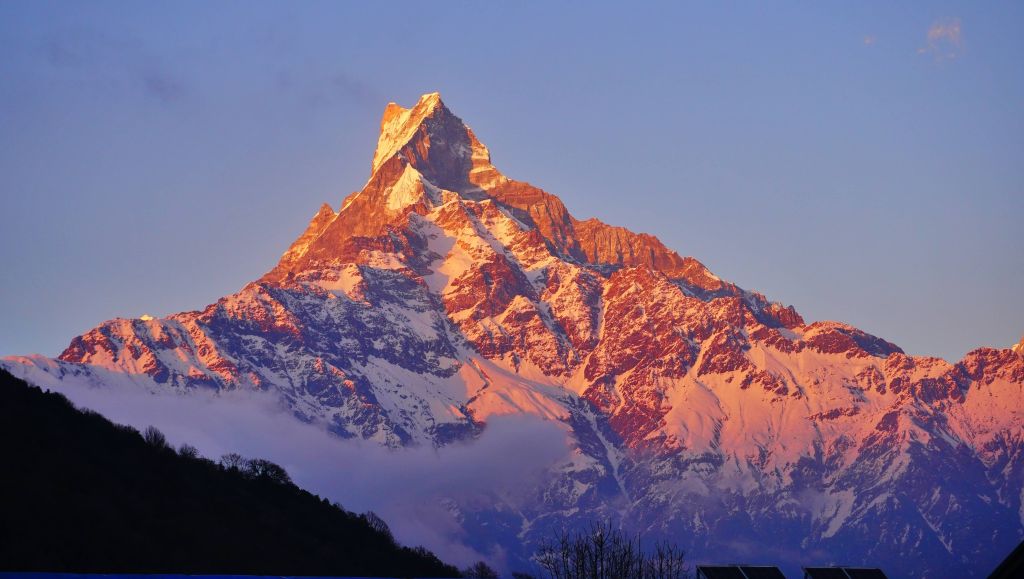 Photo: Alpenglow on the peak of Fishtail (Machhapuchre) mountian (6,993m).
Popular trekking routes such as the Everest Base Camp Trek and Annapurna Circuit Trek are bustling with trekkers during this season, so it's advisable to book accommodations in advance.
Spring is not just about nature; it's also about cultural immersion. Spring literally marks the new beginning in life. Festivals like the Nepali New Year, Holi, and Buddha Jayanti add colors and vibrancy in life. Festivals replenish the heart with joy.
Expedition also starts in the Spring season. Do not ponder if you see colorful camps with Sherpas on the Base Camp of Everest.
Summer/Monsoon Season Trekking in Nepal (June to August)
- Season: June to August
- Temperature: 15°C to 32°C (lowlands), cooler above 3,000m
- Crowd Level: Very Low
- Best For: Budget travelers, solitude seekers, rain shadow treks
- Top Treks: Upper Mustang Trek, Upper Dolpo, Nar Phu Valley
- Festivals: Yartung Horse Festival (August, Lo Manthang)
The summer months in Nepal are hotter and warmer. The temperature in the lowlands of Terai exceeds 40℃. The Hill of Nepal is less warm compared to Terai, yet hotter.
As you ascend above the elevation of 2,000 meters, the temperature drops, making it an ideal place to escape the lowland heat. The 5-day Mardi Himal Trek and Langtang Valley Trek are the best trekking destinations from Pokhara and Kathmandu before the pre-monsoon.
.webp) Image: Horse grazing in the grassy meadow of Dhorpatan region during monsoon season.
Image: Horse grazing in the grassy meadow of Dhorpatan region during monsoon season.
Summer is followed by the monsoon season, with heavy rainfall in Hilly and Terai regions of Nepal. Trails can become slippery and challenging to navigate. While trekking below 2,000 meters, you can encounter leeches. This might not be the best time to trek in Nepal for some trekkers. However, if you're up for an adventure, the monsoon season offers lush green landscapes and fewer crowds on the trails.
Monsoon for researchers and students interested in biodiversity, Nepal is a paradise. A variety of vegetation thrives and grows in the lush green forests of Nepal.
 Photo: Wildflower all over the large meadow of Kori trek during monsoon trek.
Despite the rain, the monsoon has its charm. The air is fresh, and the countryside is rejuvenated with new growth. Waterfalls cascade down the mountainsides, and the clouds create a mystical atmosphere. Trekkers who venture out during this time must be prepared for rain but will be rewarded with a unique trekking experience.
Places like Upper Mustang, Upper Dolpo, Kanchenjunga Circuit, and Humla lie in the Rain Shadow regions. For instance, Upper Mustang receives only 200-330mm of annual rainfall compared to Pokhara's 3,000mm+. Though the effect of climate change is visible with more rainfall trends these days. This makes Mustang and Dolpo ideal for June-August trekking. Due to Himalayan barrier they receive very little monsoon rainfall compared to Terai and Hills of Nepal. Sometimes, even no rain. While the lower region of Nepal rains heavily, Himalayan districts make the best trekking destination despite monsoon rain.
 Photo: High Red Cliff & Arid landscape of Upper Mustang region where people can hike even in Monsoon.
The recent change in the permit system from $500 flat fee to $50/day has made Upper Mustang even more accessible than ever. The Yartung Horse Festival in Lo Manthang (August) features traditional horse racing. This festival can be one of the key reasons to trek Mustang in monsoon.
Budget tip: Domestic flights and teahouse accommodation are 30-40% cheaper during monsoon compared to October peak season.
However, North Nepal Trek recommends that trekkers remain vigilant and check weather forecasts constantly in the monsoon season. Pack with the necessary gear. North Nepal Trek has prepared a detailed packing list to ensure safety for your successful monsoon trek.
The monsoon season is the best time for those who enjoy solitude, as fewer trekkers love to drench in the monsoon trek.
Autumn/Fall Season Trekking in Nepal (September to November)
- Season: September to November
- Temperature: 5°C to 25°C (varies by altitude)
- Crowd Level: Medium (September) → Very High (October) → High (November)
- Best For: Everyone — first-timers to experienced trekkers
- Top Treks: Annapurna Circuit, EBC, Manaslu Circuit, ABC, Mardi Himal, all treks
- Festivals: Dashain (October), Tihar/Diwali (November)
Autumn is undoubtedly the best season for trekking in Nepal. The monsoon rains have cleared, leaving behind lush greenery and clear skies. Temperatures are mild, ranging from 15°C to 25°C (59°F to 77°F) in cities like Pokhara & Kathmandu.
The monsoon curse improves from around the 3rd week (late September) with little rain on the trail. October is peak month with best visibility but crowds surges. November is slightly colder but noticeably quieter. An excellent choice for trekkers who want clear views and dine peacefully in the dining hall of teahouses.
 Photo: Trekkers on the trailhead of Everest Base Camp.
This season attracts trekkers from around the world, eager to experience Nepal's renowned trails in optimal conditions. The trails are at their most hospitable, with stable weather and breathtaking views that make each day on the trail unforgettable. During October teahouses of popular routes like Annapurna Circuit and Mohare Danda fill up by early afternoon. North Nepal Trek recommends pre-book for accommodation to guarantee rooms.
Based on our trail reports over the past decade, the autumn window is shifting. Mid-October to early December is becoming favorable time as monsoon withdrawal delays due to impact of climate change.
 Photo: Annapurna South and Hiuchuli seen from the Badal Dada of Mardi Himal Trek.
The arrival of Dashain and Tihar adds a different level of joy and vibrancy in the Autumn. The ambience is filled with colors, family gathering, and lots of fun. This is the best time in Nepal for culture immersion and celebrations with the local community of Nepal.
Remember: Early booking is a must to reserve your spot in the crowded season at Annapurna region, Langtang region, and Manaslu region.
Winter Season Trekking in Nepal (December to February)
- Season: December to February
- Temperature: -15°C to 20°C (varies dramatically by altitude)
- Crowd Level: Low to Very Low
- Best For: Experienced trekkers, solitude seekers, budget travelers
- Top Treks: Poon Hill, Mardi Himal (lower route), Lower Mustang, Pokhara day hikes
- Festivals: Sonam Losar / Tamang New Year (January, Langtang region)
Winter in Nepal is cold and snowy in higher elevations. This makes some trekking routes more challenging. The temperature in the lower-altitude ranges from 7°C to 23°C, while the temperature in the higher elevation drops to 0 to negative.
Winter might not be the best time to trek in Nepal due to the cold. However, lower-altitude treks, such as the Ghorepani Poon Hill Trek and Gosainkunda trek, remain the safest and best trekking routes in winter.
 Photo: Snow covered trail of Annapurna Circuit Trek, Nepal
The mountain passes above 5000m, such as Thorong La Pass (5,416 m), Larke La (5,106m) are covered with heavy snow during December-February. This makes it difficult to navigate the trail. However, treks below 4,000m remain accessible with proper gear.
Winter's beauty lies in its tranquility and the snow-capped peaks. The crisp air and quiet trails provide a sense of peace and solitude. This is the time when trekkers can indulge deeply in the trails of Nepal without any disturbance. However, be prepared for shorter days and colder nights.
Mind you, December to February in Nepal is peak time for the expedition and climbing season. Mountain climbers tie their spikey mountain boots while trekkers rest their trekking boots waiting for Spring.
 Photo: Snow of January 2026 in Lo Manthang of Upper Mustang region.
Keep Nepal in the winter bucklist, it is the most budget-friendly season. Domestic flights, teahouse rates, and Restricted Area Permit’s fee is lower than October peak. Trekking in winter in December, January, and February allows you the beautiful views of snow-covered peaks glistening under the bright winter sun, creating a magical atmosphere that few get to witness.
Specific winter trek recommendations with durations:
- Poon Hill: 3 to 4 days, easy, doable all winter
- Mardi Trek (lower route to High Camp): 4-5 days, moderate
- Pikey Peak: 4-5 days, moderate, stunning Everest views
- Lower Mustang: 5-7 days, moderate
- Pokhara day hikes like Australian Camp and Sarangkot) are year-round
Trekkers need to be well-prepared for the cold and potential snow. Proper preparation with a professional guide is key to a successful winter trek. You must be equipped with proper winter trekking gear and warmer clothes for the trek to protect yourself from harsh weather conditions. Get the comprehensive packing list for trekking in Nepal.
Best Treks from Pokhara by Season
As a Pokhara and Kathmandu-based agency, we arrange treks year-round from both cities. Here are the best treks accessible from Pokhara for each season, with drive times to trailheads.
|
Season
|
Best Trek from Pokhara
|
Duration
|
Difficulty
|
Drive to Trailhead
|
Why This Season
|
|
Spring (Mar-May)
|
ABC 7 Days
|
7 days
|
Moderate
|
2 hrs to Jhinu Danda
|
Rhododendron bloom, warm days
|
|
Spring (Mar-May)
|
Annapurna Circuit
|
12 days
|
Challenging
|
6 hrs to Besisahar
|
Thorong La open, wildflowers
|
|
Autumn (Oct-Nov)
|
Mardi Himal
|
5-7 days
|
Moderate
|
1 hr to Kande
|
Best mountain views, golden light
|
|
Autumn (Oct-Nov)
|
Khopra Ridge
|
5-6 days
|
Moderate
|
2 hrs to Nayapul
|
Fewer crowds, Khayer Lake open
|
|
Winter (Dec-Feb)
|
Poon Hill
|
3-4 days
|
Easy
|
2 hrs to Nayapul
|
Snow-dusted peaks, empty trails
|
|
Winter (Dec-Feb)
|
Mardi Himal (short)
|
4 days
|
Moderate
|
1 hr to Kande
|
Crisp views, budget prices
|
|
Monsoon (Jun-Aug)
|
Upper Mustang
|
10-14 days
|
Moderate
|
7 hrs to Kagbeni
|
Rain shadow, cultural festivals
|
|
Year-round
|
Australian Camp Hike
|
1 day
|
Easy
|
30 min to Phedi
|
Panoramic views, any fitness level
|
All trailheads listed above are accessible from our Kathmandu & Pokhara office. We also arrange domestic flights and private transfers from our Kathmandu office. Contact us for current trail conditions. Our guides walk these trails weekly.
Best Trekking Season by Region
For the majority of the trekking season by region, Spring and Autumn/Fall are perfect times to visit in terms of climatic conditions, mountain visibility, and cultural exposure. Find the information in detail.
Annapurna Region (Pokhara-based treks)
- Best months: October-November and March-April
- Spring highlight: Rhododendron blooms along ABC, Ghorepani, and Mohare routes
- Autumn highlight: Clear views of Annapurna South, Machhapuchre, Dhaulagiri ranges
- Monsoon note: Try Lower & Upper Mustang. Avoid lower regions.
- Winter option: Poon Hill and Mardi Trek still doable December-February
Note: As a Pokhara-based travel agency, we monitor Annapurna trail conditions daily.
Everest Region (Khumbu)
-
Best months: October-November and March-May
-
Spring advantage: Longer days, expedition season adds excitement
-
Autumn advantage: Best visibility for Everest views
-
Winter warning: Renjo La and Cho La passes may close December-February
Upper Mustang & Dolpo (Rain Shadow Area Trekking)
- Best months: May-October (opposite of everywhere else)
- Why it's different: Lies in Himalayan rain shadow of Dhaulagiri & Annapurna range
- Tiji Festival: May in Lo Manthang
- Saga Dawa festival: Upper Dolpo
- Yartung Festival: August (horse racing)
- Permit: $50/day (changed from flat $500) for Upper Mustang and USD 500 for Dolpo
Langtang Region
- Best months: October-November and March-May
- Advantage: Closest major trekking region to Kathmandu
- Winter option: Langtang Valley doable to Kyanjin Gompa in December
Manaslu Region
- Best months: September-November and March-May
- Restricted area: Requires group permit through licensed agency.
- Larke La Pass (5,106m) closed December-February
Nepal Trekking Weather by Altitude
|
Altitude Zone
|
Location
|
Spring
|
Monsoon
|
Autumn
|
Winter
|
|
822m
|
Pokhara
|
15-30°C
|
22-32°C
|
15-28°C
|
8-20°C
|
|
2,000m
|
Ghandruk
|
10-22°C
|
15-25°C
|
8-20°C
|
2-15°C
|
|
3,000m
|
Forest Camp / Namche
|
5-15°C
|
10-18°C
|
3-14°C
|
-5 to 8°C
|
|
4,000m
|
ABC / MBC
|
0-10°C
|
5-12°C
|
-2 to 8°C
|
-15 to 2°C
|
|
5,000m+
|
Thorong La / EBC
|
-5 to 5°C
|
0-8°C
|
-8 to 3°C
|
-20 to -5°C
|
Temperature drops approximately 6°C for every 1,000m gain in altitude. Night temperatures are significantly colder than daytime. Wind chill at exposed passes can make it feel 10-15°C colder than actual temperature.
Nepal Festival Calendar for Trekkers
|
Month
|
Festival
|
Where
|
Why Trekkers Care
|
|
March
|
Fagu Purnima/Holi
|
First day at Hill region
Second day at Madesh
|
Colorful pre/post-trek cultural experience
|
|
April
|
Bisket Jatra, Nepali New Year
|
Bhaktapur and Nationwide
|
Ancient 9-day chariot procession, Calendar changes to 2083 BS
|
|
May
|
Tiji Festival
|
Lo Manthang, Upper Mustang
|
3 Days masked dance by Monks and disciples
|
|
August
|
Yartung Horse Festival
|
Lo Manthang
|
Horse racing festivals in monsoon
|
|
October
|
Dashain
|
Nationwide
|
Biggest Nepali festival, 15 days
|
|
November
|
Tihar
|
Nationwide
|
Festival of lights, beautiful evenings
|
|
January
|
Sonam Losar
|
Langtang, Helambu
|
Tamang New Year celebrations
|
North Nepal Trek recommends planning a trek around these festivals to combine hiking with Nepal's culture. Our guides incorporate festival visits into your itinerary at no extra cost.
 Photo: Collage of Festivals in Nepal (Dashain , Loshar, Tiji)
How to Choose the Right Trek for Your Season
It is quite a subjective choice for trekkers. When deciding on a suitable trek in Nepal, consider your interests, the scenery, and the landscapes you want to explore. Here are some factors to keep in mind:
Autumn(Fall) and spring seasons offer the best weather conditions for trekking, with mild climate and clear skies. Also, higher chances of witnessing mountain peaks. Trails are beginner-friendly. Easy access to trails and teahouses for accommodations.
If you prefer less-crowded trails, the monsoon or winter is the best time to trek. Trails are peaceful, allowing for a more solitary experience. At the same time, be prepared for challenging conditions, including rain, snow, and unpredictable weather.
Spring is the best time to trek in Nepal for a reason. Blooming flowers and thriving wildlife add color to the canvas of Spring. Birdwatchers and wildlife enthusiasts will find spring an especially rewarding time to explore the trails.
Trekking in Autumn(Fall), enriches your cultural experience in Nepal. Festivals, such as Dashain or Tihar, offer a deeper connection to Nepalese culture. Autumn is the best time for cultural and natural exposure.
Consider going through a comprehensive packing list for trekking in Nepal for different seasons. This helps you out with trekking essentials, budget, and gears for different trekking seasons.
Trekking in Nepal is an unforgettable experience. Selecting the best time of your choice significantly enhances your adventure. Whether you’re drawn to lush green forests, snow-capped mountains, or even the snow-packed trail of winter, Nepal discriminates no trekkers. Take your time. Research thoroughly based on your interests, and prepare meticulously to ensure a memorable journey in the trail of Nepal.
I'm visiting in October-November (Peak Season)
- Go big: Annapurna Circuit, EBC, Manaslu Circuit, Nar Phu Valley
- Book guides and accommodation 2-3 months ahead
- Budget tip: October is the most expensive month
I'm visiting in March-April (Spring)
- Best for: ABC, Mardi Himal, Pikey Peak, Langtang
- April is best for Rhododendron photography below 3,500m
- Carry rain gear if extending into May
I'm visiting in December-February (Winter)
- Stick to treks below 4,000m: Poon Hill, Lower Mustang, Pokhara day hikes
- Budget advantage: 30-40% cheaper than peak season
I'm visiting in June-August (Monsoon)
- Only viable options: Upper Mustang, Dolpo, Nar Phu (rain shadow)
- Yartung Festival in August is a cultural highlight
I'm a beginner — when should I come?
- Best months: October or April
- Best treks: Mardi Himal (5 days), Poon Hill (3 days), ABC 7 days
- Stable weather reduces risk, busy trails mean more support
I'm a senior trekker — when should I come?
Frequently Asked Questions
Get answers to your most frequently asked questions regarding trekking in Nepal below:
Q1: What is the best month to trek in Nepal?
October is the single best month. Post-monsoon clarity gives the best mountain views, temperatures are comfortable (5-22°C depending on altitude), and trails are dry and stable. April is a close second with warmer temperatures and blooming rhododendrons.
Q2: Can I trek in Nepal in January?
Yes, but only on lower-altitude treks below 4,000m. Poon Hill, Mardi Himal (lower route), and Pokhara day hikes are all doable. Expect sub-zero temperatures at night above 3,000m. High passes like Thorong La are typically closed by snow.
Q3: Is Nepal safe for trekking during monsoon?
Most regions are not recommended during monsoon (June-August) due to heavy rain and landslide risk. However, Upper Mustang and Dolpo lie in the Himalayan rain shadow and receive very little rainfall, making them excellent monsoon trekking destinations.
Q4: Which treks can I do from Pokhara?
Pokhara is the gateway to all Annapurna region treks including ABC (7 days), Mardi Himal (5 days), Annapurna Circuit (12 days), Khopra Ridge (5 days), Poon Hill (3 days), and Upper Mustang (10-14 days). Most trailheads are 1-3 hours drive from Pokhara.
Q5: When is the cheapest time to trek in Nepal?
December-February (winter) and June-August (monsoon) are cheapest. Flights, teahouses, and guide fees can be 30-40% lower than peak season (October).
Q6: What is the best season for Everest Base Camp?
Autumn (October-November) is best. Spring (March-May) is also excellent and coincides with the Everest climbing season. Avoid monsoon and deep winter for EBC.
Q7: Can beginners trek in Nepal?
Absolutely. Poon Hill (3 days, easy), Mardi Himal (5 days, moderate), and Royal Trek (3 days, easy) are perfect for beginners. October and April are the best months due to stable weather.
Q8: Do I need a guide to trek in Nepal?
Since April 2023, Nepal requires all foreign trekkers to hire a licensed guide. Solo trekking without a guide is no longer permitted.
Q9: When do the high passes open and close?
Most passes above 5,000m (Thorong La, Larke La, Kang La) are open March-November. They typically close December-February due to heavy snowfall. Always check current status with your agency.
Q10: What is rain shadow trekking?
Rain shadow regions like Upper Mustang and Dolpo sit behind the Himalayan barrier and receive very little monsoon rainfall. This makes them ideal for June-August trekking when all other regions are too wet.
Plan Your Nepal Trek with North Nepal Trek
Why us? Operating from both Kathmandu & Pokhara with 10+ years of experience and 10,000+ trekkers served. Highly professional, skilled, and licensed mountain guide. Awarded Trip Advisor’s Travelers' Choice Award for three consecutive years (2025, 2024, 2023 & 2020). Over hundred 5 ⭐ ratings in Google reviews. Book your Authentic Himalayan Adventure with North Nepal Travel & Trek.
Still not sure which Trek is right for you? WhatsApp us at +977 9856016904. You are step away to craft your perfect holiday in the Himalaya of Nepal.
Author
Mohan Raj Bhandari
Founder/Managing director
A native of the Annapurna region, he brings over 17 years of firsthand experience leading treks across the mountains of Nepal. His deep local roots and proven guiding expertise make him a trusted authority on authentic Himalayan adventures.
Field Notes, Monthly
Receive monthly trekking updates, seasonal trail conditions, permit changes, packing
advice, and exclusive travel planning tips from our local guides.