Everest Base Camp Trek (12 Days) — Cost, Itinerary & Guide for 2026
Everest Base Camp is a world-famous trekking destination with the option of a Helicopter tour t...
OVERVIEW & HIGHLIGHTS
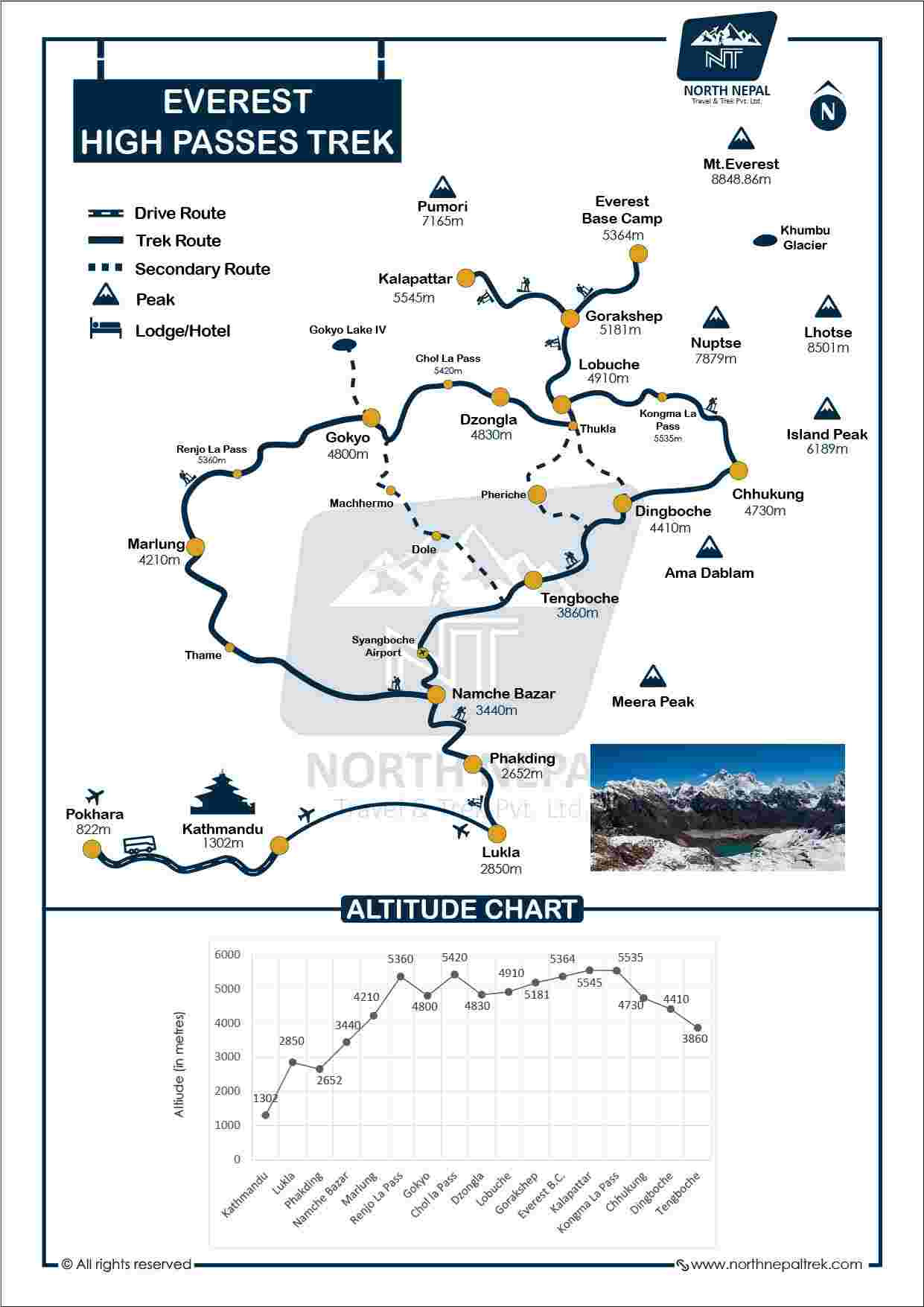
The Everest Three Passes trek is a 17-day guided circuit of the Khumbu region, crossing three high passes — Renjo La (5,360 m), Cho La (5,420 m) and Kongma La (5,535 m) — and taking in both the Gokyo Lakes and Everest Base Camp on one route. It's run by North Nepal Travel & Trek, a TAAN-registered Nepali operator, and the 2026 price starts at USD 1,400 per person in a group (USD 1,600 for two), including the Lukla flights, a licensed guide, both Khumbu permits, teahouse accommodation and three meals a day.
It's one of the hardest treks in Nepal — harder than the standard Everest Base Camp trek — because you cross three passes above 5,300 m rather than walking to base camp and back. It's built for fit, experienced trekkers who can handle 16–20 days at altitude. You need the Sagarmatha National Park and Khumbu Rural Municipality permits (no TIMS in Khumbu); we arrange both. New to Everest? Start here.
| Pass | Elevation | Trek Day |
| Renjo La | 5,360 m / 17,585 ft | Day 5 (via Gokyo) |
| Cho La | 5,420 m / 17,782 ft | Day 7 |
| Kongma La | 5,535 m / 18,159 ft | Day 11 |
Mohan Raj Bhandari, Founder/Managing director
Everest Three Passes Trek route and pacing are drawn from 12+ years guiding the Everest region. Mohan founded North Nepal Trek in 2015, and our Everest-region guides have led this challenging high-altitude circuit for our trekkers season after season.
We take an early morning flight to Lukla from Kathmandu, as afternoon winds in Lukla are not suitable for planes to land. Flying to Lukla is a memorable experience in itself; you will get to see an overhead view of the entire Everest region with the lush green hills and the nearby and distant peaks. After reaching Lukla, following a 40-minute flight, we only walk for about 3 hours to Phakding.

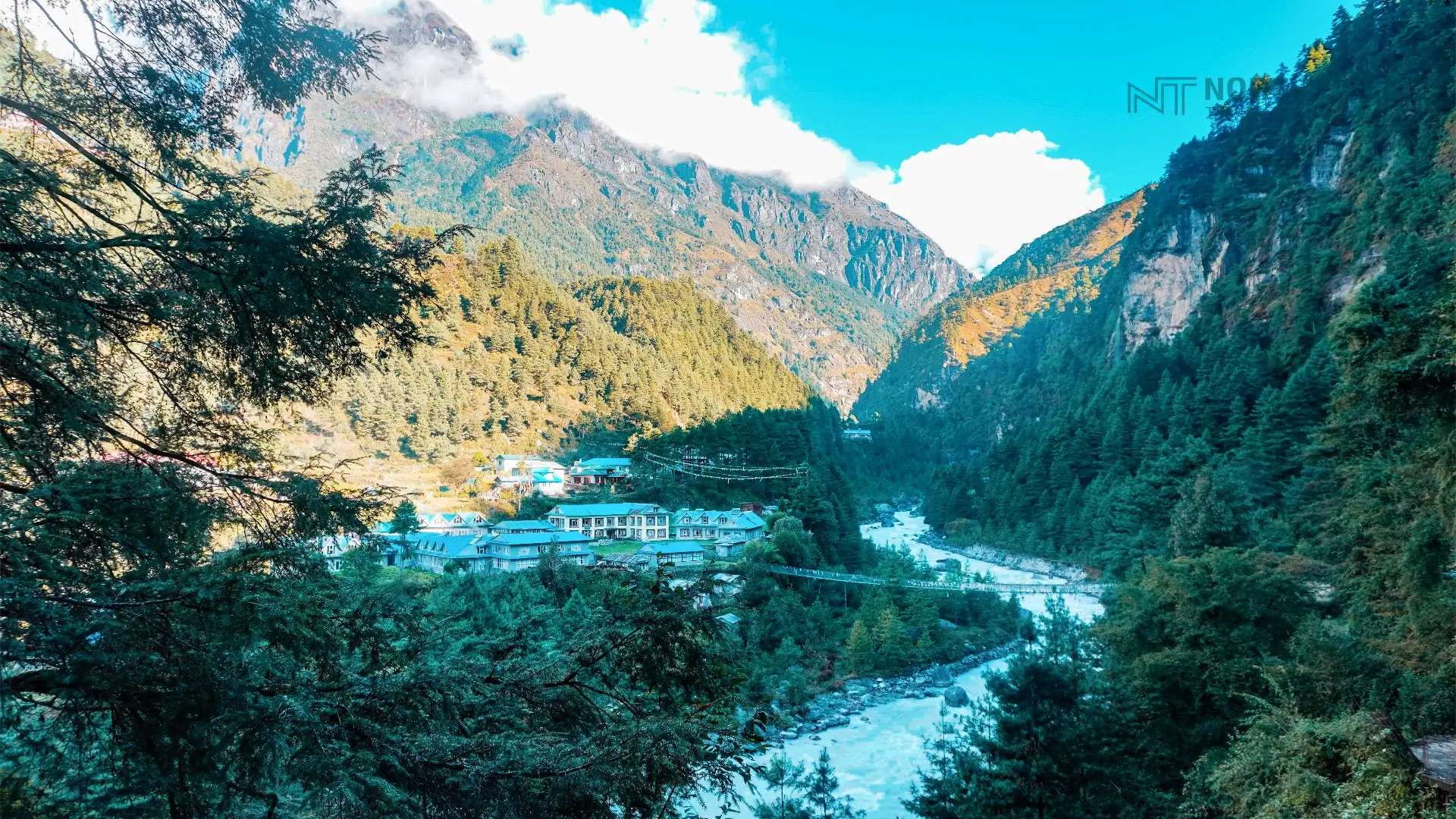
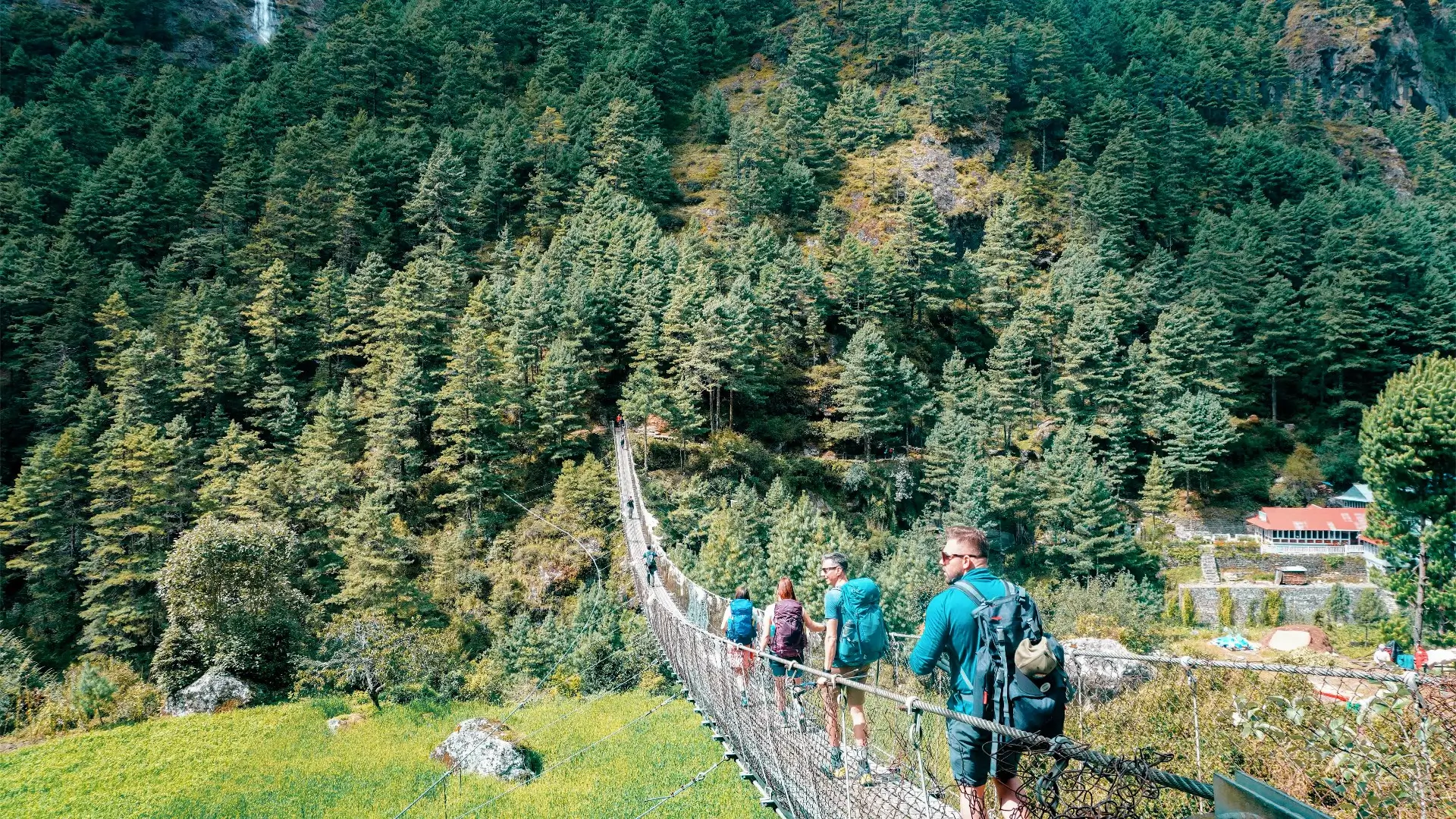
We will hike to the commercial side of Khumbu, which is Namche Bazaar. We mostly walk alongside the Dudh Koshi River and cross a rhododendron forest. Moreover, we walk across a few suspension bridges adorned with prayer flags. The scenes from these bridges are something to stop for. After 6 to 7 hours of walking through ups and downs, we reach Namche Bazaar.
After breakfast, we walk for about 2 hours to Jorsalle Village for lunch. The route starts along the banks of the Dudhkoshi River and crosses two suspension bridges before reaching Monjo Village. A 20-minute descent towards the end finally leads to Jorsalle Village, the entrance to the Sagarmatha National Park as well as the last village until Namche Bazaar.
After lunch, we walk for around 3 hours to Namche Bazaar. With the raging Dudhkoshi River mostly to the left for about half an hour before crossing a suspension bridge, the trail in its final 2 hours ascends through a pine forest. In reaching Namche, the administrative headquarters of the Khumbu Region, the ascent often demands a little extra even from seasoned legs. Spend the night in a hotel in Namche.
Today, we will walk the path that was used as a trade route centuries ago to trade salt and other goods with the Tibetans. We will pass villages like Phurte, Samsing, and Thesho, trekking through a scenic route of forest dominated by Rhododendron and pine trees. Since we will be passing through a forest, we might just come across some Himalayan wildlife including Musk deer, small rodents, Pheasant, Himalayan Thar, and more.

We then ascend through the village of Thame, famous for its stunning mountain views and a nunnery at the hilltop. Continuing the trek, we will reach Taranga, a village known to be the home of Yeti, a Sherpa folklore giant that is believed to reside in the mountains. Besides that, the village is also famous for its potatoes, as they are considered the best-tasting potatoes in Nepal.
Trekking alongside the Bhote Khosi River, we will pass through the monastery of Khari Gompa before reaching Marlung after 7 to 8 hours of trekking.
As we have a long trek day ahead, we will start early. Today, we trek on the right bank of the Bhote Koshi River, making our way to Lumde village. As we move further into the valley, you will notice fewer settlements along the way. Making our way to the pass, we will ascend a steep trail past the Gokyo Lake scenes. From the summit of the Renjo La Pass, you will get to see the views of Everest, Cho Oyu, Lhotse, Makalu, Cholatse, Taboche, Pumori, and more.

After a while of enjoying the scenes, we should begin moving again. The descent from the pass is steep, so we will trek slowly and steadily. As we leave the Gokyo glacier behind and proceed towards the Gokyo Lakes, the steep descent gradually turns into a plain track. We walk for a total of about 8 hours to finally reach Gokyo.
We will take a rest day in Gokyo Valley for acclimatization. For our acclimatization hike, we will climb the Gokyo Ri as well as visit several Gokyo lakes. These lakes are just too beautiful not to admire; make sure you have enough storage, as you will be taking tons of pics here.
We have a busy day ahead, so we will have to get on the track early in the morning. As you start the climb to Gokyo Ri, you will come across the Ngozumpa Glacier, which is the largest glacier of Nepal. Climbing the Gokyo Ri peak is not a difficult exercise in itself, and the path to the top is not as challenging. However, given that you are 5000 meters above sea level, everything takes slightly more effort. Even walking a plain path takes more energy and stamina compared to sea-level walks.

After you reach the top of the peak, you will get an expansive view of the nearby and distant mountains, including Everest, Cholatse, Cho Oyu, Thamserku, Nuptse, Lhotse, Tawache Peak, Makalu, and some other peaks that are yet to be named.
We will cross our second high pass today. Slowly making our way to the base of the Cho La Pass, we will begin the ascent through rugged terrain. This path to the summit of Cho La will have you travel over a glacier. From the top of the pass, the views of the landscape will be dominated by Ama Dablam, along with views of peaks like Cholatese, Lobuche East, Barunste, and more.

As challenging as the ascent feels, the way back down is equally challenging, as the ice and snow make it tricky. We ascend from the Ngozumpa Glacier and pass through Thangnak. After about 7-8 hours of hiking, we cross the Cho La Pass and reach Dzongla.
From Dozongla, the path to Lobuche is rocky and full of boulders. The path is ascending today as well, but it is less challenging compared to our previous day, so it won’t be a problem for us. Making our way through the rocky trail, past tiny lakes, we will reach the Lobuche Base Camp. We will take a small break at the base camp before getting on with the mountain climbing adventure. Our climbing leader will brief you on the equipment (how to use it) and the passage to the top of the peak.
Once you begin to climb the peak, you should follow the leader and not go off on your own, This bit is very important. It takes about 4 to 5 hours to get to the peak of Lobuche from where you will get to see views of Mount Everest, Amadablam, Makalu, Nuptse, Lhotse, Pumori, and more.
Today, we hike along the moraine of Khumbu Glacier, walking an ascending trail to reach Thangma Riju. We then continue up to Gorak Shep which will offer us some excellent views of the Himalayas. It will take us about 2.5 hours to reach there.
Gorka Shep is the last settlement of the region, so we will check in at a lodge there, secure our room, leave all the day and unnecessary stuff, and move on to the Everest Base Camp. You will not need your luggage at the Everest Base Camp, so it’s better to leave them at the lodging.
The Everest Base Camp is not an exact pinpoint location on the map, it is more like a long plain area with hundreds of tents, housed by those who are looking forward to climbing the Everest peak. It will take us about 3 hours to reach the Everest Base Camp from Gorakshep.
After exploring to our heart’s content, we will hike back to Gorak Shep, where we spend the night.

We hike to Kala Patthar early in the morning to witness the remarkable views of the mountains, along with the Everest Himalayan range. The hike to Kala Patthar is not a lengthy one, lasting only 1.2 km, but it is quite steep. Within 1.5 hours, we will reach the viewpoint from where views of the entire Everest Himalayan range are apparent. Peaks including Everest, Lhotse, Ama Dablam, Thamserku, Kangtega, Taboche, Lobuche, Nuptse, Changtse, and Pumori can be seen from this viewpoint.
The Kala Patthar viewpoint is among the only few spots that let you see the Everest Himalayan range in its entirety. Following a great time at Kala Patthar, we will shortly walk back to Gorakshep and continue our trek to Lobuche.
Gorakshep to Lobuche is an easy trek, only taking about 1.5 hours and covering a distance of 4.5 km. After reaching Lobuche, we will check in at a local tea shop to stay for the night
Today’s path is well-defined, but that does not make it easy for us to climb the Kongma La Pass. First, we cross the Khumbu Glacier, trekking for about 2 hours, and then we reach the highlight of today’s trek. As soon as we cross the glacier, we will begin the ascending path to Kongma La. This uphill climb is not a walk in the park; it will test you physically, so be prepared for the strains that come along with it.

The top of the pass houses several Buddhist prayer flags, and the view from there is simply amazing. After taking in the views, we descend and pass through Niyang Khola and reach Cho La after about 8 hours of trekking.
We ascend from Chhukung and climb the Chhukung Ri before heading back down to Chhukung and continuing to Dingboche. We will follow the Imja River on the way down. The trail to Dingboche is simple and well-marked, taking you through highland meadows. There are some slight incline and decline sections but it is not strenuous at all.
Photo: Dingboche in the Everest Three Passes trek.
Ama Dablam, Lhotse, Nuptse, and other peaks can be seen on the way to Dingboche, a major accommodation place for most trekkers visiting the region. Today’s trek takes about 7 whole hours to complete.
This day is for acclimatization. We will trek for a total of six hours from reaching Nagarjun Hill to coming back to Dingboche. Hiking short distances while acclimatizing is the key to avoiding altitude sickness. Always remember, trek high, sleep low. We will then climb to an altitude of 5100m, where we will see some excellent views of the mountains.
After you are done with the side trek, you can explore the village, visit the different tea houses, and chat with the locals. This village is surrounded by stone walls to keep the crops safe from the cold winds of the Himalayas.
From Dingboche to Tengboche, we will lose about 430 meters of elevation, traveling a bit more than 9 kilometers in the process. We will head south from Dingboche and down to the valley floor to cross a river bridge. The trail then ascends back to Tengboche.
Photo: Tengboche and rocky mountains in the backdrop during Everest Trek.
The trail to Tengboche takes us through forests inhabited by highland wildlife like pheasants, musk deer, and even snow leopards. We will be climbing on the steep slopes around which lie chortens and prayer flags. From the path, you can enjoy the view of the tip of Everest and the backside of Mt. Lhotse.
We trace our steps from Tengboche to Namche, passing through rhododendron forests and Sherpa villages. The trek from Tengboche to Namche is one of the longest trekking days of the 3-pass trek. Following the Dudh Koshi River, we will descend to Phungi Thenga and climb a steep trail to Namche. Overnight stay at a lodge in Namche.

We trace our steps from Namche to Lukla, passing through rhododendron forests and Sherpa villages. As the flight from Lukla to Kathmandu only takes place in the morning, we spend the night in Lukla.
Photo: Lukla or Tenzing-Hillary Airport in the Khumbu region of Solukhumbu district.
We board the plane early in the morning, which will bring us back to Kathmandu. However, we will enjoy the flight back as we look over the mountains and feel satisfied with completing the trek. Upon reaching Kathmandu, you will head to your hotel. Additionally, you can explore the UNESCO Heritage sites of Kathmandu Valley during the day.
Photo: Boudhanath Stupa in Kathmandu Valley, one of the UNESCO World Heritage Sites of Nepal.
North Nepal Trek will be organizing a farewell dinner on this day. You will also be receiving the successful Everest Trek Certificate. Our representative will take you to the airport as per your flight schedule for your final departure.
With all the agencies in Nepal it’s hard to decide which company.
Search no more! North Nepal Travel & Trek is the one to choose!
After a 20 day trek in Manaslu region with another company, we wanted to do the Three passes trek in Everest region. Luckily, we were in Pokhara and we went to North Nepal to get information.
As soon as we got in, we felt a true connexion, and we had the full attention from the owners/employees. They were so patient, they answered every question we had and they offered the best price/quality option.
We were blessed with Mohan that arranged tourist bus transportation from Pokhara to Chitwan and back to Kathmandu.
As for the Everest region trek, he chose the best airline company and he chose an experimented guide for us, Mr. Zeewan.
Zeewan came to meet us in Kathmandu, gave us all the information we needed for the trek. Zeewan is the perfect guide, we felt safe with him and he made everything go smoothly. He always respected our pace, he took pictures for us, he cheered us, and he’s knowledgeable, knowing all the mountains we passed.
We met Binaram, our porter, in Lukla. He was our superman, we had a lot of fun with him, always smiling and patient with us.
I got altitude sickness and I followed all Zeewan instructions and tips to get better and it worked fast. He’s not only a good guide, he’s a super coach and athlete. He did the Three passes trek in 5 days in 2017. He can also coach for ultramarathon training!
Zeewan and Binaram, we succeeded the Tree passes trek because of you, and we are indefinitely grateful to have experienced it with you.
Back in Pokhara, Mohan was kind enough to check on us to see how we were doing during the trek. When we finished the Three passes trek, he delivered us certificates, t-shirts and traditional Buddhist scarf to congratulate us. So thoughtful.
We are more than happy with our experience with North Nepal and will recommend to family and friends.
Itineraries are structured with careful elevation profiles and designated acclimatization stops in places like Namche Bazaar and Dingboche to ensure proper preparation before reaching extreme high-altitude mountain passes. Guides conduct rigorous daily health assessments for early symptoms of Acute Mountain Sickness (AMS). If severe symptoms appear, standard protocol mandates immediate descent to lower elevations.
In cases of severe injury, acute altitude illness, or extreme weather conditions on remote passes and high-altitude trails, emergency helicopter evacuation is coordinated directly through local rescue services, adhering strictly to regional aviation regulations set by CAAN. Evacuations are initiated promptly upon assessment by your guide in communication with our Kathmandu and Pokhara offices.
All trekkers must hold comprehensive travel insurance covering emergency medical treatment, high-altitude trekking and glacier hiking (up to 6,000 m), and emergency helicopter rescue/evacuation. Insurance details must be submitted prior to the departure of the trek to streamline emergency logistics if required.
Secure the Everest Three Passes Trek for 2026/2027 before the seat gets fully booked.
Months from March to May and from October to December are the best time to commence this trek. During March-May, the weather is usually clear and, snowfall is very common at this time of the year. But, the clearest and mind-boggling view of the Himalayas can be seen from October to December as the skies are very clear with no rainfall and meager fog. However, the trekking routes are usually more crowded from October to December than in any other season.
At the high camps and on the passes, night temperatures regularly drop to -10C to -20C, and colder in winter, while daytime walking in sun can feel mild. The three passes, all above 5,300m, are the coldest and windiest points of the trek. This is why a -20C sleeping bag and proper layering are non-negotiable. We time daily starts to cross the passes in the safest weather window.
It's possible in December and January for experienced, well-equipped trekkers, and you're rewarded with crystal-clear skies and empty trails. The trade-off is serious cold and the real risk of Cho La or Renjo La closing after heavy snow. We monitor conditions closely and always keep flexible backup days in winter itineraries. If you're considering a winter attempt, talk to us first so we can plan it safely.
Yes. From June to August the monsoon brings rain at lower elevations, clouds that block mountain views, leeches on forest sections, and frequent Lukla flight delays. The high passes can still be crossed but visibility is often poor. Most trekkers avoid this window, though the Everest rain shadow makes it less wet than other regions. We generally recommend spring or autumn instead for this route.
In particular to this trek, the nights are spent on lodges with good facilities and quality food. This trek lies in the Everest region which is famed for its highest peak in the world so, it welcomes many hikers and climbers every year, so, the lodges and tea houses are advanced and offer various options for our meals and breakfast. However, these trails and lodges may be crowded and packed during the trekking season.
Teahouses along the route serve hearty trekking food: the classic dal bhat (rice, lentils, vegetables) with free refills, plus noodles, fried rice, pasta, soups, momos, potatoes, eggs, and porridge or Tibetan bread for breakfast. Menus get simpler and pricier at higher, remote camps. We recommend dal bhat for the energy it gives at altitude. Vegetarian food is easy; tell us in advance about any allergies or dietary needs.
Don't drink untreated tap or stream water. You can buy bottled or boiled water at teahouses, or better, bring a reusable bottle with purification tablets or a filter, which is cheaper and cuts plastic waste on the trail. Boiled water is widely available for a small charge as you climb. Staying well hydrated also helps prevent altitude sickness. Our guides show you the safest options each day.
Mostly yes, but as paid extras that get more expensive with altitude. Lower teahouses often have gas hot showers, while higher up you may get a bucket of hot water for a few dollars. Charging your phone or camera and using Wi-Fi also carry small fees at higher camps, where power comes from solar. Bring a power bank and expect basic but genuinely welcoming lodges. We prepare you for what each night looks like.
This trek is mainly about ascending three passes with more than 5000m altitudes so, the routes are very technical and challenging. Also, children are more likely to get altitude sickness during the expedition. Because of that, taking children with us on this trek is very risky and almost impossible to conquer.
Yes, we can combine this route with other treks. Such as Everest Base Camp Trek and Gokyo Lake Trek.
While it is possible to trek the Everest three pass trek clockwise it will be more challenging than the counter clock-wise trek.
You will cross the Renjo La Pass which is situated at an elevation of 5,360 m / 17,585 ft directly at the start of your trek. This route connects Gokyo Valley, famous for the Gokyo Lake but is only recommended to experienced trekkers. However, we suggest that even experienced trekkers attempt the Everest three passes trek clockwise if they are already acclimatized in the high altitude zone (meaning they recently trekked any other treks at high altitude).
So, you can trek the three passes trek clockwise but with extreme caution and you are perfectly fit with low to zero chance for altitude sickness.
While the everest three pass trek is a long trek the time it takes mostly depends on your experience as well as trekking Itinerary. While directly trekking Everest three Pass Trek from Kathmandu without sight seeing mostly takes about 16 days, the acclimitization days, weather, affects the number of days you trek.
So, depending on your season, acclimitization routine, and your experience, the Everest three pass trek will take 16 - 20 days.
Everest three pass trek is one of the most challenging treks in Nepal and is rated “Challenging” grade. It is a strenuous adventure as all the passes lie over 5400 m and a good amount of stamina and physical strength is required for this long trek of 16 - 20 days.
Yes — it's widely considered the ultimate Everest-region trek because it combines Everest Base Camp, the Gokyo Lakes and three high passes in one loop, with far fewer crowds on the pass sections than the main EBC trail. If you're fit, acclimatise well, and want more than base camp, it's the standout choice.
The Everest Three Passes trek is the ultimate high-altitude circuit in Nepal's Khumbu region, crossing Renjo La (5,360m), Cho La (5,420m), and Kongma La (5,535m) while also taking in Everest Base Camp, Kala Patthar, and the turquoise Gokyo Lakes. It's a more remote, challenging, and rewarding alternative to the classic Base Camp trek, with far fewer crowds on the passes. It suits fit trekkers seeking a genuine adventure. We tailor the pace to your experience.
This is a demanding trek: you should be comfortable walking 6 to 8 hours a day for over two weeks at high altitude, with several long days above 5,000m. Previous multi-day trekking experience is strongly recommended. Cardio training, hiking with a loaded pack, and building leg strength for two to three months beforehand pays off enormously. Tell us about your fitness and hiking background and we'll advise honestly whether this route is right for you.
The classic Everest Base Camp trek is an out-and-back route to Base Camp and Kala Patthar, taking around 12 to 14 days and suiting most reasonably fit first-timers. The Three Passes trek is a longer 17 to 20 day loop that adds Renjo La, Cho La, and Kongma La plus Gokyo Lakes, demanding more fitness, acclimatization, and glacier travel. Think of it as Base Camp plus the full Khumbu adventure. We can help you choose based on your time and experience.
The foremost thing to do before inaugurating the trek is to do a regular medical check-up. However, if you get altitude sickness or any other sickness along the way then, we will consult the local doctors first and review if you can continue the journey. If you are fit enough to continue then, we will resume the journey and if no improvements are seen in your health, then we will be forced to send you back. In those cases, we will refund after calculating all the expenditures up to sick days on mutual consent.
The key is gradual acclimatization: our itinerary builds in rest days at Namche and Gokyo, follows the climb-high-sleep-low principle, and keeps ascent rates safe before each pass. Stay hydrated, walk at a steady pace, avoid alcohol, and tell your guide about any headache or nausea early. Our guides carry a pulse oximeter and are trained to spot altitude symptoms. Never rush this trek; your body needs the time.
Yes. The Everest region has one of the most established helicopter rescue networks in Nepal, and evacuation from most points on the Three Passes route is possible in good weather. This is exactly why we require travel insurance that covers high-altitude helicopter evacuation up to at least 6,000m. Our guides coordinate rescues directly when needed. We'll help you understand what your insurance must include before you travel.
Absolutely, and it must specifically cover trekking above 5,000m plus emergency helicopter evacuation and medical treatment. Standard travel insurance often excludes high altitude, so check the fine print carefully. This trek crosses three passes over 5,300m, so proper cover is essential, not optional. We can suggest what to look for in a policy, though we recommend buying it in your home country.
Choose a TAAN-registered Nepali operator with high-altitude-experienced guides and real Three Passes reviews — this trek is too demanding for a general operator. North Nepal Travel & Trek runs it with licensed guides who manage the pacing across all three passes; the 2026 price includes Lukla flights, both permits, a guide, and full board.
Our cancellation terms depend on how far ahead you cancel, since we commit to flights, permits, and guides in advance. Deposits are generally used against non-refundable costs, while the balance may be partly refundable or transferable to a future trek depending on timing. We lay out the exact terms clearly before you pay, with no hidden fine print. Message us for the current written policy that applies to your dates.
For peak seasons (spring and autumn) we recommend booking two to three months ahead, mainly to secure Lukla flights and teahouse space on this popular route. Off-season or last-minute trips are sometimes possible, but flight availability gets tight. Booking early also gives you time to train and arrange insurance. Send us your target dates and we'll tell you honestly what's still available.
Yes. North Nepal Trek is a government-registered adventure travel company based in Pokhara, Nepal, with a branch in Thamel, Kathmandu, and is a member of the Trekking Agencies Association of Nepal (TAAN). We run treks, tours, expeditions, and helicopter tours across Nepal, Bhutan, and Tibet with licensed guides. Our approach is simple: come as a guest, leave as a friend.
The standard itinerary is 17 days from Kathmandu, including the Lukla flights and acclimatisation days. The package includes the round-trip Lukla flights, a licensed guide, the Sagarmatha National Park and Khumbu Rural Municipality permits, teahouse accommodation, and three meals a day. Porters, insurance and tips are extra.
Beyond your package, budget for Nepal visa on arrival, travel insurance with high-altitude helicopter evacuation cover, meals in Kathmandu, hot showers and device charging at teahouses (a few dollars each higher up), Wi-Fi, drinking water, snacks, and tips for your guide and porter. A rough guide is USD 15 to 25 per day for personal extras on the trail. Ask us and we'll give you a realistic day-by-day estimate.
You can pay securely online through our payment page, by bank transfer, or by card, and we typically confirm your booking with a deposit while the balance is settled before or on arrival in Kathmandu. This holds your trek dates, guide, and domestic flights. We'll always confirm the exact deposit amount and accepted methods in writing before you pay. Visit northnepaltrek.com/online-payment or message us to arrange it.
Tipping is customary in Nepal and genuinely appreciated, though never mandatory. A common guideline on a 17-day trek like the Three Passes is around USD 10 to 15 per day for a guide and USD 8 to 10 per day for a porter, usually pooled by the group and given at the end. It reflects the hard, high-altitude work they do to keep you safe. We're happy to explain local norms so you feel comfortable.
Two: the Sagarmatha National Park permit and the Khumbu Rural Municipality permit. TIMS is not required in the Everest region. Both are included in our package and arranged for you. To book, send your dates and group size, and we'll confirm availability and the guide.
For 2026, the Everest Three Passes trek requires two permits: the Sagarmatha National Park entry permit (NPR 3,000, about USD 25) and the Khumbu Pasang Lhamu Rural Municipality permit (NPR 2,000, about USD 20). You no longer need a TIMS card for this route. North Nepal Trek arranges both permits for you before the trek begins, so you skip the paperwork in Kathmandu. Message us for the current confirmed rates.
Yes. Since April 2023, Nepal requires a licensed guide for trekking in national park areas, including the Everest region. Beyond the rule, a guide is essential on the Three Passes route because Renjo La, Cho La, and Kongma La involve glacier crossings and unmarked high-altitude terrain. All North Nepal Trek guides are government-licensed and trained in altitude first aid.
The trek starts in Lukla, reached by a 30 to 40 minute mountain flight from Kathmandu (or from Ramechhap/Manthali during peak season, when Everest flights shift there to ease Kathmandu congestion). From Lukla, the trail heads to Phakding and Namche Bazaar. We handle all flight bookings and transfers, and advise you in advance which airport your departure uses.
For the Three Passes you need a four-season sleeping bag rated to -20C, an insulated down jacket, waterproof shell layers, sturdy broken-in trekking boots, microspikes or crampons for the icy passes, trekking poles, and UV sunglasses for glacier glare. Because you cross three passes above 5,300m, warmth and traction matter more than on standard Everest Base Camp treks. We send every booked trekker a full route-specific packing list.
Yes, and many trekkers do. Thamel in Kathmandu has dozens of gear shops renting down jackets, sleeping bags, crampons, and trekking poles at fair daily rates, plus both genuine brands and good-value local equivalents for sale. Renting bulky items like a -20C sleeping bag makes sense if you won't trek often. We can point you to reliable shops and help you decide what to rent versus bring from home.
Aim to keep your personal daypack around 5 to 7 kg, carrying water, snacks, a camera, and layers you need during the day. Your main duffel, carried by a porter, should stay under 15 kg per trekker as this is the airline weight limit on the Lukla flight. Packing light genuinely improves your comfort at altitude. We provide a duffel bag and share exact weight limits when you book.
You fly. The Kathmandu to Lukla flight takes around 40 minutes and is one of the most scenic mountain flights in the world, landing at Tenzing-Hillary Airport. During peak seasons the flight often departs from Ramechhap (Manthali), a four to five hour drive from Kathmandu, to reduce congestion. We arrange the flights and any road transfers, and always tell you the current departure point in advance.
Lukla flights depend on clear mountain weather, so occasional delays happen, especially in monsoon and winter. We build buffer days into our itineraries to absorb this, and in serious cases a helicopter shuttle is available as a paid alternative to avoid losing the trip. Our team manages rebooking on the ground so you're never stranded alone. This is a real reason to avoid booking a tight international connection right after the trek.
Yes. Every North Nepal Trek package includes a private airport pickup and transfer to your hotel when you land in Kathmandu, and a drop-off when you depart. Your guide or a company representative meets you with a North Nepal Trek sign in the arrivals area. It's a small thing that makes a big difference after a long flight. Just share your flight details when you book.