Gokyo Lake Trek - 11 Days

Gokyo Lake Trek - 11 Days
DESTINATION Nepal
MAX. ELEVATION 5360m
WALKING DISTANCE 144 km
GRADE Moderate
BEST SEASON March-May / August-November
DURATION 11 Days
MEALS INCLUDED Breakfast, Lunch & Dinner
ACCOMMODATION Hotel, Lodge and Tea house

OVERVIEW & HIGHLIGHTS

Overview of Gokyo Lake Trek

The Gokyo Lake trek is beautiful and challenging in the Solu-Khumbu region of Nepal. Located at an altitude of 4,700 meters, the trek offers stunning views of the Himalayas, including the world's highest peak, Mount Everest. The trek begins in the town of Lukla, where trekkers catch a flight from Kathmandu. From Lukla, the trek follows the Dudh Koshi River and passes through the villages of Phakding, Namche Bazaar, and Dole.

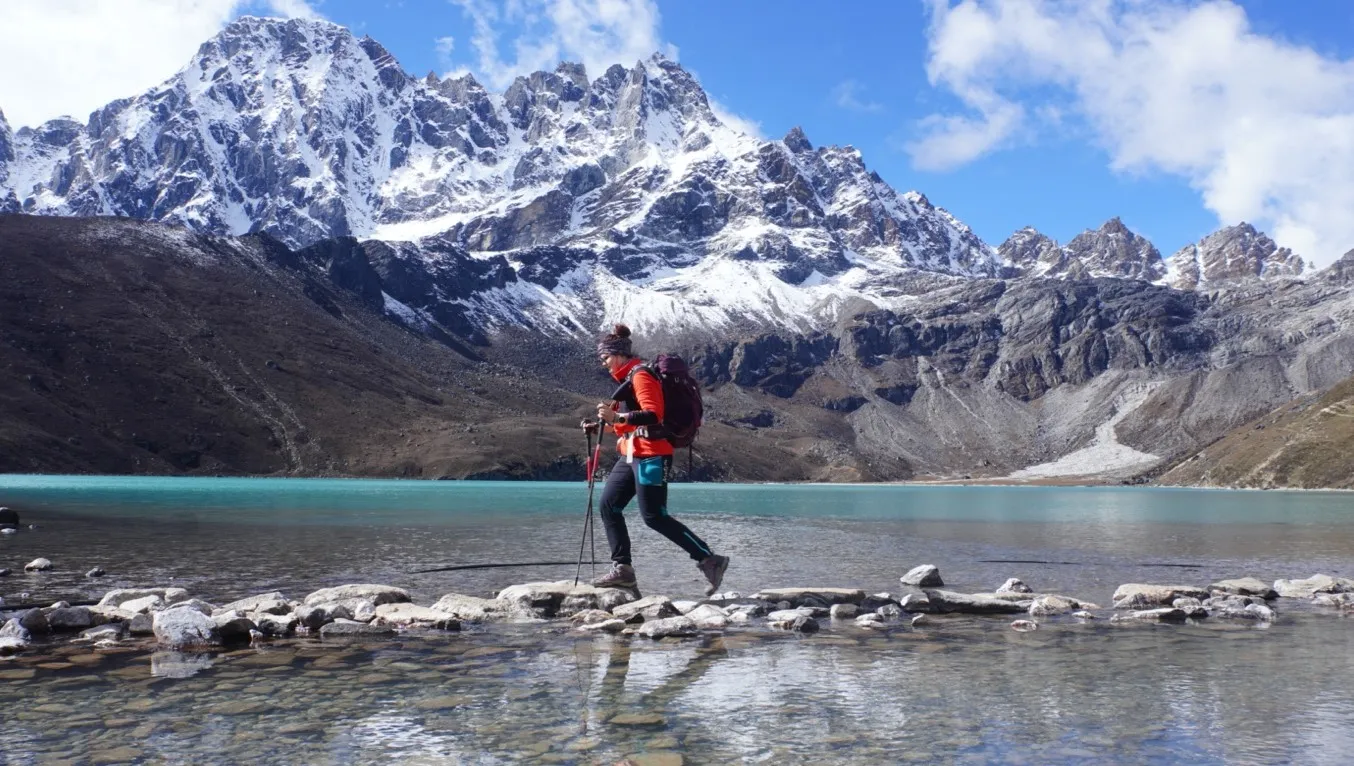
En route, trekkers can visit the famous Tengboche Monastery, home to one of the largest Buddhist monasteries in the region. As the trek continues, trekkers will experience the changing landscape and vegetation, from lush forests to alpine meadows. Along the way, they will pass several small lakes and streams, including the Gokyo Lakes, the highlight of the trek. The Gokyo Lakes are a chain of lakes of six crystal-clear bodies of water located in the Ngozumpa Glacier region. The lakes are fed by melting glaciers and feature deep blue water, making them a popular spot for trekkers to rest and enjoy the breathtaking views of the surrounding peaks.

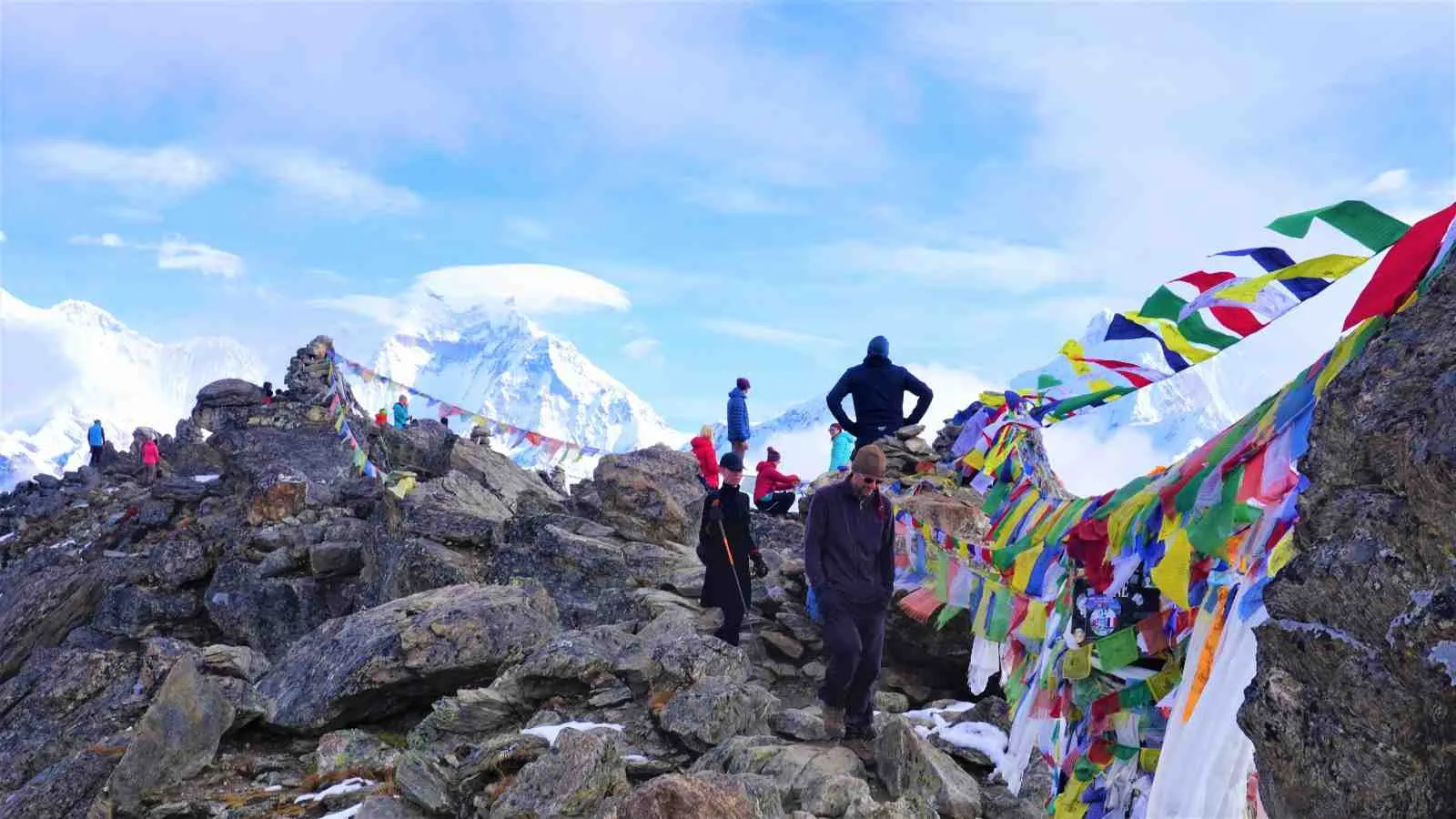
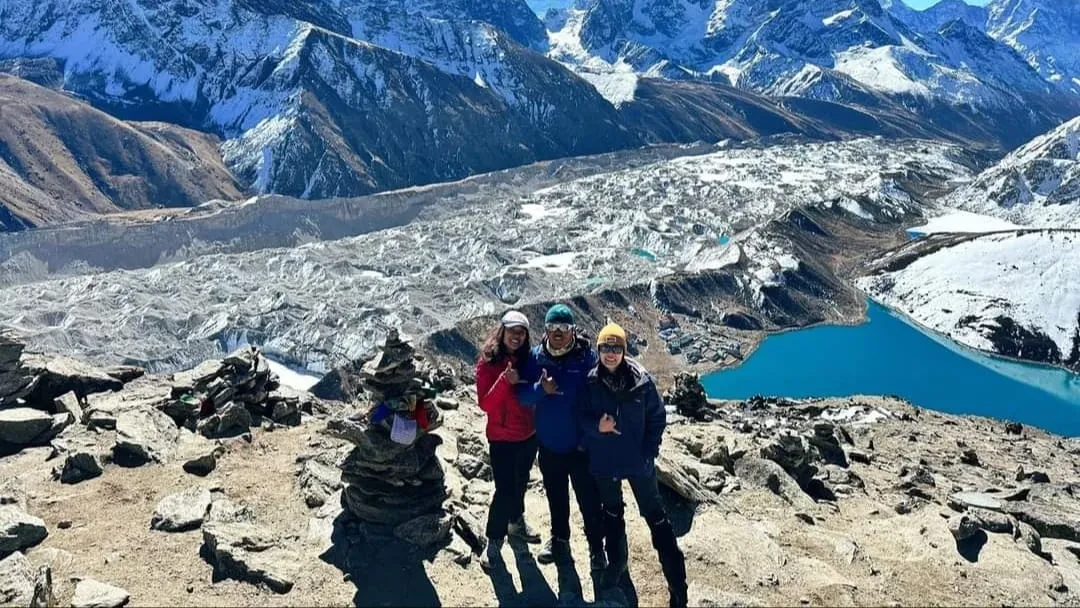
One of the main attractions of the Gokyo Lake trek is the opportunity to climb Gokyo Ri, a small peak located near the lakes. From the top of Gokyo Ri, trekkers can enjoy panoramic views of the Himalayas, including Mount Everest, Lhotse, and Makalu. In addition to the stunning natural beauty, the Gokyo Lake trek is also rich in cultural and historical significance. Trekkers will have the opportunity to visit the local villages and interact with the friendly Sherpa people, who are known for their hospitality and mountaineering skills.

Overall, the Gokyo Lake trek is a challenging yet rewarding journey through the heart of Mt. Everest. With its stunning views, rich culture, and friendly locals, the trek is a must-do for any adventure seeker visiting Nepal.

Why you will love the Gokyo Lake Trek?

  • The trail has more variation as you traverse through different landscapes.
  • Gokyo Lake at an elevation of 4,700 m (15,419 ft) is an oligotrophic lake.
  • You can see a stunning view of Ngozumpa Glacier, the longest glacier in the Himalayas.
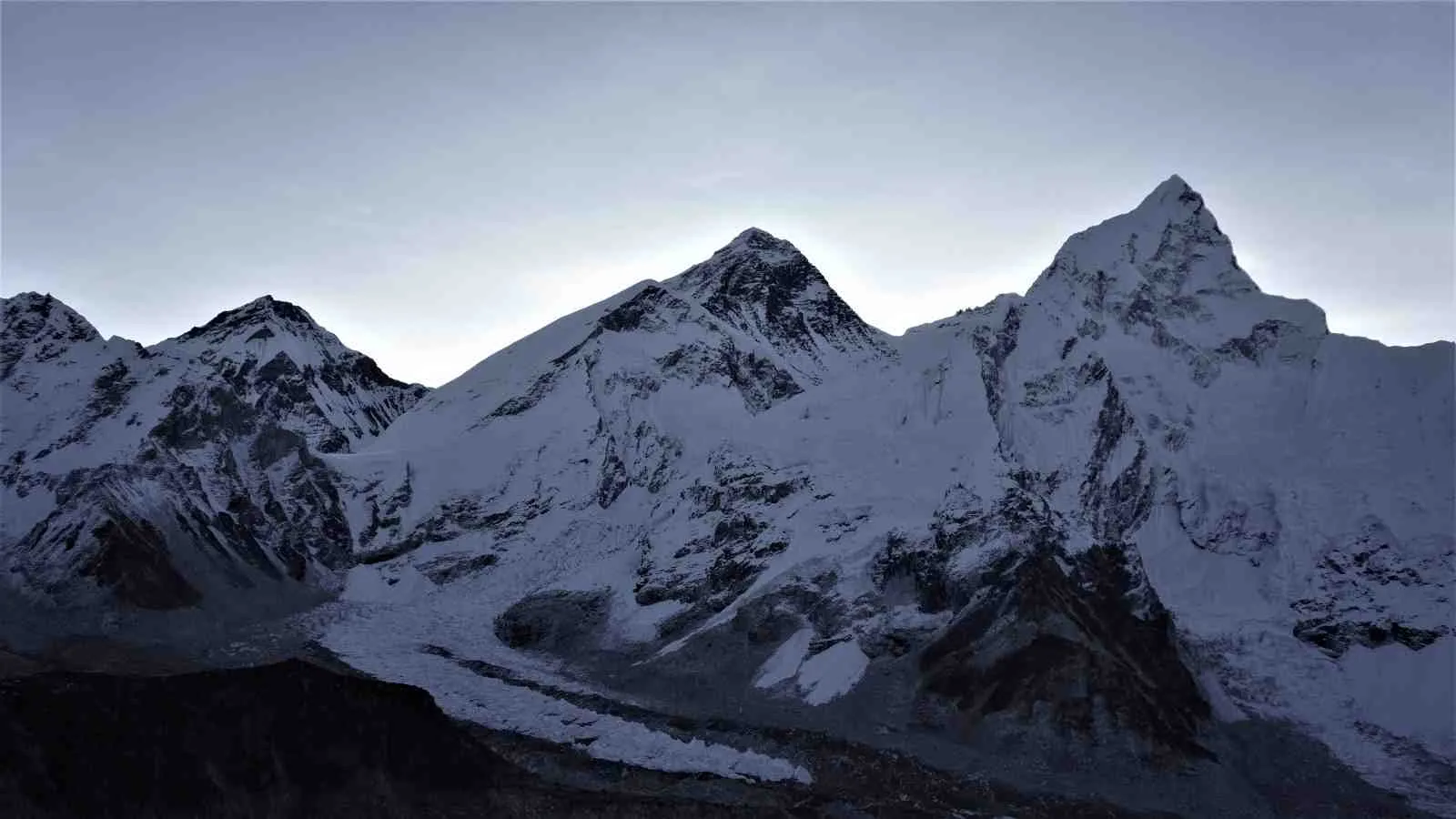
  • You will witness the grandest and most spectacular sight of Everest.
Mohan Raj Bhandari Jeewan Tamang
Itinerary review by

Mohan Raj Bhandari, Founder/Managing director / Jeewan Tamang, Trekking Guide / Mountain Climber / Trail Runner

Gokyo Lake Trek route and pacing are drawn from 12+ years guiding the Everest region. Mohan founded North Nepal Trek in 2015, and our team has guided the Gokyo Valley and Renjo La routes for trekkers of all experience levels.

Gokyo Lake Trek Itinerary

Toggle all
Day 1

Fly from Kathmandu to Lukla (2860m) and trek to Phakding (2610m)

FLIGHT 40 minutes
HIGHEST ALT. 2860m
DURATION 3 hours
Distance
DISTANCE ~ 8 km

We take an early morning flight to Lukla from Kathmandu. We fly across some lush mountain views and verdant hills. After the 40-minute flight, we will finally reach Lukla Airport. Our trek begins from here. We only walk for about 3 hours to Phakding.

Day 2

Phakding to Namche Bazaar

HIGHEST ALT. 3440m
DURATION 6-7 hours
Distance
DISTANCE ~ 10.5 km

We will hike to the commercial site of Khumbu, which is Namche Bazaar. We mostly walk alongside the Dudh Koshi River and through rhododendron forests. Moreover, we walk across several suspension bridges. After 6 to 7 hours of walking, we reach Namche Bazaar.

Day 3

Rest and Acclimatization at Namche

HIGHEST ALT. 3440 m

We will spend the fourth day acclimatizing. However, we will not sit still, as we will hike to the Syangboche Airport and Everest Hotel. Syangboche Airport is the highest airport in the world. On the other hand, Everest Hotel offers some splendid views of mountains like Everest, Ama Dablam, Lhotse, etc. We will also visit a museum and a photo gallery.

Namche Bazar the Sherpa settlement and gateway to Everest.

Day 4

Namche Bazaar to Dhole

HIGHEST ALT. 4200m
DURATION 3 hours
Distance
DISTANCE ~ 10 km

After leaving Namche, we follow the Dudh Koshi further ascend on a trail, filled with prayer flags. We pass through small monasteries and Sherpa villages.

Day 5

Dhole to Machhermo

HIGHEST ALT. 3870m
DURATION 4 hours
Distance
DISTANCE ~ 10 km

We hike along a narrow path with a continuous view of snow-clad peaks like Cho Oyu, Toboche, Cholatse, and Everest, among others. After ascending from the valley and passing through human settlements at Kele and Luza, we finally reach Machhermo.

Day 6

Machhermo to Gokyo

HIGHEST ALT. 4800m
DURATION 4 hours
Distance
DISTANCE ~ 7 km

We will reach our ultimate destination today, which is the Gokyo Valley. We ascend further along the banks of Dudh Koshi and pass through monasteries and chortens along the way. We then arrive at the first Gokyo Lake. After hiking along the moraines of Ngozumpa Glacier, we arrive at the second lake. After walking further, we finally reach the third lake. There is an ancient Sherpa settlement of Gokyo near the lake where we will spend the night.

Machhermo valley en route Gokyo Lake Trek in the Everest regionPhoto: Machhermo valley en route Gokyo Lake Trek in the Everest region.

Day 7

Explore Gokyo valley/ Hike to Gokyo Ri (5357 m)

HIGHEST ALT. 5357m
Distance
DISTANCE ~ 3.8 km

We will spend this day entirely near Gokyo. We can stroll around and explore the village. However, a better alternative will be to hike up to Gokyo Ri from where we can witness some mind-blowing vistas of Everest and Cho Oyu. In that case, we will trek back to Gokyo village for the night.

Day 8

Trek back from Gokyo (4800m)-Dole (3680m)

HIGHEST ALT. 4800m
DURATION 7 hours
Distance
DISTANCE ~ 11 km

We now start our way back. We trace back our steps through the Gokyo Lakes and pass through the settlements in Phanga, Luza, Machhermo, and Kele to finally arrive in Dhole.

Dole Village en route Gokyo Trek in the Everest region.Photo: Dole Village en route Gokyo Trek in the Everest region.

Day 9

Dole to Namche Bazaar

HIGHEST ALT. 4200 m
DURATION 7 hours
Distance
DISTANCE ~ 10 km

We head back to the vibrant village of Namche Bazaar. We pass through Phortse to join the Everest Base Camp trail. Walking further, we then reach Namche Bazaar in about 4 hours.

Namche Bazar after returning back from Gokyo LakePhoto: Namche Bazar after returning back from Gokyo Lake.

Day 10

Namche Bazaar to Lukla

DURATION 7 hours
Distance
DISTANCE ~ 17.7 km

We trace our steps from Namche to Lukla, passing through the same Rhododendron forests and Sherpa villages. As the flight from Lukla to Kathmandu only takes place in the morning, we spend the night in Lukla.

Lukla Airport or Tenzing-Hillary AirportPhoto: Lukla Airport or Tenzing-Hillary Airport.

Day 11

Lukla to Kathmandu flight

FLIGHT 40 minutes

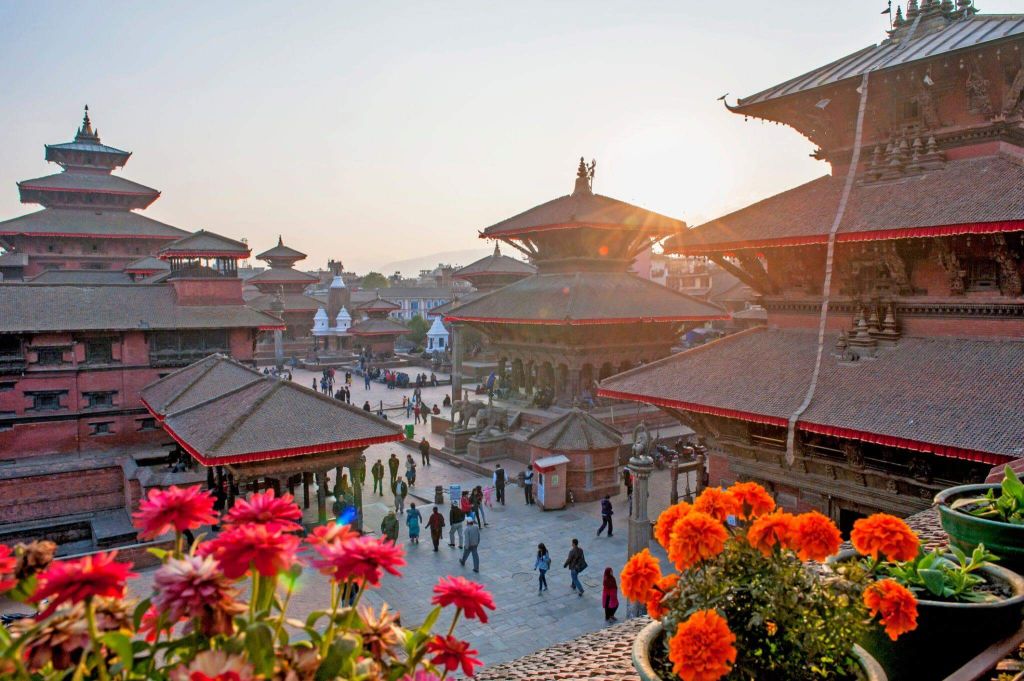
We board the plane early in the morning, which will bring us back to Kathmandu. However, we will enjoy the flight back as we look over the mountains and feel satisfied for completing the trek. Upon reaching Kathmandu, you will head to your hotel. Additionally, you can explore different sites of Kathmandu valley during the day.Ancient Kathmandu Durbar & ArchitecturePhoto: Ancient Kathmandu Durbar & Architecture.

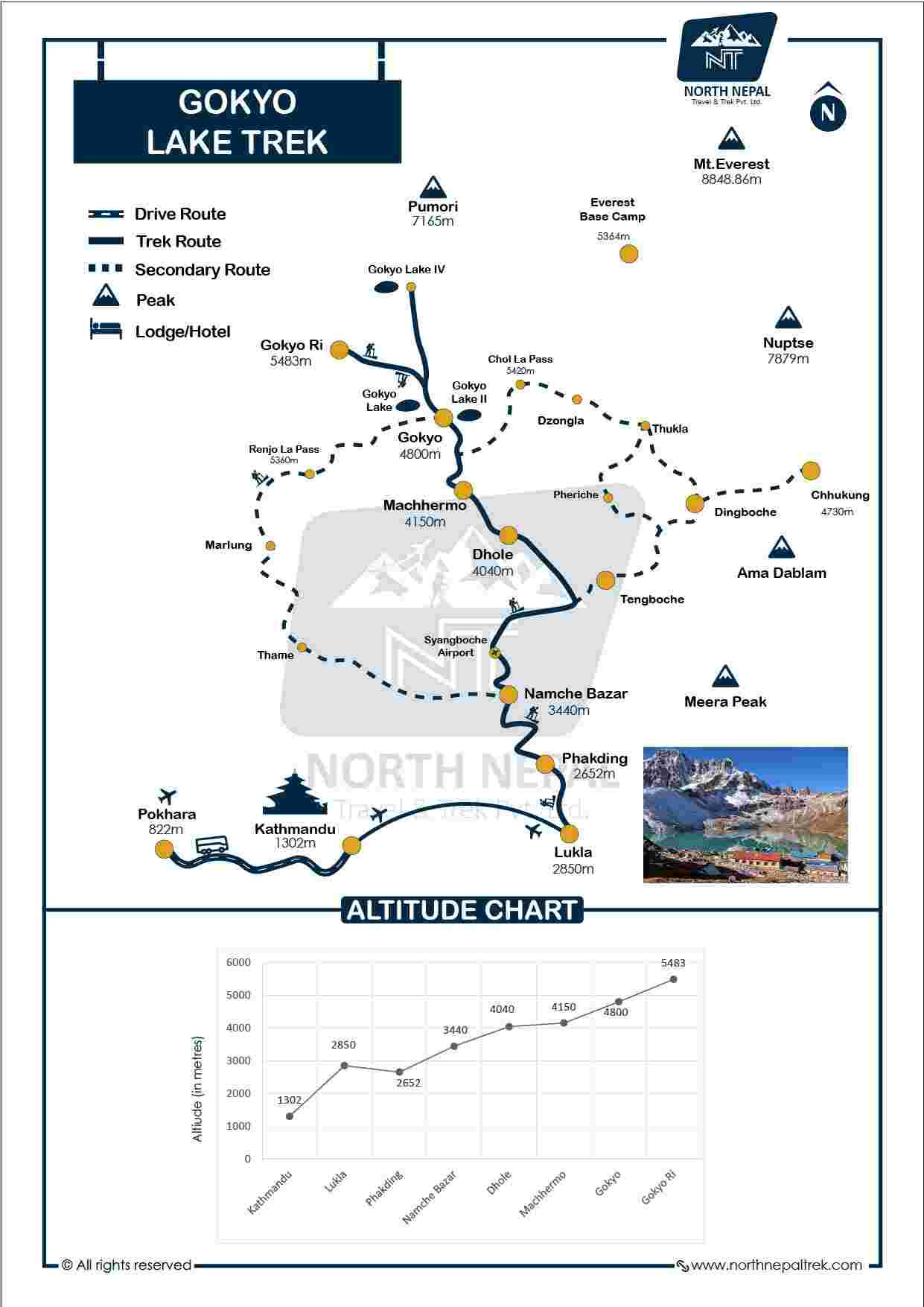
Gokyo Lake with EBC Trek Map and Altitude Graph

Gokyo Lake with EBC Trek Map  and Altitude Graph

What's Included & Excluded

  • All permits, such as the Sagarmatha National Park Permit & Khumbu Rural Municipality Permit.
  • Round-trip flight Kathmandu / Manthali – Lukla, & Lukla – Kathmandu, including departure taxes.
  • Jeep transportation from Kathmandu to Manthali.
  • Teahouse accommodation during the trek in the Everest region. 
  • We provide 3 meals per day (Breakfast, Lunch, and Dinner) and Himalayan Tea twice a day. Please note that each meal is served as a single serving.
  • Trekking gear duffel bag for your trekking stuff.
  • Medical Kit Bag with Oximeter on the trek. 
  • Mountain-trained English-speaking professional guide.
  • Staff insurance, well-paid salary, equipment, food, & Hotel.
  • Worst case, the arrangement of Emergency Helicopter service, if needed ( paid by your Travel Insurance).
  • Achievement certificate after the completion of the trek.
  • Water bottle to store hot water overnight.
  • Government taxes and office service charges.
  • Porters to carry bags up to 22 kg combined ( 2 Trekkers: 1 Porter recommended )
  • Travel & Trekking insurance that covers emergency high-altitude rescue.
  • International airfare and Nepal visa entry fee.
  • Beverages: Inc. Rum, Beer, Scotch, etc, & Drinks like Hot water, Mineral water, Fanta, Cola, etc.
  • Snacks and other personal expenses.
  • Personal trekking types of equipment.
  • WiFi internet and a hot shower during the trek.
  • Tips and gratuities for trekking staff 
  • Additional costs incurred due to causes beyond our control, like landscape, bad weather conditions, case of itinerary modification with a view to a safety concern, illness, change of government policy, political instability, moment, etc.
  • Any other expenses that are not mentioned in the included section.

Gokyo Lake Trek - 11 Days's Detail Information

Toggle all

Accommodation & Meals during Gokyo Lake Trek

The Gokyo Lake Trek is an 11-day lodge-to-lodge journey featuring standard rooms and private options with attached bathrooms at locations like Dole, Machhermo, Gokyo, and Phortse. Meals emphasize nutritious local staples like Daal, Bhaat, Tarkari, and fresh options, while avoiding meat at higher elevations for quality reasons. Additionally, bottled or boiled water, electricity for charging devices, and internet connectivity are available across all lodges for an extra charge.

Accommodation details of Gokyo Lake Trek

The Gokyo Lake trek is an 11-day trek with 10 nights in lodge-to-lodge accommodation. We select the best available services for your stay.

For solo trekkers, a single private room with an attached bathroom is easily available throughout the journey. You will get standard rooms at Dole, Machhermo, Gokyo, and Phortse.

Meals available at Gokyo Lake Trek 

As you climb higher, the choices of food will get shorter. But you will get nutritious food as the trek demands. Basic meals for lunch and dinner that we get around the trekking regions are national foods such as Daal, Bhaat, Tarkari, pickles, and curry. For breakfast, you can find bread, fruits, local porridge, sandwiches, noodles, and soft drinks.

We do not recommend meat items because of quality concerns in higher regions. It is best that you take fresh vegetables, fruits, hot liquids, green tea, lemon tea, and garlic soup, which assist you in your trekking journey.

Mineral water bottles are available in all lodges. You can also fill your water bottle with boiled water, which you have to pay extra for.

Electricity for mobile and camera, internet for communication, is available throughout the trek in all lodges, but comes with an extra service charge.
Trip Difficulty & Best Season to Trek

The Gokyo Lake trek is moderate. Those who can hike for 4 to 6 hours a day with an 8 to 12-kg backpack can complete the trek easily. In case of any medical conditions, such as respiratory or heart conditions, it is best that you consult with your doctor before you decide to go on a trek.

Spring (March-May) and autumn (September-November) are the two most popular trekking seasons in Nepal as they have moderate climates with warm days and chilly mornings and evenings.

During the winter, the Gokyo Lake trek is challenging due to extreme cold and heavy snowfall.

Permit Requirements for the Gokyo Lake trek

As the trekking destination is inside the Sagarmatha National Park, it requires a permit from the Nepal government for tourists. You need to have a Khumbu Pasang Lhamu Rural Municipality Entrance Permit and Sagarmatha National Park Entry Permit, which you can receive at the Tourism Information Center in Pokhara.

Khumbu Pasang Lhamu Rural Municipality Entrance Permit

  • 1. Foreign Nationals: NPR 3,000
  • 2. SAARC Nationals: NPR 3,000
  • 3. Nepali Nationals: NPR 100


Sagarmatha National Park Entry Permit cost 

  • 1. Foreign Nationals: NPR 3,000
  • 2. SAARC citizens: NPR 1,500
  • 3. Nepali citizens: NPR 100

For issuing the permit, you need to bring the following documents:

  • Passport
  • Insurance
  • 2 photographs (pp-size)

Note: Nowadays, a soft copy of your documents on devices also works.

The Grandeur of Gokyo Lakes

Gokyo Lake is not a single lake but a collection of 6 crystal-clear lakes that are situated between the heights of 4700 meters and 5,000 meters. There are six clear lakes comprising the Gokyo Lakes. These include Gokyo Cho (Dudh Pokhari), Thonak Cho, Ngojumba Cho, Tanjung Cho, Longbanga Cho, and Gyazumpa Cho. These lakes have high hydrological value as they are permanent sources of fresh water. Gokyo lakes mostly feed on the waters from glaciers nearby, such as the Ngozumpa glacier, the longest Khumbu glacier.

Among these lakes, Gokyo Cho is arguably the most significant one. Not merely a heavenly destination for trekkers, it also has considerable religious significance among Hindus and Buddhists as well. On the occasion of Janai Purnima, Hindus take a holy bath in the crystal clear waters of the lake. Also, the place is worshipped and revered as the residing place of Naag Devata (Snake God). Moreover, there is also a temple of Lord Vishnu and Shiva near the lake. Religious traditions also stop anyone from harming the wildlife that exists here.

Temperature and Weather of Gokyo Valley

The weather in this valley is unpredictable, so the viable option is to pay attention to the weather forecast. In case of bad weather, we will halt our exploration or reschedule for the next day. Usually, the average temperature during the daytime reaches 3-7 degrees Celsius, whereas the temperature drops to -5 to -8 degrees Celsius. 

Extended Gokyo Lake Trek

The trek can be extended further to ascend the world-famed Everest Base Camp, sitting at an altitude of 5364m. We can also further ascend to Kala Patthar, which is at an altitude of 5,644 m. It offers the best view of Mt. Everest than the Everest Base Camp itself. is from the base camp. This trek will take you through the blue-green alpine lakes of Gokyo Valley as well as Everest Base Camp. It can be a little more challenging, but the rush of adrenaline and enchanting views of the Himalayas make it worthwhile.

Why Trek With Us — Gokyo Lakes Trek

When you trek into the high alpine wilderness of the Khumbu to discover the breathtaking turquoise waters of the Gokyo Lakes and climb Gokyo Ri for an unmatched panorama of Everest and Cho Oyu, your safety, high-altitude success, and comfort depend entirely on expert alpine guidance. Here is why global trekkers choose North Nepal Travel & Trek:

100% Locally Owned & Nepal-Based Experts

We are proudly based in Nepal with deep roots in the Himalayan adventure community. Booking directly with us keeps your investment local, directly supports mountain families, and guarantees reliable, hands-on support from day one.

Officially Licensed & TAAN-Registered

We are a fully government-registered trekking agency and an active member of the Trekking Agencies' Association of Nepal (TAAN). We guarantee complete legal compliance, financial security, and strict high-altitude safety standards on every high-altitude departure.

Decades of High-Altitude & Glacial Route Expertise

The Gokyo Valley demands precise acclimatization schedules, expert handling of flight logistics through Lukla, and safe navigation around the massive Ngozumpa Glacier. We bring over a decade of specialized experience managing advanced Himalayan trekking itineraries.

Elite Wilderness Leadership

Your expedition is led by our government-certified, English-speaking local guides who possess profound technical knowledge of high-altitude safety, remote trail navigation, and Sherpa cultural heritage.

Top-Rated Client Satisfaction

Backed by a 4.9/5 rating across global review platforms, our travelers consistently praise our rigorous safety protocols, expert physical pacing through demanding terrain, and unforgettable support from start to finish.

Live Trail Update of Gokyo Lake Trek - 11 Days Live

Last updated: 2 Days ago

Updated: Milan Tamang

Trail Condition Good
Weather Clear Mornings
Wifi/Network Weak at High Altitude
Teahouses Mostly open

Trekker Alerts

  • Carry microspikes above Lobuche (Editable Fields)
  • Afternoon clouds affecting flights
  • Water filters recommended
  • ATM unavailable in Dingboche
Reviews From The Trail

Hear it from those who've walked with us.


Safety Policy

Professional & Certified Guides

Every trek is accompanied by an experienced, licensed, English-speaking local guide trained in high-altitude wilderness survival, remote trail navigation, and first-aid response. Guides carry comprehensive medical kits equipped with essential high-altitude pharmaceuticals and pulse oximeters to monitor oxygen saturation levels daily during the ascent toward Gokyo Village (4,790 m) and Gokyo Ri (5,357 m / 17,575 ft).

High-Altitude Acclimatization & AMS Management

Itineraries are structured with careful elevation profiles and designated acclimatization stops in places like Namche Bazaar to ensure proper physiological preparation before reaching high-altitude points above 4,000 meters. Guides conduct rigorous daily health assessments for early symptoms of Acute Mountain Sickness (AMS). If severe symptoms appear, standard protocol mandates immediate descent to lower elevations.

Emergency Rescue Coordination

In cases of severe injury, acute altitude illness, or extreme weather conditions on remote glacial trails, emergency helicopter evacuation is coordinated directly through local rescue services, adhering strictly to regional aviation regulations set by CAAN. Evacuations are initiated promptly upon assessment by your guide in communication with our Kathmandu and Pokhara offices.

Mandatory Travel Insurance

All trekkers must hold comprehensive travel insurance covering emergency medical treatment, high-altitude trekking and glacier trail hiking (up to 6,000 m), and emergency helicopter rescue/evacuation. Insurance details must be submitted prior to the departure of the trek to streamline emergency logistics if required.


Gokyo Lake Trek Departure Date for 2026/2027

Secure the Gokyo Lake Trek for 2026/2027 before the seat gets fully booked.


Terms, Conditions & Feasibility

  1. All bookings are made with North Nepal Travel & Trek Pvt. Ltd Registered Company Number 162883/073/074 (hereafter referred to as The Company) whose office is in 13th Street, Lakeside, Pokhara-6, Nepal.
  2. The term "trip" used in this website and booking conditions refers to all itineraries described on this website including those which might otherwise be known as walking, tours, trekking trips, sightseeing, climbing, mountaineering, expeditions, or holidays.
  3. We accept your last-minute booking as well, but full payment of the total tour cost should be made in advance if necessary or can be paid fully on arrival day. See More

Frequently Asked Questions

General Information

1. What is the Gokyo Lake trek and what makes it special?

The Gokyo Lake trek is a moderately challenging trek in Nepal's Everest (Khumbu) region, leading to the turquoise Gokyo Lakes, the highest freshwater lake system in the world, and the summit of Gokyo Ri (5,357m). From Gokyo Ri you get a sweeping panorama of four 8,000m peaks: Everest, Lhotse, Makalu, and Cho Oyu. It's a quieter, stunning alternative to the classic Everest Base Camp route. We tailor the pace to suit your experience.

2. Is the Gokyo Lake trek possible with children?

Yes, with proper care and planning. The Gokyo Lake trek is moderately challenging for adults, and bringing children adds difficulty, mainly because of the high altitude. With attentive parents, a slow acclimatization schedule, and often an extra guide to help look after the kids, families can complete it successfully. Tell us your children's ages and we'll advise honestly whether this route suits your family.

3. Can I connect the Gokyo Lake trek with other Everest region treks?

Yes. The Gokyo Lake trek combines beautifully with other famous routes in the region. Popular extensions include the Everest Base Camp Trek (northnepaltrek.com/everest-base-camp-trek) and the Everest High Passes Trek (northnepaltrek.com/everest-high-passes-trek), the latter crossing Cho La to link Gokyo with the Base Camp trail. Tell us how many days you have and we'll suggest the best combination for you.

Trekking Permits & Logistics

1. What permits do I need for the Gokyo Lake trek, and how much do they cost?

The Gokyo Lake trek requires two permits: the Sagarmatha National Park entry permit, NPR 3,000 (about USD 25), checked at the Monjo entrance after Phakding, and the Khumbu Pasang Lhamu Rural Municipality permit. A TIMS card is not required for this route. Bring two passport-size photos for the paperwork. North Nepal Trek arranges all permits for you, so you don't queue at checkpoints yourself.

2. Do I need a licensed guide for the Gokyo Lake trek?

Yes. Since April 2023, Nepal requires a licensed guide for trekking inside national park areas, including the Everest region. A guide also greatly improves safety at altitude, handles teahouse logistics, and enriches the trek with local knowledge on the climb to Gokyo Ri. All North Nepal Trek guides are government-licensed and trained in altitude first aid and AMS management.

3. Where does the Gokyo Lake trek start?

The trek starts in Lukla (2,860m), reached by a short 30 to 40 minute mountain flight from Kathmandu, or from Ramechhap (Manthali) during peak seasons when Everest flights shift there to ease congestion. From Lukla the trail heads to Phakding and Namche Bazaar before branching toward the Gokyo valley. We arrange all flights and transfers and confirm your departure airport in advance.

Packing Gear & Rental

1. What gear do I need for the Gokyo Lake trek?

For the Gokyo Lake trek you need warm layered clothing, a waterproof shell, an insulated down jacket, gloves, a beanie, sturdy trekking boots, sunglasses, sunscreen, a headlamp, water bottles, and a sleeping bag rated for freezing temperatures. Traction aids can help if the trail to Gokyo Ri is icy or snowy. North Nepal Trek provides a sleeping bag, trekking poles, and a duffel bag for trekkers.

2. Can I rent trekking gear in Kathmandu for the Gokyo Lake trek?

Yes. Most trekking equipment can be rented or bought in Thamel, Kathmandu, before departure, including sleeping bags, down jackets, trekking poles, duffel bags, and backpacks, with both genuine brands and good-value local equivalents available. For personal-fit or technical items such as well-fitted boots, base layers, and gloves, bringing your own is preferable. We can point you to reliable shops and advise what to rent versus bring.

3. How heavy can my luggage be on the Gokyo Lake trek?

Keep your daypack light at around 5 to 7 kg for water, snacks, a camera, and layers you need during the day. Your main duffel, carried by a porter, should stay within the airline weight limit on the Lukla flight, typically 15 kg per trekker. Packing light genuinely improves comfort at altitude. We provide a duffel bag and confirm exact weight limits when you book.

Payments & Extra Costs

1. What extra costs should I budget for beyond the Gokyo Lake trek package?

Beyond your package, budget for your Nepal visa, travel insurance with high-altitude helicopter evacuation cover, meals in Kathmandu, hot showers and device charging at teahouses (a few dollars each, more at higher elevations), Wi-Fi, drinking water, snacks, and tips for your guide and porter. A rough guide is USD 15 to 25 per day for personal extras on the trail. Ask us for a realistic day-by-day estimate.

2. How do I pay for the Gokyo Lake trek, and is a deposit required?

You can pay securely online, by bank transfer, or by card, and we typically confirm your booking with a deposit while the balance is settled before or on arrival in Kathmandu. The deposit secures your trek dates, guide, and domestic flights. We always confirm the exact deposit amount and accepted methods in writing before you pay. Visit northnepaltrek.com/online-payment or message us to arrange it.

3. How much should I tip the guide and porter on the Gokyo Lake trek?

Tipping is customary in Nepal and much appreciated, though never mandatory. A common guideline is around $25 – $35 per day for a guide and $18 – $30 per day for a porter, usually pooled by the group and given at the end of the trek. It reflects the hard work they put in to keep you safe at altitude. We're always happy to explain local norms so you feel comfortable.

Booking & Company Policies

1. What is your cancellation and refund policy for the Gokyo Lake trek?

Our cancellation terms depend on how far ahead you cancel, since we commit to flights, permits, and guides in advance. Deposits are generally applied against non-refundable costs, while the balance may be partly refundable or transferable to a future trek depending on timing. We set out the exact terms clearly before you pay, with no hidden fine print. Message us for the current written policy that applies to your dates.

2. How far in advance should I book the Gokyo Lake trek?

For peak seasons (spring and autumn) we recommend booking two to three months ahead to secure Lukla flights and teahouse space. Off-season or last-minute trips are sometimes possible, but flight availability tightens. Booking early also gives you time to train and arrange proper insurance. Send us your target dates and we'll tell you honestly what's still available.

3. Is North Nepal Trek a registered and licensed trekking company?

Yes. North Nepal Trek is a government-registered adventure travel company based in Pokhara, Nepal, with a branch in Thamel, Kathmandu, and a member of the Trekking Agencies Association of Nepal (TAAN). We operate treks, tours, expeditions, and helicopter tours across Nepal, Bhutan, and Tibet with licensed guides. Our approach is simple: come as a guest, leave as a friend.

Weather & Seasons

1. When is the best time to do the Gokyo Lake trek?

The best seasons are spring (March to May) and autumn (September to November). Spring brings clear weather and blooming rhododendrons, though the Gokyo Lakes are often still frozen early in the season, and snowfall is common. Autumn, especially October, offers the clearest Himalayan views with little rain or fog, but trails are busier. We help you pick the window that best fits the experience you want.

2. How cold does the Gokyo Lake trek get?

Nights at higher elevations like Machhermo and Gokyo regularly fall below freezing, and the early morning climb to Gokyo Ri (5,357m) is the coldest, windiest part of the trek, while sunny daytime walking can feel pleasantly mild. In winter it gets significantly colder and the lakes freeze over. This is why a sleeping bag rated for freezing temperatures and proper layering are essential. We time the Gokyo Ri hike for the safest window.

3. Can I do the Gokyo Lake trek in winter or during the monsoon?

Winter (December to February) is possible for well-prepared trekkers and rewards you with clear skies and empty trails, but expect deep cold and frozen lakes, and snow can make the Gokyo Ri climb harder. The monsoon (June to August) brings rain, cloud cover, leeches lower down, and frequent Lukla flight delays, so most trekkers avoid it. We generally recommend spring or autumn and monitor conditions closely year-round.

Health & Safety

1. How do I avoid altitude sickness on the Gokyo Lake trek?

The key is gradual acclimatization. Our itinerary includes a rest day at Namche Bazaar and follows a safe ascent profile toward Gokyo, using the climb-high-sleep-low principle. Stay hydrated, walk at a steady pace, avoid alcohol, and report any headache or nausea to your guide early. Our guides carry a first-aid kit with a pulse oximeter and are trained in AMS management. Never rush the ascent; your body needs the time.

2. What happens if I get sick or injured on the Gokyo Lake trek?

Your guide is trained in altitude first aid and will assess symptoms, adjust the plan, or descend if needed, since descent is the most effective treatment for altitude sickness. The Everest region has a well-established helicopter rescue network, and evacuation is possible from most points in good weather. This is why we require travel insurance covering helicopter evacuation above 3,000m. Our team coordinates any rescue directly on the ground.

3. Do I need travel insurance for the Gokyo Lake trek?

Yes, and it is compulsory. Your policy must cover trekking at high altitude plus emergency medical treatment and helicopter evacuation above 3,000m, since Gokyo Ri reaches 5,357m. Many standard travel policies exclude high altitude, so check the fine print carefully. We can advise what to look for, though we recommend buying your policy in your home country before you travel.

Transportation

1. How do I get from Kathmandu to the start of the Gokyo Lake trek?

You fly from Kathmandu to Lukla, a scenic 30 to 40 minute mountain flight landing at Tenzing-Hillary Airport. During peak seasons the flight often departs from Ramechhap (Manthali), a four to five hour drive from Kathmandu, to reduce air congestion. From Lukla the trek begins on foot toward Phakding. We arrange all flights and road transfers and tell you the current departure point in advance.

2. What happens if my Lukla flight is delayed by weather?

Lukla flights depend on clear mountain weather, so occasional delays happen, especially in monsoon and winter. We build buffer days into the itinerary to absorb them, and in serious cases a helicopter shuttle is available as a paid alternative so you don't lose the trip. Our team handles rebooking on the ground so you're never stranded. For this reason, avoid booking a tight international flight immediately after the trek.

3. Is airport pickup in Kathmandu included?

Yes. Every North Nepal Trek package includes a private airport pickup and hotel transfer when you land in Kathmandu, and a drop-off when you depart. A guide or company representative meets you in the arrivals area with a North Nepal Trek sign. It's a small touch that makes a real difference after a long flight. Just share your flight details when you book.

Accommodation & Food

1. What food and accommodation can I expect on the Gokyo Lake trek?

Nights are spent in teahouse lodges with good facilities and quality food. Because the Everest region welcomes many trekkers each year, the lodges and teahouses are well developed and offer a wide choice of meals and breakfast options. Expect the classic dal bhat (rice, lentils, vegetables) with free refills, plus noodles, pasta, soups, momos, eggs, and porridge. Lodges and trails can get crowded in peak season. Tell us about any dietary needs in advance.

2. Is drinking water safe on the Gokyo Lake trek?

Don't drink untreated tap or stream water. You can buy bottled or boiled water at teahouses, or better, carry a reusable bottle with purification tablets or a filter, which is cheaper and reduces plastic waste on the trail. Boiled water is widely available for a small charge as you climb. Staying well hydrated also helps prevent altitude sickness. Your guide will show you the safest options each day.

3. Are hot showers and phone charging available on the Gokyo Lake trek?

Mostly yes, but as paid extras that get pricier with altitude. Lower teahouses often have gas hot showers, while higher up you may get a bucket of hot water for a few dollars. Charging devices and using Wi-Fi also carry small fees at higher lodges, where power often comes from solar. Bring a power bank and expect basic but genuinely welcoming teahouses. We prepare you for what each night looks like.

Cultural Insights

1. Can I do boating or other activities on Gokyo Lake?

No. The Gokyo Lakes are considered sacred, so boating and similar activities are not permitted out of respect for their religious significance, and the lakes are frozen through winter in any case. Instead, trekkers hike around the lakeshores and climb Gokyo Ri for the famous panorama. Hindu and Buddhist pilgrims visit the lakes, especially during the Janai Purnima festival. Your guide shares the local stories and customs along the way.

2. What culture will I experience on the Gokyo Lake trek?

The Gokyo valley is the homeland of the Sherpa people, renowned for their mountaineering heritage and warm hospitality. Along the trail you'll pass Buddhist monasteries, mani stone walls, prayer wheels, and colourful prayer flags, and in Namche Bazaar you can visit the Sherpa culture museum. Respecting local customs, such as walking clockwise around religious sites, is appreciated. Your guide helps you understand the traditions you encounter.

PRIVATE TRIP

11 Days

Price Start from USD 1600

USD 1400 pp pp

RECOGNISED · CERTIFIED · TRUSTED

We are associated with