Rescue Flight, Medical Evacuation and Other Services
We have the provision of rescue flight evacuation in an emergency, in case of altitude sickness or i...
OVERVIEW & HIGHLIGHTS
Everest Helicopter Tour takes you to the exotic land of Sherpas in the Solukhumbu region of Nepal. Hovering over 4,000 meters from Kathmandu, the aerial view of the highest mountain in the world, Mt. Everest, from Everest Base Camp and Kala Patthar is a moment of bliss.
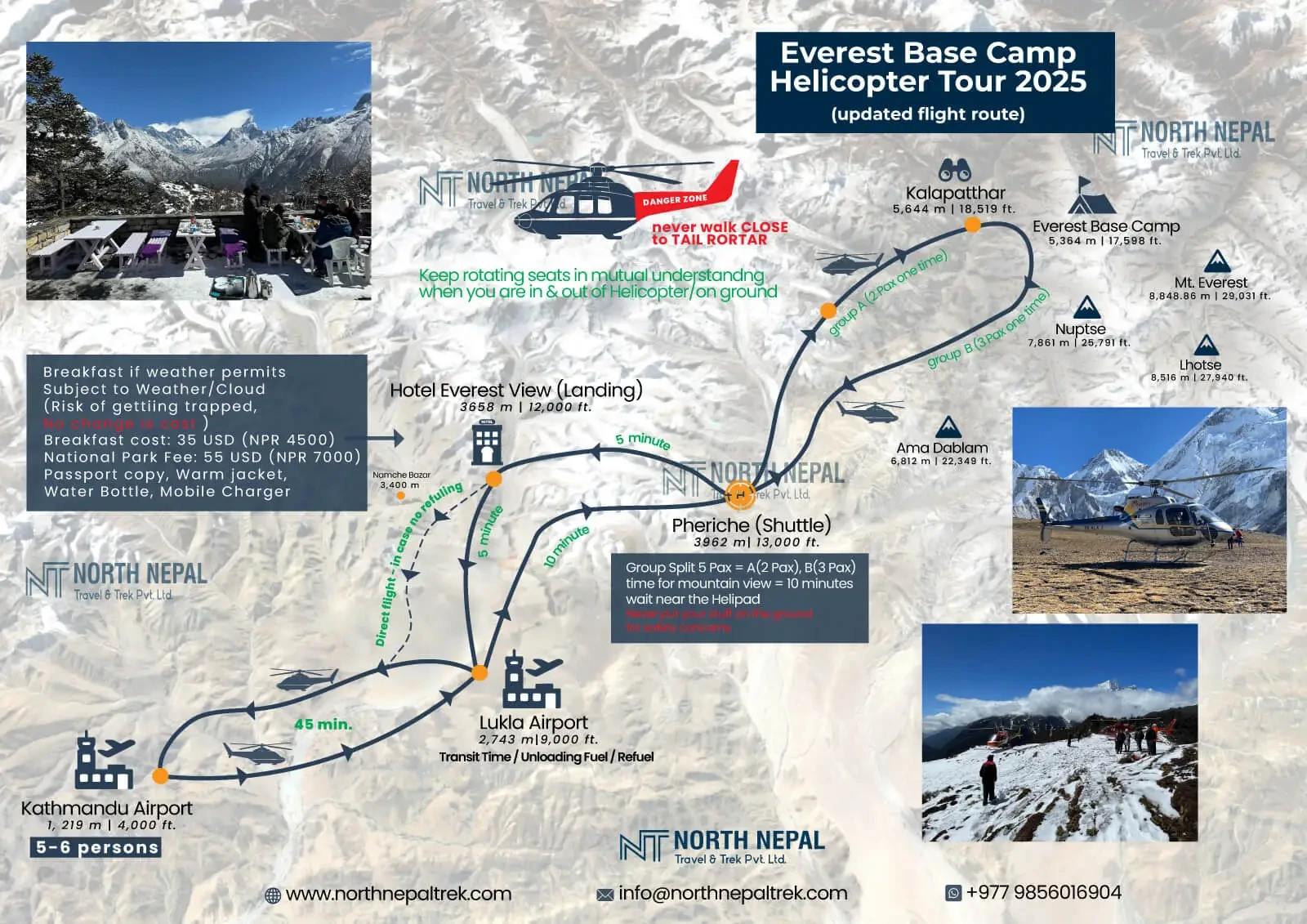
Everest Base Camp (EBC) is the trekker's paradise and iconic landmark on the base of Mt. Everest, located at an elevation of 5,364 m (17,598 ft) and offering a grandeur view of snowy mountain peaks Lhotse, Nuptse, Ama Dablam, and other neighboring peaks.
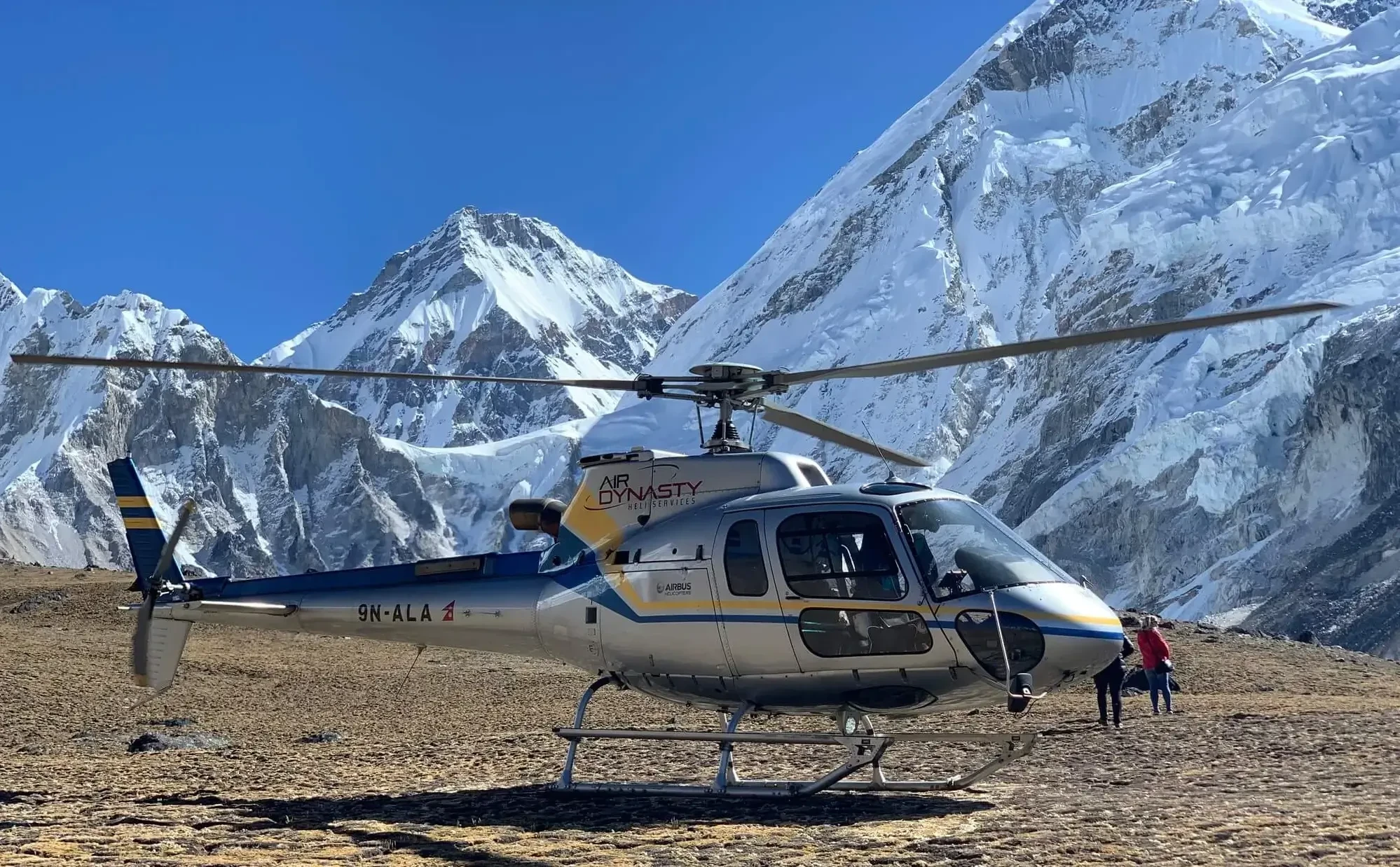
Kala Patthar is another important landmark, known for the stunning view of the Everest summit which Base Camp forbids. Located at an altitude of 5,644 m (18,519 ft), it gives you panoramic views of the mountains. Flying from Pheriche, you will view the world of icy cold Himalayas from a helicopter.
A helicopter landing in the Everest region is a luxury and the easiest way to tour the area compared to conventional trekking. Instead of trekking to Everest Base Camp and its periphery for 14 to 15 days, you will reach it in just a few hours — a once-in-a-lifetime adventure that you should not miss.
Gopal Yonjan, Trekking Guide / Tour Guide
Since founding North Nepal Trek in 2015, Mohan Raj Bhandari has kept a close eye on the Everest Helicopter Tour, and Gopal Yonjan shares firsthand insight from personally leading this helicopter tour, so you know exactly what to expect before you go.
Everest helicopter flights depart only when visibility and weather conditions meet safe flying standards. If conditions deteriorate, replacement flights are scheduled rather than risking guest and crew safety.
Everest Base Camp and Kala Patthar sit above 5,300 m, so altitude effects are more pronounced than on lower tours. Ground time is kept brief and passenger groups are shuttled in weight-limited pairs above 4,500 m for safety.
All guests joining the Everest Helicopter Tour must carry valid travel insurance covering helicopter evacuation and high-altitude activities before departure.
Secure the Everest Helicopter Tour for 2026/2027 before the seat gets fully booked.
The Everest Base Camp Helicopter Tour is a scenic Himalayan flight from Kathmandu that takes you close to Mount Everest and Everest Base Camp without requiring a multi-day trek. It’s ideal for travelers with limited time who want to experience the Everest region from the air and make a short landing in the high Himalayas.
The complete experience generally takes around 4 to 5 hours, depending on the flight route, weather, air traffic, and landing conditions. The itinerary normally includes the helicopter flight, a landing in the Everest region, time for photographs, and the return flight to Kathmandu.
The standard tour starts from Kathmandu, with the flight departing from Tribhuvan International Airport. Early-morning departures are preferred because mountain visibility and flying conditions are generally better before afternoon cloud and wind develop.
Yes. A private helicopter charter can be arranged for individuals, families, couples, or groups who prefer an exclusive flight. The price depends on the helicopter, group size, travel date, and operational requirements.
Yes, shared flights are available when seats are available for your requested date. Joining a shared flight can significantly reduce the per-person cost compared with chartering the entire helicopter.
Spring (March to May) and autumn (September to November) are generally the best seasons for mountain visibility and stable flying conditions. Winter can also provide exceptionally clear views, although temperatures are much colder. During the monsoon, flights depend heavily on cloud cover, rain, and visibility.
Yes. Weather is one of the most important factors in mountain helicopter operations. Low clouds, fog, snowfall, strong winds, or poor visibility can cause delays or cancellation. The pilot has the final authority to determine whether the flight and landing can safely proceed.
Safety is the priority throughout the operation. The flight is conducted by experienced mountain pilots using helicopters suitable for high-altitude operations. Weather, visibility, wind, and landing conditions are assessed before and during the flight. If conditions aren't suitable, the flight may be delayed or canceled rather than taking unnecessary risks.
Yes. A helicopter takes you rapidly from Kathmandu to elevations above 5,000 meters, so your body doesn't have time to acclimatize in the way it would during a trek. You may experience shortness of breath, headache, dizziness, or nausea during the landing. Keep activity light, stay with your group, and inform the crew immediately if you feel unwell.
The tour can be a good option for travelers who aren't able to undertake a long Everest Base Camp trek. However, the rapid ascent to extreme altitude can be demanding even without physical trekking. Children, older travelers, and anyone with heart, lung, or other significant medical conditions should consider their individual health and consult a doctor before traveling to high altitude.
Dress for sub-zero high-altitude conditions. Bring a warm down jacket, thermal layers, gloves, warm hat, sunglasses, sunscreen, and sturdy shoes. Conditions at the landing area can be dramatically colder than in Kathmandu, even on a sunny morning.
A helicopter tour isn't the same as undertaking the Everest Base Camp Trek, so trekking permit requirements shouldn't be assumed to be identical. Any required flight permissions, landing arrangements, airport charges, or local fees are handled as part of the helicopter operation according to current regulations.
The exact landing location depends on current aviation regulations, weather, aircraft limitations, and operational conditions. Helicopters may use designated landing areas in the Everest region rather than assuming that a landing directly at the base camp is always possible.
Meals depend on the selected package. Many short helicopter tours don't include a full meal, although some itineraries include a breakfast stop in the Everest region. Confirm the exact inclusions before booking.
Depending on the flight itinerary and current operating conditions, the tour may include a stop around the Everest region for breakfast. The exact location and timing can change because of weather, aircraft operations, and airport conditions.
Mobile connectivity varies considerably across the Everest region. You shouldn't rely on continuous mobile or Wi-Fi service during the flight or high-altitude landing. It's best to download anything important before departure and keep your phone fully charged for photography and communication.
Depending on weather and flight routing, you can see Mount Everest, Lhotse, Nuptse, Ama Dablam, Pumori, Thamserku, Kangtega and numerous other Himalayan peaks. The aerial perspective gives you a much broader view of the Everest massif than you get from a single viewpoint on the trekking trail.
The experience isn't just about Everest. From the helicopter, you'll see glacial valleys, Khumbu Glacier, rugged mountain ridges, Sherpa settlements, alpine terrain, and the dramatic landscape of Sagarmatha National Park.
The helicopter tour is primarily a mountain and scenic experience rather than a cultural trek. However, depending on the itinerary, you may see traditional Sherpa villages and monasteries from the air or during a ground stop. Travelers wanting deeper cultural interaction can combine the helicopter tour with a short Everest-region village visit or a trekking itinerary.