Hiking vs Trekking: What Is the Difference, and Which Is Right for You in Nepal?
Published Oct 27, 2026 Updated Oct 27, 2026 7 min read
Quick answer
A hike is usually a walk of a few hours to a day, on a marked trail, home or to a hotel by night. A trek is a journey of several days or weeks, sleeping along the way, often over rough ground and at altitude. In Nepal, a trek means walking village to village and sleeping in teahouses, with a permit and usually a licensed guide.
People write to us asking for a hike when they mean a two-week trek, and for a trek when a morning walk up to Sarangkot is what they have time for. The words overlap, and they mean slightly different things in different countries. Here is the difference as we use it in Nepal, and how to decide which suits your trip.
Key facts
HikeHours to a day; back at night
TrekSeveral days or weeks; sleep along the route
In NepalTreks sleep in teahouses, village to village
PermitsNeeded for treks in conservation areas and national parks
GuideRequired on most Nepal treks since April 2023
Shortest treks we runPoon Hill or Panchase, 4 days
Day hikes from PokharaSarangkot, Australian Camp, World Peace Pagoda
The short answer
Hiking
Trekking
Length
A few hours to one day
Several days to several weeks
Nights
At home or a hotel
Along the route, in teahouses, lodges or tents
Terrain
Usually marked trails
Village paths, rough mountain trails, passes, sometimes no path
Altitude in Nepal
Usually below about 2,000 m from Pokhara
Up to 5,000 m and more
Pack
A daypack with water, snacks and a layer
Daypack for you, a porter or pack animal for the rest
Planning
Little; you can decide on the day
Permits, a guide, acclimatisation, insurance, season
Fitness
General
Several long days in a row, often at altitude
In other countries the same idea has other names: Americans call a multi-day walk with a tent a backpacking trip, New Zealanders call it tramping, Australians go bushwalking, and in Britain a long walk over hills may be called a hike or a hillwalk. In Nepal the word trek is used for almost any walk of more than a day.
What hiking looks like in Nepal
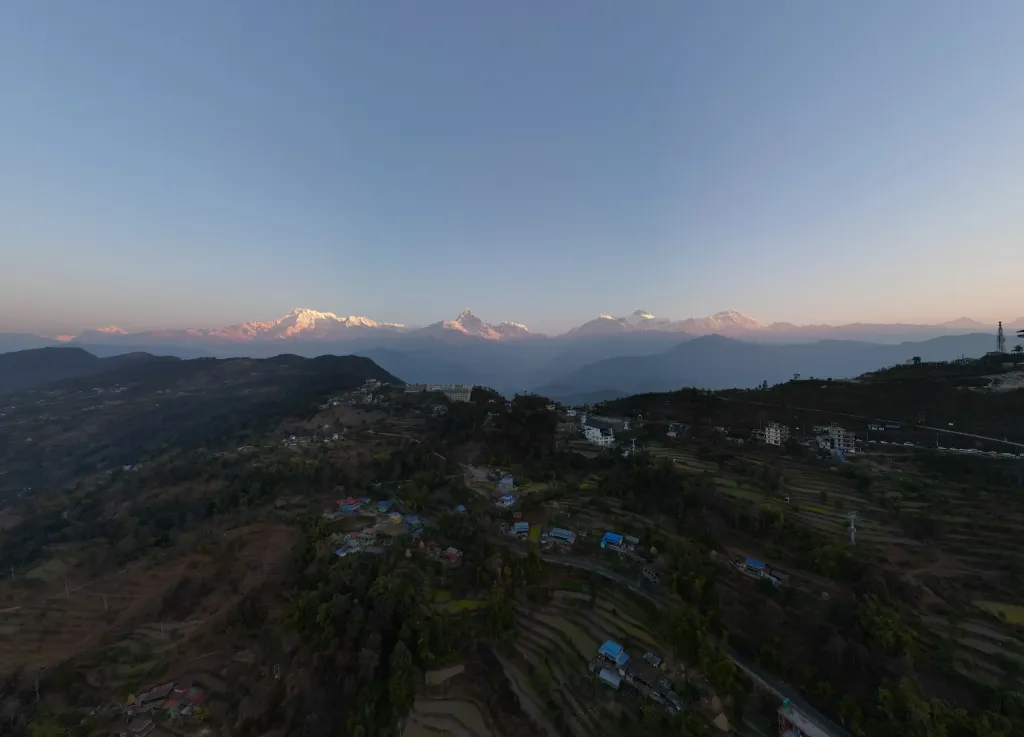
From Pokhara, the classic hikes take a morning or a day. You walk up through villages and forest to a viewpoint, look across Phewa Lake to the Annapurnas and Machhapuchhre, and are back for dinner in Lakeside. Sarangkot and the World Peace Pagoda need no permit; for Australian Camp, on the edge of the Annapurna Conservation Area, we check the current permit position before you go. No special gear is needed: good shoes, water, a warm layer and sun cream.
These are good choices if you have a day or two in Pokhara, want to test your legs before a trek, or are travelling with young children. More ideas are on our day hikes in Nepal page.
Sunrise from Sarangkot, the classic morning hike from Pokhara. Photo: North Nepal Travel & Trek.
What trekking looks like in Nepal
A Nepal trek is a journey on foot from village to village. You walk five to seven hours a day, stop for dal bhat at lunch, and sleep in a teahouse: a family-run lodge with simple twin rooms and a warm dining room. A porter carries your main bag and a licensed guide handles the route, the lodges and the altitude.
Treks range from a few days in the foothills to three weeks over high passes. Above about 2,500 m (8,200 ft) the altitude starts to matter, and the itinerary has to climb slowly with rest days. Most treks need an entry permit for a conservation area or national park, and since April 2023 foreign trekkers in those areas must walk with a licensed guide; the Everest (Khumbu) region, where the local municipality still allows solo trekkers, is the main exception.
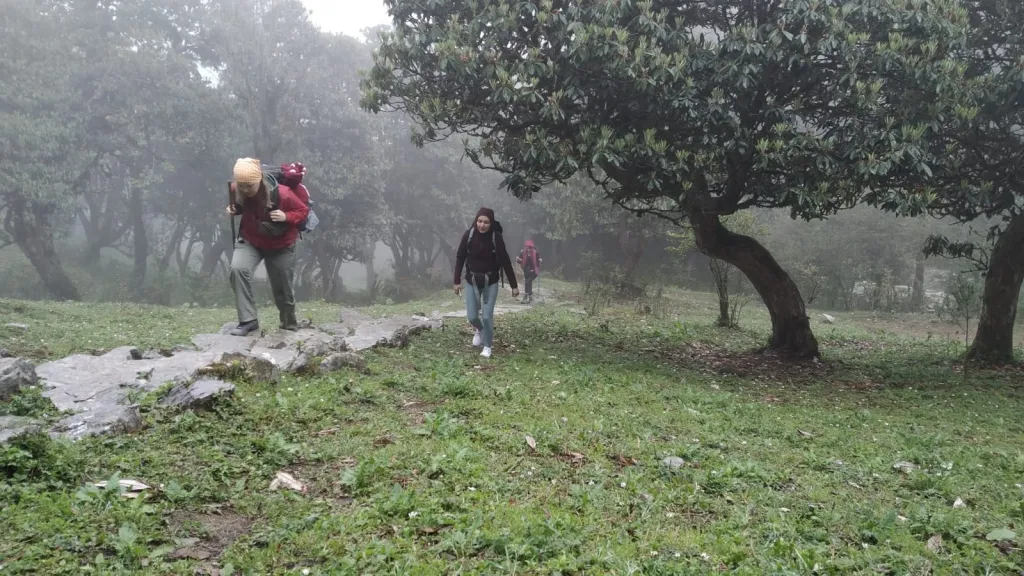
On the way to Ghorepani: stone steps, forest and a teahouse at the end of the day. Photo: North Nepal Travel & Trek.
Gear: what changes from a hike to a trek
For a day hike you need comfortable walking shoes, a small pack, water, a snack, a light warm layer, a rain jacket in the wet months and sun protection.
For a trek, add broken-in boots, layers for cold evenings (a fleece and a warm down jacket), a sleeping bag for higher routes, a headlamp, water purification, a first-aid kit, trekking poles and a power bank. Down jackets and sleeping bags can be rented in Pokhara; our Pokhara gear guide and packing checklist list it all.
Heads up
The most common mistake we see is new boots. A pair that is fine for a two-hour hike can give you blisters on the second day of a trek. Walk at least a few long days in them at home first.
Fitness, altitude and safety
A day hike asks for general fitness. A trek asks you to walk for many days in a row, often on steep stone steps, and the higher treks add altitude on top. Train for eight to twelve weeks before a high trek with long walks carrying a pack, stairs and back-to-back days; our 16-week training plan has a programme.
Altitude sickness is the main health risk on a trek above about 2,500 m (8,200 ft), and it has nothing to do with how fit you are. The answer is a slow ascent, rest days, and going down if symptoms get worse. Read our altitude guide before a high trek, and buy travel insurance that covers trekking to your highest point.
Cost: hike vs trek
A day hike from Pokhara costs a guide for the day and transport to the start: our Sarangkot sunrise hike is from USD 40 per person and the Australian Camp day hike from USD 80. A trek adds permits, a porter, teahouse rooms and three meals a day for several days: our Poon Hill trek starts at USD 375 per person and Annapurna Base Camp at USD 550.
The Annapurna Circuit, Manaslu or Everest Base Camp
Are travelling with young children
Day hikes, or Poon Hill at a gentle pace
Not sure? Start with a day hike from Pokhara. If you enjoy it, a trek is the same thing for longer, with a teahouse at the end of every day. Our guide to choosing a trek goes into more detail.
Frequently asked questions
A hike is a walk of a few hours to a day, back at night. A trek is a journey of several days or more, sleeping along the route, usually over rougher ground and often at altitude.
Usually, because you walk many days in a row and, in Nepal, often at high altitude. A long day hike can be harder than a gentle two-day trek, though.
Not for short day hikes near Pokhara, though a guide helps with the route. For treks in national parks and conservation areas, a licensed guide has been required since April 2023, with the Everest region as the main exception.
Not for the usual day hikes to Sarangkot or the World Peace Pagoda. Treks into the Annapurna Conservation Area need an ACAP permit, NPR 3,000 for foreigners.
Ghorepani Poon Hill: four days from Pokhara, a highest point of 3,210 m (10,531 ft), and teahouses every night.
Yes. Start with a short, lower trek such as Poon Hill or Panchase, with a guide, and move on to higher treks once you know how your body handles the days and the altitude.
A native of the Annapurna region, he brings over 17 years of firsthand experience leading treks across the mountains of Nepal. His deep local roots and proven guiding expertise make him a trusted authority on authentic Himalayan adventures.