Everest Base Camp Trek 2026: The Complete Planning Guide
Published Oct 26, 2026 Updated Oct 26, 2026 14 min read
Quick answer
The Everest Base Camp trek is a 12-day teahouse trek from Lukla to Everest Base Camp, 5,364 m (17,598 ft), and the Kala Patthar viewpoint, 5,644 m (18,517 ft). It needs good fitness and careful acclimatisation, not climbing skills. Go in March to May or late September to November, and keep two spare days for Lukla flights and autumn storms.
This is the guide I wish every client read before they book. It puts the whole plan in one place, from the day-by-day route to the permits, the money and the weather, and it links to our detailed guides when you want to go deeper. It is also written for 2026, a year in which early snow, a cyclone forecast and flood damage in other parts of Nepal have all changed what a sensible Everest plan looks like.
Key facts
Everest Base Camp5,364 m (17,598 ft)
Highest pointKala Patthar, 5,644 m (18,517 ft)
Highest nightGorak Shep, 5,164 m (16,942 ft)
Our itinerary12 days, Lukla to Lukla about 130 km
PermitsSagarmatha National Park and Khumbu municipality fees, NPR 3,000 each
GuideNot required by law in the Khumbu; strongly recommended
Our price, 2026From USD 1,500 per person; USD 1,000 each for groups of 7 to 20
Everest Base Camp trek in 2026: what has changed
The trail itself is open and in normal shape. What has changed is the weather around the trekking seasons, and that matters more for your plan than anything else this year.
When
What happened
What it means for you
16 August 2024
A glacial lake burst above Thame and swept through the village, destroying 14 buildings including a school, a health post and five hotels
Thame is on the Renjo La side of the Three Passes route, not the main base camp trail
Early October 2025
Heavy snow buried the upper Khumbu; more than four feet settled on rooftops, and five hotels collapsed in the Dingboche area. No one was killed
Early-October snow is now a real possibility at Dingboche and above
Late October 2025
Rain and fog grounded Lukla flights for three days; about 1,500 people with tickets waited in Lukla and about 1,200 in Namche
Keep spare days at the end of your trip
26 September 2026
More than half a metre of snow fell in the upper Khumbu; seven foreign trekkers were rescued near Island Peak, and the municipality asked people not to go higher unnecessarily
The season can start with snow; listen to local advice
28 to 31 October 2026
The Department of Hydrology and Meteorology warned that a Bay of Bengal cyclone would bring rain to Koshi Province, which includes the Everest region, and snow to parts of the Himalaya, and told trekkers on the trails to move to safe places
If you are on the trail that week, stay low and wait it out
The big flood of 2026 was in Rasuwa, on the Bhotekoshi river north of Kathmandu, on 26 August. It cut road access to Langtang and Gosaikunda; the Everest region, including Lukla flights, kept operating normally. If you read "Nepal floods" in the news, check which valley the story is about before you change your plans.
Heads up
For an autumn trek, the old advice of one spare day is no longer enough. Plan two spare days at the end, keep your international flight flexible if you can, and do not book a non-refundable onward flight for the day after you are due back in Kathmandu.
Is the Everest Base Camp trek right for you?
Yes, if you are reasonably fit, can walk five to seven hours a day for nearly two weeks, and are willing to go slowly at altitude. You do not need any climbing skills. The trail follows old village paths through Namche Bazaar, Tengboche, Dingboche and Lobuche, and you sleep in teahouses every night.
Two things surprise people. Everest itself is mostly hidden from base camp by its own ridges, and the classic view of the summit comes from Kala Patthar the next morning. And the trek is more about the whole valley than the destination: the Sherpa villages, the monastery at Tengboche, Ama Dablam above you for days.
You are…
Is EBC a good fit?
A first-time trekker with good fitness
Yes, with training and a sensible itinerary
An experienced hiker
Yes, the challenge is altitude, not terrain
A family with fit teenagers
Possible; talk to us about pace and rest days
Short of time (under 12 days in Nepal)
Consider the Pikey Peak trek or a helicopter tour instead
Worried about altitude
Read our altitude guide first, or start with a lower trek
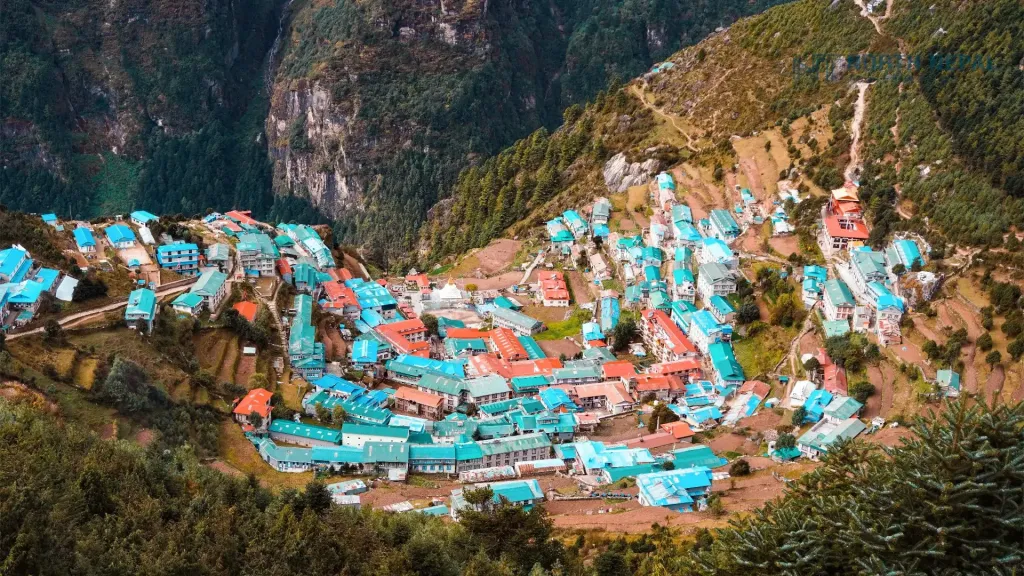
Namche Bazaar, 3,440 m (11,286 ft), where you spend your first acclimatisation day. Photo: North Nepal Travel & Trek.
The 12-day itinerary, day by day
This is our standard itinerary. Distances and walking times are from our package page; your guide will adjust the pace on the day.
Day
Route
Sleep at
Walking
1
Arrive in Kathmandu
Kathmandu, 1,400 m (4,593 ft)
–
2
Fly to Lukla, 2,846 m (9,337 ft), walk to Phakding
Phakding, 2,610 m (8,563 ft)
Short afternoon walk
3
Phakding to Namche Bazaar
Namche, 3,440 m (11,286 ft)
6 hours, 7.4 km
4
Rest day: hike to the Everest View Hotel, 3,962 m (12,999 ft)
Namche
3 to 4 hours
5
Namche to Tengboche
Tengboche, 3,867 m (12,687 ft)
5 to 6 hours, 6 km
6
Tengboche to Dingboche
Dingboche, 4,410 m (14,469 ft)
5 to 6 hours, 9.2 km
7
Dingboche to Lobuche
Lobuche, 4,940 m (16,207 ft)
6 hours, 8.4 km
8
Lobuche to Everest Base Camp, 5,364 m (17,598 ft), and back
Gorak Shep, 5,164 m (16,942 ft)
5 to 6 hours, 8.5 km
9
Kala Patthar, 5,644 m (18,517 ft), at dawn, then down
Pheriche
6 to 8 hours
10
Pheriche to Namche
Namche
About 5 hours
11
Namche to Lukla
Lukla
7 to 8 hours, about 17.7 km
12
Fly back to Kathmandu
Kathmandu
–
Our 12-day plan has one full acclimatisation day, at Namche. If you have had trouble with altitude before, or simply want more margin, ask us to add a second rest day at Dingboche; it makes the trek 13 days and is the single best change you can make. For the full day-by-day detail, see the Everest Base Camp Trek page.
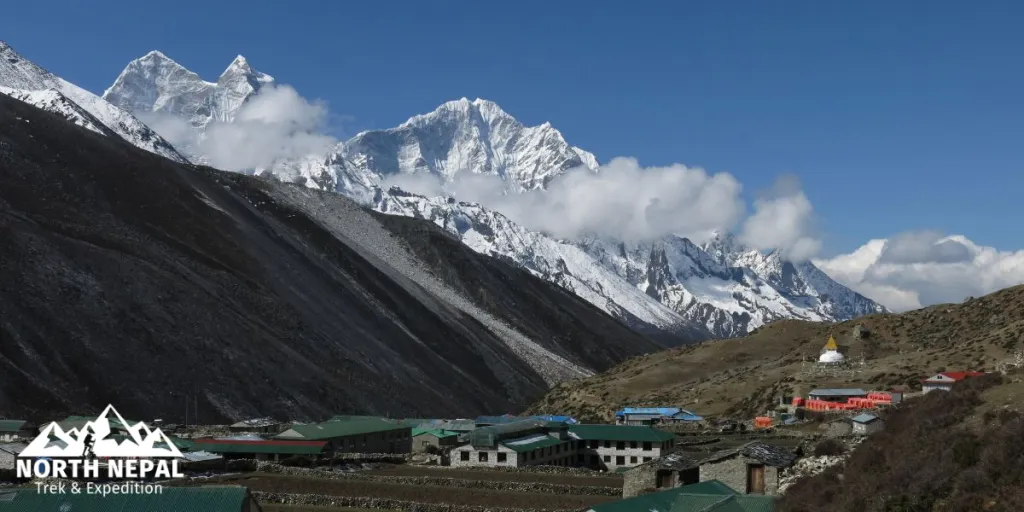
Dingboche, 4,410 m (14,469 ft). If you add a second rest day, this is where it goes. Photo: North Nepal Travel & Trek.
Difficulty and altitude
The walking is steady rather than technical: long days, stone steps and suspension bridges low down, then rocky moraine above Lobuche. What makes the trek hard is the thin air. By Gorak Shep you are sleeping above 5,000 m, where every step is slower and sleep is poor.
Climb slowly, drink plenty, and tell your guide about any symptoms early. A headache that does not go away, nausea, unusual tiredness or breathlessness at rest are reasons to stop going up. Our guides carry an oximeter and check you in the evenings, but the decision to descend is always made on symptoms, not on a number.
You need two permits, and neither is expensive. The Sagarmatha National Park entry fee is NPR 3,000 for foreigners. The Khumbu Pasang Lhamu Rural Municipality fee is NPR 3,000 for most foreigners since July 2024 (NPR 2,000 for SAARC and Chinese nationals). At about NPR 155 to the dollar, the two together come to about USD 40. There is no TIMS card for the Everest region.
The Everest region is the main exception to Nepal's 2023 rule that foreign trekkers must hire a licensed guide: the Khumbu municipality still allows independent trekkers. I still recommend a guide here, especially in a year like this one, when the person beside you needs to read the weather, the altitude and the flight situation every day.
Cost: what to budget in 2026
Our 12-day package costs USD 1,500 per person for one trekker and less as the group grows, down to USD 1,000 each for seven to twenty. It includes the Lukla flights, both permits, a licensed guide, porters, three meals a day and ground transport. On top, budget about USD 500 to 700 for your visa, insurance with helicopter evacuation, tips, and drinks, charging, showers and Wi-Fi on the trail.
Item
2026 figure
Our 12-day package
From USD 1,500 per person (USD 1,000 each for groups of 7 to 20)
The two main seasons are March to May and late September to November. Spring brings warmer days and rhododendrons low down; autumn brings the clearest skies and the most people. Both seasons now start and end with more weather risk than they used to, as the storms in the table above show.
Season
Conditions
Our view
March to May
Mild days, haze builds in May, busy
Excellent; book Lukla flights early
Late September to November
Clearest views, cold nights, busiest; early-season snow is now common
Excellent; keep two spare days
December to February
Very cold, clear, quiet; some lodges close higher up
Good for experienced, well-equipped trekkers
June to mid-September
The green season: rain, cloud, the most flight delays, almost no crowds
The flight to Lukla is short and spectacular, and it is the most common cause of changed plans on this trek. Flights only run in good visibility, and when the cloud comes in they stop, sometimes for days. In the busy seasons many Lukla flights leave from Manthali airport in Ramechhap rather than Kathmandu, which means a drive of four to five hours in the early morning; our package covers the drive.
If you are stuck, a shared helicopter seat is sometimes the way out, and it costs several times the plane fare. This is why we ask for spare days, and why your insurance should cover delays as well as rescue.
Teahouses, food, water and money
You sleep in teahouses every night: simple twin rooms, often with shared toilets higher up, and a dining room with a stove where everyone gathers in the evening. Our package includes three meals a day. Dal bhat, rice with lentils and vegetables, is the best choice on the trail: it is cooked fresh and refills are free.
Charging, hot showers and Wi-Fi are paid separately above Namche, and prices rise with altitude. Bring a power bank. Avoid bottled water: it gets expensive high up and adds to the valley's plastic problem. Since 2020 the Khumbu has banned thin single-use plastics and plastic soft-drink bottles, though water bottles were left out of that ban. Use purification tablets or a filter and refill from the lodges. Our package includes tablets.
Carry your trail money in Nepali rupees in cash. The only ATMs are in Lukla and Namche, and they are not reliable.
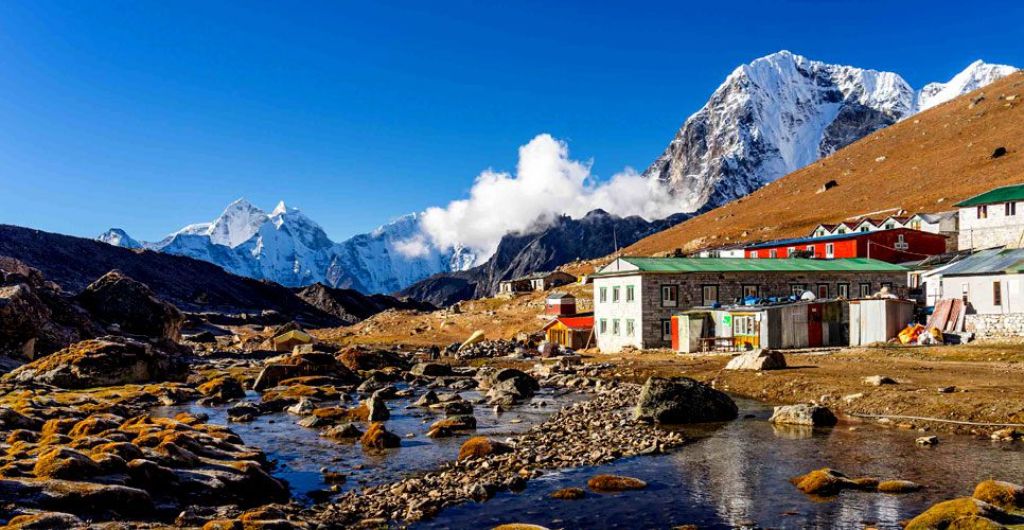
A teahouse at Lobuche, 4,940 m (16,207 ft). Simple, warm in the dining room and cold in the bedrooms. Photo: North Nepal Travel & Trek.
What to pack
Pack in layers: a base layer, a fleece, a down jacket and a waterproof shell, because you will go from sun in the morning to freezing in the evening. Bring broken-in boots, a sleeping bag good to well below freezing, a warm hat and gloves, sunglasses, sun cream, a headlamp, a first-aid kit and your own medicines. Our package includes a duffel bag, trekking poles and, when needed, crampons.
In autumn 2026, with snow arriving early, do not leave the microspikes or crampons behind if your guide suggests them. Our full list is in the all-season packing checklist for Nepal.
Alternatives in the Everest region
If the full base camp trek does not fit your time, fitness or taste, these are our other Everest-region trips.
Gokyo is quieter and arguably more beautiful; Three Passes is for strong, experienced trekkers. For a comparison with the Annapurna side, see Everest Base Camp vs Annapurna Base Camp.
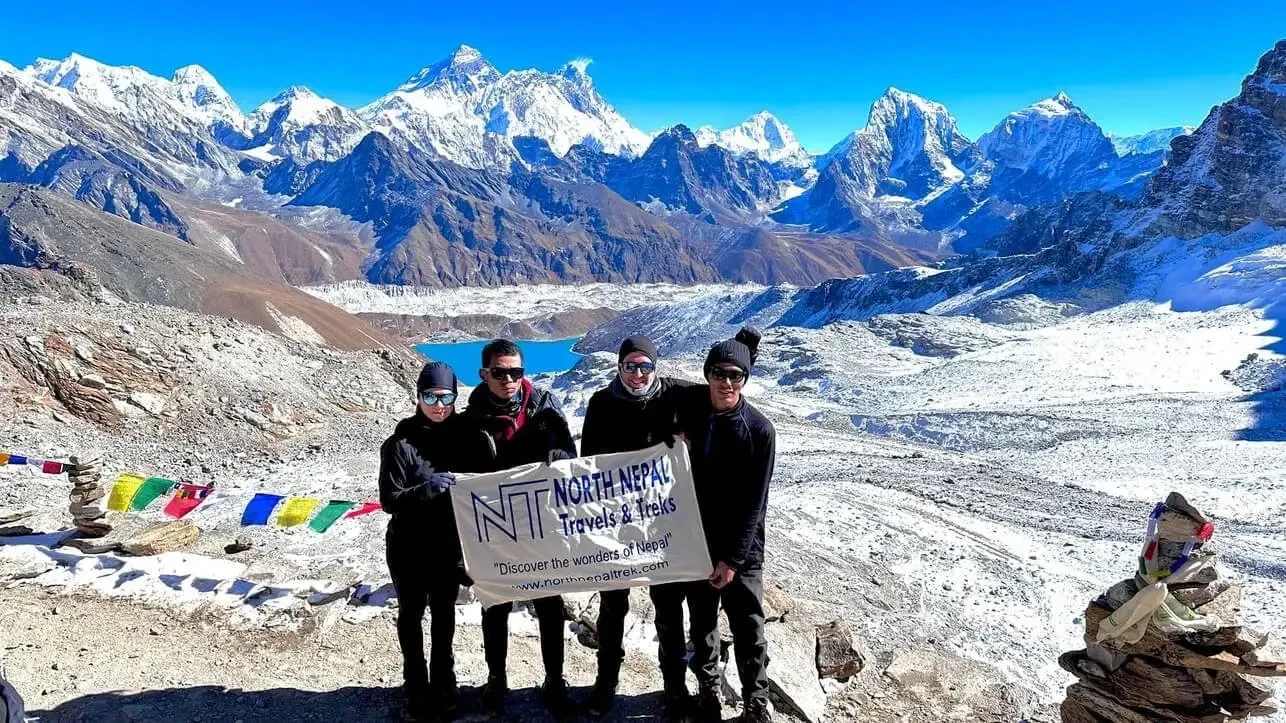
Our group above Gokyo, with Everest on the skyline. Photo: North Nepal Travel & Trek.
Your planning checklist
Before you book
Done?
Choose your season, and allow 14 to 15 days in Nepal including two spare days
☐
Buy insurance that covers trekking to at least 6,000 m and helicopter evacuation
☐
Start training 8 to 12 weeks before you fly
☐
Check your passport is valid for six months and plan your Nepal visa
☐
Keep your international flight home flexible if you can
☐
Decide whether you want a second rest day at Dingboche
☐
Bring cash in Nepali rupees for the trail
☐
Kala Patthar is 5,644 m, so a policy capped at 5,500 m is not enough for this trek. Read the altitude limit before you buy.
Frequently asked questions
Our standard itinerary is 12 days from Kathmandu back to Kathmandu, with about 130 km of walking from Lukla to base camp and back. With a second rest day at Dingboche it is 13 days. Allow 14 to 15 days in Nepal to cover flight delays.
Yes. The main trail is open. The 2026 floods were in Rasuwa, north of Kathmandu, not the Everest region. Early-season snow fell in the upper Khumbu on 26 September 2026, and a cyclone was forecast to bring rain and snow from 28 to 31 October, so plan spare days and follow your guide's advice.
Not by law. The Khumbu municipality still allows independent trekkers, as an exception to Nepal's 2023 guide rule. We strongly recommend one, for acclimatisation, weather and flight problems.
Our 12-day package starts at USD 1,500 per person, down to USD 1,000 each for groups of seven to twenty, plus about USD 500 to 700 for visa, insurance, tips and trail extras. The permits together cost about USD 40.
October and November for the clearest views, April and May for warmer days. In recent autumns early snow and storms have hit the upper Khumbu, so whichever month you choose, keep two spare days.
Everest Base Camp is at 5,364 m (17,598 ft). The highest point of the trek is Kala Patthar, 5,644 m (18,517 ft), and you sleep at Gorak Shep, 5,164 m (16,942 ft).
You wait in Lukla, or Kathmandu or Manthali on the way in, until the weather clears. That is why we build in spare days. When flights are grounded for days, a shared helicopter seat is sometimes possible at extra cost.
Yes, a fit beginner can, with eight to twelve weeks of training and a slow, sensible itinerary. The challenge is altitude, not technical skill.
A native of the Annapurna region, he brings over 17 years of firsthand experience leading treks across the mountains of Nepal. His deep local roots and proven guiding expertise make him a trusted authority on authentic Himalayan adventures.