Published Oct 18, 2026 Updated Oct 18, 2026 10 min read
Quick answer
At Everest Base Camp, 5,364 m (17,598 ft), air pressure is about half of sea level, so each breath carries roughly half the oxygen. Your body breathes harder, sheds fluid, sleeps lightly and eats less, and needs days to adapt.
Most of what you feel on the way to base camp is your body doing its job, not something going wrong. I want guests to know which changes are normal before they start, so the real warning signs stand out when they matter. This is the body-by-body version; our separate guides cover preparation, safety and Everest Base Camp trek difficulty in full.
Key facts
Everest Base Camp5,364 m (17,598 ft)
Air pressure at base campAbout half of sea level
Main early adaptationFaster, deeper breathing over the first 3–5 days
Normal at altitudeBroken sleep, lower appetite, puffy hands or face, more urination
Not normalBreathless at rest, stumbling or confusion
Does fitness protect you?No. It helps you enjoy the trek, not avoid altitude illness
The air at Everest Base Camp is still 21% oxygen, but at half the sea-level pressure each breath delivers roughly half as much. Your breathing, blood and sleep all change to cope, over days, not hours.
The Caudwell Xtreme Everest research team measured the air pressure at their laboratories along the route to base camp. The numbers show why the walk gets harder even when the trail doesn't.
Laboratory site
Air pressure
Share of sea-level pressure
London (baseline)
100.5 kPa
100%
Kathmandu
86.7 kPa
86%
Namche Bazaar
67.3 kPa
67%
Pheriche
61.5 kPa
61%
Everest Base Camp
53.8 kPa
54%
Your body can adapt to this, but only at its own pace. The CDC describes the early phase of acclimatisation as taking place over the first 3 to 5 days after each climb to a new height. Walk up faster than that and you outpace it, however fit you are.
A North Nepal Travel & Trek group at the Everest Base Camp rock, 5,364 m (17,598 ft). Photo: North Nepal Travel & Trek.
Why are you so out of breath?
Heavy breathing on the Everest Base Camp trail is your first and most important adaptation, not a sign of poor fitness. Your body senses the low oxygen and makes you breathe faster and deeper.
The CDC calls this a steady increase in ventilation, and it is the core of the first few days of acclimatisation. You'll notice it on the stairs of a lodge in Dingboche as much as on the trail. Slowing your pace until you can talk in full sentences is the simplest way to stay inside what your body can supply.
All that extra breathing of cold, dry air has a cost. You lose water with every breath, and many trekkers develop what the Himalayan Rescue Association describes as a persistent, bothersome cough and cold-like symptoms in the cold, dry air of high altitude. Trekkers call it the Khumbu cough. A buff over your mouth and nose warms and moistens the air you breathe.
The Himalayan Rescue Association suggests about 3 litres of fluid a day in the mountains. Drink steadily through the day rather than forcing water at night, when it only means more trips outside in the cold.
A slow, steady pace through fresh snow in the Khumbu. Photo: North Nepal Travel & Trek.
What happens to your heart and blood?
Your blood changes quickly at altitude, but not the way most people think. New red blood cells take weeks to build, so they play no part in the early adaptation on a trek to Everest Base Camp.
What does change quickly is the fluid in your blood. The CDC explains that plasma volume drops over the first few days, which raises the concentration of haemoglobin, the oxygen carrier, without adding new cells. It's one reason you urinate more than usual for the first days at a new height.
Expect your pulse to run higher than at home, at rest and on every climb. If your group carries a pulse oximeter, as ours do, your oxygen reading will sit well below your sea-level number. A single low reading matters less than a trend: a trekker whose numbers keep falling while the rest of the group holds steady is the one your guide watches.
Why can't you sleep at altitude?
Broken sleep is close to universal on the Everest Base Camp trek, and most of it comes from periodic breathing. The CDC says some degree of it becomes nearly universal above about 2,700 m (8,858 ft).
Periodic breathing is a cycle of deep breaths, then shallow ones, then a short pause that can jolt you awake feeling you need air. It's alarming the first time, but the Himalayan Rescue Association notes that it is only a problem if it makes you wake up repeatedly, breathless, anxious and unable to sleep. Tell your guide if that happens.
The lodges add their own challenges. Bedrooms are unheated and only the dining hall has a stove, so a warm sleeping bag, a hat and a bottle of hot water from the kitchen make a bigger difference to your sleep than any gadget. Skip alcohol on the way up; save the celebration beer for the walk down.
Why do you lose your appetite?
A smaller appetite is one of the most common changes at Everest Base Camp height, and on its own it is normal. Combined with headache and nausea, it is a classic sign of acute mountain sickness.
The answer is to keep eating even when food seems like a chore. Carbohydrates go down most easily: dal bhat, potatoes, noodle soup and porridge are all on every lodge menu, and garlic soup is a trail favourite. Your guide will notice if you leave half a plate, and that's useful information, not nagging.
Your stomach is also more exposed up here. Drink only boiled, treated or bottled water, use treated water to brush your teeth, eat food that arrives hot, and clean your hands before every meal. A night of diarrhoea at 4,000 m (13,123 ft) drains the fluid and energy your body needs to acclimatise.
Is swelling in your face or hands normal?
Mild swelling around the eyes, fingers or ankles is a known effect of altitude. The Himalayan Rescue Association says that, without other symptoms of AMS, it usually needs no treatment.
Take rings off before the trek, loosen pack straps, and mention any swelling to your guide so it can be checked against your other symptoms. The Himalayan Rescue Association also describes sudden fainting shortly after arriving at altitude as well known but harmless. It still needs a rest and a conversation with your guide.
What do cold and sun do to you up there?
Cold and sunlight both hit harder at Everest Base Camp height. The World Health Organization says UV rises about 10% for every 1,000 m (3,281 ft) of altitude, and snow can reflect up to 80% of it.
That combination burns skin and eyes quickly, including the underside of your chin and nose. Use high-factor sunscreen and lip balm, and wear sunglasses with proper UV protection. Snow blindness, a sunburn of the eye's surface, is painful and can stop you walking for a day or more.
The cold works the other way, especially in the early mornings at Gorak Shep and on the climb to Kala Patthar, 5,644 m (18,517 ft). Layers you can add and remove beat one heavy jacket. Clumsiness and confusion from getting too cold can look like serious altitude illness, so stay warm and say how you feel.
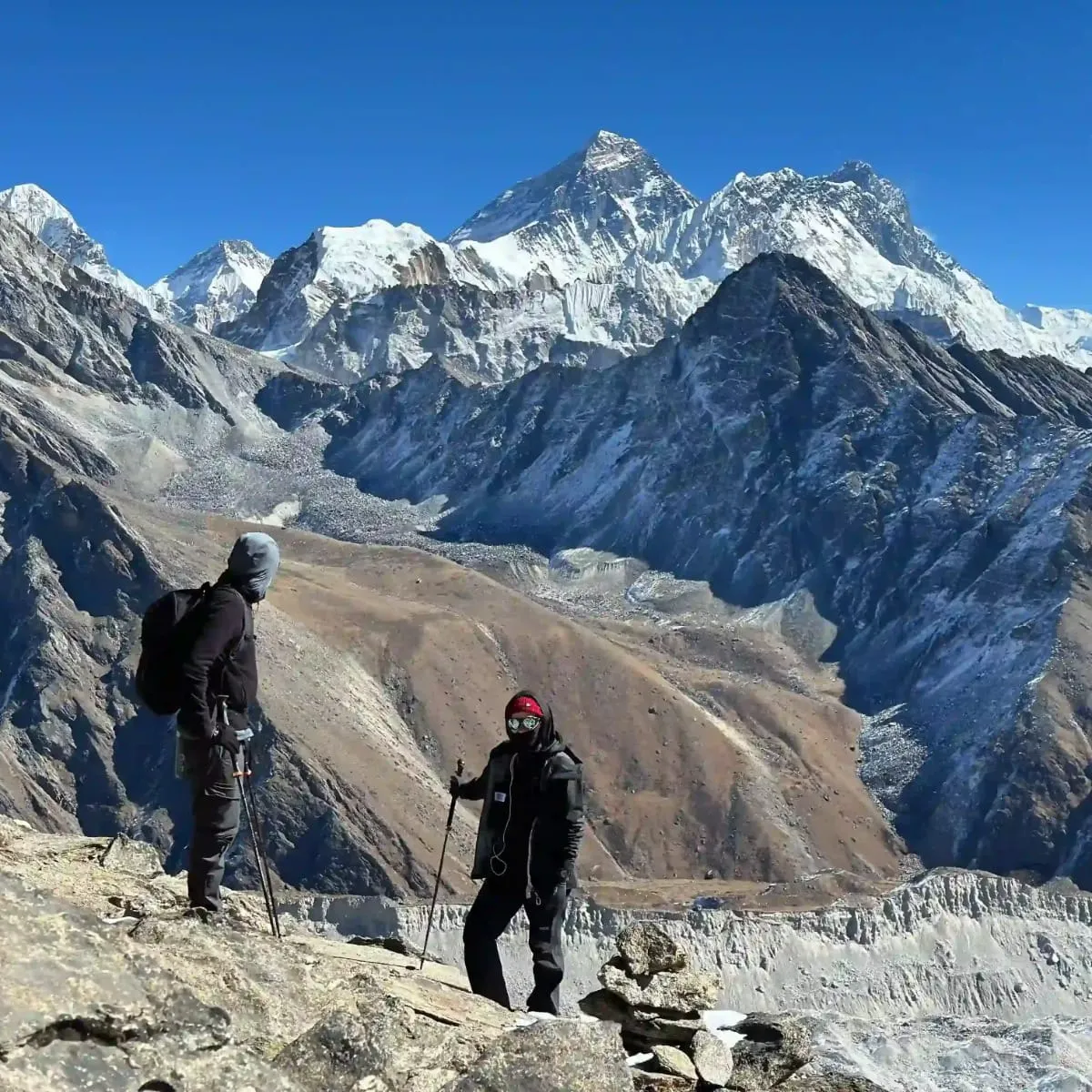
Clear, cold air and strong sun high in the Khumbu. Cover up even when it feels mild. Photo: North Nepal Travel & Trek.
Who adapts more slowly to altitude?
Your own history matters most, not your age or fitness. The CDC says how you responded to high altitude before is the most reliable guide, and that training and physical fitness do not affect risk.
Age matters less than people expect. The CDC notes that children are as susceptible as adults, and people over 50 have slightly less risk. Part of the difference between individuals is genetic, so a strong friend may struggle while a gentler walker feels fine. Train anyway, because fitness makes every day easier; our 16-week Himalayan training plan is a good place to start.
Some conditions need a doctor's advice before you book, including heart and lung disease. The Himalayan Rescue Association advises that pregnant women should not sleep higher than 12,000 ft (3,658 m). See a travel medicine doctor well before you go, and talk to them about whether acclimatisation medicine suits you.
When does normal turn into a warning sign?
Breathlessness on hills, light sleep and puffy fingers are normal. Breathlessness at rest, a wet cough, stumbling, confusion or a severe headache that painkillers don't touch are not: stop, tell your guide, prepare to descend.
Acute mountain sickness usually starts 2 to 12 hours after reaching a new height, according to the CDC, with headache plus tiredness, poor appetite or nausea. The two dangerous conditions are high-altitude pulmonary oedema (fluid in the lungs) and high-altitude cerebral oedema (swelling of the brain). For HAPE, the CDC says descent is urgent and mandatory in most circumstances, and for HACE it advises starting descent for anyone suspected of having it.
Heads up
In our groups, the first altitude headache usually shows up at Dingboche, 4,410 m (14,469 ft). Tell your guide straight away. Our rule is that nobody goes higher with symptoms of AMS, and your guide judges each trekker individually. Our 12-day itinerary has one rest day, at Namche Bazaar, so if you know you acclimatise slowly, I'd add a second night at Dingboche.
The air at Everest Base Camp is still 21% oxygen, but the pressure is about half that at sea level. The Caudwell Xtreme Everest team measured 53.8 kPa at their base camp laboratory against 100.5 kPa in London, so each breath delivers roughly half the oxygen.
The early phase of acclimatisation takes 3 to 5 days after each climb to a new height, according to the CDC. That's why sensible itineraries gain height slowly and build in rest days, rather than walking straight up to base camp.
Most trekkers get periodic breathing at night, a cycle of deep and shallow breaths with short pauses. The CDC says it becomes nearly universal above about 2,700 m (8,858 ft). It's usually harmless, but tell your guide if you keep waking breathless.
No. The CDC says training and physical fitness do not affect the risk of altitude illness. Fitness makes the walking easier and gives you more reserve, but the fittest person in a group can still get sick if they climb too fast.
Yes, mild swelling around the eyes, fingers and ankles is a known effect of altitude that, without other AMS symptoms, usually needs no treatment, according to the Himalayan Rescue Association. Tell your guide anyway, so it can be checked alongside any other symptoms.
Yes. UV rises by about 10% for every 1,000 m (3,281 ft) of altitude and snow can reflect up to 80% of it, according to the World Health Organization. Sunglasses with proper UV protection prevent snow blindness, which is painful and can stop you walking.
Levett DZH, Martin DS, Wilson MH et al., "Design and conduct of Caudwell Xtreme Everest", BMC Medical Research Methodology, 2010; 10:98: https://doi.org/10.1186/1471-2288-10-98
A native of the Annapurna region, he brings over 17 years of firsthand experience leading treks across the mountains of Nepal. His deep local roots and proven guiding expertise make him a trusted authority on authentic Himalayan adventures.