OVERVIEW & HIGHLIGHTS
Lower Seti River Rafting Overview
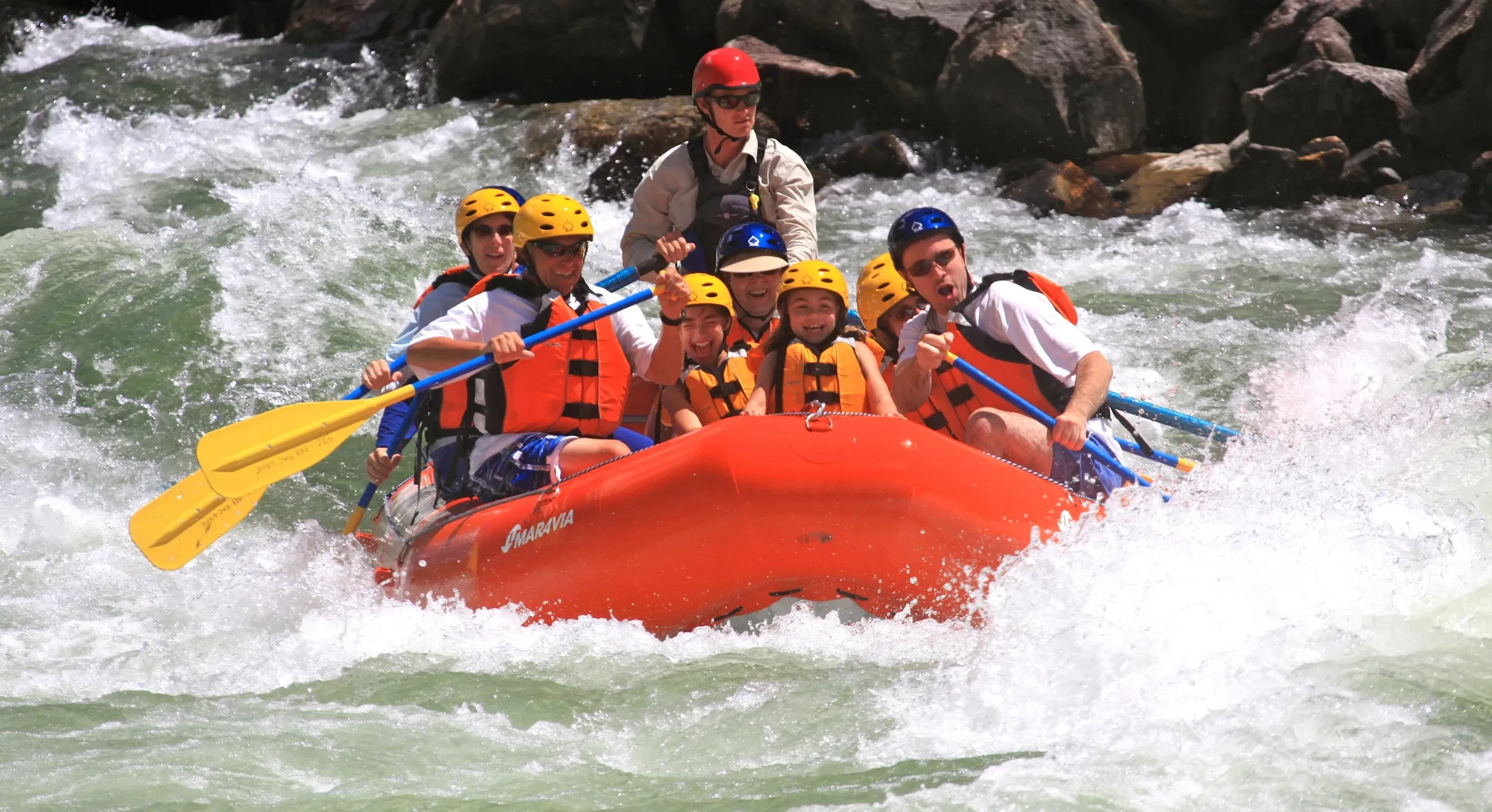
Lower Seti River rafting is a two-day, 32-kilometre white water trip that starts at Damauli on the Prithvi Highway and ends at the Devghat confluence south of Chitwan. The rapids run Class II-III, which makes it one of the most beginner-friendly rafting routes in Nepal. It's also one of the most scenic, threading through unbroken forest and Magar villages between Tanahun and Chitwan districts.
White water rafting is one of Pokhara's most popular adventure activities, alongside paragliding, bungee jumping, and ziplining. For rafting in Pokhara, the Seti River is the go-to choice: fast-flowing water through a secluded stretch of forest, with easy rapids that suit beginners without dulling the excitement.
The starting point is Damauli, a town in Tanahun district about two hours from Pokhara on the Prithvi Highway. You leave Pokhara in the morning, arrive at the put-in for a safety briefing, and are on the water by mid-morning. Rafts get rigged, life jackets and helmets fitted, and paddling technique run through before launch.
The water level on the Seti shapes the experience more than any single factor. In autumn and spring the river runs at moderate flow with clean Class II-III rapids that carry momentum without overwhelming a first-timer. In monsoon (June to August) the water level rises sharply and the rapids grade up, turning a family-friendly float into something more physical.
The name Seti means "white" in Nepali, and the river gets its colour from suspended white clay carried down from the Annapurna range. That pale flow, framed by forested banks, is what most photographs of Seti rafting actually show. It also makes the river easy to pick out from any of the bridges along the Prithvi Highway.
Once you're on the water, the first hour is mostly reading the river and syncing paddle timing with the rest of the raft. Guides call the strokes; you and four to six others provide the paddle power. Rapids come in short bursts, and between them the river slows enough for you to look up at the ridges.
By early afternoon the raft reaches Saranghat, a Magar village on the middle hills above the river. The Magars here have generations of service with the Gurkha regiments, and it's not unusual to see retired soldiers watching the rafts drift past. Camp for the night is on a beach just below the village.
Day two continues downstream through open forest to the take-out at Devghat, the sacred confluence where the Seti joins the Trishuli and Kali Gandaki. This is one of Nepal's most important Hindu pilgrimage sites — you'll usually pass sadhus, cremation ghats, and temple flags on the banks as you paddle in. It's an unusual place to end a rafting trip.
Safety on Lower Seti depends on the guide team and current water conditions, and the two are not separable. We run this trip with CPR-certified river guides, checked rafts and safety kayakers on the water, and full personal kit — life jacket, helmet, paddle, and wetsuit when the season calls for it. Our team pauses or reroutes when the water level moves outside safe parameters, especially in the shoulder weeks around monsoon.
Lower Seti rafting is a strong fit for families with older children, first-time rafters, couples, and travellers building a Pokhara adventure block alongside paragliding in Pokhara or the Pokhara bungee jump. It's less demanding than Kali Gandaki rafting or Trishuli rafting, but delivers real rapids, real forest, and two full days on the water.
Lower Seti River Rafting Highlights
-
The Seti River is a secluded and beautiful spot for white water rafting, perfect for beginners.
-
Rafting on the Seti River is surrounded by lush forests and pristine wildlife, making it an ideal destination for nature lovers.
-
The monsoon season offers an extra level of intensity for those looking for a more challenging rafting experience.



.webp)
.webp)
.webp)
.webp)