Yarsagumba in Dolpo: The Caterpillar Fungus Harvest on the Upper Dolpo Trek
Published Oct 29, 2026 Updated Oct 29, 2026 7 min read
Quick answer
Yarsagumba is a caterpillar fungus that grows in Nepal's high pastures. In Dolpa its harvest lasts about a month from late May, and for many families it is the main source of cash for the year. Trek Upper Dolpo in late May or June and you walk right through it.
A fungus that can sell for up to three times the price of gold in Beijing, a month when families move up to the pastures, and a harvest that is getting smaller. What yarsagumba is, how the park runs the season, and what it means for your trek.
Most guides to Dolpo mention yarsagumba in a line, usually as the reason villages are empty in June. It deserves more than that. The harvest is one of the biggest events in the Dolpa year, it runs through Shey Phoksundo National Park, and it overlaps one of the two good seasons for the trek. For when to go, see our guide to the best time to trek Upper Dolpo; this post is about the fungus itself and the people who collect it.
Key facts
What it isOphiocordyceps sinensis, a fungus that grows inside ghost moth caterpillars
Where in NepalAlpine grassland at 3,000 m to 5,000 m, in 27 northern districts
Dolpa season, 2026Opened 24 May, for one month
Collectors in the park, 20266,205, in 21 major pastures
Collector entry feeNPR 500 buffer-zone residents, NPR 2,000 other Dolpa residents, NPR 3,000 from outside the district
StatusVulnerable on the IUCN Red List since 2020
What is yarsagumba?
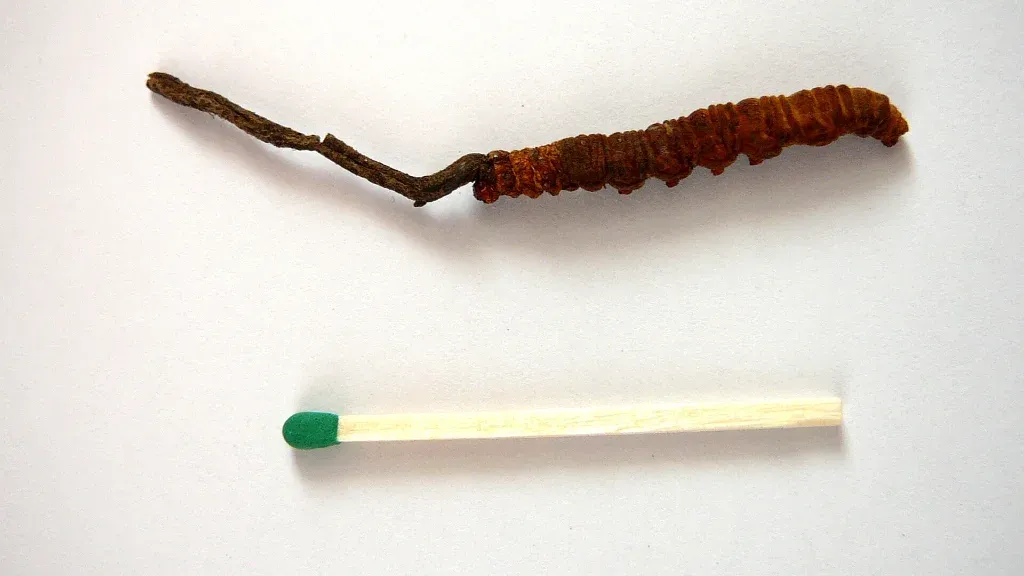
Yarsagumba is the caterpillar fungus Ophiocordyceps sinensis. It grows inside the larvae of ghost moths in the soil of high meadows, slowly kills them, and then pushes a thin stalk up out of the caterpillar's head.
In Nepal it grows in isolated patches of alpine grassland between 3,000 m and 5,000 m, and it has been recorded in 27 northern districts, according to a 2014 study in the Journal of Mountain Science. Collectors search the pastures for the small stalk and dig each piece out by hand, sometimes through late snow.
The demand comes from traditional Chinese medicine, and it has grown sharply since the 1990s. Researchers quoted by AFP in 2020 said yarsagumba can fetch up to three times the price of gold, ounce for ounce, in Beijing.
That demand has a cost. In 2020 the IUCN listed the fungus as Vulnerable, saying overharvesting had cut its populations by at least 30% over 15 years.
A dried yarsagumba harvested in Nepal, with a match for scale. Photo: Nicolas Merky, CC BY-SA 3.0 DE, via Wikimedia Commons, cropped.
Why does yarsagumba matter so much in Dolpo?
For many families in Dolpa, yarsagumba is the main source of cash. Onlinekhabar reported from Dolpa in 2023 that the harvest earns enough for almost seven months of the year, while in Upper Dolpa farming does not cover even three.
Nepal legalised the yarsagumba trade in 2001, and collecting has become part of the calendar in the high villages. A central bank study reported by the Kathmandu Post in 2023 put a collecting family's average earnings from the fungus at about NPR 277,000 a year, or 56% of its total income.
The harvest is a family undertaking. People take horses and mules up to the pastures and stay there for weeks, and Onlinekhabar met one collector who held a gharpuja, a ritual to bless the house, before setting off. A local representative in Dolpa called the fungus the community's lifeline.
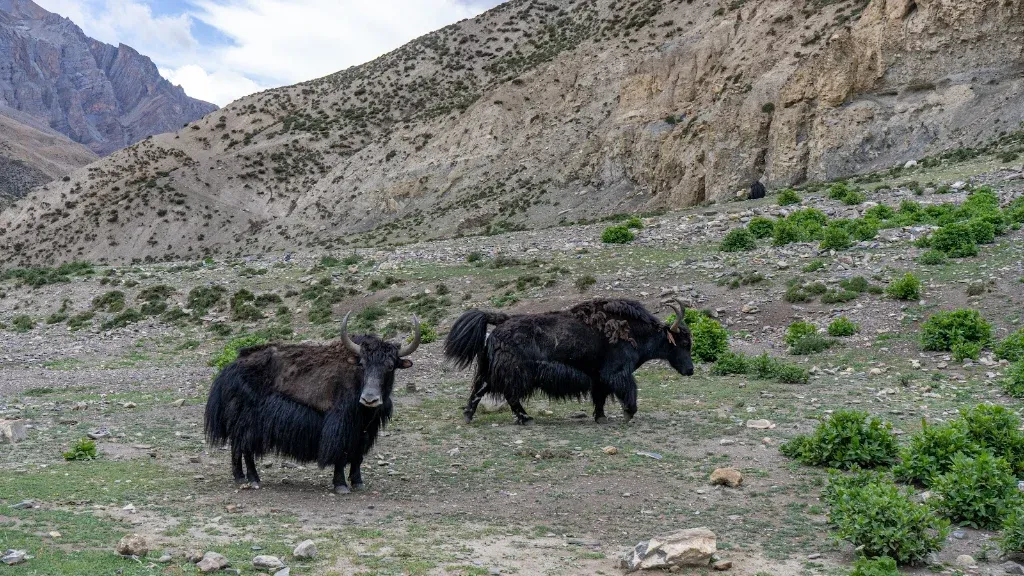
Yaks on a summer pasture on the Upper Dolpo route. Photo: North Nepal Travel & Trek.
How does Shey Phoksundo National Park run the harvest?
Shey Phoksundo National Park sells collectors a season entry permit priced by where they live. In 2026 it cost NPR 500 for buffer-zone residents, NPR 2,000 for other Dolpa residents and NPR 3,000 for people from outside the district.
The 2026 season opened on 24 May for one month, after officials and political representatives meeting in Dunai agreed a 12-point management plan, the Kathmandu Post reported. Collectors may not leave plastic waste, pitch tents outside designated areas, set fires, dig pits or carry banned tools, and police and park staff patrol against early harvesting.
By mid-July the park had recorded 6,205 collectors entering 21 major pastures and had taken NPR 10.7 million in entry fees. Traders who move the fungus out of the district pay a royalty of NPR 31,000 per kg for a transport permit.
Is the yarsagumba harvest getting smaller?
Yes, by the figures reported from Dolpa in 2026. Shey Phoksundo National Park issued transport permits for 150 kg of yarsagumba in 2025, but only about 60 kg by late September 2026, according to the Kathmandu Post.
Prices have fallen with it. Dolpa yarsagumba sold for NPR 2 million to 2.4 million per kg in 2025, and in 2026 some collectors sold single pieces for NPR 700 to 1,000. Some reports put pre-Covid prices in Karnali as high as NPR 3.2 million per kg.
Dolpa's forest officer blamed below-normal rainfall, climate change, habitat disturbance and human activity that reduces the fungus's ability to reproduce. The fungus is now increasingly rare below 4,000 m, a researcher told the Kathmandu Post. Local people notice the change too: in 2023, after snow fell on Shey La in the middle of May, a Saldang resident told Onlinekhabar it had never snowed at that time of year before.
What does the harvest mean for your Upper Dolpo trek?
If your Upper Dolpo trek falls in late May or June, it will overlap the harvest. Expect to share the trail with collectors and their pack animals, to see their tents on the pastures, and to find some village houses locked while families are up the hill.
None of this closes the trek, and for me it's one of the most interesting times to be in Dolpo, because you see how the high valleys actually earn a living. It does ask a little more of you as a guest:
Stay on the trail, and don't wander onto a slope where people are searching.
Ask before you photograph collectors or their camps.
Don't buy yarsagumba on the trek. The next section explains why.
Carry your rubbish out. The park bans plastic waste in the pastures during the season.
Heads up
If meeting families in their villages is high on your list, late May and June are not the best weeks for it, because many of them will be in the pastures. The mid-September to November window is the other good season, and the villages are full again by then.
Can you buy yarsagumba on the Upper Dolpo trek?
My advice to guests is simple: don't buy it. Moving yarsagumba out of Dolpa takes a transport permit with royalty paid, which is the traders' business, and the fungus is listed as Vulnerable.
Quality is hard to judge, too. Traders price it by how many pieces make up a kilo, and in 2026 many collectors found pieces infected by another fungus, which traders refused to buy, Dolpa's forest officer said. Leave it to the trade, and spend your money in the villages on food, lodging and things made there.
Frequently asked questions
Yarsagumba is a fungus, Ophiocordyceps sinensis, that grows inside ghost moth caterpillars in Himalayan pastures. It is sold for traditional Chinese medicine and a 2014 study called it one of the most valuable medicinal mushrooms in the world.
In 2026 the Dolpa pastures opened on 24 May for one month. In 2025, collection began in the third week of May. Before the pandemic, pastures sometimes opened as early as April.
Collecting and trading yarsagumba has been legal in Nepal since 2001, under permits. Collectors pay for an entry permit to the pastures, and traders pay a royalty for a transport permit to move it.
In 2025 Dolpa yarsagumba sold for NPR 2 million to 2.4 million per kg. In 2026 some collectors sold single pieces for NPR 700 to 1,000.
Demand from traditional Chinese medicine is high, and supply is small and shrinking. The fungus grows only in high pastures, each piece is dug out by hand, and harvests in Karnali have fallen in recent years.
Thinking of trekking during the harvest? Our Upper Dolpo Trek runs in late spring and autumn. Message me on WhatsApp and we can work out which suits you.
B. B. Thapa et al., An Assessment of Yarsagumba (Ophiocordyceps sinensis) Collection in Dhorpatan Hunting Reserve, Nepal, Journal of Mountain Science 11(2), 2014, https://doi.org/10.1007/s11629-013-2692-7, accessed 29 Oct 2026.
A native of the Annapurna region, he brings over 17 years of firsthand experience leading treks across the mountains of Nepal. His deep local roots and proven guiding expertise make him a trusted authority on authentic Himalayan adventures.