Lower Mustang Trek: A Place Beyond Himalayas

Home Trekking

Annapurna Region

Lower Mustang Trek: A Place Beyond Himalayas
DESTINATION Nepal
MAX. ELEVATION 3760 m | 12336 ft
WALKING DISTANCE 5 - 6 hrs Trekking
GRADE Moderate
BEST SEASON Spring(March - June) | Autumn( September - December)
DURATION 7 Days
MEALS INCLUDED Breakfast, Lunch & Dinner
ACCOMMODATION Hotel/Lodge

OVERVIEW & HIGHLIGHTS

A Hidden Gem Beyond the Upper Mustang Trail

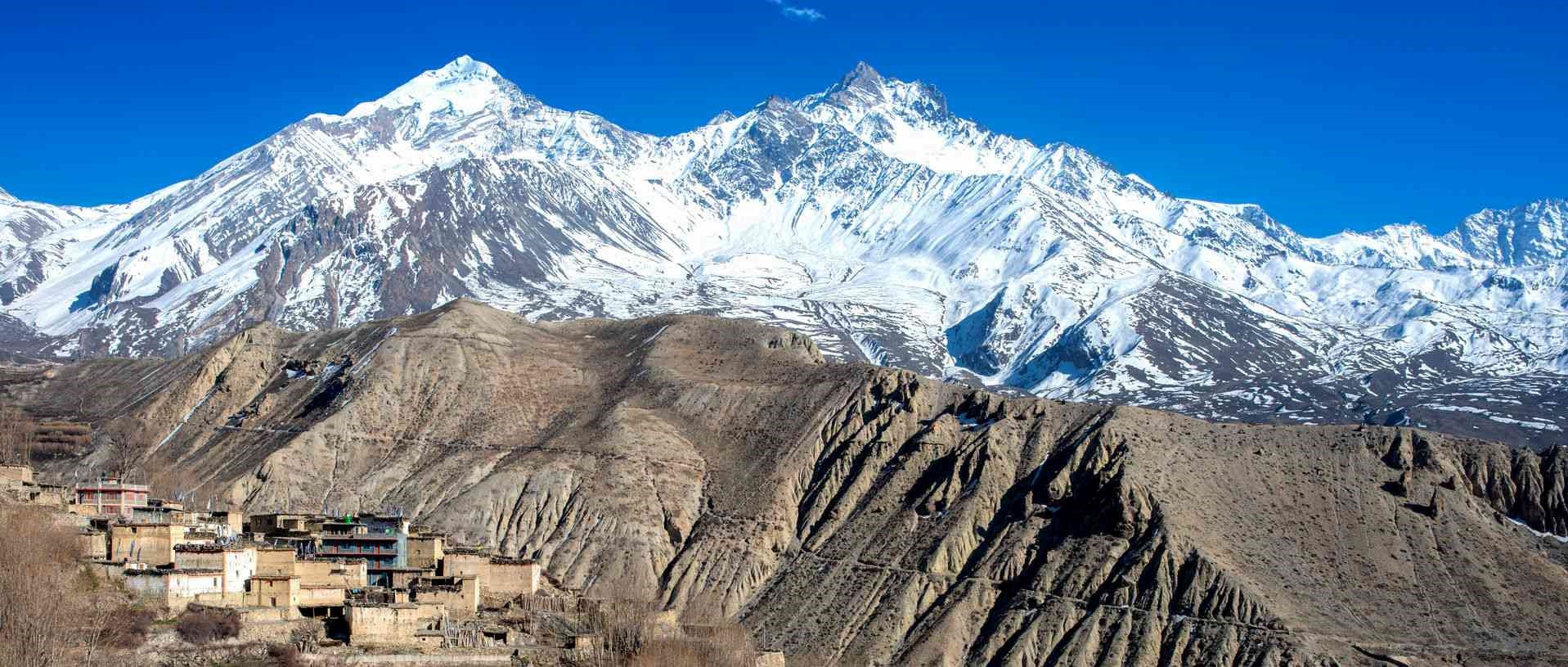
Lower Mustang is located in the southern part of the Mustang District inside Gandaki province, often overshadowed by its restricted counterpart, Upper Mustang. Even though Lower Mustang is more accessible than the Upper Mustang Trek, it stands as a hidden gem waiting to be explored as a captivating region where natural wonders and cultural treasures intertwine.

Download the season packing checklist before you lace up your trekking boots for the Lower Mustang Trek.

The 7-day Lower Mustang trek starts from Kalopani (2,350 m) and ends at Pokhara, Nepal. This trek transcends you from the arid landscape of Lower Mustang to the Rhododendron forest of Ghorepani Poon Hill, covering around 80 km of distance. Passing through Kagbeni, Marpha, Jharkot, and Sikha villages gives you the opportunity of cultural interaction with people of  Thakali, Gurung, and Magar heritage. Muktinath, at an elevation of 3,710 meters (12,172 feet), marks the most important landmark. It has been an important place of faith for Buddhists and Hindus.

Lower Mustang Trip Highlights

  • Rainshadow desert landscape amidst Himalayan peaks
  • Jomsom: Apple orchards, windy weather, gateway to Upper Mustang
  • Cultural diversity: Thakali, Magar, Lupra, Tibetan, and Bon communities
  • Ancient monasteries: Muktinath Temple's religious significance
  • Adventure-filled trekking: Annapurna Circuit, varied terrains
  • Natural wonders: Kali Gandaki River, Tatopani hot springs
  • Historic trade routes that influenced architecture, lifestyle, and heritage
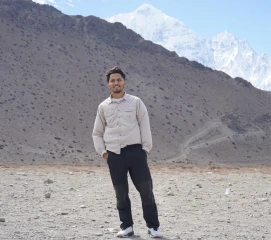
Niranjan Adhikari
Itinerary review by

Niranjan Adhikari, Trekking Guide

Mohan founded North Nepal Trek in 2015 to share Nepal's lesser-explored trans-Himalayan valleys with the world, and the Lower Mustang Trek reflects that mission perfectly. Niranjan Adhikari reviewed this itinerary after guiding trekkers from Kalopani through Marpha and Jomsom to Muktinath, where the Kali Gandaki Gorge's arid cliffs give way to the sacred temple's 108 spring-fed taps.

Lower Mustang Trek Itinerary

Toggle all
Day 1

Drive from Pokhara to Kalopani

Starting from Pokhara, you will embark on a scenic jeep journey along Bhupi Sherchan Highway to reach the Himalayas. The drive will take approximately 5-6 hours, covering 125km, passing through notable cities like Kushma, Beni & Tatopani. As you travel, the views along the roadway will leave you in awe. The road up to Beni is mostly blacktopped, leaving a few sections, but the rough road begins after Beni.

Photo: View from kalopaani guest House

The road is on the bank of the Kali Gandaki River, and massive waterfalls can be seen during this section of trails. After crossing Tatopani and Ghasa, eventually, you will arrive at the picturesque village of Kalopani, situated at an elevation of 2,350 m. Kalopani is a small and distinctive village adorned with fluttering monastery flags. Your trekking adventure will begin from this enchanting village, taking you further into the Himalayas.

Day 2

Trekking from Kalopani to Marpha Village

DURATION 6 - 7 hrs
Distance
DISTANCE ~ 20 km

Your second day of Lower Mustang Trek starts after having breakfast at Kalopani. The trail to Marpha nearly covers 20 kilometers (12.4 miles). During this trail, you will pass along the pine woodland and trek through the slopes. The trail also passes along the bed of the waterway, and the trails offer a fascinating journey through the Gandaki Valley, showcasing stunning views of high mountains, lush trees, picturesque villages, and green pastures.

Marpha villagePhoto: Marpha village

After trekking for about 6-7 hours on the upwards trail filled with mesmerizing views and passing through small and traditional villages like Kokhethanti, Larjung, Kobang, Tukuche, and Chimang we finally reach Marpha. Marpha is renowned for its picturesque apple gardens and is often referred to as the "Apple Capital" of the country. The apples grown in Marpha are known for their exceptional quality and taste, making them highly sought after both locally and internationally. The Marpha to Kalopani trek is a thrilling part of the lower Mustang trek and a popular spot among trekkers. Overnight stay at Lodge or Hotel.

Day 3

Trek from Marpha to Lupra Village via Jomsom:

DURATION 6 - 7 hrs
Distance
DISTANCE ~ 19 km

The day starts with a hearty breakfast at the lodge. After having our breakfast we trek towards the Lupra Village. Leaving behind the Marpha village, we embark on a picturesque trek to Lupra village, Nepal. As we follow the designated trail the stunning Himalayan landscapes, and mountain views captives your heart. Experience the thrill of walking alongside the majestic Kali Gandaki River, one of the world's deepest gorges, as it carves through the rugged terrain.

Lupra Village en route Lower MustangPhoto: Lupra Village en route Lower Mustang.

We stop in Jomsom and after some rest trek towards Lupra. Jomsom is known for its cultural significance and breathtaking mountain views. Along the way, enjoy the serene beauty of Dhumba Lake, a peaceful oasis amidst the rugged landscape. 
Finally, after 6-7 hours of trekking covering about 19 km, we arrive in Lupra village, renowned for its Buddhist heritage and the Bon Po monastery. Overnight stay at Lupra.
 

Day 4

Trek from Lupra to Muktinath via Jharkot:

DURATION 6 hrs
Distance
DISTANCE ~ 8 km

We start our day early with breakfast and trek toward Muktinath. Trekking from Lupra village to Muktinath via Kagbeni & Jharkot is an awe-inspiring and unforgettable journey. We first trek toward Kagbeni, which is the gateway to Upper Mustang. The greenery in this valley in the middle of the desert makes it like an Oasis.

Jharkot ChortenPhoto: Jharkot Chorten

We explore Kagbeni as this valley has so much to offer, the Kaligandaki River flows between the valley, the spectacular mountain views such as Nilgiri (7,060m), Tilicho Peak(7,139m), Yak Kawa(6,482m), and Thorung Peak(6488m). Moreover, monasteries and old temples can also be explored at Kagbeni. After enjoying the views and lunch we start ascend to the Jharkot along the scenic views.

After we reach Jharkot we can witness its rich and cultural heritage and historical significance. It is home to Jharkot Monastery, also known as Jharkot Gompa or Jharkot Kagyu Monastery, where you can see the ancient Buddhist artworks and statues which further boast the spiritual traditions of this region.After trekking for about 30 min from Jharkot we reach Muktinath, which is one of the most sacred pilgrimage sites located in the Mustang district. Muktinath is a popular destination not only for religious pilgrims but also for trekkers, adventure enthusiasts, and those with a keen interest in culture as well. It nearly takes about 6 hours for the overall trek with stops at Kagbeni and Jharkot. However, the overall trekking may vary if you explored Kagbeni and Jharkot for a longer time. Overnight stay at Muktinath. 

Day 5

Drive from Muktinath to Tatopani and trek to Sikha Village

DURATION 5 - 6 hrs
Distance
DISTANCE ~ 16 km

You can choose to explore the Muktinath before or after breakfast, as some want to explore the spiritual region on empty stomach as in the Hindu culture, a tribute to Lord Bishnu here. The Muktinath is not only famous for Hindus but also for the Buddhist religion. 

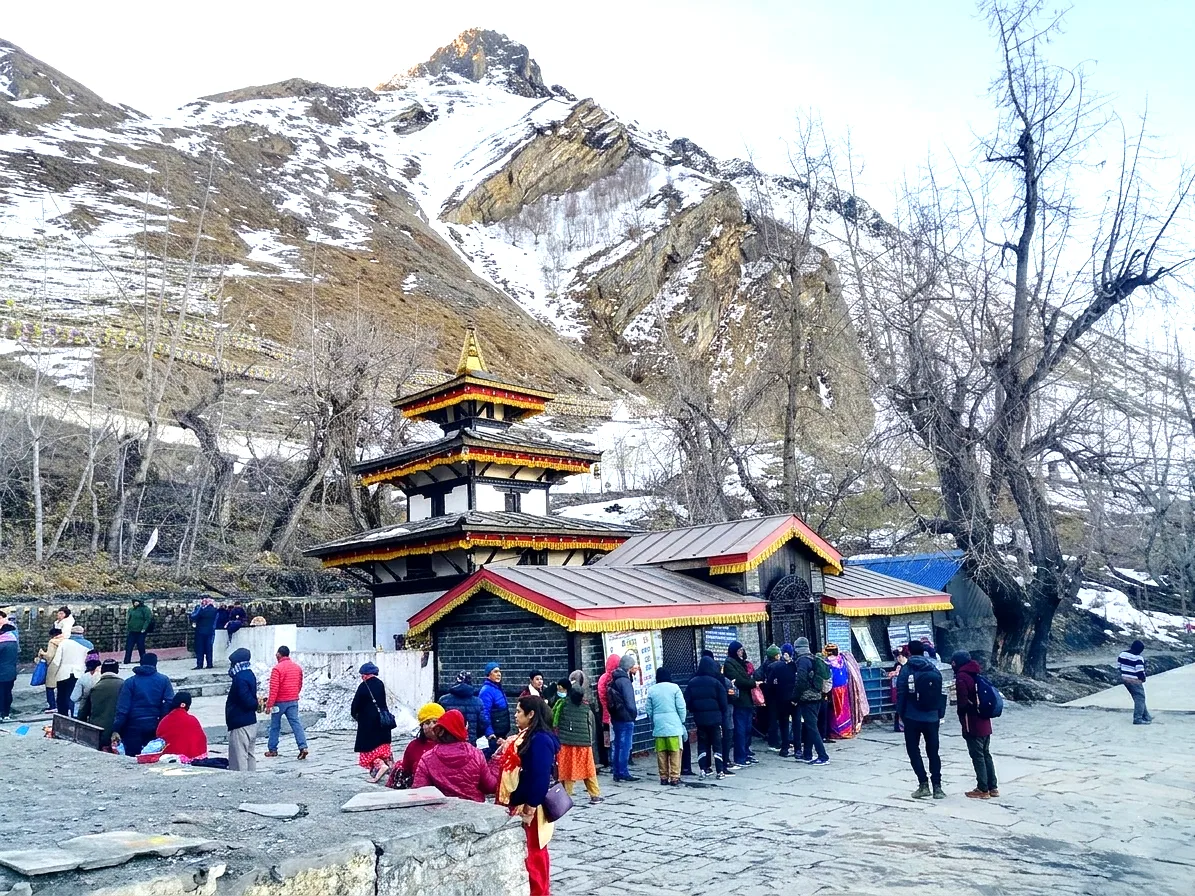
Muktinath holds immense religious significance for both Hindus and Buddhists. Hindus consider it one of the 108 Divya Desams, which are sacred shrines mentioned in Hindu scriptures. The main temple at Muktinath is devoted to Lord Vishnu, and inside, visitors can witness a serene golden statue of Lord Vishnu in a meditative posture.

Muktinath TemplePhoto: Muktinath Temple

For Buddhists, Muktinath is a revered site linked to Guru Rinpoche (Padmasambhava), a renowned 8th-century Buddhist saint. According to beliefs, Guru Rinpoche meditated at Muktinath during his spiritual journey through the Himalayas. The presence of Buddhist monasteries and fluttering prayer flags near the temple complex signifies Muktinath's importance in Tibetan Buddhism. 

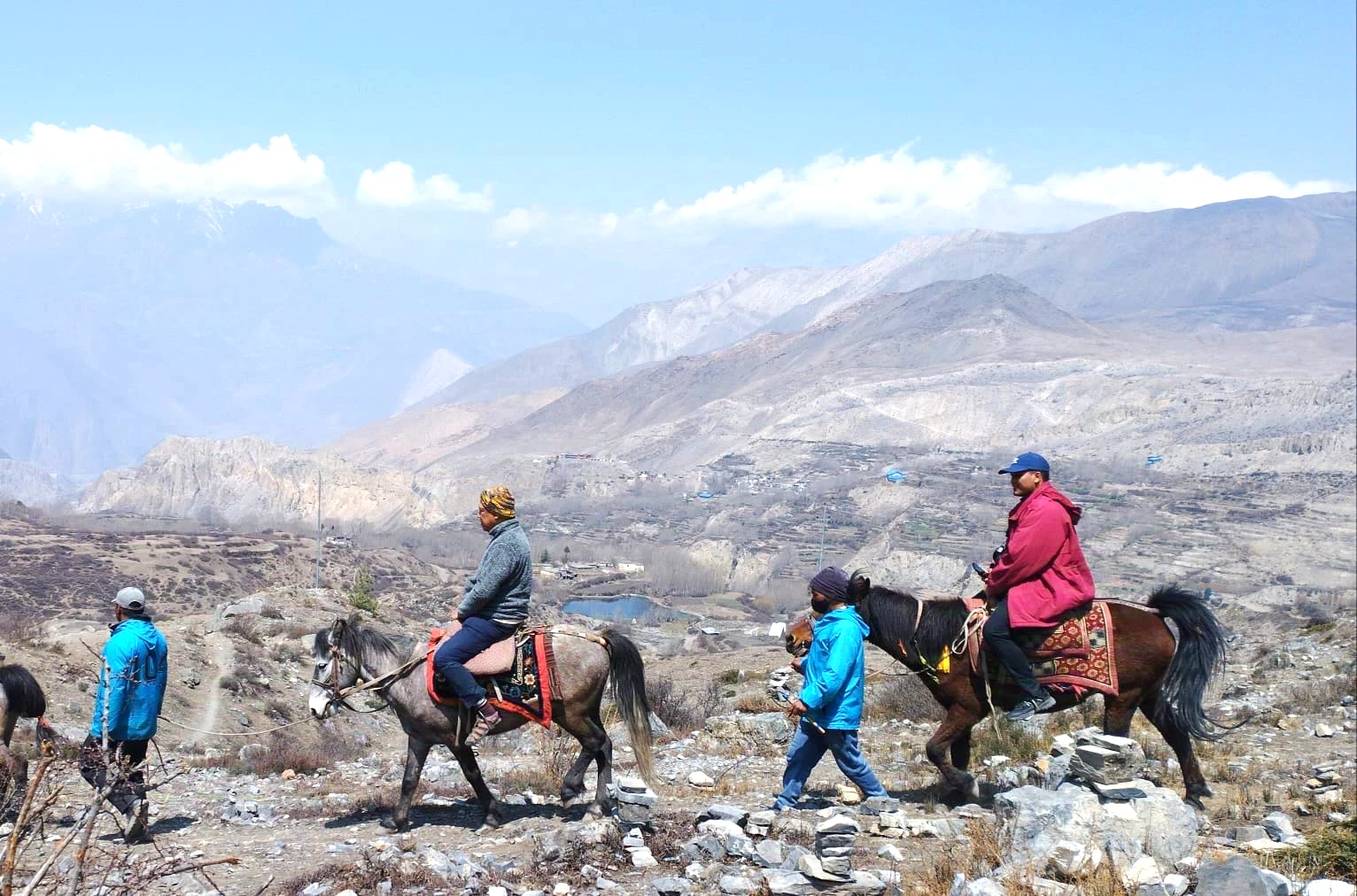
After the exploration, we ride from Muktinath to Tatopani. A couple of hours of scenic jeep ride from Muktinath takes us to Tatopani. Enjoy some of the picturesque landscapes as you traverse through the rugged terrain, passing through charming villages along the way.

Tatopani MyagdiPhoto: Tatopani Myagdi

Upon reaching Tatopani we have our lunch and prepare for a hike toward Sikha Village, but a quick bath in the natural hot spring can be done. The trail from leads you through beautiful forests, which offer glimpses of the rich flora and fauna of this region. We reach Sikha village after 5-6 hours of trek, enjoy the tranquility of nature, and capture breathtaking views of the surrounding mountains. Overnight village at Sikha village.

Day 6

Trek from Sikha village to Ghorepani:

DURATION 5 - 6 hrs
Distance
DISTANCE ~ 11 km

After breakfast in the Sikha village, you will pass through picturesque villages with terraced and sloping farmlands, such as Ghara and Phalate. Throughout the trek, you see the agricultural lifestyle of the people from traditional villages. Ghorepani is reached after a hard climb largely along stone-paved routes along the forest routes.

Sunrise & Mountain view from Poonhill Photo: Sunrise & Mountain view from Poonhill 

A variety of vibrant plants can be seen along the way, and as you climb, you can see more and more majestic mountain peaks, and prepare yourself for the Poonhill sunrise. The Ghorepani is surrounded by spectacular scenery, however, as it is connected to most of the treks in the Annapurna region it is a bit crowded. We prepare for our trip to Poonhill the next morning and overnight stay at Ghorepani. 

Day 7

Trek from Ghorepani to Poonhill and back to Pokhara:

DURATION 5 - 6 hrs
Distance
DISTANCE ~ 5 km

We wake up early, for the sunrise in Poon Hill. After about 45 mins of uphill hike from Ghorepani, we reach Poonhill, which is located at 3210 m. After we reach Poonhill the golden rays on the summit welcome us to witness the dawn’s first light on the snow-capped mountains. After enjoying the views from Poonhill, we trek towards Ghorepani for a delicious breakfast and towards the end journey to Pokhara.

Majestic view of Fishtail peak from the Fewa Lake of PokharaPhoto: Majestic view of Fishtail peak from the Fewa Lake of Pokhara.

We trek towards Hile, your final stop for the day, you will walk through rhododendron woods, passing through magnificent villages like Banthanti and Ulleri. After 5-6 hours of trekking, we reach Hile where our jeep will be on standby. The checkpost in Nayapul also checks your permits before exit. We drive along the asphalt roads for most of the sections roads, some sections are bumpy, so enjoy your ride to Pokhara with views of Seti River along the way. 

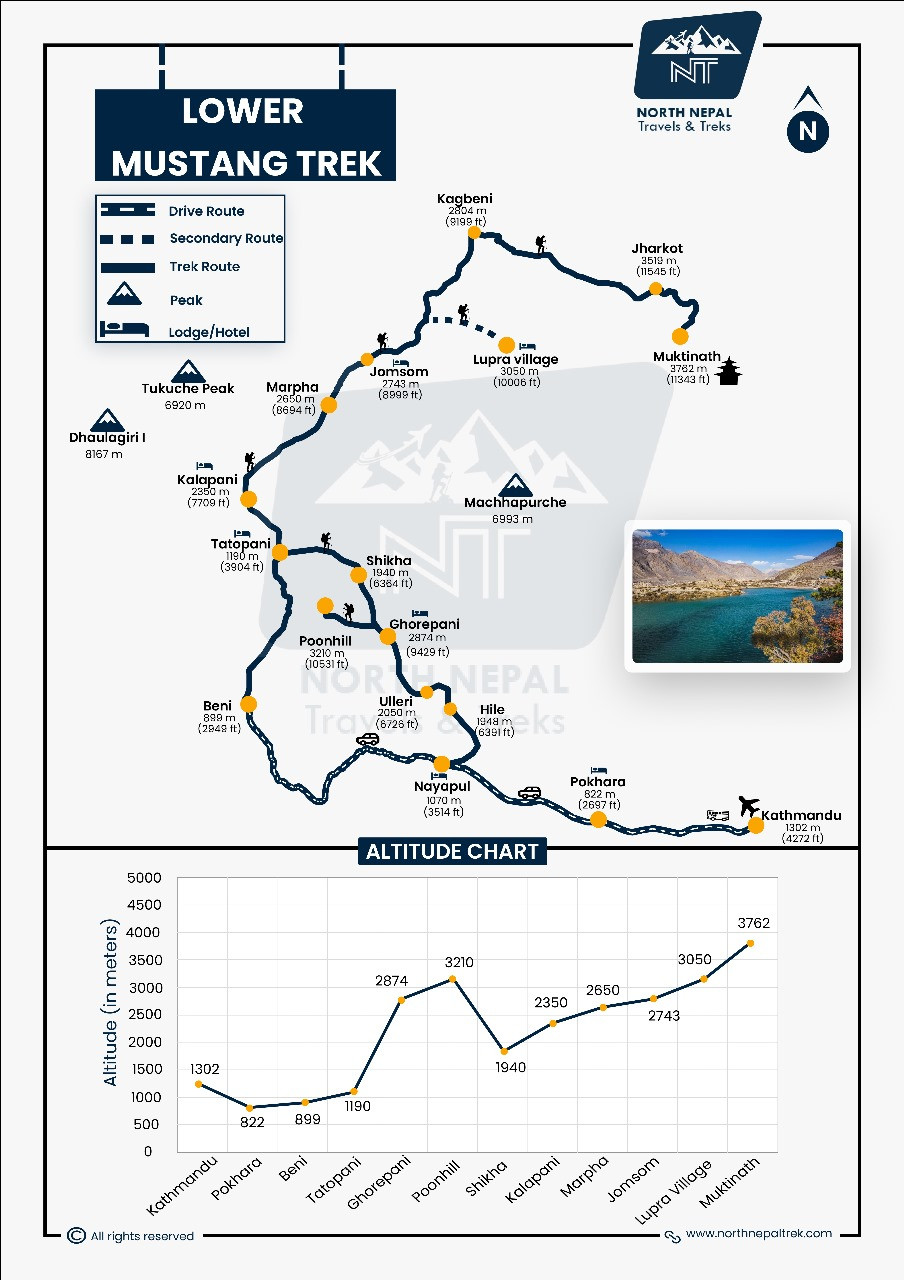
Lower Mustang trek and Altitude Graph

Lower Mustang trek and Altitude Graph

WHAT'S INCLUDED & EXCLUDED

  • All ground transfers are in a shared jeep/bus before and after the trek. ( Note: Additional cost for private vehicle for both ways )
  • We provide 3 meals per day (Breakfast, Lunch, and Dinner) and Tea / Coffee twice daily. Please note that each meal is served as a single serving.
  • Hotel / Teahouse accommodation during the trek.
  • A professional English-speaking guide during the trek & his expenses on the route.
  • Complete trekking arrangements with the Annapurna Conservation Area Project (ACAP) Permit.
  • Medical kits and an oximeter during the trek.
  • Fresh/Dry fruits along the trek.
  • Trek achievement certificate after the trek.
  • Anything related to International flight airfares, such as Nepal entry visa fees, excess baggage charges, International flight tickets, and so on.
  • All accommodations and meals before the trek, extra night accommodations due to early arrival in Nepal, late departure, or early return from the trek.
  • Personal expenses before the trek, such as (renting sleeping bags, buying trekking shoes, and so on), during the trek (any shopping, boiled water, tea, coffee(if more than 3 times), cold drinks, alcoholic beverages, hot showers, telephone call, Wifi, cell-phone, camera battery recharges and so on).
  • Travel insurance, which covers high-altitude helicopter rescue and evacuation along with medical costs.
  • Tips and gratuities for guides and porters.
  • Additional costs, such as additional days due to delays caused by natural/uncontrollable phenomena such as bad weather, landslides, and change of plans(itinerary modifications) due to safety concerns, illness, and so on.
  • Lastly, all of the costs and expenses that aren't listed in the "What's Included?" section.

Complete Guide to the Lower Mustang Trek

Toggle all

Route Overview & Trail Access

The first section of the Lower Mustang trek starts with a scenic Jeep drive along the Bhupi Sherchan Highway, and you can see the world's longest suspension footbridge during this section. The drive takes approximately 5-6 hours, and you pass through notable cities like Kushma, Baglung, and Beni. Eventually, we arrive at the picturesque village of Kalopani, which is situated at an elevation of  2350m, and you can witness many fluttering monastery flags here. We start our trek from this enchanting village and adventure into the Himalayas.

During the final phase of the trek, we return from Poonhill via Jeep, a scenic drive along the Prithvi highway. Enjoy the scenic Seti River and mountain views along the way, and it takes nearly 2 hours to drive.

The easier but costlier transportation method for the Lower Mustang Trekking adventure is via plane, and it also requires a separate itinerary, so if you wish to change your itinerary so that it matches the flight to Jomsom, feel free to reach us; we are always flexible.

Changes to the Traditional Trekking Route in the Lower Mustang Trek

Road infrastructure development in the Lower Mustang region has transformed the traditional trekking experience. Previously, multi-day treks through the rugged and solitary Kali Gandaki Gorge offered an immersive experience of mountain splendor. Now, vehicles run through those routes, making a shift in traditional trekking routes.

Trekkers seeking out traditional routes in the Lower Mustang trek, we have designed a perfect trail that skips the busy vehicle road and takes you through beautiful traditional villages of Marpha, Lupra, Sikha, and Ghorepani village. 

Well, the road has also improved accessibility to Jomsom and the surrounding area, which is good from the perspective of locals. Similarly, a 20-25-minute flight from Pokhara and Jomsom has changed the nature of untouched trekking adventures. 

Best Time to Trek Lower Mustang

Like most treks in Nepal, the best season for the Lower Mustang Trek is Spring( March-May) and Autumn(September to November). The weather during the spring season is ideal as there is less to no rainfall, and the clear sky offers more scenic views. While the Autumn season is before a new one as the monsoon rain washes some of the trails. Even though the lower Mustang area beyond the Himalayas is known to be rainshadow, the trails up to Tatopani experience rainfall.  

The Monsoon season is also ideal for trekking in this region; the rainfall won't reach Jomsom and Mustang as they lie beyond the Himalayas, and the clouds rarely pass the Himalayan range of over 7000 - 8000 m, so it is also known as the rainshadow region of Nepal. So, you can have a perfect vacation if you trek in Lower Mustang even during the Monsoon.

While winter brings cold weather on the trail, some people opt for the Lower Mustang trek in Nepal during this season for the snowfall. From Jomsom to Muktinath, this region experiences snowfall during the winter season, and the views of the Himalayas, like Dhaulagiri and Nilgiri, look otherworldly, entirely covered in snow.

Landscape, Culture & Sacred Stones of Lower Mustang

Lower Mustang Trek takes you through the high-altitude desert and passes in and out of the vast valley of Kali Gandaki; the Kali Gandaki runs through the deepest gorge in the world, also known as Kali Gandaki Gorge. Additionally, the lower Mustang is also known for its diverse landscapes, ranging from fertile river valleys where the world's tastiest apples are found to the cold desert where nothing can be cultivated.

Moreover, the Lower Mustang trek also offers a blend of cultural exploration, natural beauty, and rare geography, making this region a must-trek destination. The region is inhabited by the people of Magar, Tibetan, and Thakali ethnicities, and the Lumbra Valley is covered with Bon inhabitants, which isn't touched by any external religion. The Lumbra is also home to what is considered the last Bon monastery, so you can indulge in the unique cultural richness and warm hospitality.

Lower Mustang Trek also offers you a visit to Kagbeni, which hosts the ancient Kag Chode Thupten Samphei Ling Monastery, which reflects the Tibetan Buddhist influence in the region. Furthermore, the lower Mustang is famous for Saligram, a black stone that, when broken, opens and reveals the fossilized remains of the prehistoric ammonites that lived here more than 140 million years ago. There is a belief among Hindus that "God Bishnu resides in the Stone", and it holds spiritual power even if it is broken.

Lower Mustang Trekking Permits & Costs

Unlike the Upper Mustang region, which needs a separate permit of 500$, the Lower Mustang region doesn't need a separate permit for you to trek. The permit needed for Lower Mustang is the Annapurna Conservation Area Permit (ACAP), which costs $30 per person. From April 2023, the Trekkers Information Management System(TIMS) card, which costs 20$ per person, is also required for the Lower Mustang Trek.

One of the main reasons Lower Mustang Trek is the best alternative to the 'restricted' Upper Mustang Trek is because of the affordable permit costs.

Note: Since April 2023, Guides are mandatory during your trek to Lower and Upper Mustang.

Extending Your Trek: Upper Mustang, Annapurna Circuit & Beyond

Lower Mustang Trek can be combined with Annapurna Circuit Trek, or you can start the trek itself as Annapurna Circuit Trek and combine to Annapurna Circuit Trek. Lower Mustang Trek can also be easily combined with Upper Mustang Trek easily. Moreover you can also experience the remote region of Dolpa if you combined this trek with Lower Dolpa Trek or Upper Dolpa Trek.

1. Upper Mustang Trek

The Upper Mustang region is located in the Himalayas of Nepal, and beckons explorers with its mystique and charm, also captivates adventurers and culture enthusiasts alike. This remote and secluded region, also known as the "Last Forbidden Kingdom", offers awe-inspiring landscapes, where towering peaks such as Sarebong and Thorong La, with Annapurna and Dhaulagiri ranges, and the deep valleys create a dramatic backdrop.

Moreover, the mesmerizing blend of breathtaking landscapes, ancient Buddhist Monasteries, and preserved Tibetan traditions with the arid, windswept terrain makes this region unreal. The Upper Mustang region, adorned with towering cliffs and dramatic canyons,  creates a surreal atmosphere that transports visitors to a different world, full of hidden treasures such as the legendary Lo Manthang, a walled city steeped in history and adorned with intricately designed monasteries.

Furthermore, with the unique amalgamation of natural wonders, cultural richness, and pristine land, Upper Mustang remains an irresistible destination for intrepid travelers seeking unique and unforgettable adventures instead of following the crowds.

2. Annapurna Circuit Trek

One of the most popular routes in the Annapurna region is the Annapurna Circuit Trek, and it involves passing through the world's highest trekking pass, the "Thorong La Pass" at an altitude of 5,416 m (17,769 ft). While the Annapurna Circuit Trek is done anti-clockwise, starting from Pokhara to Manang, Manang to Thorong Phedi, and Thorong Phedi to Muktinath via Thorong La pass, we can trek this route clockwise. As we visit Muktinath, we trek towards Thorong Phedi, acclimate there, and then trek to Yak Kharka via Thorong La Pass.

While this itinerary is easily adjustable by adding more days, you need a moderate fitness level for the Thorong La Pass. As the altitude you will be trekking on is more than 5,000m, you must prepare for this trek. Moreover, while the Lower Mustang trek can be enjoyed in the rainy season, trekking the Annapurna Circuit during the rainy season is challenging.

Nonetheless, if you have good physical fitness and can adapt to colder temperatures, you can go for the Annapurna Circuit Trek—an experienced guide supporting your journey. Furthermore, you can trek to the Thorong La Pass and then return to Jomsom and fly back to Pokhara, or take the route ofthe  Annapurna Circuit Trek and enjoy a new adventure on your way back to Pokhara.
Muktinath: Sacred Pilgrimage of Lower Mustang

Muktinath is a sacred temple located at an elevation of 3,710 meters (12,172 feet) above sea level. The word Muktinath is derived from two words: “Mukti,” meaning liberation, and “Nath,” meaning Lord. 

The pilgrimage to Muktinath is not only sacred for Hindus but also for Buddhists. Muktinath has drawn devotees from Nepal, India, and Tibet for centuries. Muktinath is not a mere religious place; it is a confluence of spiritual energy and liberation.

The harmonious atmosphere is enhanced by the presence of Buddhist nuns from the Lama Wangyal lineage. Amidst fluttering prayer flags, pilgrims continue ancient traditions, performing rituals that once attracted kings and sages across Asia.

Visitors are often drawn to Muktinath not only for its profound religious significance but also for its tranquil mountain setting and breathtaking landscapes. Spending a full day here allows for a complete immersion in both the spiritual aura and the surrounding natural beauty.

History of Muktinath Temple: A Sacred Journey Through Time

Muktinath temple was built during the 19th century in pagoda-style architecture. But the statue of Lord Vishnu is believed to be even older than the temple.

The temple of Muktinath is revered by both Hindus and Buddhists. Hindus worship in the temple as Vishnu, whereas Buddhists worship as Avalokiteśvara. Muktinath is the epitome of religious harmony. Buddhists believe that Guru Rinpoche (Padmasambhava) meditated here before he walked to Tibet. The 108 spring water tap flowing down from the Himalayan mountain range is believed to be a spiritual bath that purifies your soul.

Kathmandu & Pokhara: Before and After Your Trek

The Lower Mustang Trek begins and ends in Nepal’s most vibrant cities, Kathmandu and Pokhara. Both are a blend of beautiful nature, art, culture, traditions, and local flavor.

Exploring Kathmandu

Kathmandu is a bustling capital with ancient civilization, arts, history, and culture. Kathmandu has many sightseeing opportunities before and after the Lower Mustang trek. You can wander the ancient alleys of Kathmandu where centuries-old palaces and temples meet lively markets. A tour to UNESCO World Heritage Sites is an architectural feast, featuring the pagoda-style and neo-classical architecture inspired by Europe, and is a blissful walk.

Beyond the square, visit: 

  • Swayambhunath (Monkey Temple): Perched on a hilltop, it offers panoramic views over the valley and a chance to join the local monkeys in a bit of people watching.
  • Boudhanath Stupa: One of the world’s largest Buddhist stupas, shrouded in clouds of incense and spinning prayer wheels.
  • Pashupatinath Temple: For those interested in Hindu tradition, witness the riverside rituals along the sacred Bagmati.

If you haven’t heard about Thamel (less likely), add it to your bucket list. Stroll through the iconic Thamel, a tourist hub in Kathmandu. Also, an ancient trading hub between India, Nepal, and Tibet in the past. Trey bakeries and coffee. Shop few handicrafts and interact with locals.

Discovering Pokhara

Pokhara is a natural wonder of  Nepal. Lush green hills, caves, waterfalls, lakes, rivers, and deep gorges make it a perfect destination to skip the bustling city of Kathmandu. Pokhara greets you with a laid-back lakeside vibe before the serene Fewa Lake. And not to mention the majestic view of Machhapuchre (Fishtail) peak from the Fewa Lake. It brightens your day. Every nook and corner of Pokhara is a vibe to rejoice.  

While in Pokhara, don’t miss:

  • Devi’s Fall: A peculiar but photogenic waterfall, best viewed during the monsoon.
  • International Mountain Museum: Glimpse of Nepal’s mountaineering history with engaging displays on climbers and culture.
  • Gupteshwor Cave: Venture underground to this spiritual cavern, paired with tales of local mythology.
  • Shanti Stupa: One of the best places to get a view of Fewa Lake, the Mountains, and the Valley
  • Sarangkot: A Beloved destination by tourists for the magical sunrise and sunset. 

You can end your day wandering the Lakeside, enjoying juicy momos (Nepalese dumplings), or a delicious local grilled fish. Rest assured, Kathmandu and Pokhara will make your Lower Mustang trek unforgettable.

What Past Travelers Say About the Lower Mustang Trek

Trekkers consistently praise the Lower Mustang trail, sharing glowing reviews on platforms like TripAdvisor, Google Reviews, and Facebook. A frequent highlight is the region's unique combination of rich culture and dramatic landscapes, with many travelers commending the warm reception from local communities and the unique opportunity to experience Bon, Magar, and Thakali traditions firsthand.

Reviews often describe the Lower Mustang trek's breathtaking transitions, from vibrant apple orchards to arid Himalayan deserts. Many travelers remark on the rewarding sense of achievement after conquering the world's deepest gorge, enjoying panoramic views that leave a lasting impression.

People with religious and spiritual inclinations describe the region of Lower and Upper Mustang as the best trekking destination to pursue their spiritual journey.

The unanimous feedback confirms that the Lower Mustang trek offers an unforgettable trekking experience, whether you seek adventure, spiritual insight, or simply the joy of connecting with friendly locals along the trail.

Why Trek With Us - Lower Mustang Trek: A Place Beyond Himalayas

Exploring the arid, Tibetan-influenced landscapes of Lower Mustang — Kagbeni, Jomsom, and Muktinath — depends on who guides you through this place beyond the Himalayas. Here is why trekkers choose North Nepal Travel & Trek:

1. Locally Owned & Pokhara-Based

We are based in Pokhara, the gateway to Mustang, so your booking stays local and directly supports the communities of the Kali Gandaki valley.

2. Officially Licensed & TAAN-Registered

A fully government-registered agency and active TAAN member, ensuring legal compliance, financial security, and the highest safety standards.

3. Over a Decade on the Mustang Route

We have safely operated the Lower Mustang trek for more than ten years, mastering its high desert terrain, wind patterns, and Jomsom logistics.

4. Expert Local Leadership

Your trek is personally led by our expert guide, a government-certified, English-speaking local leader who knows every step of the Mustang trail.

5. Top-Rated Client Satisfaction

Backed by a 4.9/5 review rating across global platforms for safety, local hospitality, and personalized service.

Live Trail Update of Lower Mustang Trek: A Place Beyond Himalayas Live

Last updated: 1 Week Ago

Updated: Niranjan Adhikari

Trail Condition Dry, Rocky High-Desert Trails
Weather Windy Days, Cold Nights
Wifi/Network Reliable Wifi in Jomsom
Teahouses Comfortable Thakali Teahouse Stays

Trekker Alerts

Autumn Trail Alert: Expect dry, rocky high-desert trails and windy days with cold nights on the Lower Mustang Trek this season. Wifi is reliable in Jomsom, and comfortable Thakali teahouses await along the route.

Reviews From The Trail

Hear it from those who've walked with us.


Safety Policy

Professional & Certified Guides

Every trek is accompanied by a licensed, English-speaking local guide trained in eco-tourism, wilderness navigation, and first-aid response. Guides carry comprehensive medical kits equipped with essential pharmaceuticals and pulse oximeters to monitor oxygen levels daily during the ascent toward Muktinath (3,710 m / 12,172 ft).

Altitude & Environment Management

While the Lower Mustang Trek reaches a moderate maximum altitude of 3,710 m (12,172 ft) at Muktinath, our itineraries feature balanced pacing through arid desert terrain and windy Kali Gandaki river valleys. Guides conduct daily health assessments for symptoms of Acute Mountain Sickness (AMS). If severe symptoms appear, standard protocol mandates immediate descent to lower elevations.

Emergency Rescue Coordination

In cases of severe injury, acute altitude illness, or extreme weather conditions across the mountain trails, emergency helicopter evacuation is coordinated directly through local rescue services. Evacuations are initiated promptly upon assessment by your guide in communication with our Pokhara and Kathmandu offices.

Mandatory Travel Insurance

All trekkers must hold comprehensive travel insurance covering emergency medical treatment, high-altitude trekking (up to 4,000 m), and emergency helicopter rescue/evacuation. Insurance details must be submitted prior to the departure of the trek to streamline emergency logistics if required.


Lower Mustang Trek Departure Date for 2026/2027

Secure the Lower Mustang Trek for 2026/2027 before the seat gets fully booked.


Terms, Conditions & Feasibility

  1. All bookings are made with North Nepal Travel & Trek Pvt. Ltd Registered Company Number 162883/073/074 (hereafter referred to as The Company) whose office is in Lakeside, Pokhara-6, Nepal.
  2. The term "trip" used in this website and booking conditions refers to all itineraries described on this website including those which might otherwise be know as walking, tours, trekking trips, sightseeing, climbing, mountaineering, expeditions, or holidays.
  3. We accept your last-minute booking as well, but full payment of the total tour cost should be made in advance if necessary or can be paid fully on arrival day. See More 

PRIVATE TRIP

7 Days

Price Start from USD 800

USD 600 pp

We Offer Group Discount

No. of PersonsPrice per Person
1 Pax US$ $ 600
2 Paxes US$ $ 550
3 - 6 Paxes US$ $ 520
7 - 15 Paxes US$ $ 490
16 -30 Paxes US$ $ 450
RECOGNISED · CERTIFIED · TRUSTED

We are associated with