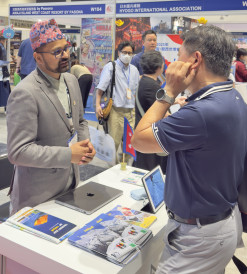
Around 37,550 Australians visited Nepal in 2025, making Australia the 8th largest source of international visitors to the country. Most came for the trekking. A few came for Kathmandu and Pokhara alone. Almost all of them wish they'd had a clearer guide before they landed — something that answered the practical questions without the filler. This is that guide.
How Long Is the Flight from Australia to Nepal?
No direct flights operate between Australia and Kathmandu. Every route requires at least one stop, typically through Southeast or South Asia.
From Sydney (SYD): 14–17 hours total, including layover. Malaysia Airlines via Kuala Lumpur and Singapore Airlines via Singapore are the most common options. Both have Kathmandu as a regular destination.
From Melbourne (MEL): Around 17 hours total one-way. Singapore Airlines off-peak from Melbourne can drop to A$644 round-trip, making it one of the cheapest gateways to Nepal from Australia.
From Brisbane (BNE): 15+ hours total. Singapore is the most common stopover city, handling about 65% of Brisbane-to-Kathmandu bookings.
From Perth (PER): Add roughly 2–3 hours to Melbourne times. The Middle East hubs (Dubai, Doha) become more competitive from Perth given the westward routing.
What Do Flights to Nepal Cost from Australia?
Prices shift significantly by season, and Nepal's peak trekking months overlap with Australian spring and early summer.
Off-peak (May–July, early August): A$800–A$1,350 round-trip from Sydney. Melbourne has seen fares from A$644 on Singapore Airlines. Brisbane's cheapest month is July, averaging around A$468 round-trip.
Peak season (October–November, March–April): A$1,400–A$2,000+ from Sydney. These are Nepal's best trekking months, and flights reflect the demand.
|
Airline
|
Via
|
From SYD
|
From MEL
|
From BNE
|
|
Malaysia Airlines
|
Kuala Lumpur
|
A$931
|
A$679
|
—
|
|
Singapore Airlines
|
Singapore
|
Competitive
|
A$644
|
A$787
|
|
China Southern
|
Guangzhou
|
A$1,397
|
—
|
A$584
|
|
Thai Airways
|
Bangkok
|
A$1,433–1,859
|
A$1,285–1,380
|
—
|
|
Cathay Pacific
|
Hong Kong
|
A$1,658
|
—
|
Available
|
|
Qatar Airways
|
Doha
|
Mid-range
|
—
|
Available
|
|
Emirates
|
Dubai
|
A$1,500–2,000+
|
—
|
—
|
Booking tips: Two to three months in advance is the sweet spot — 87 days out averages around A$1,360 from Sydney. Sundays are cheapest for booking (6–13% less than Friday). Travelling on Thursdays saves up to 16% on fares. Business class runs A$2,500–A$4,860+ round-trip for those who want to arrive rested.
When Should Australians Go to Nepal?
Nepal's seasons are clear-cut, and picking the right one matters more than most people expect.
October–November (Autumn): The most reliable window. Skies are clear, trail conditions are stable, and temperatures at lower elevations sit between 15–20°C during the day. October is Nepal's single busiest month — accommodation books out weeks ahead and prices are at their highest. If you're going in October, secure your flights, agency, and teahouse bookings months beforehand.

March–April (Spring): The second-best option. Rhododendrons bloom across the hillsides above 2,000m through March and April — the forests between Ghorepani and Annapurna Base Camp are particularly vivid. Visibility is strong and high passes like Thorong La open reliably from late March. Trail conditions are good, though crowds approach October levels by mid-April.
December–February (Winter): Cold, with temperatures well below freezing above 3,500m. Many high-altitude teahouses close. Lower routes — Poon Hill and Lower Mustang — stay operational and are very quiet. This suits Australians looking to avoid crowds and school holiday pricing.

June–September (Monsoon): Heavy rainfall, slippery trails, leeches on lower paths, and persistent cloud cover blocking mountain views. The exception is the rain-shadow region north of the Himalayan range — Upper Mustang and Dolpo stay dry and trekable through the monsoon months.
Nepal Visa for Australian Passport Holders
Australians get a tourist visa on arrival at Tribhuvan International Airport in Kathmandu. It's straightforward, but the queues during October and November can be long enough to matter.
Visa fees (paid in USD cash):
- 15 days: US$30 (~A$45)
- 30 days: US$50 (~A$75)
- 90 days: US$125 (~A$185)
The 30-day visa is the right choice for most trekking trips. Tourist visas allow multiple re-entry and can be extended in Kathmandu or Pokhara up to a maximum of 150 days per calendar year.
Pre-registration (strongly recommended for peak season): Register your visa online at nepaliport.immigration.gov.np before you leave Australia. Print the barcode confirmation. At the airport, you skip the kiosk queues and go straight to the payment counter. In October and November, this saves a significant amount of time and energy after a 15-hour flight.
Alternative: The Embassy of Nepal in Canberra (PO Box 1070, Mawson, ACT 2607) can issue a visa before departure. Submissions are accepted 9:30am–12:30pm, with collection from 3pm–5pm. If you're nervous about the arrival process, this removes the uncertainty entirely.
Passport requirements: At least 6 months of validity beyond your departure date from Nepal and at least one blank page. Nepal does not recognise dual nationality — always travel on your Australian passport.
Register with DFAT Before You Go
The Australian government's Smartraveller registration is free and takes about five minutes at smartraveller.gov.au. You enter your trip details and an emergency contact, and the Australian Embassy in Kathmandu can reach you if there's an earthquake, civil unrest, or a major natural disaster.
Nepal sits on an active seismic zone. The 2015 earthquake killed nearly 9,000 people, and several trekking routes pass through affected areas. For remote trekking, DFAT registration is basic risk management.
DFAT current advisory: Nepal is rated Yellow — "Exercise a high degree of caution" — primarily due to earthquake risk, monsoon landslides, and periodic political protests. The advisory specifically notes that solo trekking is now illegal for foreigners.
What Does a Nepal Trip Cost from Australia?
Here's a realistic budget for two weeks in Nepal, with flights from Australia included. All figures are in Australian dollars.
|
Expense
|
Budget
|
Mid-Range
|
Premium
|
|
Return flights (SYD/MEL/BNE–KTM)
|
A$900–1,200
|
A$1,200–1,600
|
A$1,800–2,500
|
|
Visa (30-day)
|
A$75
|
A$75
|
A$75
|
|
Travel insurance (high-altitude)
|
A$150–250
|
A$300–500
|
A$500–1,000
|
|
Guided trek (10–14 days via agency)
|
A$1,500–2,000
|
A$2,300–3,000
|
A$3,700–7,500+
|
|
Accommodation in KTM/Pokhara (3–4 nights)
|
A$40–80
|
A$150–300
|
A$400–800
|
|
Food & drink (non-trek days)
|
A$40–80
|
A$80–160
|
A$200–400
|
|
Internal flights (e.g., KTM–Lukla)
|
A$350–500
|
Often included
|
Included
|
|
Tips (guides + porters)
|
A$150–200
|
A$200–350
|
A$350–500
|
|
Miscellaneous
|
A$100–200
|
A$200–400
|
A$400–800
|
|
TOTAL
|
A$3,300–4,500
|
A$4,500–6,500
|
A$7,500–13,500+
|
Note that, cost are subject to change affected by different factors such as international/national conflits and season. For most Australians, a well-planned mid-range Nepal trip runs A$4,500–6,000 all-in for two weeks. That includes flights, a guided trek, a few nights in Kathmandu and Pokhara, and solid insurance.
The Rule That Changed Solo Trekking in Nepal
Since April 1, 2023, all foreign trekkers must hire a licensed guide through a government-registered agency in any National Park, Conservation Area, or Restricted Area. This covers every major trek in Nepal. DFAT's Smartraveller advisory specifically flags this rule.

Enforcement is strict and tightening further for 2026. Checkpoint scanners at major trail entry points — Besisahar and Birethanti for Annapurna, Monjo for Everest, Syabrubesi for Langtang — verify guide credentials, TIMS cards, and permits. Trekking without a licensed guide means fines, denial of entry, or removal from the trail.
Guide rates run US$30–40 per day. Porter rates are US$20–30 per day. For a 12-day Everest Base Camp trek, this adds roughly US$360–480 for a guide — money that goes directly into local communities in remote areas with few other income sources.
Which Trek Is Right for You?
Here's an honest look at Nepal's most popular routes and how they compare to Australian benchmark treks.
If you've completed the Kokoda Track, you have the mental endurance for Nepal — though altitude replaces heat and mud as the primary challenge. The Overland Track in Tasmania is a reasonable fitness baseline for the gentler Nepal routes. The Larapinta Trail's 14–21-day duration is comparable to the Annapurna Circuit, minus any altitude concerns.
Everest Base Camp Trek (12–16 days)
Ends at 5,364m (17,598 ft) at Base Camp, or 5,644m at Kala Patthar. The flight from Kathmandu to Lukla (A$350–500 one-way) is part of the experience — and the delay risk is real. Build 1–2 buffer days around Lukla into your schedule. EBC tops out nearly three times higher than the Kokoda Track's highest point.
View the Everest Base Camp Trek →
Annapurna Base Camp Trek (7–13 days)
Reaches 4,130m (13,549 ft) inside the Annapurna Sanctuary — a high glacial amphitheatre ringed by eight-thousanders. Lower maximum altitude than EBC makes altitude sickness less likely. The approach through rhododendron forests and Gurung villages is one of Nepal's more varied trails.
View the Annapurna Base Camp Trek →
Annapurna Circuit Trek (12–18 days)
Circumnavigates the Annapurna massif over Thorong La Pass at 5,416m (17,769 ft) — higher than EBC. The trail passes through subtropical valleys, pine forests, and the Kali Gandaki gorge (the world's deepest). Duration and variety make this the closest Nepal equivalent to the Larapinta Trail, with significantly higher altitude.
View the Annapurna Circuit Trek →
Mardi Himal Trek (5–7 days)

A shorter route topping out around 4,500m, with close-up views of Machapuchare (the Fish Tail). Fewer trekkers than ABC or EBC. Good first Nepal trek for Australians who've done the Overland Track and want to step up to Himalayan altitude without committing to 14 days.
View the Mardi Himal Trek →
Poon Hill / Ghorepani Trek (4–5 days)
Maxes out at 3,210m. The pre-dawn climb to Poon Hill for sunrise over Dhaulagiri and the Annapurna range is one of Nepal's most replicated photographs — and it earns that reputation. This is the right choice for first-timers, older trekkers, or anyone working around a tight schedule.
View the Poon Hill Trek →
Langtang Valley Trek (7–10 days)
The closest major trekking region to Kathmandu — accessible by road, which saves the Lukla flight cost. Max altitude of 3,870m at Kyanjin Gompa, with an optional extension to Tserko Ri at 5,033m. Tamang culture throughout. Strict guide enforcement has been in place here since February 2025.
View the Langtang Valley Trek →
Manaslu Circuit Trek (14–18 days)
Circles the world's 8th-highest peak (8,163m). Larkya La Pass at 5,106m is the high point. Far fewer trekkers than the Annapurna or Everest regions. Requires a minimum of two trekkers and a licensed guide. Comparable in duration to doing the full Larapinta Trail but at roughly four times the altitude.

View the Manaslu Circuit Trek →
Upper Mustang Trek (10–14 days)
An ancient walled kingdom north of the main Himalayan range, with Tibetan-Buddhist cave monasteries and dry desert terrain that looks nothing like the green valleys of the Annapurna region. One of the very few areas where you can trek during monsoon — the rain doesn't reach here. The restricted area permit changed in late 2025 from a flat US$500 fee to US$50/person/day, making shorter visits considerably more affordable.
View the Upper Mustang Trek →
Trekking Permits: What You'll Pay
Your agency handles permit logistics, but it's useful to know what's included in your package and what might be extra.
|
Permit
|
Cost (Foreign Nationals)
|
Applies To
|
|
ACAP (Annapurna Conservation Area)
|
NPR 3,000 (~A$29)
|
All Annapurna treks
|
|
Sagarmatha National Park
|
NPR 3,000 (~A$29)
|
All Everest treks
|
|
Khumbu Rural Municipality fee
|
NPR 2,000 (~A$20)
|
Everest region (replaces TIMS)
|
|
Langtang National Park
|
NPR 3,000 (~A$29)
|
Langtang Valley trek
|
|
TIMS Card
|
NPR 2,000 individual / NPR 1,000 group
|
Annapurna, Langtang, others
|
|
Manaslu Restricted Area
|
US$100/person first 7 days (peak)
|
Manaslu Circuit
|
|
Upper Mustang Restricted Area
|
US$50/person/day
|
Upper Mustang Trek
|
Standard treks (EBC, ABC, Annapurna Circuit, Poon Hill, Langtang) run A$60–120 in permits total. Restricted area treks cost considerably more.
Altitude Sickness: The Risk That Doesn't Care About Fitness
The highest point on the Kokoda Track is 2,190m. Thorong La Pass on the Annapurna Circuit is 5,416m. Everest Base Camp is 5,364m. Australia has no terrain that prepares your body for those altitudes — and neither does any gym program.

Altitude sickness (Acute Mountain Sickness, AMS) affects anyone above 2,500–3,000m, regardless of fitness level. The only reliable prevention is ascending slowly: no more than 300–500m of net elevation gain per day above 3,000m. Acclimatisation days built into your itinerary are non-negotiable, not optional add-ons.
If AMS progresses to HAPE (fluid in the lungs) or HACE (fluid in the brain), immediate descent is the only effective treatment. Himalayan Rescue Association clinics operate at Pheriche (4,371m, Everest trail) and Manang (3,519m, Annapurna Circuit) during spring and autumn seasons.
A scam worth knowing: Nepal sees 5,000+ helicopter rescues annually, and estimates suggest 30–50% may be medically unnecessary. Some guides diagnose mild AMS and call for evacuation without trying simpler options first, collecting a commission from insurance companies. If a guide recommends helicopter evacuation, visit the nearest HRA clinic first and call your insurer before authorising anything.
Travel Insurance: Medicare Doesn't Cover Nepal
Medicare does not cover any overseas medical expenses. A helicopter rescue in Nepal costs US$3,000–6,000. A serious medical incident requiring airlifting to Bangkok or Delhi can exceed US$30,000–50,000.
For Nepal trekking, you need a policy that explicitly includes:
- High-altitude trekking to at least 6,000m
- Helicopter evacuation
- Emergency medical treatment
- Trip cancellation and flight delay cover (Lukla delays are common)
Australian providers with relevant coverage:
|
Provider
|
Altitude Coverage
|
Approx. 2-Week Cost
|
|
World Nomads (Explorer Plan)
|
Up to 6,000m
|
A$150–250+
|
|
Cover-More (Adventure Plus)
|
High-altitude available
|
Roughly half of World Nomads
|
|
Freely (Cover-More based)
|
Auto up to 4,000m; needs Adventure Boost for higher
|
Competitive
|
|
Allianz Australia
|
Check adventure add-on
|
Competitive
|
Important warnings: Some NIB-based policies specifically exclude Nepal. Some policies exclude activities on snow or ice. Always select the altitude or adventure upgrade at the time of purchase — it cannot be added later. Check that Lukla flight delays and cancellations are covered.
Vaccinations: What Australian Travellers Need for Nepal
See a travel doctor 4–6 weeks before departure. Most travel clinics in major Australian cities can administer everything in one or two visits.
Recommended for all travellers:
- Hepatitis A — high risk; recommended for all Nepal visitors
- Typhoid — Nepal has one of the world's highest rates (~351 cases per 100,000)
- Hepatitis B, Tetanus/Diphtheria/Pertussis, Polio booster, MMR, Influenza, COVID-19
Consider based on your activities:
- Rabies — relevant for trekking in rural areas; stray dogs and monkeys are the main sources
- Japanese Encephalitis — primarily for stays over 30 days in rural lowland areas (greatest risk June–October in Terai)
Malaria: No risk in Kathmandu, Pokhara, or on any Himalayan trek. The parasite is only present in lowland Terai below 1,500–2,000m.
Yellow Fever: No risk in Nepal, but a certificate is required if you're arriving from a yellow fever-risk country.
Money in Nepal: What Australians Need to Know
As of April 2026, A$1 buys approximately 103–105 Nepali Rupees. The AUD has strengthened considerably against the NPR since early 2025 — you're getting meaningfully better value than Australian travellers did in 2024.
ATMs: Standard Chartered and Nabil Bank allow NPR 40,000 per withdrawal. Most other ATMs cap at NPR 10,000–20,000. Foreign card fees run NPR 500 (~A$5) per transaction. Withdraw all your cash for the trek in Kathmandu or Pokhara — ATMs in Namche Bazaar and Jomsom exist but are unreliable.
Currency exchange: Thamel money changers in Kathmandu consistently give 5–8% better rates than ATMs. AUD is accepted at most exchange counters. Bring clean, recent notes — older or damaged bills are often refused. Airport exchange counters offer poor rates; change only enough for a taxi to your hotel.
Cards: Visa and Mastercard work at hotels and restaurants in Kathmandu and Pokhara, typically with a 3–5% surcharge. On trek, it's cash only.
Best cards for Australians: Wise card (no foreign transaction fees), ING Orange Everyday (no ATM fees overseas), or 28 Degrees credit card (no currency conversion fees).
Time Zone: Australia to Nepal
Nepal Standard Time is UTC+5:45 — one of only two time zones in the world with a 45-minute offset.
|
Australian Time Zone
|
Nepal is Behind By
|
|
AEST (Apr–Oct, UTC+10)
|
4 hours 15 minutes
|
|
AEDT (Oct–Apr, UTC+11)
|
5 hours 15 minutes
|
12:00 noon Sydney AEST = 7:45 AM in Nepal. 12:00 noon Sydney AEDT = 6:45 AM in Nepal.
When you're calling family back in Australia, remember Nepal is behind you — not ahead. Evening in Kathmandu is mid-afternoon or early afternoon in Sydney.
Plug Adapters: The Good News for Australians
Nepal uses Type C, D, and M plugs (round-pin configurations). Australia uses Type I (the angled flat-pin plug). You'll need a universal travel adapter.

Here's the good news: Nepal runs on 230V/50Hz, the same voltage as Australia. You do not need a voltage converter — just the plug adapter. Every Australian appliance will work fine once you can plug it in. The only exception is anything specifically designed for a different voltage (rare in modern electronics).
Bring a universal adapter with USB ports and a 20,000+ mAh power bank. Charging at teahouses above 3,000m costs NPR 200–1,000 per device, and cold temperatures drain batteries faster than you'd expect.
SIM Cards and Internet in Nepal
Get a Nepali SIM at the airport or in Thamel — it's one of the cheapest parts of the trip.
- NTC (Nepal Telecom): Free SIM at Tribhuvan Airport. NPR 1,200 (~A$12) for 1GB/day for 28 days plus calling credit. Best mountain coverage — signal reaches Everest Base Camp.
- Ncell: NPR 110 (~A$1) for the SIM. NPR 500 for 10GB over 7 days. Faster 4G in Kathmandu and Pokhara; coverage fades above 3,500m.

Experienced trekkers get both SIMs and switch between them depending on altitude. Download offline maps (Maps.me or Gaia GPS) and Google Translate's Nepali language pack before you leave Kathmandu — don't plan on downloading anything once you're on the trail.
Getting Around Nepal
Domestic flights: Buddha Air has the best safety record for internal routes. Kathmandu to Pokhara costs US$90–145 one-way and takes 25 minutes. Kathmandu to Lukla costs US$190–260 one-way — this flight is essential for Everest treks but notorious for weather delays. Build 1–2 buffer days into any itinerary that depends on Lukla.
In Kathmandu and Pokhara: Download the Pathao app for motorbike or car rides. Motorbike rides start at NPR 30 base; cars at NPR 125. No Uber or Lyft. Tuk-tuks and auto-rickshaws are available near major tourist areas. Airport taxis to Thamel run about NPR 1,000 (~A$10) — agree on the price before you get in.
Teahouses: What to Actually Expect
Teahouse rooms are basic. You get two foam mattresses, a pillow, a thin blanket, one light, and a lock. Heating, hot showers, thick blankets, and reliable charging are extras — when they're available at all. Bring your own sleeping bag. Above 3,000m, it becomes essential, not optional.

Room rates run A$4–10 at lower altitudes and A$8–15+ higher up. Many teahouses charge very little for accommodation with the firm expectation that you eat all your meals there — it's an unwritten rule that's as binding as anything in your trek agreement.
Daily food costs on trek:
|
Item
|
Cost
|
|
Dal bhat (unlimited refills)
|
US$4–8 (~A$6–12)
|
|
Noodle soups, fried rice
|
US$3–6 (~A$5–9)
|
|
Momos (dumplings)
|
US$3–5 (~A$5–8)
|
|
Breakfast (pancakes, porridge)
|
US$2–5 (~A$3–8)
|
|
Tea or coffee
|
US$1–2 (~A$1.50–3)
|
|
Full day of food and drinks
|
~US$20–30 (~A$30–45)
|
Dal bhat is the best value on the trail — the unlimited refill policy is real and widely used. Order it at any meal and you won't go hungry.
Tipping in Nepal
Tips are a meaningful part of guide and porter income but not mandatory in the trekking culture of Nepal. Tipping is often done based on the service and care provided by the guide.
Gear: What to Buy in Australia vs. What to Get in Thamel
Buy at home and bring:
- Trekking boots — must be broken in with at least 50km of walking. Boots bought in Kathmandu and worn on day one of a trek means blisters by day three.
- Merino wool base layers and thermal underwear
- Waterproof jacket (Gore-Tex or equivalent) — Thamel waterproofs are water-resistant at best
- First aid kit with Diamox, ibuprofen, azithromycin, rehydration sachets, and blister treatment
- Sunglasses with Category 3 or 4 UV protection — essential above the snow line
- Headlamp
Buy or rent in Thamel, Kathmandu:
- Down jacket: A$45–120 (vs. A$200–600 at home)
- Sleeping bag rated to -15°C: A$60–150 to buy, A$2–3 per day to rent
- Trekking poles: A$15–40
- Fleece jacket, trekking pants, gloves, beanies: A$5–45 each
Three tiers exist in Thamel: genuine international brands (North Face, Marmot, Rab — expensive but real), good Nepali brands like Sherpa Adventure Gear and Shona's Alpine (best value for money), and Chinese knock-offs with thin fills and zippers that fail by day three. Inspect all stitching and test every zipper before buying.
This blog guide to packing list can help you before you prepare for Nepal from Australians.
Safety in Nepal
Nepal is one of the safer countries in South Asia for international travellers. Violent crime against tourists is rare. The main risks are altitude-related, road conditions, and natural hazards — not personal safety in towns or cities.
Common scams to know:
- Fake agencies and unlicensed guides — book through a government-registered agency. DFAT's Smartraveller and the Nepal Tourism Board's website list registered operators.
- Airport touts and taxi overcharging — agree on a price before getting in any vehicle at the airport.
- Fake permits — permits obtained through unregistered sources won't hold up at checkpoints.
Emergency numbers in Nepal: Police 100, Ambulance 102, Tourist Police 1144.
Plan Your Nepal Trip with North Nepal Trek
North Nepal Travel & Trek is a government-registered agency based in Pokhara (Tourism License No. 179) specialising in trekking, tours, helicopter tours, and peak climbing across Nepal, Bhutan, and Tibet.
If you're deciding between two routes, their EBC vs ABC comparison guide is a practical starting point. For detailed packing guidance specific to Nepal's trails, the Essential Packing List for Nepal Trekking covers what to bring from Australia and what to pick up in Thamel once you arrive.
Australians who want fewer people on the trail might also consider the Less Crowded Treks in Nepal guide, which covers routes that see a fraction of the Everest and Annapurna traffic.
For the full range of options — from trekking routes and helicopter tours to peak climbing expeditions and Nepal tour packages — browse the North Nepal Trek website or reach out directly.
Contact North Nepal Trek:
Email: [email protected]
WhatsApp/Viber: +977 9856016904
Office: +977 61-454885
Address: Street 13 Lakeside Road, Pokhara, Nepal
Author
Mohan Raj Bhandari
Founder/Managing director
A native of the Annapurna region, he brings over 17 years of firsthand experience leading treks across the mountains of Nepal. His deep local roots and proven guiding expertise make him a trusted authority on authentic Himalayan adventures.
Field Notes, Monthly
Receive monthly trekking updates, seasonal trail conditions, permit changes, packing
advice, and exclusive travel planning tips from our local guides.