Traveling to Nepal during the March 5, 2026, election is safe for trekkers. The mountain regions remain unaffected; primary logistics challenges involve urban transport on election day itself. A 3-4 day pre-election Kathmandu arrival buffer resolves 95% of planning friction. If you're planning a trek through the Annapurna Circuit or capturing the spring rhododendrons in your camera lens, you probably require strategic scheduling for a few days in Nepal.
-
Election Date (Gregorian): March 5, 2026 AD
-
Election Date (Nepali Calendar): Falgun 21, 2082 BS
-
Election Cycle Type: House of Representatives election; post-September 2025 interim government mandate; constitutional requirement to hold elections within 6 months of Parliament dissolution
Key Political Timeline:
-
January 20, 2026: Candidate nominations deadline
-
February 15 – March 2: Campaign period
-
March 3 to 4: "Silence period" (48 hours of election blackout before voting)
-
March 5: Election Day (7:00 AM – 5:00 PM voting)
-
March 6+: Counting and results announcement
For trekkers, March 3 to 5 window requires the most planning consideration.
The Political Context: What's Happening in Nepal?
To understand the 2026 election, we need to look back briefly. Following the September 2025 Gen Z-led uprising, which resulted in significant political reform, the Government of Nepal dissolved Parliament and established an interim government under former Chief Justice Sushila Karki, Nepal's first female Chief Justice and now first female Prime Minister.
 Photo: Sushila karki first female pm of Nepal
The Election Commission has scheduled the House of Representatives election for March 5, 2026, following the constitutional requirement that elections be held within six months of parliament's dissolution. This election will determine which 275 members enter the newly reformed House of Representatives (Pratinidhi Sabha) through a mixed electoral system: 165 seats via first-past-the-post voting, and 110 through proportional representation.
Transportation: The One Day That Matters
If you've booked a spring trek, your biggest concern is likely this: Can I get to the trailhead on March 5?
The government implements a 24-hour vehicle movement ban on election day (5:00 AM to 7:00 PM on March 5) across Nepal. This means:
What Stays Open (With Warnings)
- Domestic flights: Technically may operate, but with heavily reduced capacity. Staff need to vote, and airports implement heightened security protocols. Expect delays or cancellations.
- International flights: Tribhuvan International Airport (TIA) in Kathmandu remains open for international departures and arrivals.
- Tourist vehicle shuttles: The Nepal Tourism Board and Tourist Police have historically coordinated special "green-plate" authorized vehicle passes for hotel-to-airport transfers.
What Closes on March 5
- Public buses and taxis throughout Nepal
- Private vehicle movement, except for government-authorized or tourist vehicles.
- Inter-city transfers (e.g., Kathmandu to Pokhara via regular transport)

The Smart Scheduling Strategy
Ideal arrival timeline:
- Land in Kathmandu 3 to 4 days before election day (by March 1 or 2)
- This provides buffer time to clear jet lag, finalize permits, and secure teahouse reservations
- Allows government permit offices to process your documentation while fully staffed
Ideal departure timeline:
- Schedule international flights 3+ days after the election (March 8 or later)
- Ensures immediate post-election disruptions (if any) have cleared
- Guarantees smooth airport transfers without rush-hour restrictions
If you're already on the trail by March 5:
- You're in the best position; no transportation concerns exist in mountain regions
- Many experienced trekkers schedule treks to be on the Annapurna Circuit or the Everest trail during election day, avoiding urban logistics entirely
Proposed Itinerary during Election:
- Arrive Kathmandu: March 1
- Complete permits/logistics: March 2 to 3
- Fly to Lukla or Pokhara: March 4
- Begin trek: March 4 to 5 (already on the mountain during the election)
- Continue trek: March 6 to 17 (elections are now distant news)
- Return to Kathmandu: March 18
- Depart Nepal: March 20 to 22
Safety: The Critical Truth
Let's address the elephant in every trekker's mind: Are elections in Nepal dangerous?
The Facts:
- Tourists are not targets. Nepal has a profound cultural respect for visitors (the principle of "Athiti Devo Bhava"—the guest is God). Political unrest has never been directed at international travelers.
- Mountain regions remain calm. Political rallies, protests, and election activity concentrate in urban centers, Kathmandu, Pokhara, and Bhaktapur. The Himalayan trails, National Parks, and rural regions stay peaceful and unaffected.
- Security is heightened. The Nepal Army oversees election security nationwide. This actually increases safety for trekkers through improved infrastructure, communication systems, and rapid-response capabilities.
- Historical precedent: Nepal has held elections during trekking season in 2017 and 2019. Tourism continued smoothly; incidents affecting travelers were negligible.
Precautions to Take
- Avoid political rallies and demonstrations. If you notice motorcycle processions or street gatherings in Kathmandu, take an alternative route.
- Avoid sensitive areas: Government buildings, parliament grounds, political party offices, the Maitighar Mandala area in Kathmandu.
- Don't wear political symbols. Symbols like the Sun (Rastriya Swatantra Party), Sickle & Hammer (Communist), or Tree (Nepali Congress) have deep meaning. Your involvement in any political rallies or activities can lead to deportation. Stick to neutral trekking gear.
- Listen more than you speak. Nepalis are passionate about politics; appreciate the conversation but stay neutral.
- Contact your embassy. Maintain contact with your country's embassy or consulate (optional but recommended)
What Could Happen (And What Probably Won't)
- Likely: Minor traffic diversions in Kathmandu; temporary shop closures; reduced government office hours on March 4–5
- Possible but unlikely: Brief public transport strikes (Bandhs) lasting a few hours
- Very unlikely: Violence affecting tourists; security incidents in mountain regions; major disruptions to international flights
Regional Breakdown: Your Specific Trek
Everest Region (Khumbu) & Everest Base Camp Trek
Election impact: Minimal to none
The trek's starting point is Lukla (9,100 ft), accessible only by small aircraft. While domestic flights may experience delays on March 5, the Lukla airport is a protected zone. Most trekkers reach Lukla by March 3–4 and are on the trail well before election day.
 Photo: Iconic stone landmark of Everest Base Camp
Logistics: Lukla flights are weather-dependent anyway (infamous for frequent cancellations). Build in 1–2 flexibility days.
Annapurna Region (Circuit & Base Camp)
Election impact: Minor (city-based, not trail-based)
The Annapurna Circuit trailhead near Nayapul is accessible via jeep from Pokhara (45 min) or Kathmandu (6–7 hours via Pokhara). If you plan to take a jeep on March 4–5, schedule it for March 3 or March 6+.
Logistics: Pokhara is less politically active than Kathmandu. Many trekkers base-layer there, reducing Kathmandu dependency.
Langtang Region
Election impact: Minimal
The drive from Kathmandu to the Langtang trailhead (Syabrubensi) takes 6–8 hours. Schedule this for March 2–3 or March 6+.
Manaslu Circuit
Election impact: Minimal
Remote and far from political centers. The drive to Arughat trailhead (6–7 hours) is lengthy; plan travel accordingly. Restricted Area Permit (RAP) required; these can take 5–7 business days, so apply early.
Financial Considerations: Currency & Banking
Nepal's currency is the Nepali Rupee (NPR). One critical election consideration:
Banking on Election Day
- Banks close on March 5: No over-the-counter currency exchange
- ATMs continue operating in most towns (automated systems aren't election-dependent)
- The Internet may lag temporarily: Don't rely on mobile banking if you arrive on March 5
Smart Money Strategy
- Withdraw 7–10 days' worth of NPR before March 3
- 2026 currency rates: Approximately 130–135 NPR = 1 USD (rates fluctuate)
- Carry USD 200–300 as emergency backup (major lodges accept USD at poor exchange rates)
- Teahouses in mountains don't use electronic payments, cash only (NPR preferred, USD accepted)
The Election Silence Period: March 3 to 4
The "Silence Period" (48 hours before voting) brings a unique atmosphere:
What changes:
- Campaign activities cease (technically – enforcement is relaxed)
- Alcohol sales may be restricted in some regions
- Rallies and public events pause
- The streets of Kathmandu become noticeably quieter
For trekkers: If you're in Kathmandu during the silence period, enjoy the unusual calm. Tourist areas remain open; restaurants, shops, and hotels operate normally.
North Nepal Trek handles everything (recommended): They manage this timeline. Your job is to provide documents by mid-February.
First-Time Trekker Considerations
If this is your first Nepal trek and the March election concerns you:
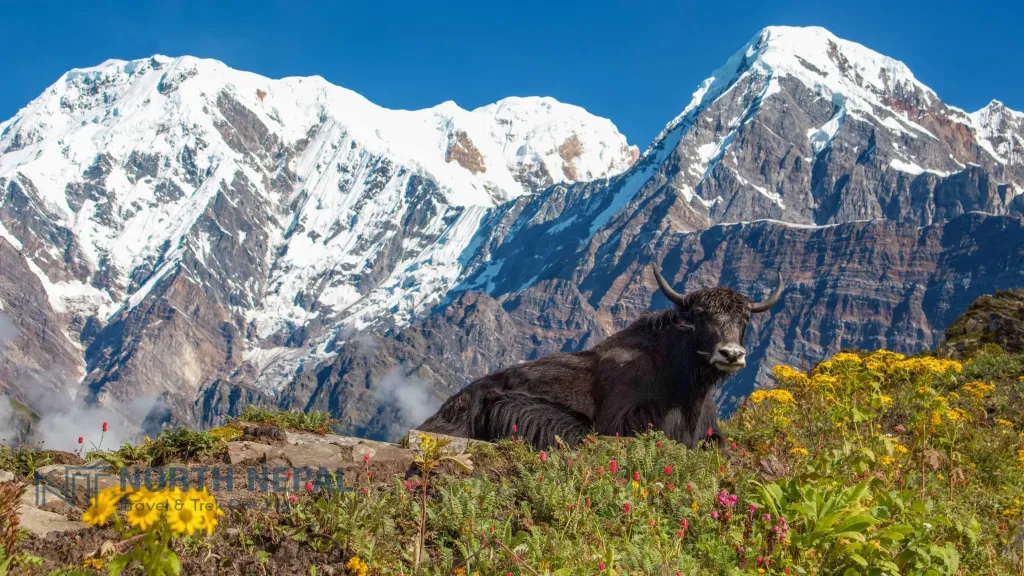
Photo: Yak resting on the wildflower meadow with Mountain range in the backdrop
Don't Let It Deter You:
- Spring offers the best visibility for your first high-altitude experience
- Clear skies mean less altitude surprise
- Mandatory guides ensure professional support
- Tourist infrastructure is well-established for beginners
Special Advice:
- Book Everest Base Camp or Annapurna Base Camp rather than the full circuit (shorter, equally rewarding for first-timers)
- Fly to Lukla or Pokhara by March 3 (removes all election-day transportation concerns)
- Trek for 10–14 days (gives acclimatization time, reduces altitude sickness risk)
- Hire a porter (common for first-timers; guides often recommend this)
- Arrive in Kathmandu by March 1 (provides full permit processing window)
Photography Enthusiasts: Seasonal Gold
March 2026 is exceptional for photography:
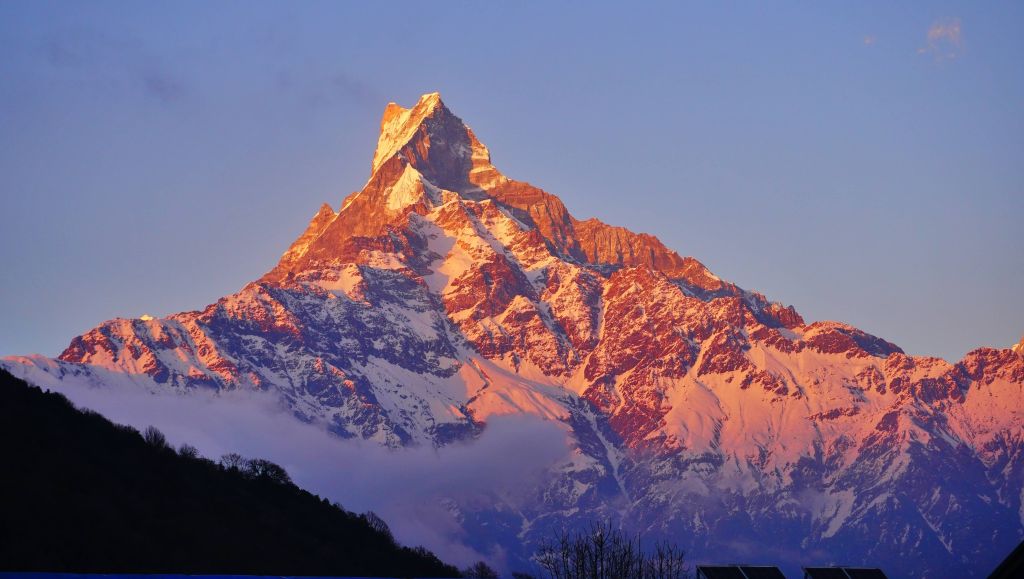 Photo: Alpenglow in the southern face of Fishtail (Machhapuchre) peak
Prime Subjects
- Rhododendron macro photography: Close-ups of blooms with mountain backgrounds
- Local election scenes: (From a safe distance) Nepali citizens voting and celebrating—powerful cultural documentation
- Sunrise alpenglow: First light on snow peaks with spring flowers
- Porter and guide portraits: Authentic documentation of mountain communities
- Village celebrations: Naya Barsha (Nepali New Year) festivities in late March
Practical Tips:
- Bring ND filters (neutral density) for long-exposure waterfall shots in the mist.
- Extra batteries: Mountain cold drains batteries 30% faster
- Waterproof bag: Spring monsoon moisture approaches
- Tripod: Essential for sunrise shots; lightweight carbon fiber models are trek-friendly
- Fast lens (f/2.8): Early morning and evening light is low; faster lenses capture better detail
What If Plans Change?
Election Day Flexibility:
If disruptions unexpectedly occur (statistically unlikely), your options:
-
Shift your trek start date. Agencies can often reschedule trekking dates with 48–72 hours' notice
-
Extend your Kathmandu stay. Enjoy the city; permit offices reopen March 6
-
Take a shorter trek. Poon Hill (3 days), Mardi Himal (4 days), or Annapurna Base Camp (5 days) are alternatives
-
Join a group trek. Scheduled group departures have flexibility built in
Travel insurance: Confirm your policy covers election-related disruptions (most comprehensive policies do under "Civil Unrest" provisions).
The Bottom Line: Your Trek is Protected
The March 5, 2026, election is a significant political event for Nepal—but it is not a threat to your trekking adventure.
Here's what you can expect:
-
Mountains remain pristine and peaceful
-
Permits are processed normally (by March 2)
-
Teahouses and lodges stay open throughout
-
Guides and porters work as scheduled
-
Stunning spring views, rhododendrons, and cultural experiences unfold as planned
-
Tourist areas are actively protected by security forces
-
You'll witness Nepal's democratic spirit firsthand (from a safe distance)
The only logistical constraint: Schedule flights and urban transfers to avoid March 5 specifically.
Final Thoughts: Nepal Welcomes You
Nepal's democratic process is a point of national pride. While the March 5 election reshapes the nation's leadership, the mountains remain eternal and unchanged.
For decades, trekkers have journeyed to Nepal during turbulent political periods, and Nepal's people have always honored the principle that guests are sacred.
Your spring trek in 2026 will be no different—just better planned and guided by professionals certified in your safety.
The Rhododendrons are waiting. The Himalayas are calling.
Let the elections happen below 3,000 meters. Your adventure starts above them.
Safe travels, and we'll see you on the trail.
Resource Links & References
Author
Mohan Raj Bhandari
Founder/Managing director
A native of the Annapurna region, he brings over 17 years of firsthand experience leading treks across the mountains of Nepal. His deep local roots and proven guiding expertise make him a trusted authority on authentic Himalayan adventures.
Field Notes, Monthly
Receive monthly trekking updates, seasonal trail conditions, permit changes, packing
advice, and exclusive travel planning tips from our local guides.