Upper Mustang Trek - 14 Days
The 14-Day Upper Mustang Trek starts from Kathmandu via Pokhara & Jomsom into the trans-Himalaya...
OVERVIEW & HIGHLIGHTS
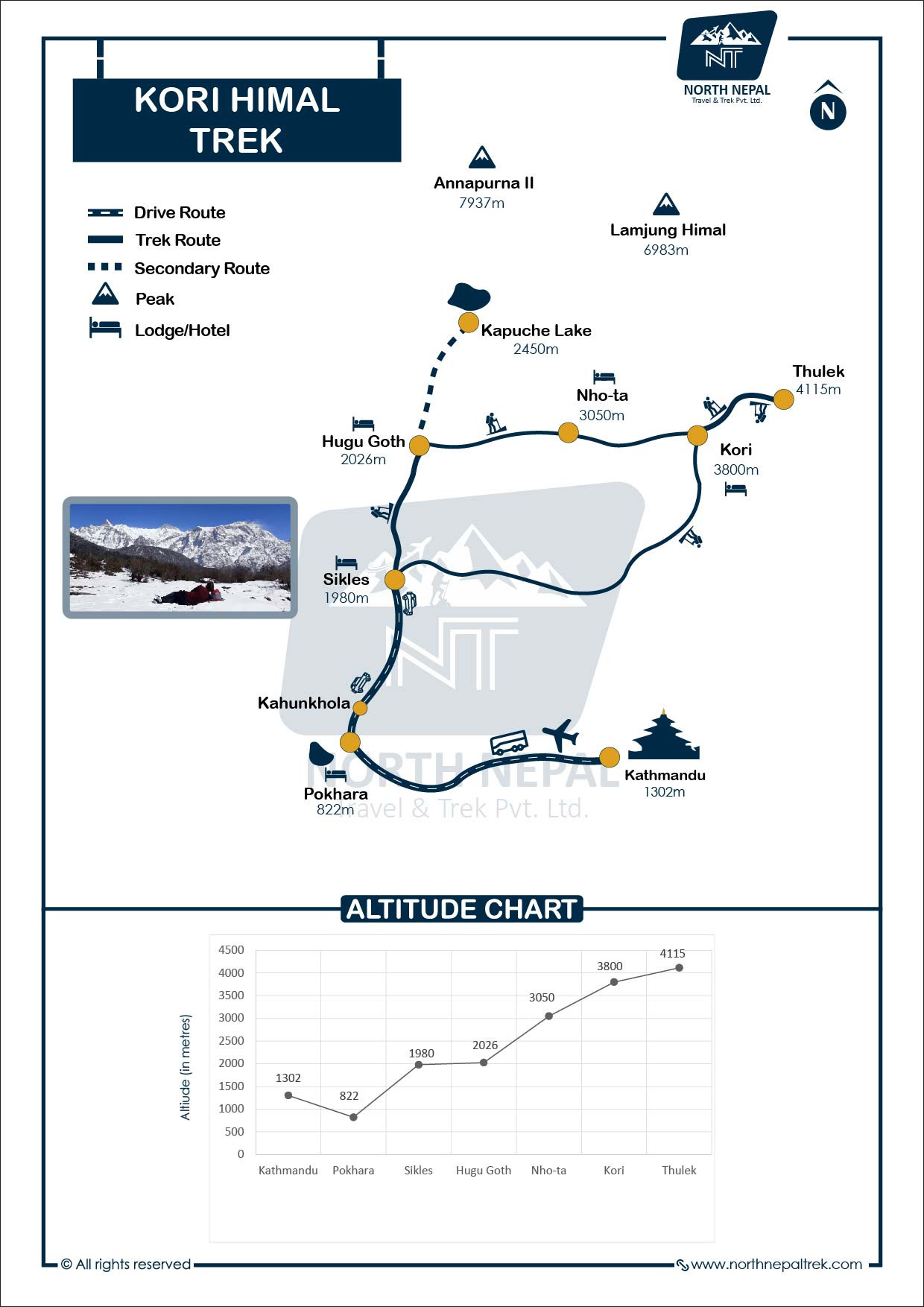
The Kori Himal Trek package is a 6-day short trek from Pokhara with mountain views and cultural exposure at 3,800m (12,467 ft) at Kori Danda. Starting from the clustered traditional Gurung village of Sikles (1,980m) in the Madi Rural Municipality, the trail ascends through ancient rhododendron and oak forests within the Annapurna Conservation Area (ACAP).
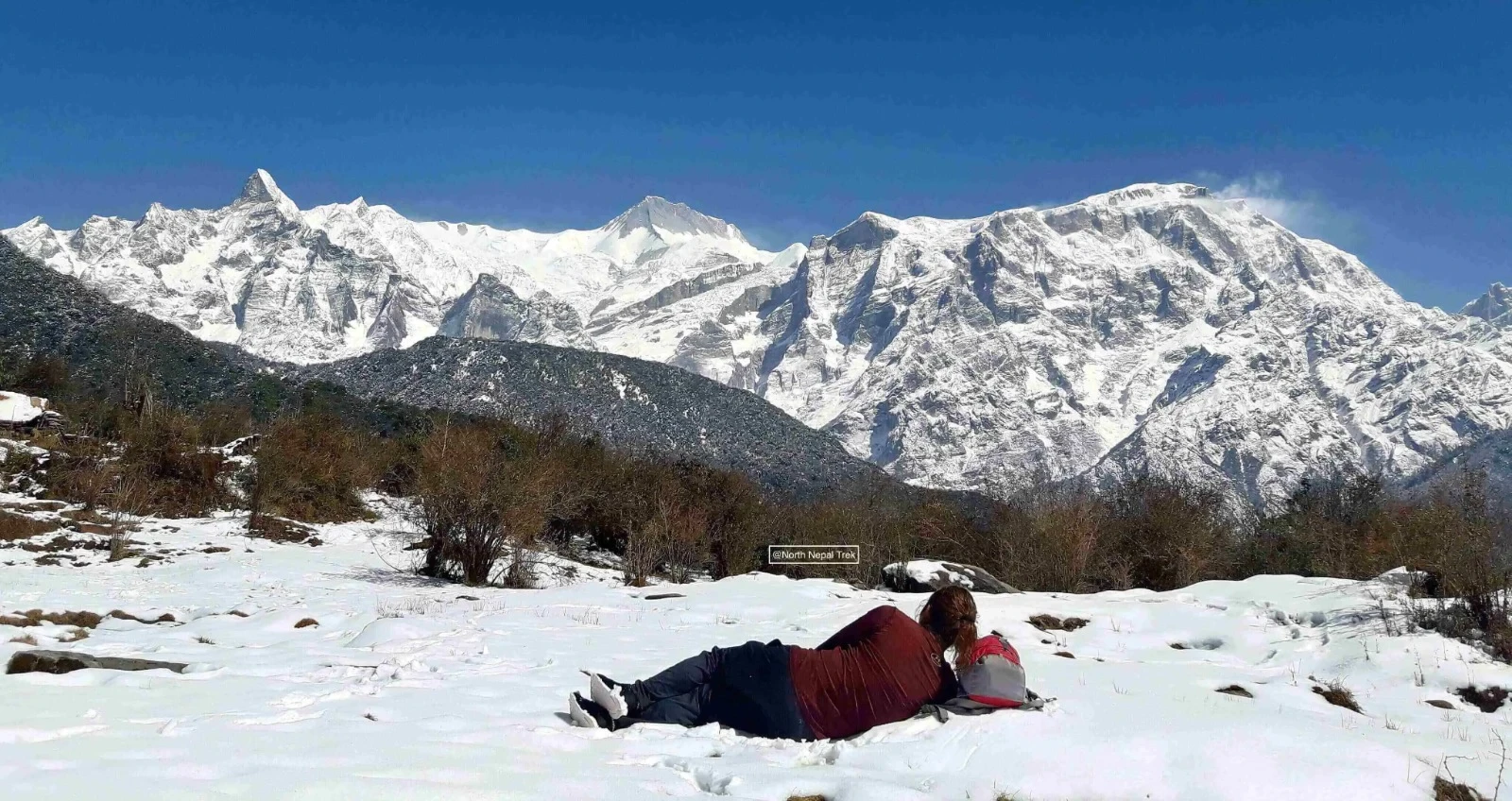
The high-altitude grasslands of the Kori viewpoint offer a panoramic view featuring Annapurna II (7,937m), Annapurna IV (7,525m), Lamjung Himal, Manaslu, and Tangting village. A major highlight is the side trip to Kapuche Glacier Lake (2,450m), the world's lowest-altitude glacier lake, where trekkers can witness avalanches tumbling from the Annapurna massif into the turquoise waters. Under the 2026 Nepal Tourism Board regulations, a licensed guide is mandatory for this route to ensure safety in the isolated Sikles wilderness. The trek is an easy, unspoiled alternative to the Mardi Himal Trek.
Find the comparison table between Kori vs. Mardi vs. Kapuche Lake; the shortest trek from Pokhara.
After breakfast we head towards Hugo Goth the route is on its way through the heavy stairs with scenic forest and melodious birds chirping.
In some parts, the route is a bit technical and can make it difficult, after 6-7 hours of the hike we reach the Hugu Goth. Hugu Goth is a newly built place with a very basic tea house. We will stay a night at Hugu Goth teahouse.
We start our journey early in the morning towards Kapuche Lake. After an hour of hike, we reach Kapuche Lake the lowest-altitude Glacier Lake in the world situated at the height of 2,546 m.
Photo: Direction board for trekkers at Nhutah or Nho-ta
Exploring the beauty of the lake, we will have our breakfast in the nearby tea house. And continue our journey to the Nho-ta. The trail to reach Nho-ta is a bit challenging with a narrower and unmanaged path. Upon reaching Nho-ta we stay overnight there at the tea house.
After a hike of about 4-5 hours, we arrived at our destination Kori. Kori is situated at the height of 3,800 m with breathtaking views of the mountains emerald grazing grassland, beautiful wildflowers, and also the view of clouds floating over the Mountains truly makes it Paradise.
We can easily enjoy the view with a sip of tea. The view of Mt Lamjung Mt Lamjung, Mt Annapurna II Machhapuchhare, Mount Fishtail, and Manaslu Himal looks astonishing and the hills aside. In the meantime, we can also explore the beauty of Thulek.
These days the logistics and accommodation are well-managed so we stay overnight at Kori.
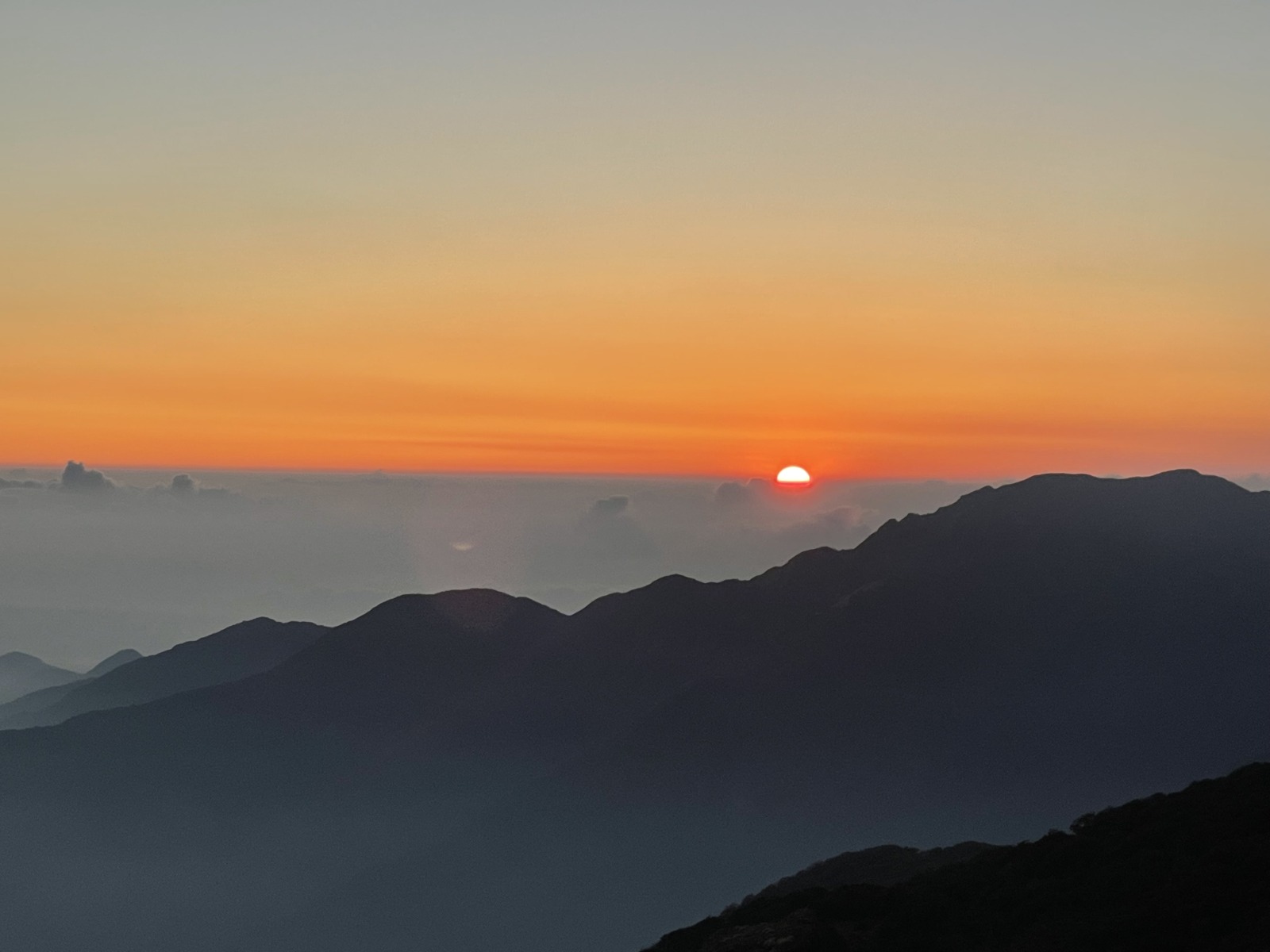
With beautiful views of sunrays hitting mountains and a gloomy warm morning, we descend back sikles.
Photo: Native frog species of Sikles village called Paha.
After 6-7 hrs of the hike, we reach Sikles where we previously stayed. We stay overnight at Sikles enjoying the vibrant beauty of the hills and Himalayas, with friendly and warm welcoming locals.
To the very day, we pack our bags to return to Pokhara. After having breakfast we will take a jeep. We will drive back to Pokhara passing by several villages on the route. After 3-4 hours of ride, we will reach Pokhara. Our beautiful journey to Kori ends here. Once you have reached Pokhara, you may explore the city on your own or proceed to Kathmandu.
Photo: Fewa Lake with the view of Machhapuchre mountain and other peak in Pokhara.
Autumn Trail Alert: Expect steep, uneven forest trails and clear skies with cold nights on the Kori Himal Trek this season. Signal drops above Sikles, and camps on the ridge are cold but scenic.
While the Kori Himal Trek reaches a moderate maximum altitude of 3,800 m (12,467 ft), the journey combines teahouse stays (such as in Sikles) with remote high-altitude camping. Routes can be rugged or muddy depending on the season, and trails require steady pacing. Guides conduct routine daily check-ins to ensure proper hydration, monitor physical exertion, and ensure a safe, organized camping and meal routine.
In cases of unexpected injury, acute illness, or adverse weather conditions on remote ridges or camping sites, emergency evacuation and rescue support are coordinated directly through local rescue services. Evacuations are initiated promptly upon assessment by your guide in communication with our Pokhara and Kathmandu offices.
All trekkers must hold comprehensive travel insurance covering emergency medical treatment, high-altitude mountain trekking and camping (up to 4,500 m), and emergency rescue/helicopter evacuation. Insurance details must be submitted prior to the departure of the trek to streamline emergency logistics if required.
Secure the Kori Himal Trek for 2026/2027 before the seat gets fully booked.
The Kori Himal Trek is a 6-day off-the-beaten-path trek from Pokhara into the Annapurna Conservation Area. The route begins at Sikles, a traditional Gurung village at around 1,980m, then climbs through rhododendron and oak forests to Hugu Goth, Nho-ta and finally Kori Danda at 3,800m. The trek also includes a visit to Kapuche Glacier Lake at around 2,450m, combining a glacier lake, highland meadows, mountain views and Gurung culture in one route.
Kori Danda is in northern Kaski District, within Madi Rural Municipality and the Annapurna Conservation Area. It lies roughly northeast of Pokhara and is reached by travelling to Sikles before continuing on foot through Hugu Goth and Nho-ta. Kori Danda rises to about 3,800m and forms a high alpine meadow with wide views across the surrounding valleys and mountains.
Kori Himal is a moderate trek rather than an easy short hike. Walking days generally involve 5 to 7 hours on stone steps, forest trails, uneven ground and steep sections of grassland. The upper route is relatively remote and has less infrastructure than established Annapurna trails. Previous high-altitude trekking experience isn’t essential, but you should be comfortable with consecutive days of uphill and downhill walking.
Yes, for reasonably fit beginners travelling with an experienced guide. You don’t need technical climbing skills or previous Himalayan trekking experience, but Kori is more demanding than a typical short trek around Pokhara. The 3,800m maximum elevation, remote upper trail and basic accommodation make preparation and pacing important for first-time trekkers.
The main Kori Himal Trek takes 6 days and 5 nights from Pokhara. There is also a 4-day short version that focuses on Kori Danda without following the full Kapuche Glacier Lake itinerary. The 6-day route covers approximately 45 km on foot and includes the Kapuche Glacier Lake side trip. (North Nepal Trek)
The highest point is Kori Danda at approximately 3,800m (12,467 ft). This is the main high point of the trek and the place where you get the broadest mountain panorama. Because the route approaches 4,000m, you should take altitude symptoms seriously even though the trek doesn’t require supplemental oxygen or technical mountaineering.
Kori combines three experiences that are rarely found together on a short Pokhara trek: Kapuche Glacier Lake, the high meadow of Kori Danda and the Gurung culture of Sikles. It’s also considerably quieter than established routes such as Mardi Himal and Poon Hill. The upper trail has less infrastructure, which is part of its appeal but also means you should travel with realistic expectations about accommodation and facilities.
They suit different travellers. Kori Himal is the better choice if you want a quieter route, basic wilderness conditions, Sikles village and Kapuche Glacier Lake. Mardi Himal has a more established trail network and more developed teahouse infrastructure. Choose Kori for a more remote experience; choose Mardi if accommodation comfort and a well-established trekking route matter more.
Yes. North Nepal Trek offers a 4-day version that follows Pokhara–Sikles–Tasa–Chigu–Kori–Sikles–Pokhara. This shorter itinerary concentrates on Kori Danda and does not follow the full 6-day route with the Kapuche Glacier Lake side trip. It’s better suited to travellers who have limited time and are comfortable with longer walking days. (North Nepal Trek)
This is a newly opened trekking route that has not been explored adequately, and the trail is mostly off-the-beaten-track. There are not enough signposts that can be used to identify the right path for the lake. For trekkers without a guide, it can be challenging to find a way and even accommodations and good food services. So, we recommend you go on the Kori trek with an experienced guide
For a Nepali citizen, the cost of the Kori trek is customizable according to the need of the customers and time requirements. We have ongoing departures for the trek every week, and we are open to negotiating provisions and the associated costs for the trek.
Sikles is a traditional Gurung village and the main gateway to Kori Himal. At around 1,980m, it provides a strong cultural contrast to the remote forest and alpine sections higher on the trail. The village is known for its stone-paved paths, traditional houses and welcoming Gurung community. Spending time here before or after the trek gives you a chance to experience the local culture rather than simply using Sikles as a trailhead.
Yes. The trek starts in one of the established Gurung communities of the Madi Valley, so cultural experience is naturally part of the journey. You can see traditional village architecture, local farming practices and everyday life in Sikles. A homestay provides a more direct experience than staying only in a standard lodge.
Kori refers to the high hill or meadow area known as Kori Danda. “Danda” is commonly used in Nepali place names for a hill or ridge. Kori is also used as seasonal grazing land, and sheep herding remains part of the landscape around the high meadows.
Yes. Sikles is already part of the standard itinerary, with an overnight homestay on the first night. You can also allow additional time in the village if you want a slower cultural experience, particularly for photography, village walks and interaction with local residents.
March to May and September to November are the strongest seasons for Kori Himal. Spring brings rhododendron blooms and greener forests, while autumn generally offers the clearest mountain views and more stable trekking conditions. Nepal Tourism Board also identifies March to May and September to November as the main trekking seasons for the Annapurna Conservation Area. (Nepal Tourism Board)
Yes. Spring, particularly March to May, is the best period if rhododendrons are a major reason for your trip. The lower and middle sections of the trail pass through rhododendron and oak forests, with several rhododendron species found along the route.
Yes, but it requires more preparation. Kori is not a rain-shadow route, so the forest sections can become muddy and slippery during the monsoon. Leeches are also common on wetter lower sections, while clouds can hide Kori Danda’s mountain views. The alpine meadows can look exceptionally green and wildflower-filled, but July and August are generally much wetter than autumn. (North Nepal Trek)
Winter is possible but more demanding. Temperatures fall sharply at night around the higher camps, and snow can affect the upper trail. If you plan a winter trek, you need proper cold-weather clothing and should confirm trail and accommodation conditions before departure.
Conditions at 3,800m can change quickly. Mornings are often the best time for mountain visibility, while cloud, wind, rain or snow can develop later in the day depending on the season. Pack for changing conditions rather than relying only on the forecast for Pokhara.
Accommodation varies considerably along the route. You stay in a homestay at Sikles, while higher sections use basic teahouses and, depending on the itinerary and conditions, camping. Facilities become increasingly basic above Sikles. Travellers should not expect the same accommodation standard found on established Annapurna routes such as Mardi Himal.
Camping may be required on some sections or during certain periods depending on current accommodation availability. The North Nepal Trek itinerary includes camping on the remote upper section, while newer teahouses are also operating in parts of the route. Your exact accommodation arrangement should be confirmed before departure. (North Nepal Trek)
Food is simple and practical, especially above Hugu Goth. Typical meals include dal bhat, rice, vegetables, noodles and basic soups. Food choices are more varied in Sikles and become more limited as you move toward the remote upper sections. Carrying personal snacks and energy foods is a good idea for the longer walking days.
Yes. Sikles is the best place on the route to experience local food and Gurung hospitality. A homestay can give you a more authentic meal experience than the limited menus available in higher teahouses.
Facilities are basic on the Kori route. You may find better bathroom and shower facilities in Sikles, but higher sections have shared and basic toilets, and hot showers aren’t something you should rely on. Pack wet wipes and personal hygiene supplies for the remote sections.
Sikles is reached by road from Pokhara, normally by jeep. The journey takes around 3 to 4 hours, depending on road conditions. The route passes through villages including Thak, Taprang and Khilang, with a mix of paved and off-road sections. (North Nepal Trek)
Yes. Depending on availability, you can travel by shared jeep or reserve a private jeep. A private vehicle gives you greater flexibility with departure time and luggage, while sharing can reduce transportation costs.
The standard 6-day itinerary descends back to Sikles before taking a jeep to Pokhara. The drive takes around 3 to 4 hours. If arranged in advance, the final drive can also continue onward toward Kathmandu. (North Nepal Trek)
Kori Himal lies within the Annapurna Conservation Area, so an ACAP entry permit is required. Nepal Tourism Board currently lists the Annapurna Conservation Area entry fee at NPR 2,000 for foreign visitors and NPR 200 for SAARC nationals. (Nepal Tourism Board)
Current Nepal Tourism Board guidance requires TIMS for trekking in Nepal, while its specific mandatory-guide list includes Sikleh Tara Hill Trek under the Annapurna region rather than explicitly naming Kori Himal. Because Kori is a less-established route, the exact current documentation should be confirmed through your registered trekking agency before departure rather than relying on an outdated FAQ. (Nepal Tourism Board)
Yes. North Nepal Trek currently requires a licensed trekking guide for its Kori Himal trips because the upper route is remote and less clearly marked than established Annapurna trails. A guide also helps with accommodation, route finding, weather decisions and emergency coordination. (North Nepal Trek)
Yes, but this changes the character of the trip significantly. The Kori route continues toward Namun Bhanjyang, from where adventurous trekkers can connect toward the Annapurna Circuit. This is a demanding extension and should only be planned with an experienced guide, appropriate equipment and enough time.
Yes. They share Sikles as their gateway, and the 6-day Kori itinerary already includes Kapuche Glacier Lake as a side trip. The lake visit allows you to experience the lower glacier-lake environment before continuing toward the higher Kori Danda viewpoint.
The highest point is 3,800m, so altitude sickness is a genuine consideration even though the trek is moderate. The risk is lower when you ascend gradually and avoid rushing, but no one can guarantee that altitude symptoms won’t occur. Watch for headache, nausea, dizziness, unusual fatigue or difficulty breathing and tell your guide immediately if symptoms develop. Nepal Tourism Board advises trekkers to take AMS seriously above 3,000m. (Nepal Tourism Board)
You should be comfortable walking for 5 to 7 hours on consecutive days, including steep stairs, uneven forest trails and uphill grassland. Preparing with regular hiking, uphill walking and leg-strength exercises for several weeks before departure will make the trek substantially easier.
Kori Himal can be safely completed with proper preparation and a qualified guide, but it shouldn’t be treated like a highly developed teahouse route. The main concerns are remote terrain, changing weather, slippery trails, altitude, limited facilities and navigation. North Nepal Trek provides guide support, first-aid equipment and emergency coordination as part of its safety arrangements. (North Nepal Trek)
Yes, particularly during wet conditions on the forest sections. Leeches are more likely during the monsoon. Long trekking trousers, suitable socks, footwear that covers the ankle and insect or leech protection can make the experience much easier.
Yes. Travel insurance covering trekking, medical treatment and emergency evacuation is strongly recommended. Because Kori reaches 3,800m and includes remote sections, your policy should explicitly cover trekking at the maximum elevation of your itinerary and helicopter evacuation where applicable.
Pack sturdy broken-in trekking boots, warm base layers, a fleece or insulated jacket, waterproof jacket and trousers, warm hat, gloves, trekking socks, sunglasses, sunscreen, a 25–30 litre daypack, headlamp, water bottles or hydration bladder, trekking poles, personal medication, basic toiletries and a power bank. You should also carry enough snacks for the longer days.
A warm sleeping bag is useful because overnight temperatures can fall considerably around the higher camps. North Nepal Trek provides sleeping bags as part of its package, but travellers who are sensitive to cold may prefer to bring their own. A liner is also useful for hygiene.
Yes, they’re particularly useful on Kori. The route includes steep stone steps, uneven forest paths and downhill sections where poles can reduce strain on your knees and improve balance. North Nepal Trek provides trekking poles on its package. (North Nepal Trek)
Yes. Basic trekking equipment can be rented or purchased in Pokhara, including sleeping bags, trekking poles, backpacks, jackets and other hiking gear. Since Kori includes remote and colder sections, make sure rented equipment is suitable for the actual conditions rather than simply choosing the lightest option.
The current 6-day package starts at USD 450 per person for one traveller, with lower per-person rates for larger groups. North Nepal Trek currently lists USD 400 for two people, USD 350 for 3–6, USD 310 for 7–12 and USD 290 for 13–25 people. The 4-day version is listed separately at NPR 25,000 for one person and NPR 19,000 per person for groups of 4–5. (North Nepal Trek)
The 6-day package includes trekking accommodation, three meals a day, transportation between Pokhara and Sikles, an English-speaking guide, required trekking documentation, a sleeping bag, trekking poles, first-aid support and government taxes. Exact inclusions can vary by itinerary, so confirm the final quotation before booking. (North Nepal Trek)
Plan for personal expenses such as bottled water, snacks, drinks, charging fees where available, laundry, hot showers if available, tips and personal purchases. International flights, travel insurance and expenses resulting from voluntary itinerary changes are also outside the standard package.
No. You shouldn’t depend on finding an ATM after leaving Pokhara. Carry enough Nepali rupees before travelling to Sikles to cover personal expenses and tips. Card payments and foreign currency are unlikely to be useful on the remote upper trail.
Yes. North Nepal Trek offers both group departures and private trips. A private trek is useful if you want to choose your own departure date, walking pace, accommodation preferences or route variations.
Yes. North Nepal Trek currently lists group-joining departures for the 6-day Kori Himal Trek. Group prices are lower than the solo rate and vary according to group size. Departure availability should be confirmed before booking. (North Nepal Trek)
Yes. The route can be adjusted according to your available time and trekking experience. You can choose the shorter 4-day itinerary, follow the full 6-day route, combine Kori with Kapuche Glacier Lake or plan a more ambitious extension toward Namun Bhanjyang.
It isn’t the first choice for families with young children. The upper trail is remote, facilities are basic and the trek reaches 3,800m. Fit teenagers with previous hiking experience may be able to complete it with a guide, but families looking for an easier short trek around Pokhara have more suitable options.
WiFi is limited. You may find connectivity in Sikles and possibly at some lower accommodation, but reliable internet shouldn’t be expected on the upper trail. The remote sections around Nho-ta and Kori have very limited communication infrastructure. (North Nepal Trek)
Mobile coverage is available around Sikles and some lower sections but becomes unreliable as you climb toward Hugu Goth, Nho-ta and Kori Danda. Expect little or no signal at higher sections. Download offline maps and important travel information before leaving Pokhara.
Charging facilities are limited and shouldn’t be relied upon throughout the route. Carry a fully charged power bank, particularly if you use your phone for photography, navigation or emergency communication.
Always travel with your guide and inform someone outside the trek about your itinerary. Your trekking agency should have an emergency communication and evacuation procedure. Because Kori is remote, don’t assume that you can simply make a phone call from every point on the trail.
The Kori route passes through the Annapurna Conservation Area, where trekkers may encounter Danphe (Himalayan Monal), Himalayan Tahr, musk deer and other Himalayan bird species. Wildlife sightings are never guaranteed, but the relatively quiet trail gives you a better chance of experiencing the natural environment without the crowds found on major Annapurna routes. (North Nepal Trek)
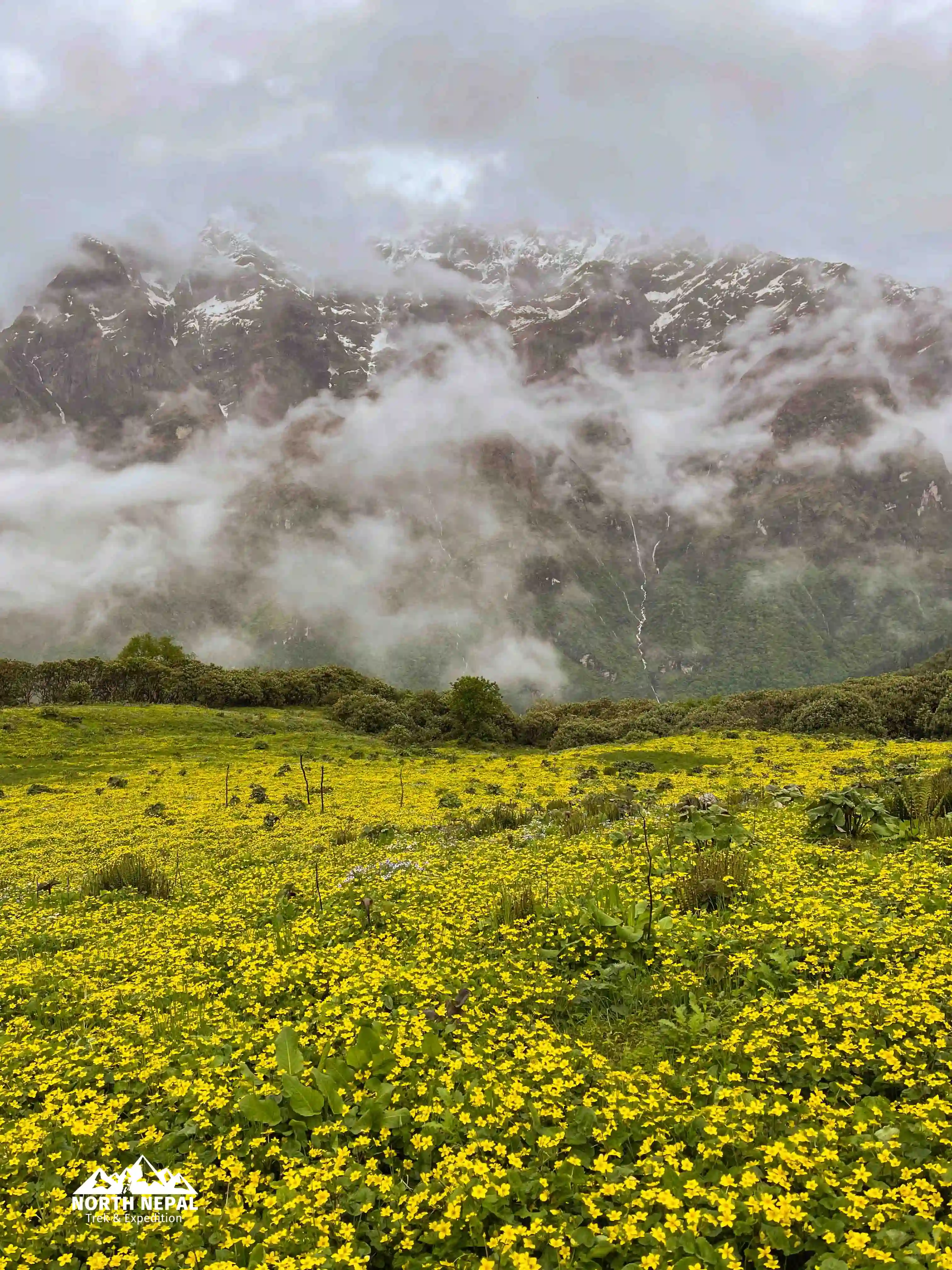
The lower and middle sections pass through rhododendron, oak and bamboo forests, while the landscape becomes more open as you approach the high meadows. Spring brings rhododendron flowers, while the upper grasslands can be covered in wildflowers during warmer months.
Kori Danda is a high-altitude grazing meadow rather than a conventional mountain summit. At around 3,800m, it opens into a broad landscape of grassland, ridges and deep valleys with Himalayan peaks surrounding the viewpoint. Sheep grazing in the meadow is also part of the area's traditional pastoral landscape.
Kapuche Glacier Lake is a turquoise glacial lake at roughly 2,450m and one of the defining attractions of the route. It sits below the Annapurna massif and can be reached as a side trip from the Kori trail. The lake is particularly unusual because of its relatively low elevation compared with most glacier lakes in the Himalayas. The current North Nepal Trek itinerary includes the lake visit on the route toward Nho-ta. (North Nepal Trek)
Yes. The trek gives photographers several very different environments in a single trip: Gurung village life in Sikles, rhododendron and oak forests, Kapuche Glacier Lake, alpine wildflowers, grazing meadows and wide Himalayan panoramas from Kori Danda. Spring is strongest for flowers, while autumn is generally better for clear mountain views.
Avalanche activity can sometimes be seen or heard from the Annapurna massif, particularly around Kapuche Glacier Lake. It’s a natural phenomenon and cannot be guaranteed on a particular day. Always follow your guide’s instructions around the lake and never approach unstable snow, ice or avalanche debris.