Four Peaks Trek: A Unique Trek of Annapurna Region

Four Peaks Trek: A Unique Trek of Annapurna Region
DESTINATION Nepal
MAX. ELEVATION 4660 m
WALKING DISTANCE
GRADE Moderate
BEST SEASON September-December / April - June
DURATION 12 Days
MEALS INCLUDED Breakfast, Lunch & Dinner
ACCOMMODATION Lodge

OVERVIEW & HIGHLIGHTS

Four Peaks Trek Overview

Four Peaks Trek is a unique trek formed with the combination of several other short treks. It is also a golden opportunity to observe four beautiful and appealing peaks in a single expedition. What makes this trek different from others is that its trails were designed and modified to observe Mohare Danda, Ghorepani Poonhill, Khopra Danda, and Mulde Peak in a single journey.

The four peaks have gained fame of their own, and when they are combined in a single trek, it is bound to gain popularity within a short time. Also, this trek is not a high-altitude trek, so the chances of getting altitude sickness are almost nil, and it is also applicable to all age groups with slightly better physical fitness. Moreover, beginners can attempt this trek without any worry.

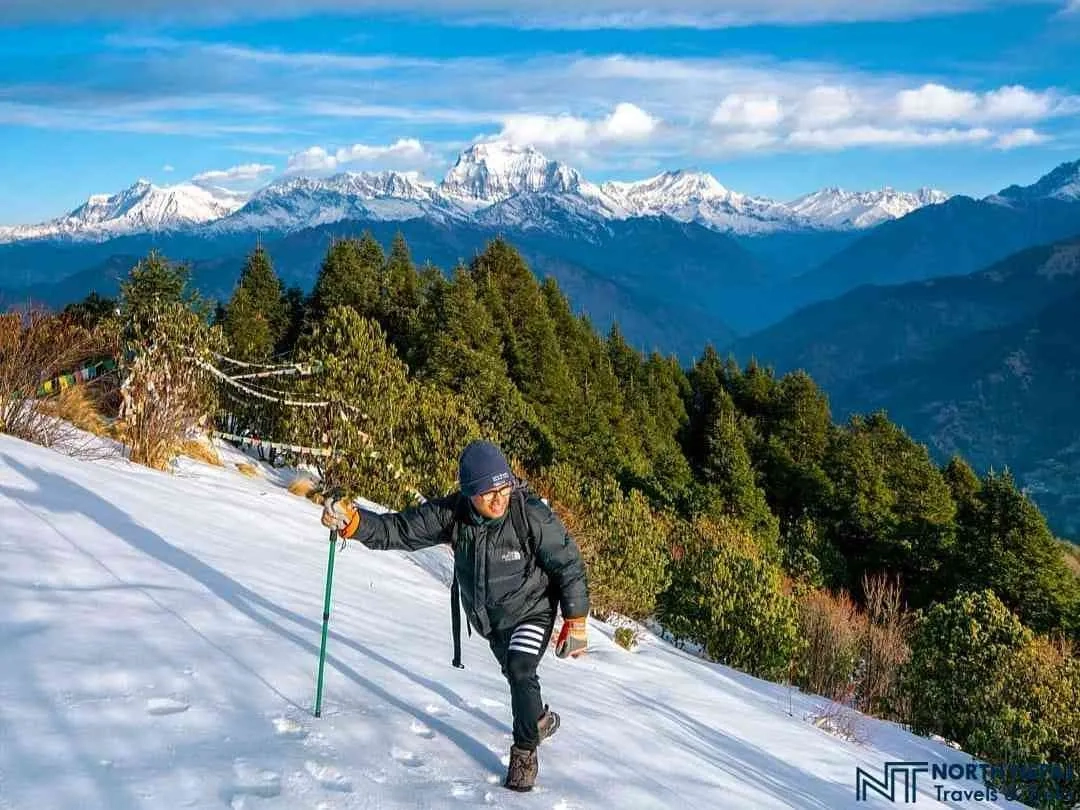
The mesmerizing view and rich bio-diversity of Mohare Danda, the heat-stopping view of several mountains and the soul-stirring view of sunrise from the Poon Hill viewpoint, the tantalizing view of the Annapurna range, and the pristine beauty of Khayer Lake perceived from the Khopra Danda, and the mouth-watering view of more than 25 peaks of both the Annapurna range and Dhaulagiri range from the Mulde Peak make it distinct from other treks of the Annapurna Conservation Area.

Similarly, this trek is an excellent opportunity to indulge in the cultures of various ethnic groups, mainly Gurung, and nature. The landscapes and views of the mighty Himalayas perceived along the way and the culturally enriched Ghandruk village at the end of the trek are some of the highlights of this journey.

Why you will love the Four Peaks Trek?

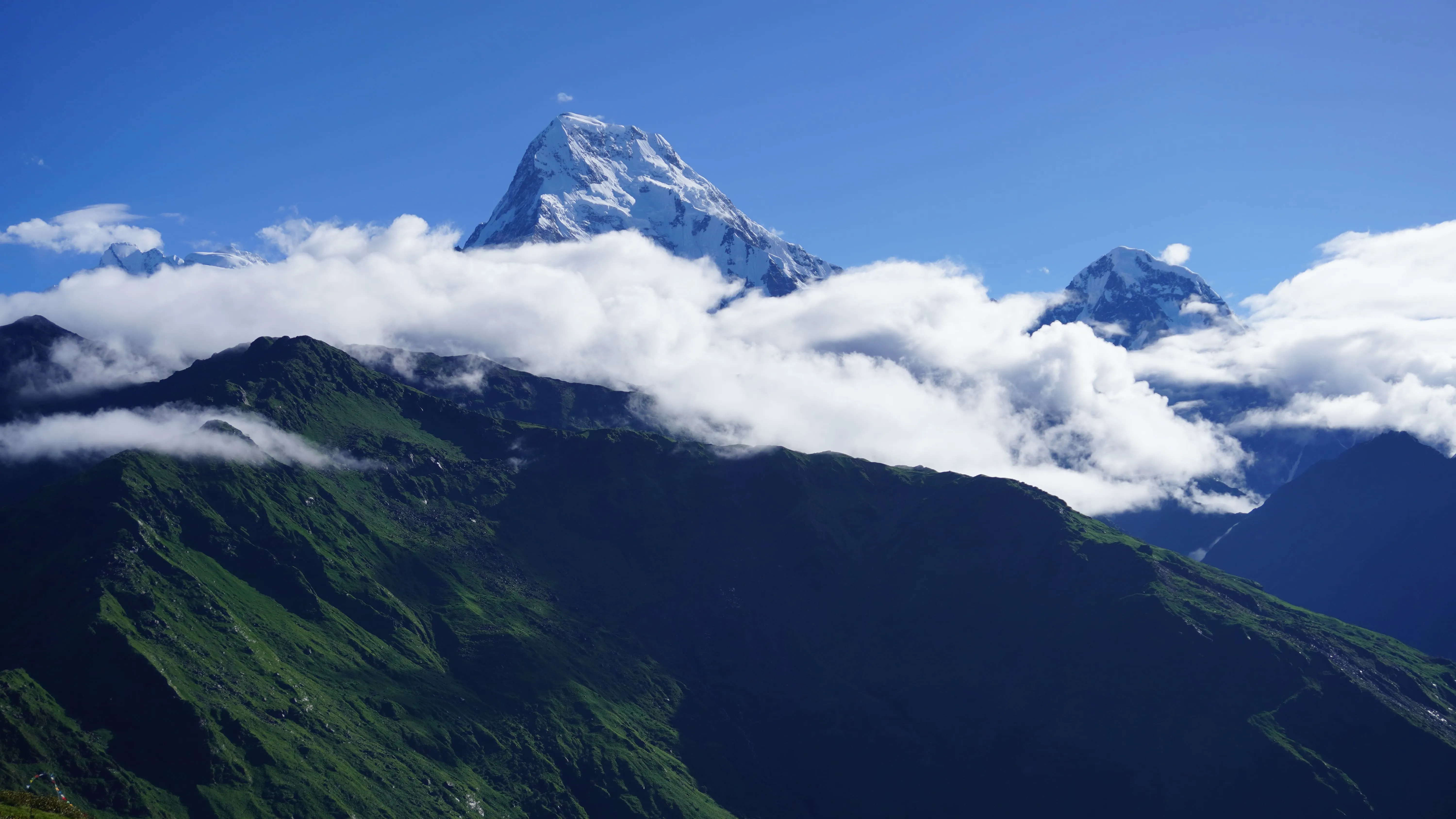
  • Majestic mountain views of Annapurna, Annapurna South, Dhaulagiri, etc, from all four peaks.
  • The trek is filled with biodiversity and culturally enriched villages, added by lush vegetation and rhododendron-filled hills along the way.
  • The sunrise view from the Poon Hill viewpoint and other viewpoints is the main highlight of this trek.
  • We can peek at the culture of the different ethnic groups of people, mainly Gurungs and Magars, during this trek
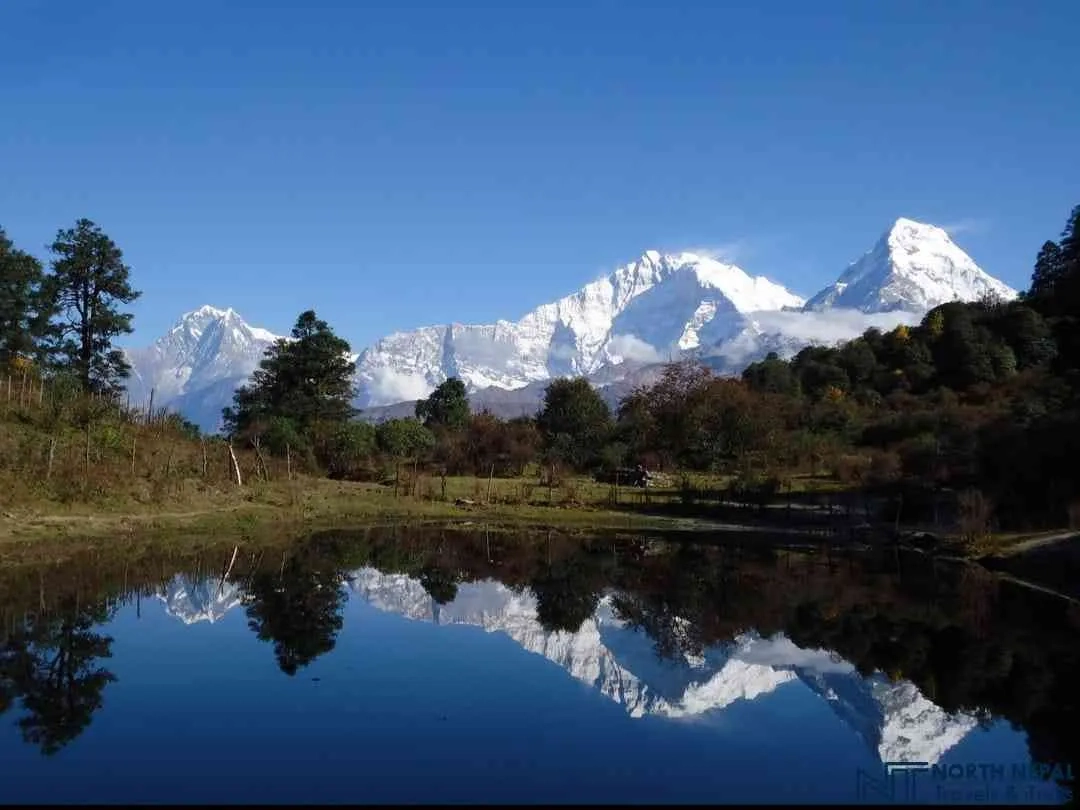
  • Khayer Lake, situated at 4660 m above sea level, is known for its pristine and serene beauty.
Jeewan Tamang
Itinerary review by

Jeewan Tamang, Trekking Guide / Mountain Climber / Trail Runner

Four Peaks Trek route and pacing are drawn from 12+ years guiding the Annapurna region. Mohan founded North Nepal Trek in 2015; this itinerary has been reviewed by Jeewan Tamang, one of our government-licensed local guides.

Four Peaks Trek Itinerary

Toggle all
Day 1

Arrival at Kathmandu Airport

HIGHEST ALT. 1324 m|4344 ft

When you arrive at Kathmandu's airport, one of our team members will be there take you to your hotel. You can either start exploring Kathmandu or take some time to rest and get over any tiredness from your flight to Nepal. In the evening, we'll have a meeting to give you all the information you need for the trek ahead.

Day 2

Fly or Drive to Pokhara

FLIGHT 25 mins

Catching a 25 min flight to Pokhara after breakfast in the hotel falls in the morning schedule however you can also take a tourist bus which takes about 7- 8 hrs.Pokhara is also one of the most beautiful cities in Nepal. Exploring and enjoying the lakeside town at the base of the Annapurna Himalayas is the best thing you can do in Pokhara.

Day 3

Drive from Pokhara to Nayapool and Trek to Lespar

HIGHEST ALT. 2062 meters
DURATION 7-8 hours
Distance
DISTANCE ~ 8 km

After a one and half hour's drive, we will reach Nayapul, the starting point of our trek. From there, we will start climbing hills towards the northwest side and reach Deupur village. After that, we will trace ahead enjoying the view of forests, and terraced agricultural fields to reach Purna Gaun. Similarly, we head further ahead and finally stop at Lespar Village where we will spend our night in a simple hotel.

Day 4

Trek from Lespar to Nangi Village

HIGHEST ALT. 2250 m / 7380 ft
DURATION 5-6 hours
Distance
DISTANCE ~ 9 km

After an early breakfast, we will commence our expedition towards Nangi Village situated at an altitude of 2,340 meters above sea level. After walking steeply uphill and passing through green forests, we will be welcomed by a mesmerizing view of the Himalayas of the Dhaulagiri range after reaching Nangi Village, the hometown of Mahabir Pun.

He founded the Nepal wireless networking project in early 2002. Moreover, the village has internet and telephone facilities. Also, we can opt to visit the Nepalese handicraft centre of the village. We will stay overnight in a guest house.

Day 5

Trek from Nangi Village to Mohare Danda

HIGHEST ALT. 3300 m / 10824 ft
DURATION 5-6 hours
Distance
DISTANCE ~ 7.7 km

Same as yesterday, we will initiate our journey after a healthy breakfast. Passing through oaks and rhododendron-filled forests, we will move ahead towards Mohare Danda, one of the highlights of this trek. The views of several Himalayas such as Annapurna, Dhaulagiri, etc are something that will be carved in our heads for the rest of our lives.

Moreover, this place hosts one of the highest wireless internet relay stations in Nepal, providing internet to the remote villages for schools and health posts that use Tele-Medicine, linking up with hospitals in Kathmandu to provide better healthcare to the surrounding villagers.

This concept was initiated by a famous scientist, Mahabir Pun. Furthermore, the sunset view from the top is alluring and enchanting. We will spend our night in a community homestay. Also, we can opt to spend the night in a tent though, gear and equipment should be carried with us from the beginning.

Day 6

Trek from Mohare Danda to Poon Hill, Ghorepani

HIGHEST ALT. 3210 m / 105288 ft
DURATION 3 hours
Distance
DISTANCE ~ 5 km

After an early breakfast, we will move ahead towards one of the most popular destinations among trekkers Ghorepani Poonhill. After observing a mesmerizing sunrise view from Mohare Danda, we will pass through a forest full of Rhododendrons, the national flower of Nepal.

Also, we will be accompanied by an astounding view of the majestic Himalayas of both the Dhaulagiri range and the Annapurna range along the whole way. Finally, we will halt our footsteps in Ghorepani for an overnight stay in a hotel. Poon Hill Sunrise Trek is one of the most favoured short treks in Nepal and is known for the overwhelming view of sunrise and sunset.

Day 7

Trek from Ghorepani to Swata Village

HIGHEST ALT. 2270m / 74456 ft
DURATION 5-6 hours
Distance
DISTANCE ~ 16 km

Today, we will wake up earlier than usual for a beautiful sunrise view from the Poon Hill viewpoint situated at an altitude of 3,210 meters above sea level. The sunrise view from the top of the viewpoint and an expansive view of several Himalayas is the talking point and main highlight discussed among trekkers.

After that, we will trace our footsteps backwards the Ghorepani and head towards Swata Village. The landscapes and views observed along the way are very unique. We will spend the night in a lodge.

Day 8

Trek from Swata Village to Khopra Danda

HIGHEST ALT. 3600 m / 11811 ft
DURATION 6 hours
Distance
DISTANCE ~ 9.6 km

Same as any other day, we will commence our journey after a healthy breakfast. Today’s trek may be a little bit of challenging than any other day because we have to ascend uphill to more than 1,500 meters to reach Khopra Danda situated at an altitude of 3600 m. However, the tiredness will sway away because of the grand and majestic vistas of the Himalayas we get to enjoy along the way. Finally, we will spend our night in Khopra Danda as a more exciting journey awaits us tomorrow.

Day 9

Trek from Khopra Danda to Khayer Lake and back to Chistibung

HIGHEST ALT. 4660 m / 15288 ft
DURATION 7 hours

As usual, we will initiate our journey after breakfast. Khopra Danda is one of the main attractions of this 4 peak trek. First, we will ascend to Khayer Base Camp. The base camp will welcome us with a tantalizing and mouth-watering view of the high Himalayas such as Annapurna, Dhaulagiri, Dhampus peak etc.

Furthermore, we will get to behold the beauty of Khayer Lake situated at an altitude of 4660 meters. After enjoying the beautiful views from the Khayer Base Camp, we will descend further down towards Chitisbung. We will pass through gorges and beautiful forests filled with Rhododendrons and other vegetation. Finally, we will stop at Chitisbung and spend the night there.

Day 10

Trek from Chistibung to Mulde Peak

HIGHEST ALT. 3650 m / 11972 ft
DURATION 6-7 hours
Distance
DISTANCE ~ 7 km

After a healthy breakfast, we will kick off our journey towards Dobato. Enjoying the lush green forest and breathtaking views of mountains along the way, we will reach Dobato. From Dobato, we will ascend for about 15 minutes to reach Mulde Peak.

The peak will embrace us with a majestic grand view of more than 25 Himalayas from the top. Furthermore, the peak is equally famed for the sunrise view in the morning. Mulde Peak can be counted among the best viewpoint of the whole Annapurna Sanctuary. We will spend our night in a lodge or tea house in Mulde.

Day 11

Trek from Mulde Peak to Ghandruk Village

HIGHEST ALT. 1940 m / 6363 ft
DURATION 7 hours

Same as any other day, we will headstart our journey after a healthy breakfast. Leaving behind several small villages, green forests, and panoramic vistas of mountains we will reach Ghandruk village. The village has gained popularity for the rich and ancient culture of the Gurungs.

We will peek at the various rituals and traditions recited by the Gurungs. Moreover, we can opt to enjoy the various traditional dances and songs of the Gurung community. Similarly, we can observe the breathtaking views of the Dhaulagiri range and other mountains such as Himchuli, Annapurna, Machhapuchhre, etc. We will spend our night in a homestay. Also, we can directly drive to Ghandruk via bus or jeep from Pokhara if you have a plan for a short trip.

Day 12

Trek from Ghandruk to Kimche and drive to Pokhara

FLIGHT 2 hours Jeep
HIGHEST ALT. 1920 m / 6300 ft
DURATION 2 hours
Distance
DISTANCE ~ 8 km

After a belly full of cultural insights, we will head towards Kimche after a healthy breakfast. From there, we will walk downhill towards Kimche or Nayapul. From Kimche or Nayapul, we can hop onto a car and return back to Pokhara. The trek ends here after 10 days of starting.

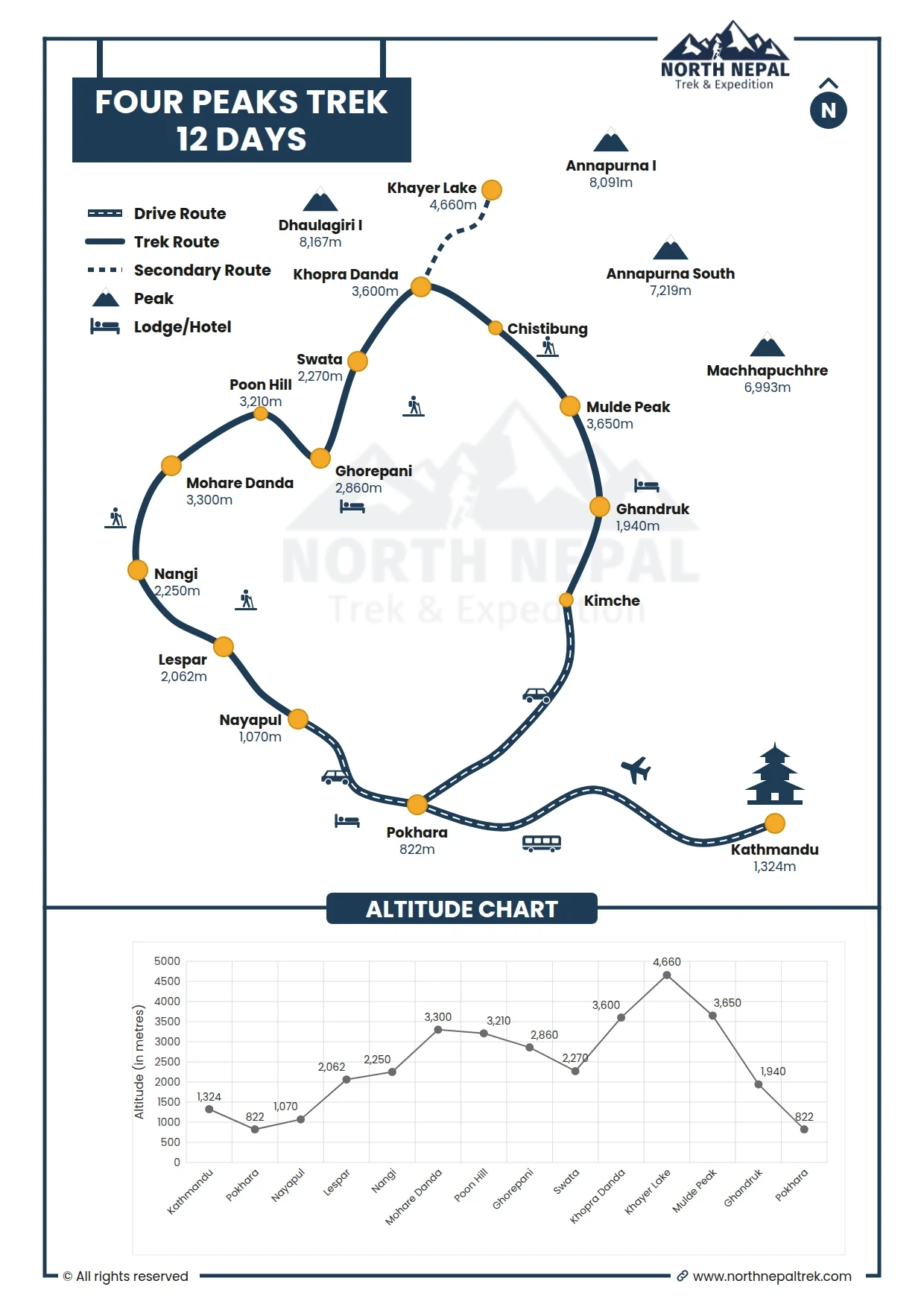
Four Peaks Trek Route Map and Altitude Graph

Four Peaks Trek Route Map and Altitude Graph

What's Included & Excluded

  • Transportation from Pokhara to Nayapul to Pokhara  and from Ghandruk to Pokhara
  • We provide 3 meals per day (Breakfast, Lunch, and Dinner) and Tea / Coffee twice daily. Please note that each meal is served as a single serving.
  • Best available accommodation along the trek.
  • An experienced English-fluent guide (salary, transportation, insurance, equipment, food, and lodging included). 
  • Equipment: Down Jacket, Sleeping Bag, Rain Coat (Return after the trek).
  • All Legal Documents (TIMS, Permit, etc).
  • Dry fruits along the trek.
  • Achievement certificate from the company.
  • Farewell dinner.
  • Extra nights in Kathmandu and Pokhara.
  • Travel insurance for the trek.
  • Porter ( One porter for two trekkers, salary, transportation, insurance, equipment, food, and lodging included )
  • Cold drinks: Coke, mineral water, beer, Fanta, etc.
  • Personal Expenses (shower, boiled water, telephone, laundry service, etc).
  • Tips & Gratitudes for guides and porters.
  • Anything not included ig the list.

Complete Guide to the Four Peaks Trek

Toggle all

Best Time & Season to Visit the Four Peaks Trek

The Four Peaks Trek can be completed throughout much of the year, but weather, trail conditions, mountain visibility, and temperatures vary significantly by season. The best trekking months are March to May and September to November, when the Annapurna region offers stable weather and the clearest Himalayan views.

Spring (March to May) — Best Overall Season

Spring is widely considered the best season for the Four Peaks Trek. Rhododendron forests around Mohare Danda, Ghorepani, Khopra Danda, and Mulde Peak burst into bloom, creating one of Nepal's most spectacular trekking landscapes.

  • Daytime temperature: 10°C to 20°C at lower elevations
  • Night temperature: -5°C to 5°C near Khopra Danda and Khayer Lake
  • Trail conditions: Dry, stable, and ideal for trekking
  • Mountain visibility: Excellent, especially in the mornings
  • Crowd level: Moderate to high during April

Autumn (September to November) — Best Mountain Views

Autumn is another outstanding season following the summer monsoon. The air is clean, humidity is low, and the Himalayas are exceptionally clear.

  • Daytime temperature: 12°C to 18°C
  • Night temperature: -5°C to 3°C at higher elevations
  • Trail conditions: Dry with excellent footing
  • Mountain visibility: Outstanding after the monsoon
  • Crowd level: High, particularly during October

If your priority is panoramic views of Annapurna I, Dhaulagiri, Machhapuchhre, Nilgiri, and Annapurna South, autumn offers some of the best conditions of the year.

Monsoon (June to August) — Lush but Wet

Frequent rainfall creates more challenging trekking conditions: wet, muddy, and occasionally slippery trails, mountain visibility often limited by clouds, and leeches in lower forest sections. Experienced trekkers can still enjoy the route, but this is generally not the preferred season.

Winter (December to February) — Quiet Himalayan Trails

Winter offers peaceful trails and crisp mountain views, but colder temperatures (-10°C to -5°C at night at higher elevations) and snowfall can affect higher sections, particularly around Khayer Lake (4,660 m). Winter is suitable for experienced trekkers with proper cold-weather gear, and snow may occasionally require itinerary adjustments.

For most trekkers, April and October offer the ideal combination of stable weather, excellent visibility, comfortable temperatures, and unforgettable Himalayan scenery.

Trek Difficulty & Fitness

The Four Peaks Trek is graded moderate and is best suited for trekkers with a good level of fitness. While no technical climbing or mountaineering skills are required, previous multi-day trekking experience is recommended because the route includes long walking days, steep ascents, and reaches a maximum altitude of 4,660 meters (15,289 ft) at the sacred Khayer Lake.

Is the Four Peaks Trek hard?

The trek is more challenging than shorter Annapurna foothill hikes such as Panchase or the Royal Trek, but it is less demanding than technical mountaineering expeditions. Expect to walk 5 to 7 hours per day, with occasional days of 7 to 8 hours, depending on the itinerary and trail conditions.

Which day is the most challenging?

The ascent from Khopra Danda to Khayer Lake and back is the most demanding day of the trek. This involves a significant altitude gain, rough alpine terrain, and a long return hike. Starting early, maintaining a steady pace, and following your guide's instructions are essential for a safe and enjoyable experience.

Is altitude sickness a concern?

Yes. Since the trek reaches 4,660 meters, there is a genuine risk of Acute Mountain Sickness (AMS). A gradual itinerary, proper hydration, adequate nutrition, and ascending slowly help reduce the risk. If symptoms such as severe headache, nausea, dizziness, or shortness of breath develop, you should immediately inform your guide.

Do I need training?

  • Walk or hike 45–60 minutes, 3–5 times per week.
  • Climb stairs or hike hills with a light backpack.
  • Build cardiovascular fitness through running, cycling, or swimming.
  • Strengthen your legs and core with regular exercise.

Who should not attempt this trek?

  • Travelers with serious heart or lung conditions unless medically cleared.
  • Anyone unable to comfortably hike 6–8 hours on consecutive days.
  • People recovering from major surgery or injury.
  • Travelers looking for luxury accommodation rather than traditional mountain teahouses.

The Four Viewpoints: Mohare Danda, Poon Hill, Khopra Danda & Mulde Peak

Mohare Danda (3,300 m)

Standing at an altitude of 3,300 m above sea level, Mohare Danda offers a panoramic view of the Annapurna Range and Dhaulagiri Range. The trek passes through settlements of different ethnic groups like Magars and Chhetris, giving a peek at typical village livelihood. Mohare Danda is even more alluring during the spring season because of the varieties of blooming rhododendrons along the trails, and you can see the expansive view of the whole Pokhara Valley and Beni from the top.

Ghorepani Poon Hill (3,210 m)

Just 5 km away from Mohare Danda, Ghorepani Poon Hill is a very renowned short trek among trekkers. The Poon Hill viewpoint stands at an altitude of 3,210 m and gained its popularity for the soul-stirring sunrise view rising from the Himalayas of the Annapurna range, with astounding views of Annapurna, Machhapuchhre, and Dhampus Peak. The trails are filled with green vegetation and rhododendrons during the spring season, and are usually more crowded during the trekking season.

Khopra Danda (3,660 m)

As we walk further ahead from Ghorepani, we witness another equally famed and beautiful peak called Khopra Danda. Situated at an altitude of 3,600 meters, Khopra Danda offers mesmerizing views of the high Himalayan ranges such as Dhaulagiri, Nilgiri, Annapurna, Machhapuchhre and Lamjung. The sunrise view from the top will blow your mind. Khayer Lake, sitting at an altitude of 4,660 m, is also one of the main attractions during the Khopra Ridge section. The small settlements along the trails, lush vegetation and wildlife, and rhododendron-filled hills add more to its beauty — and the trails are less crowded.

Mulde Peak (3,637 m)

Standing at an altitude of 3,630 meters, the Mulde Peak trek is less known among trekkers but is equally appealing and beautiful as the Poon Hill trek. This peak even offers a more expansive view of the high Himalayas than Poon Hill's viewpoint, with mind-boggling views of more than 20 peaks such as Annapurna, Fishtail, Dhaulagiri, Tukuche and Ganesh Himal. The sunrise view from the Mulde viewpoint is even more alluring, and the trails are less crowded than the Poon Hill trek.

Permits for the Four Peaks Trek

The Four Peaks Trek is located within the Annapurna Conservation Area, so you'll need trekking permits before starting your adventure. When you book with North Nepal Travel & Trek, we arrange all permit applications on your behalf, saving you time and ensuring all paperwork is completed correctly.

  • Annapurna Conservation Area Permit (ACAP): NPR 3,000 (approx. USD 23) — issued by the Nepal Tourism Board (Kathmandu or Pokhara) or ACAP permit offices.

Total permit cost (2026): NPR 3,000 (approximately USD 23) per international trekker booking through a registered trekking agency like North Nepal Trek. Permit fees are subject to change if revised by the Government of Nepal or the relevant authorities.

Culture & Local Life

The Four Peaks Trek is as much a cultural journey as it is a mountain adventure. As you travel through the Annapurna Conservation Area, you'll pass traditional villages where generations of local families have preserved their customs, architecture, and way of life beneath some of Nepal's most spectacular Himalayan peaks.

Ethnic Communities Along the Route

The trail is home primarily to Gurung and Magar communities, with smaller populations of Brahmin and Chhetri families in the lower villages. The Gurung people are renowned for their warm hospitality, traditional stone houses, Buddhist heritage, and long history of serving in the British and Indian Gurkha regiments. The Magar community contributes its own rich traditions, folk music, and agricultural lifestyle.

Villages You'll Visit

Depending on your itinerary, you'll trek through well-known mountain settlements such as Ghandruk, Ghorepani, Swanta, Chistibung, Khopra Danda, and nearby villages along the Mohare Danda community trail. Each village offers a unique glimpse into daily Himalayan life, with terraced farms, grazing livestock, prayer flags, traditional lodges, and friendly local families welcoming trekkers.

Traditional Food

Meals are freshly prepared using local ingredients grown in the surrounding hills. Popular dishes include Dal Bhat (rice, lentil soup, vegetables, and curry), Dhindo (buckwheat or millet porridge), Gundruk soup (fermented leafy greens), Tibetan bread, noodles and fried rice, potato curry, homemade pickles (achar), yak or buffalo cheese in some higher villages, and fresh apples and seasonal fruits during harvest season.

Homestay & Teahouse Experience

Accommodation is mainly in family-run teahouses and community lodges, giving trekkers the opportunity to interact closely with local hosts. Evenings are often spent around a warm dining room, sharing stories with guides, fellow trekkers, and village families. Choosing locally owned lodges directly supports the mountain communities that maintain these trails.

Festivals & Traditions

If you visit during festival season, you may witness celebrations such as Dashain, Tihar, and Lhosar, along with local Buddhist ceremonies and harvest festivals. Traditional Gurung dances, village music, and seasonal gatherings provide a deeper understanding of the culture that has flourished in the Annapurna region for centuries.

History & Region

Regional History

The Four Peaks Trek is located within Nepal's Annapurna Conservation Area (ACA), the country's first and largest protected conservation area, established in 1986 and covering more than 7,600 square kilometers across the Annapurna and Dhaulagiri Himalayas.

This unique itinerary links four of the Annapurna region's finest viewpoints: Mohare Danda, Poon Hill, Khopra Danda (Khopra Ridge), and Mulde Peak. Along the route, trekkers pass through well-known villages including Ghandruk, Ghorepani, Swanta, Chistibung, and Bayeli Kharka, where Gurung and Magar communities have lived for centuries. These settlements developed along ancient Himalayan footpaths that once connected villages with Pokhara, the Kali Gandaki Valley, and trading routes leading toward Mustang and Tibet — historically used by traders transporting salt, grain, wool, livestock, medicinal herbs, and handmade goods.

One of the highlights of this trek is Khopra Danda, a community-managed trekking destination developed to promote sustainable tourism. Community lodges along the Khopra Ridge help generate income directly for local villages while preserving traditional culture and protecting the surrounding environment.

Trekking & Expedition History

Dominating the skyline is Annapurna I (8,091 m), the 10th-highest mountain in the world and the first mountain over 8,000 meters ever climbed — on 3 June 1950 by French mountaineers Maurice Herzog and Louis Lachenal, marking the beginning of the modern era of Himalayan mountaineering.

To the south rises the iconic Machhapuchhre (6,993 m), or Fishtail Mountain. In 1957, a British expedition led by Wilfrid Noyce climbed to within approximately 150 meters of the summit before voluntarily turning back out of respect for its sacred status. Shortly afterward, the Government of Nepal permanently closed Machhapuchhre to climbing, and it remains one of the world's most famous unclimbed mountains.

From viewpoints such as Poon Hill, Khopra Danda, and Mulde Peak, trekkers enjoy spectacular panoramas of Dhaulagiri I (8,167 m), Annapurna South, Hiunchuli, Nilgiri, Tukuche Peak, Baraha Shikhar (Annapurna Fang), and Lamjung Himal. Dhaulagiri I, the world's seventh-highest mountain, was first climbed on 13 May 1960 by a Swiss-Austrian expedition.

Accommodation & Meals

The Four Peaks Trek follows a classic teahouse trekking route through the Annapurna Conservation Area. You'll stay in locally owned mountain lodges and community teahouses in villages such as Ghandruk, Ghorepani, Swanta, Chistibung, and Khopra Danda. Accommodation is simple, comfortable, and offers an authentic Himalayan experience.

Accommodation

Most teahouses provide:

  • Twin-sharing rooms with two single beds, mattresses, pillows, and blankets.
  • Shared bathrooms in most villages, with a limited number of attached bathrooms at lower elevations.
  • Warm communal dining rooms heated by a central stove during colder months.
  • Solar or hydroelectric power for lighting and charging devices.

Charging mobile phones, cameras, and power banks is usually available for an additional NPR 200–500 per device, depending on the village. Wi-Fi is available in many teahouses, particularly in Ghandruk and Ghorepani, but connections become slower and less reliable around Khopra Danda. Internet access generally costs NPR 300–500 where available.

Meals

Three freshly prepared meals are served each trekking day: breakfast, lunch, and dinner. Popular menu items include Dal Bhat (rice, lentil soup, vegetables, and curry), fried rice, noodles, Tibetan bread, pasta and macaroni, soups, momos, pancakes, eggs, tea, and coffee.

Vegetarian meals are widely available and are the preferred choice at higher elevations because fresh meat is difficult to transport safely. Vegan meals can usually be prepared with advance notice, although options may be more limited in remote villages.

Packing & Gear for the Four Peaks Trek

The Four Peaks Trek reaches Khayer Lake (4,660 m), the highest point of the journey, where temperatures can drop below freezing, even during spring and autumn. Packing in layers is essential to stay comfortable as conditions vary from warm valleys to cold alpine terrain.

Essential Gear

  • Waterproof hiking boots with good ankle support
  • Moisture-wicking base layers
  • Fleece jacket and insulated down jacket
  • Waterproof and windproof shell jacket
  • Warm trekking pants and thermal leggings
  • Gloves, beanie, and neck gaiter
  • Sunglasses with UV protection and sunscreen
  • 30–40L daypack with rain cover
  • Reusable water bottles or hydration bladder (2–3 litres)
  • Headlamp, power bank, and personal first aid kit

Seasonal Packing

  • Spring (Mar–May): Warm layers, rain jacket, trekking poles for melting snow.
  • Summer/Monsoon (Jun–Aug): Waterproof clothing, backpack cover, gaiters, and insect repellent.
  • Autumn (Sep–Nov): Layered clothing, insulated jacket, gloves, and warm hat for cold mornings.
  • Winter (Dec–Feb): Heavy down jacket, thermal base layers, insulated gloves, thick socks, and microspikes if conditions require.

Free Trekking Gear from North Nepal Travel & Trek

When you book with North Nepal Travel & Trek, we provide the following free of charge:

  • Sleeping bag
  • Trekking poles
  • Duffel bag

Packing smart and keeping your daypack light will make your journey to Khayer Lake safer and more enjoyable.

Why Trek With Us - Four Peaks Trek

When you set out to summit and survey four of the Annapurna's most iconic viewpoints — Mohare Danda, Ghorepani Poon Hill, Khopra Danda, and Mulde Peak — in a single continuous journey, your safety, physical pacing, and panoramic success depend entirely on seasoned local expertise. Here is why trekkers choose North Nepal Travel & Trek:

100% Locally Owned & Pokhara-Based

We are proudly based right here in Pokhara, the literal doorstep to the Annapurna foothills. Booking directly with us keeps your investment local, directly supports the community lodges and rural families along these ridge trails, and guarantees immediate on-the-ground support.

Officially Licensed & TAAN-Registered

We are a fully government-registered trekking agency and an active member of the Trekking Agencies' Association of Nepal (TAAN). We guarantee complete legal compliance, financial security, and professional safety standards on every multi-peak departure.

Specialized Ridge & Multi-Peak Route Expertise

Connecting four distinct high viewpoints requires seamless logistical flow across stone staircases, forested ridges, and high alpine pastures. We bring over a decade of specialized experience mastering these exact interconnected Annapurna ridge routes.

Expert Local Leadership

Your trek is personally led by our government-certified, English-speaking local guides who know every ridge line, sunrise timing, and trail variation like the back of their hand, ensuring safe navigation and rich cultural context from start to finish.

Top-Rated Client Satisfaction

Backed by a 4.9/5 rating across global review platforms, our travelers consistently praise our expert physical pacing across multiple ridges, warm teahouse hospitality, and unforgettable 360-degree Himalayan vistas.

The Four Peak

Mohare Danda

Mohare Danda trekking is a short trek of 4-5 days from Pokhara. During our journey to Mohare Danda, we will pass through several settlements of different ethnic groups like Magars, Chhetri, etc, so we get a peek at the typical village livelihood of local communities. Moreover, the view perceived from the top of Mohare Danda will melt our hearts like butter.

Standing at an altitude of 3300 m above sea level, Mohare Danda offers a panoramic view of the Annapurna Range and Dhaulagiri Range. Furthermore, Mohare Danda Trek is even more alluring during the spring season because of the varieties of blooming Rhododendrons along the trails. Also, we can see the expansive view of the whole Pokhara Valley and Beni from the top of Mohare Danda.

Ghorepani Poon Hill

Just 5 Km away from the Moahare Danda, Ghorepani Poon Hill is a very renowned short trek among trekkers. The Poon Hill viewpoint stands at an altitude of 3210 m and gained its popularity for the soul-stirring sunrise view rising from the Himalayas of the Annapurna range.

Moreover, it grants astounding views of the mighty Himalayas such as Annapurna, Machhapuchhre, and Dhampus Peak. Similarly, the trails are filled with green vegetation and Rhododendrons during the spring season. PoonHill sunrise trek is counted as one of the most renowned short treks of the Annapurna region, so the trails are usually more crowded during the trekking season.

Khopra Danda

As we walk further ahead from the Ghorepani, we will witness another equally famed and beautiful peak called Khopra Danda. Situated at an altitude of 3600 meters above sea level, Khopra Danda Trek offers mesmerizing views of the high Himalaya ranges such as Dhaulagiri, Nilgiri, Annapurna, Machhapuchhre, Lamjung, etc.

Moreover, the sunrise view from the top of Khopra Danda will blow our minds. Similarly, Khayer Lake, sitting at an altitude of 4660 m, is also one of the main attractions during the Khopra Ridge Trek. Furthermore, the small settlements along the trails, lush vegetation and wildlife, and Rhododendron-filled hills have added more to its beauty. Also, the trails are recently brought to light, so they are less crowded.

Mulde Peak

Standing at an altitude of 3630 meters, the Mulde peak trek is less known among trekkers but is equally appealing and beautiful as the Poon Hill Trek. Moreover, this peak even offers a more expansive view of the high Himalayas than Poon Hill's viewpoint. The viewpoint of Mulde Peak can be counted among the best viewpoints of the whole Annapurna Sanctuary. This peak offers mind-boggling views of more than 20 peaks, such as Annapurna, Fishtail, Dhaulagiri, Tukuche, Ganesh Himal, etc.

Furthermore, the sunrise view perceived from the Mulde viewpoint is even more alluring and hypnotising. Similarly, the human settlements, like Ghandruk Village, Tatopan, etc, rhododendron-filled forests, and cultures perceived along the way have added more to its charm. Also, the trails are less crowded than the Poon Hill Trek.

Live Trail Update of Four Peaks Trek: A Unique Trek of Annapurna Region Live

Last updated: 1 Week Ago

Updated: Jeewan Tamang

Trail Condition Generally in good condition
Weather Generally favorable trekking weather
Wifi/Network Unreliable above 2,000 m
Teahouses Open and often crowded

Trekker Alerts

  • Water filters recommended
  • ATM unavailable
Reviews From The Trail

Hear it from those who've walked with us.


Safety Policy

Professional & Certified Guides

Every trek is accompanied by a licensed, English-speaking local guide trained in eco-tourism, wilderness navigation, and first-aid response. Guides carry comprehensive medical kits equipped with essential pharmaceuticals and pulse oximeters to monitor oxygen levels daily during the ascent toward Khopra Danda, Mulde Peak, and Khayer Lake (4,660 m).

High-Altitude Acclimatization & AMS Management

Itineraries are structured with gradual elevation gains to ensure proper acclimatization before reaching high-altitude points like Khayer Lake (4,660 m). Guides conduct daily health assessments for symptoms of Acute Mountain Sickness (AMS). If severe symptoms appear, standard protocol mandates immediate descent to lower elevations.

Emergency Rescue Coordination

In cases of severe injury, acute altitude illness, or extreme weather conditions on the high ridgelines, emergency helicopter evacuation is coordinated directly through local rescue services. Evacuations are initiated promptly upon assessment by your guide in communication with our Pokhara and Kathmandu offices.

Mandatory Travel Insurance

All trekkers must hold comprehensive travel insurance covering emergency medical treatment, high-altitude trekking (up to 5,000 m), and emergency helicopter rescue/evacuation. Insurance details must be submitted prior to the departure of the trek to streamline emergency logistics if required.


Four Peaks Trek Departure Date for 2026/2027

Secure the Four Peaks Trek for 2026/2027 before the seat gets fully booked.


Terms, Conditions & Feasibility

  1. All bookings are made with North Nepal Travel & Trek Pvt. Ltd Registered Company Number 162883/073/074 (hereafter referred to as The Company) whose office is in Lakeside, Pokhara-6, Nepal.
  2. The term "trip" used in this website and booking conditions refers to all itineraries described on this website including those which might otherwise be known as walking, tours, trekking trips, sightseeing, climbing, mountaineering, expeditions, or holidays.
  3. We accept your last-minute booking as well, but full payment of the total tour cost should be made in advance if necessary or can be paid fully on arrival day. See More


Frequently Asked Questions

General Information

1. What is the Four Peaks Trek in Nepal?

The Four Peaks Trek is a 12-day trekking route in the Annapurna region that links four well-known viewpoints: Mohare Danda, Poon Hill, Khopra Danda and Mulde Peak. The route combines forest trails, high ridges, traditional Gurung and Magar villages and wide views of the Annapurna and Dhaulagiri ranges.

2. How difficult is the Four Peaks Trek?

The Four Peaks Trek is a moderate to challenging trek because of its length, repeated ascents and descents, and the high elevation reached on the Khayer Lake excursion. Most trekking days involve around 5 to 7 hours of walking, but some days are more demanding. No technical climbing is required, but good fitness and previous hiking experience are helpful.

3. How many days does the Four Peaks Trek take?

The standard itinerary takes 12 days. This includes the approach from Pokhara, the four major viewpoints, the Khayer Lake excursion and the descent toward Ghandruk before returning to Pokhara.

4. What are the four viewpoints on the Four Peaks Trek?

The four principal viewpoints are Mohare Danda, Poon Hill, Khopra Danda and Mulde Peak. Each has a different setting and perspective of the surrounding Himalayan ranges. The route is designed to connect them into one longer Annapurna trekking experience.

5. What is the highest point of the Four Peaks Trek?

The highest elevation reached on the itinerary is Khayer Lake at approximately 4,660m (15,289 ft). Khayer Lake is an optional high-altitude excursion associated with the Khopra section of the trek and requires considerably more effort than the main viewpoint sections.

6. How many hours do I walk each day?

Most days involve approximately 5 to 7 hours of walking, although the actual duration varies with the route, elevation gain, weather, trail conditions and walking pace. The Khayer Lake day is significantly more demanding than a typical trekking day.

7. Is the Four Peaks Trek suitable for beginners?

It can be completed by fit first-time trekkers, but it shouldn’t be treated as an easy beginner trek. The 12-day duration, high-altitude Khayer Lake excursion and consecutive walking days require preparation. Beginners should train beforehand and follow a sensible pace with an experienced guide.

8. What makes the Four Peaks Trek different from other Annapurna treks?

The main difference is the combination of four major viewpoints in one itinerary. Instead of focusing on a single destination such as Annapurna Base Camp or Poon Hill, the route moves through several ridges and landscapes, combining mountain panoramas with Gurung and Magar villages and quieter sections of the Annapurna foothills.

Cultural Insights

1. Can I experience Gurung and Magar culture on the Four Peaks Trek?

Yes. The route passes through communities with strong Gurung and Magar cultural traditions. Village walks provide opportunities to see traditional houses, farming practices and everyday life in the Annapurna foothills.

2. What kind of villages do I see during the trek?

The route passes through traditional mountain settlements as it moves between the lower foothills and higher ridges. The villages are an important part of the journey because they provide accommodation, local food and opportunities to interact with communities living in the Annapurna region.

3. Is the Four Peaks Trek suitable for cultural travel as well as hiking?

Yes. Although the main attraction is the mountain scenery, the trek also gives you considerable time in traditional villages. Travellers interested in photography, local food and community life can make the most of the route by allowing time to interact respectfully with local residents rather than simply walking through each settlement.

Weather & Seasons

1. What is the best time for the Four Peaks Trek?

The best seasons are spring, from March to May, and autumn, from September to November. Spring is particularly attractive for rhododendron flowers, while autumn generally provides clearer mountain views and more stable trekking conditions.

2. Can I do the Four Peaks Trek during winter?

Winter trekking is possible, but conditions become colder at higher elevations. Snow can affect the Khopra and Khayer Lake sections, and the high-altitude excursion may become difficult or temporarily inaccessible depending on conditions. Winter departures should be planned with current trail and weather information.

3. Can I do the Four Peaks Trek during the monsoon?

It is possible, but monsoon is not the preferred season. Rain can make forest trails slippery, increase leech activity and reduce visibility of the mountains. The route becomes very green during the rainy season, but travellers should be prepared for wet conditions and flexible schedules.

4. When is the best time for mountain photography?

October and November are usually excellent for Himalayan photography because skies are often clearer after the monsoon. March and April are better if you want to combine mountain photography with rhododendron blooms.

Health & Safety

1. Is altitude sickness a concern on the Four Peaks Trek?

Yes. Unlike lower-altitude Annapurna foothill treks, this route reaches 4,660m at Khayer Lake, so altitude sickness is a genuine consideration. Ascending gradually, staying hydrated, maintaining a sensible pace and allowing your body time to adjust are important. Tell your guide immediately if you develop symptoms such as headache, nausea, dizziness, unusual fatigue or difficulty breathing.

2. Is the Khayer Lake excursion difficult?

Yes. The Khayer Lake excursion is one of the hardest parts of the itinerary because it involves a substantial gain in elevation and a long day at high altitude. It should not be approached as a casual sightseeing walk. Your guide should assess weather, trail conditions and your condition before proceeding.

3. Can I skip Khayer Lake if I don’t feel well?

Yes. If you’re experiencing altitude symptoms, exhaustion or the weather is unsuitable, skipping the Khayer Lake excursion is the safer decision. Khopra Danda and the other viewpoints remain worthwhile parts of the trek.

4. How fit do I need to be for the Four Peaks Trek?

You should be comfortable hiking for several consecutive days, often 5 to 7 hours at a time, with substantial uphill and downhill walking. Preparation should include regular hiking, stair climbing and longer walks with a backpack before departure.

5. Do I need travel insurance?

Yes. Travel insurance is strongly recommended and should specifically cover trekking at the maximum elevation of your itinerary and emergency evacuation. Because the route reaches 4,660m, check the policy carefully rather than assuming a standard travel policy covers the trek.

6. Can I hire a porter?

Yes. A porter can carry your main luggage while you walk with a smaller daypack. This is particularly useful on a 12-day trek because reducing your daily load can make the repeated climbs and descents considerably more comfortable.

Trekking Permits & Logistics

1. What permits are required for the Four Peaks Trek?

The route lies within the Annapurna Conservation Area, so an Annapurna Conservation Area Permit (ACAP) is required. Other trekking registration requirements can change under Nepal's current regulations, so the documentation applicable to your departure should be confirmed when booking.

2. Do I need a TIMS card for the Four Peaks Trek?

TIMS requirements can change according to Nepal's current trekking regulations and the way your trek is organized. North Nepal Travel & Trek can confirm the applicable requirements and arrange the necessary documentation for an organized trek.

3. Is a guide required for the Four Peaks Trek?

A licensed local guide is strongly recommended, particularly because the route includes remote sections and reaches 4,660m. A guide can assist with navigation, accommodation, weather decisions, altitude management and emergency coordination. Current guide requirements should also be confirmed when booking.

4. Can I customize the Four Peaks Trek?

Yes. The itinerary can be customized around your available time, fitness level and interests. The Khayer Lake excursion can also be discussed separately because it adds a demanding high-altitude day to the itinerary.

Transportation

1. How do I get to the starting point of the Four Peaks Trek?

The itinerary begins with a road journey from Pokhara to the trailhead, with the exact starting point depending on the selected route. Road conditions in the Annapurna foothills can affect travel times, so the final vehicle arrangement should be confirmed before departure.

2. How do I return to Pokhara after the Four Peaks Trek?

The trek descends toward Ghandruk, from where road transportation can be arranged back to Pokhara. The final driving time depends on road conditions and the exact pickup point.

3. Is transportation included in the Four Peaks Trek?

Transportation depends on the package. An organized North Nepal Travel & Trek itinerary can include the required road transfers between Pokhara and the trekking route. Check the final quotation for the exact transportation inclusions.

Accommodation & Food

1. What kind of accommodation is available on the Four Peaks Trek?

Accommodation is mainly in mountain teahouses and lodges. Rooms are generally simple, with twin-sharing accommodation common on the route. Bathrooms may be shared, particularly at higher and more remote overnight stops.

2. What food is available during the trek?

Teahouses generally serve trekking staples such as dal bhat, noodles, fried rice, soups, eggs, Tibetan bread, vegetables and tea or coffee. Food choices become more limited at higher and less-developed settlements.

3. Are three meals included during the trek?

The organized package includes breakfast, lunch and dinner during the trekking period, according to the itinerary and package inclusions. Confirm the final meal arrangements when booking.

4. Can I get vegetarian food?

Yes. Vegetarian meals are commonly available throughout the route. If you have food allergies or a specific dietary requirement, inform the trekking company before departure so suitable meals can be planned with the lodges.

Packing Gear & Rental

1. What should I pack for the Four Peaks Trek?

Because the trek reaches 4,660m, pack for both moderate valley temperatures and cold high-altitude conditions. Essential items include waterproof trekking boots, warm base and mid-layers, a down or insulated jacket, waterproof jacket and trousers, warm hat and gloves, sleeping bag, trekking poles, sunglasses and sunscreen, reusable water bottles or a hydration system, headlamp, personal medication, basic toiletries and a small daypack.

2. Do I need special gear for the Khayer Lake section?

You need warmer clothing and suitable footwear for the Khayer Lake excursion because the route reaches 4,660m. Good trekking boots, warm layers, gloves, a warm hat, sunglasses and a suitable sleeping bag are particularly important.

3. Can I rent trekking equipment in Pokhara?

Yes. Basic trekking equipment can be rented or purchased in Pokhara, including sleeping bags, down jackets, trekking poles, backpacks and rain gear. North Nepal Travel & Trek also provides selected equipment according to the package arrangement.

4. What equipment does North Nepal Travel & Trek provide?

According to the supplied itinerary information, North Nepal Travel & Trek provides a down jacket, sleeping bag and raincoat for use during the trek. Confirm the equipment list before departure so you know exactly what you need to bring yourself.

Payments & Extra Costs

1. How much does the Four Peaks Trek cost?

The price depends on group size, itinerary, accommodation, transportation and services included. A private trek and group departure can have different per-person rates. Request a current quotation for your travel dates rather than relying on an older price.

2. What is included in the Four Peaks Trek package?

Depending on the package, inclusions can cover trekking accommodation, three daily meals, guide services, required permits, transportation and selected trekking equipment. The exact inclusions should be confirmed in your final itinerary and quotation.

3. What extra costs should I budget for?

Budget separately for personal drinks and snacks, bottled water, charging fees where applicable, hot showers, tips, personal purchases and any services not included in your package. Travel insurance and expenses resulting from itinerary changes or delays may also be additional.

4. Do I need to carry cash during the trek?

Yes. Carry sufficient Nepali rupees before leaving Pokhara because ATMs and card payment facilities are limited or unavailable in remote trekking villages. Your guide can help estimate an appropriate amount for personal expenses.

Booking & Company Policies

1. Can I book a private Four Peaks Trek?

Yes. Private departures can be arranged for solo travellers, couples, families and groups. Private trips allow greater flexibility with departure dates, walking pace, accommodation and the decision to include or skip the Khayer Lake excursion.

2. Can I join a group Four Peaks Trek?

Group departures may be available depending on the season and departure calendar. Group travel can reduce the per-person cost while providing guide support and organized logistics.

3. Can I change the itinerary after booking?

Some changes are possible, but they may affect accommodation, transportation, permits, guide arrangements and the total cost. Significant changes should be discussed before departure, particularly if they involve adding or removing high-altitude sections.

4. Why choose North Nepal Travel & Trek for the Four Peaks Trek?

North Nepal Travel & Trek provides local guide support, trekking logistics, accommodation arrangements, transportation and required permits. The company also provides selected trekking equipment, helping travellers prepare for a route that includes both lower-altitude villages and the 4,660m Khayer Lake excursion.

Wifi/Network and Communication

1. Is WiFi available on the Four Peaks Trek?

WiFi is available at some teahouses and villages, but connection quality varies considerably. Higher and more remote sections may have little or no internet access. Download maps and important travel information before starting the trek.

2. Is mobile network available during the trek?

Mobile coverage varies along the route. Nepal Telecom (NTC) and Ncell may provide service around some villages, while coverage can become unreliable in remote sections and at higher elevations. Don’t rely on continuous connectivity.

3. Can I charge my phone during the Four Peaks Trek?

Many teahouses have electricity, and some charge an additional fee for device charging. Availability can be limited at higher settlements, so carrying a power bank is recommended.

Wildlife & Nature

1. What kind of landscape does the Four Peaks Trek pass through?

The trek crosses a wide range of landscapes, from terraced farmland and traditional villages to rhododendron forests, alpine meadows and high mountain ridges. The scenery changes noticeably as you climb from the lower Annapurna foothills toward Khopra and Khayer Lake.

2. Can I see rhododendron flowers on the Four Peaks Trek?

Yes. March to April is generally the best period for rhododendron blooms. The forest sections can become particularly colourful in spring, providing a strong contrast with the snow-covered peaks.

3. What mountains can I see on the Four Peaks Trek?

Depending on weather and viewpoint, the route offers views toward Annapurna I, Annapurna South, Machhapuchhre (Fishtail), Dhaulagiri, Nilgiri, Hiunchuli, Tukuche Peak, Lamjung Himal and Manaslu. Mulde Peak is particularly known for its broad Himalayan panorama.

4. Is the Four Peaks Trek good for landscape photography?

Yes. The four viewpoints offer different perspectives of the Annapurna and Dhaulagiri ranges, while the route adds forests, villages and high-altitude landscapes. Autumn is generally strongest for clear mountain photography, while spring adds rhododendron colour.

5. Can I see wildlife on the Four Peaks Trek?

The route passes through protected landscapes of the Annapurna Conservation Area, where you may encounter Himalayan birds, butterflies and other wildlife. Sightings are unpredictable, so the trek is better understood as a nature-rich trekking route rather than a dedicated wildlife-watching trip.

PRIVATE TRIP

12 Days

Price Start from USD 800

USD 690 pp pp

We Offer Group Discount

No. of PersonsPrice per Person
1 Pax US$ $ 690
2 Paxes US$ $650
3 Paxes US$ $ 620
4 -6 Paxes US$ $ 600
6 -15 Paxes US$ $ 570
RECOGNISED · CERTIFIED · TRUSTED

We are associated with